
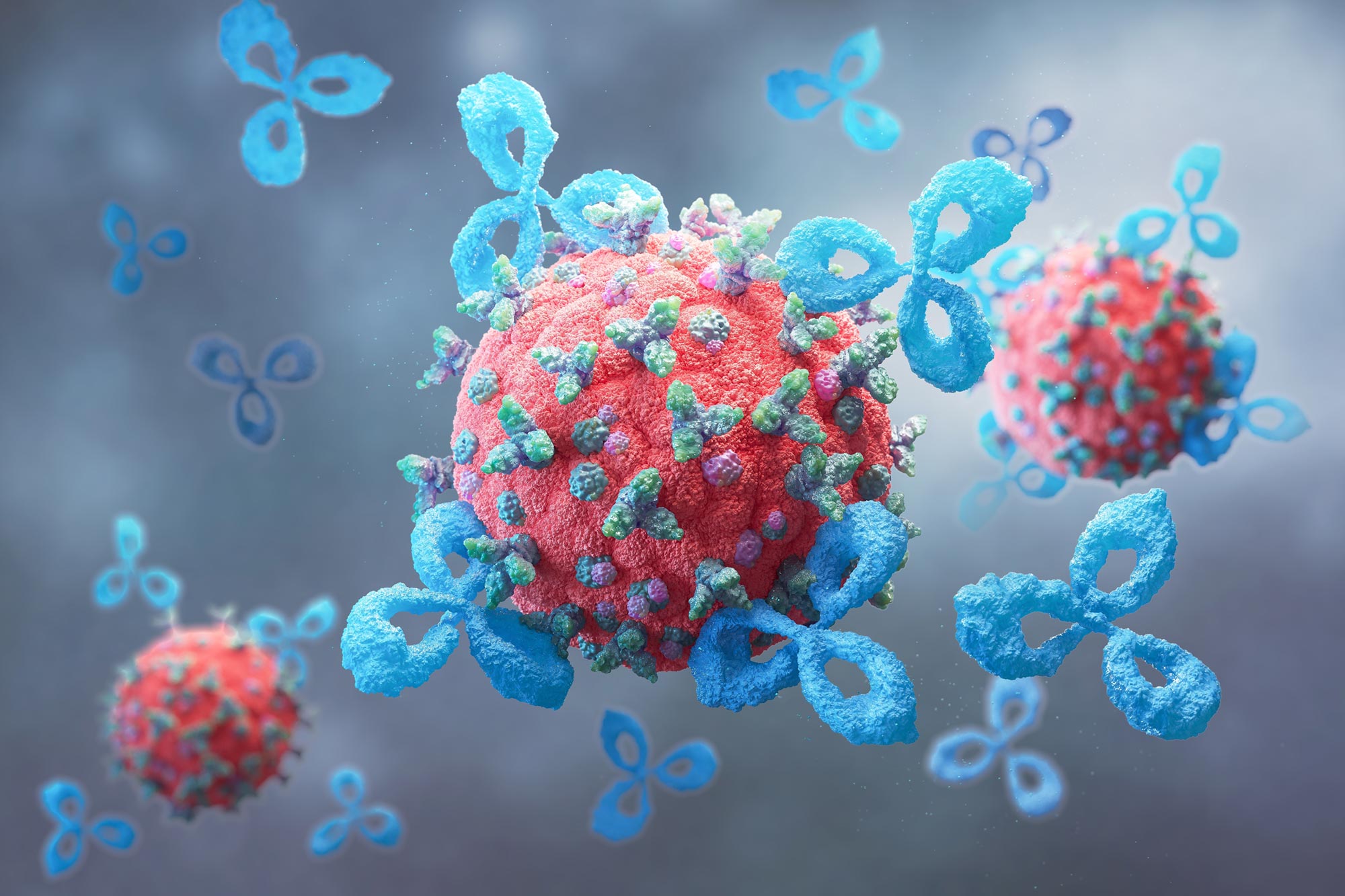
A microbial metabolite called 3,4 dihydroxybenzoic acid, derived from dietary fiber, improved antitumor immunity in mice.
A compound made by gut bacteria during the breakdown of dietary fiber may offer a way to strengthen cancer immunotherapy. In mouse studies, University of Michigan researchers turned that compound into an oral drug that helped T cells attack tumors more effectively.
The work, published in Nature Nanotechnology, centers on 3,4-dihydroxybenzoic acid, or DHB, a natural microbial metabolite produced in the gut.
The approach is designed to address a major limitation of immune checkpoint blockade, a cancer treatment that releases natural brakes on the immune system so T cells can recognize and destroy cancer cells. Although checkpoint therapies have transformed cancer immunotherapy, response rates among patients are often low.
“Our gut microbiome produces many beneficial compounds that can be used for new drug development,” said James Moon, Ph.D., John G. Searle Professor of Pharmaceutical Sciences and a member of Rogel Cancer Center.
“This is the first time anyone has shown that natural microbial metabolites can be developed as a new oral formulation for immunotherapy.”
A gut metabolite strengthened memory T cells
One reason checkpoint immunotherapy can stop working is that T cells gradually lose their ability to kill cancer cells and stop dividing.
Looking for compounds that might counter that decline, the researchers screened several metabolites produced by gut microbes and identified DHB as a promising candidate. The compound is naturally generated as intestinal bacteria break down dietary fiber.
The researchers found that DHB encouraged T cells to develop into memory T cells, which play a central role in cancer immunotherapy. These cells can multiply rapidly and help drive antitumor immune responses.
A prodrug overcame poor absorption
Using DHB directly posed another challenge. Naturally occurring compounds such as DHB are often poorly absorbed and quickly removed from the body.
To improve delivery, the researchers developed a prodrug form of DHB. They enclosed the compound in a protective nanoemulsion shell and converted it into an inactive precursor that becomes active after reaching its target tissues.
“Our gut microbiome produces many beneficial compounds that can be used for new drug development,” said James Moon, Ph.D., John G. Searle Professor of Pharmaceutical Sciences and a member of the Rogel Cancer Center.
Combined treatment eliminated tumors in mice
The researchers tested the oral prodrug in mouse models of melanoma, colorectal cancer, and breast cancer.
When the animals received the prodrug together with immune checkpoint blockade therapy, their tumors were eradicated. The mice also developed long-term immune memory that could prevent the tumors from returning.
DHB appeared to have effects beyond checkpoint therapy as well.
“We found that DHB also improved the efficacy of CAR T-cell therapies, which is widely used to re-engineer a patient’s own immune cells to target cancer,” Moon said.
“We hope that our results from mouse tumor models will also hold true in human clinical trials.”
The researchers are now screening additional compounds that could enhance immune system activity. They also hope the nanomedicine formulation methods developed for this work could eventually prove useful for treating autoimmune diseases.
Reference: “Oral nano-delivery of a gut microbial metabolite enhances T cell stemness for cancer immunotherapy” by Kai Han, Young Seok Cho, Mariko Takahashi, Xingwu Zhou, Hannah E. Dobson, Kim Hutchings, Yuesong Wu, Youngseo Na, Fang Xie, Julia Crowther, Jinmei Wu, Jin Xu, Chuan Lee, Himani Jasewicz, Yujin Kim, Minal Nenwani, Olamide Animasahun, Fulei Wuchu, Anthony Andren, Harrison Wong, Emma Camp, Ziye Wan, Qi Wu, Li Zhang, Cheng Xu, Katherine Dong, Yao Xu, Anna Schwendeman, Grace Y. Chen, Yuying Xie, Costas A. Lyssiotis, Martin Clasby, Deepak Nagrath, Yu Leo Lei and James J. Moon, 10 August 2026, Nature Nanotechnology.
DOI: 10.1038/s41565-026-02235-9
This work was supported by NIH (R01DE030691, R01CA271799, R01NS122536, R01DE031951, P30CA046592, R01DE026728 and R01CA271369); National Natural Science Fund for Excellent Young Scientists Fund Program (Overseas) of China; National Natural Science Foundation of China (52473160); Project Program of Jiangsu Key Laboratory of Drug Design and Optimization; China Pharmaceutical University (DDOZZ202301); Rogel Cancer Center; Forbes Scholar Award and NIH T32 training grant (T32GM145304)
Disclosure: Patent applications for microbial metabolite prodrug-based oral formulation to improve the efficacy of ICB have been filed with Moon, Han, Nagrath, Hutchings and Clasby as inventors. Moon declares financial interests for board membership, as a paid consultant, for research funding, and/or as an equity holder in EVOQ Therapeutics, and Saros Therapeutics. Lyssiotis has consulted for Astellas Pharmaceuticals, Odyssey Therapeutics, Third Rock Ventures and T-Knife Therapeutics and is an inventor on patents pertaining to Kras-regulated metabolic pathways, redox control pathways in pancreatic cancer and targeting the GOT1-ME1 pathway as a therapeutic approach (US patent number 2015126580-A1, 05/07/2015; US patent number 20190136238, 05/09/2019; international patent number WO2013177426-A2, 04/23/2015)
Never miss a breakthrough: Join the SciTechDaily newsletter.
Follow us on Google and Google News.