
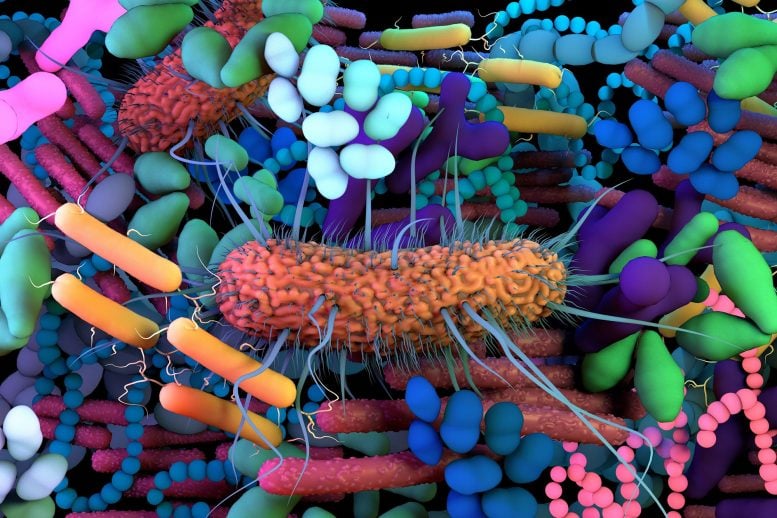
Researchers found that melanoma patients’ gut microbes impact their response to ICB therapy, with harmful bacteria playing a larger role than beneficial ones.
Melanoma patients receiving therapy that helps their immune system kill cancer cells respond to treatment differently depending on the types of microbes in their gut, and new research suggests the microorganisms hindering therapy have more influence than the beneficial ones.
Findings by a collaboration that included researchers at Oregon State University, the National Cancer Institute, the Frederick National Laboratory for Cancer Research and the University of Pittsburgh were published today (February 28, 2022) in Nature Medicine.
The research is a key step forward in the fight against multiple types of cancer including melanoma, the most deadly form of skin cancer, said Andrey Morgun of the OSU College of Pharmacy.
“Our findings shed new light on the highly complicated interaction between the gut microbiome and cancer immunotherapy response and set a course for future studies,” he said.
Nationwide, melanoma is the fifth-most common cancer. Roughly 100,000 new melanoma cases will be diagnosed in the United States in the coming year, and more than 7,000 of those patients are expected to die, according to the American Cancer Society.
One of the most aggressive cancers, melanoma kills by metastasizing, or spreading, to other organs such as the liver, lungs, and brain.
Immune Checkpoint Blockade Therapy
The new study involves a therapeutic technique called immune checkpoint blockade, often referred to by its initials of ICB, which has revolutionized treatment of melanoma and cancer in general.
ICB therapy relies on inhibitor drugs that block proteins called checkpoints that are produced by certain immune system cells – T cells, for example – and also by some cancer cells.
Checkpoints help prevent immune responses from being too strong, but sometimes that means keeping T cells from killing cancer cells. Thus, when the checkpoints are blocked, T cells can do a better job of killing cancer cells.
ICB has been a “game-changer” in cancer therapy, Morgun said, and multiple studies have shown patients’ gut microbes play a role in how well a patient responds. The human gut microbiome is a complex community of more than 10 trillion microbial cells representing roughly 1,000 different bacterial species.
Microbial Signatures Linked to Therapy Outcomes
Morgun and collaborators looked at data from multiple cohorts of melanoma patients receiving a type of ICB known as anti-programmed cell death protein therapy, abbreviated to anti-PD-1 therapy.
Among other methods, they used a computer modeling technique, transkingdom network analysis, invented by Morgun and Natalia Shulzhenko of Oregon State’s Carlson College of Veterinary Medicine, to determine which bacteria were associated with better or worse responses to the treatment.
“We established multiple microbiotypes and some of them were clearly correlated with response to cancer immunotherapy,” Morgun said. “Two microbial signatures – one comparatively heavy with Lachnospiraceae species, the other comparatively heavy with Streptococcaceae species – were connected to favorable and unfavorable clinical response, respectively.”
The results also suggest that about a year after treatment begins the gut microbiota become a dominant factor in response to therapy, and that the microbes that detract from therapy seem to play a bigger role than the ones that enhance therapy, he added.
Reference: “Intestinal microbiota signatures of clinical response and immune-related adverse events in melanoma patients treated with anti-PD-1” by John A. McCulloch, Diwakar Davar, Richard R. Rodrigues, Jonathan H. Badger, Jennifer R. Fang, Alicia M. Cole, Ascharya K. Balaji, Marie Vetizou, Stephanie M. Prescott, Miriam R. Fernandes, Raquel G. F. Costa, Wuxing Yuan, Rosalba Salcedo, Erol Bahadiroglu, Soumen Roy, Richelle N. DeBlasio, Robert M. Morrison, Joe-Marc Chauvin, Quanquan Ding, Bochra Zidi, Ava Lowin, Saranya Chakka, Wentao Gao, Ornella Pagliano, Scarlett J. Ernst, Amy Rose, Nolan K. Newman, Andrey Morgun, Hassane M. Zarour, Giorgio Trinchieri and Amiran K. Dzutsev, 28 February 2022, Nature Medicine.
DOI: 10.1038/s41591-022-01698-2
Amiran Dzutsev and Giorgio Trinchieri of the National Cancer Institute and Hassane Zarour of the University of Pittsburgh are the corresponding authors on the study, which was supported by the National Institutes of Health and the National Cancer Institute.
Never miss a breakthrough: Join the SciTechDaily newsletter.
Follow us on Google and Google News.