

The search for effective anti-aging treatments has produced clear front-runners: healthy lifestyle changes and certain prescription drugs.
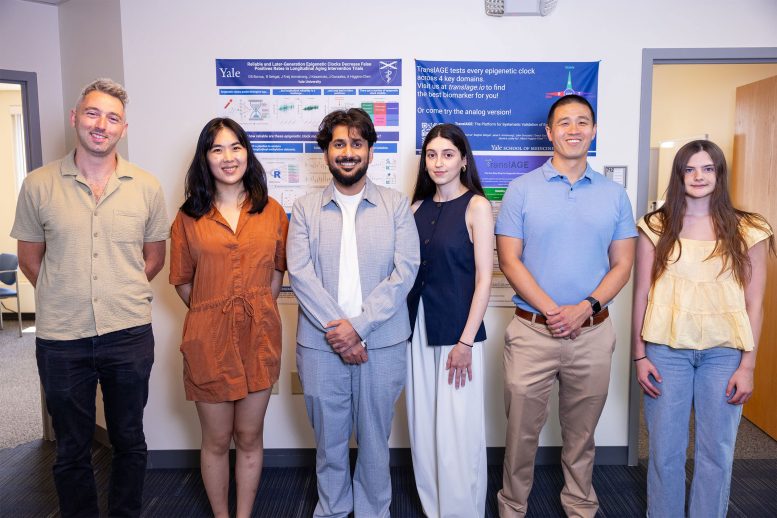
Raghav Sehgal originally came to Yale hoping to apply computer science to cancer. With an engineering background and experience building a computational biology startup, he was well positioned to investigate the disease through data.
His research direction changed when his thesis adviser at the Yale School of Medicine posed a more ambitious question: If aging contributes to cancer, cardiovascular disease, diabetes, and dementia, could targeting aging itself help address several diseases at once?
“That put me on a different path,” said Sehgal, an associate research scientist in psychiatry who specializes in computational biology and bioinformatics. “As researchers, we have a long way to go in understanding the aging process and whether the steps we take to manage it really work.”

Putting Anti-Aging Claims to the Test
Sehgal now investigates the biological systems that drive human aging, how scientists can measure the process, and whether interventions can reverse some of its effects. He is the first author of a new study from the laboratory of Albert Higgins-Chen, an assistant professor of psychiatry at the Yale School of Medicine.
The team examined whether widely studied anti-aging strategies produce consistent changes in biological age. Unlike chronological age, which simply counts years, biological age attempts to capture how quickly the body’s cells, tissues, and organs are changing.
Using DNA-based blood tests, the researchers found measurable improvements after lifestyle programs and several prescription treatments. The over-the-counter supplements included in the analysis, however, generally showed little effect. The findings were published in Nature Medicine.
“For the first time we’ve shown that certain therapies have measurable impacts,” Sehgal said. “This wasn’t previously possible, because we didn’t have enough data to say these biomarkers are consistently responsive to these interventions.”
DNA Clocks Measure Biological Age
The analysis centered on epigenetic clocks, blood-based tools that estimate biological age by examining DNA methylation. Methyl groups (basic chemical structures that act like tags) attach to DNA and help regulate how genes behave without changing the underlying genetic code.
These patterns shift predictably with age. Algorithms can analyze them to produce estimates of epigenetic age, while more specialized biomarkers may reflect inflammation, immune function, or other aspects of physical decline. A younger reading does not necessarily mean someone will live longer, but it can show whether an intervention is affecting biological processes associated with aging.
The researchers pooled data from 51 intervention studies, covering approaches that ranged from dietary supplements to medical procedures. They assessed more than 110 DNA methylation biomarkers (including 16 major epigenetic clocks) and compared measurements taken before and after each intervention.
“What we did was pretty unique,” Sehgal said. “We already know that certain things might prolong health span and lifespan. There is data from retrospective analysis as well as from animal models. We took all that knowledge along with the real-world clinical studies to identify which interventions in humans were slowing down aging across the board in these known biomarkers.”
Exercise, Diet, and Drugs Stand Out
The studies covered four broad categories: lifestyle changes, pharmacological treatments, over-the-counter supplements, and medical procedures. Programs combining exercise with a healthy diet consistently lowered epigenetic age, regardless of whether the eating plan was Mediterranean, low-carb, or low-fat.
Prescription drugs produced the largest decreases. The strongest results appeared with metformin and semaglutide, which are used for metabolic control and weight management, and anti-TNF treatments, which block an immune system protein involved in harmful inflammation. (TNF, or tumor necrosis factor, is an immune system protein that helps fight inflammation-related injury.)
By comparison, the supplements and certain medical procedures included in the analysis did not significantly reduce epigenetic age. Newer biological age clocks also detected intervention-related changes more effectively than older models.
The biomarkers shifted more substantially among participants with diseases than among healthy volunteers. One possible explanation is that people experiencing illness have more age-related biological disruption available to improve, although further research is needed to determine why the responses differ.
A Faster Way to Study Aging
Proving that a treatment extends life or protects against age-related disease can require decades of follow-up. Reliable biomarkers could offer a much faster way to identify promising treatments, determine who benefits, and rule out approaches that produce little measurable response.
“If these new biomarkers are eventually validated to predict long-term health, scientists will be able to evaluate anti-aging therapies much faster,” Sehgal said. “Instead of waiting decades for evidence from clinical trials, we’ll be able to see which interventions are effective and in which people in a few years or even months.”
The researchers next want to evaluate interventions in larger and more diverse groups. Such studies will be important because age, health status, genetics, medication use, and other factors could influence how a person’s biomarkers respond.
A Younger Clock Is Not Yet Proof
Higgins-Chen cautioned that moving a biomarker in a younger direction does not automatically prove that an intervention slows aging, prevents disease, or extends life.
“We have developed a rigorous, systematic approach to evaluating and comparing how biomarkers change across a wide variety of interventions, and that is a critical step in the right direction,” he said. “However, the true meaning of that change must be fully understood.”
Researchers still need to separate changes caused by an intervention from those linked to hidden confounding factors. They must also learn when the effects begin, how long they persist after an intervention ends, and which biological mechanisms produce them.
“And most importantly, what does the change mean for our long-term risk of age-related disease and functional decline?” Higgins-Chen said.
Reference: “Responsiveness of epigenetic aging biomarkers to longevity interventions in humans” by Raghav Sehgal, Daniel Borrus, Jenel F. Armstrong, John Gonzalez, Jessica Kasamoto, Yaroslav Markov, Ahana Priyanka, Ryan Smith, Natàlia Carreras-Gallo, Jessica Lasky-Su, Varun B. Dwaraka, Michael J. Corley and Albert Higgins-Chen, 21 August 2026, Nature Medicine.
DOI: 10.1038/s41591-026-04562-9
Never miss a breakthrough: Join the SciTechDaily newsletter.
Follow us on Google and Google News.