
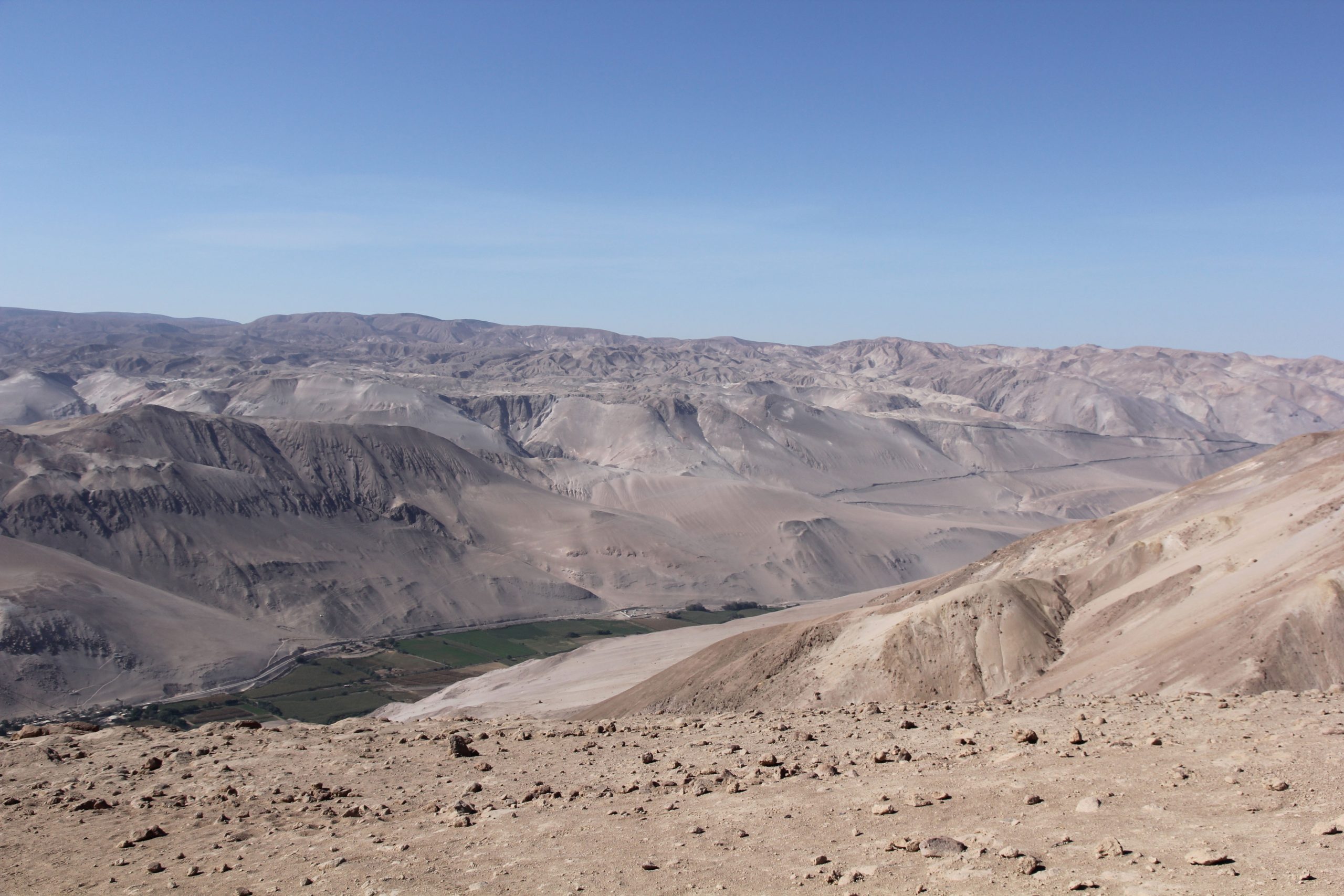
A reconstructed landscape beneath Chile’s Lauca volcanic deposits supports a slow, steady rise for this part of the Andes.
The Lauca Caldera, a large volcanic depression in northern Chile, erupted 21.9 million years ago and buried an entire landscape beneath volcanic rock. That covering protected evidence of how the Andes were growing from erosion and deformation. Researchers have now used it to reconstruct terrain they cannot dig down to see.
Their study, published in Science Advances, points to a landscape of gentle mountain foothills before the eruption. From that terrain, the team inferred that rocks in this part of the Andes were being pushed upward by no more than 0.26 kilometers per million years, roughly 2.5 centimeters, or an inch, per century.
That is slow compared with many rapidly rising parts of active mountain ranges. In parts of the Himalaya, for example, both rock uplift and erosion can reach rates of several millimeters to centimeters per year. The Chilean findings instead support a long, gradual history of mountain building.
Evidence for the Andes’ slow rise
Lead author Dr. Byron Adams, based at UCL Earth Sciences, said: “This approach gives us a new way to look back at Earth’s history. Current methods to estimate the speed at which mountains build look at chemical ‘clocks’ in the rock, but these are limited to specific moments in time. Our method can estimate rock uplift over a much longer period.
“In this case, we estimate it would have taken millions of years to produce the subdued landscape we infer prior to the eruption.
“There is debate over whether the Andes grew slowly and steadily over 40 or 50 million years or whether they rose extremely slowly and then popped up more recently, in the last six to 10 million years. Our findings, which cover a large part of the middle of that history, support the slow but steady hypothesis.”
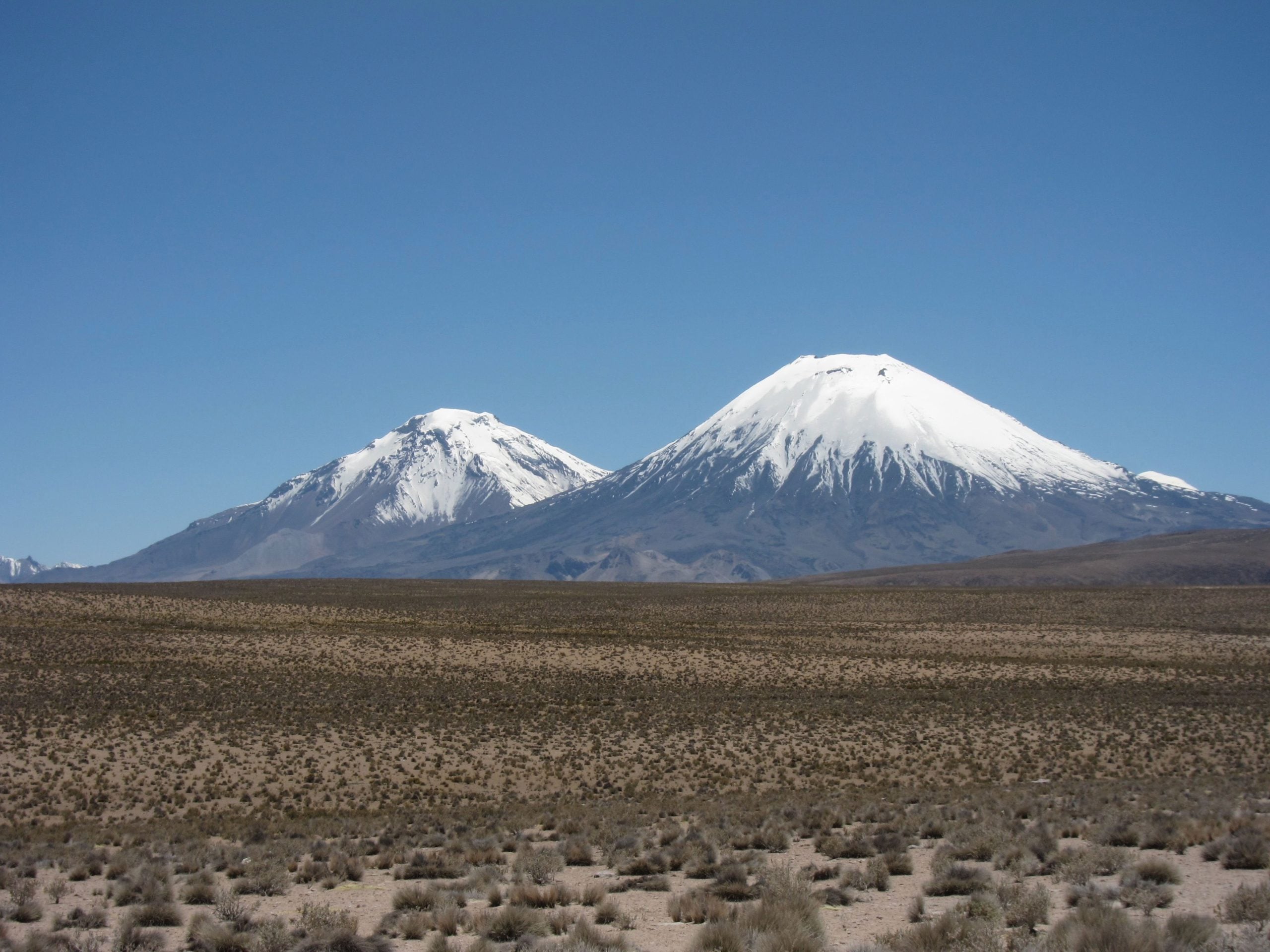
Reconstructing foothills beneath Lauca’s volcanic rock
The volcanic deposit provides a physical constraint on what the earlier landscape could have looked like. Known as ignimbrite, the rock from the eruption covered an area six times larger than Santiago, Chile’s capital, or nearly three times larger than Greater London. In places, it reached a kilometer thick, about 0.6 miles.
“This landscape was buried by a giant volcanic eruption – a little like Pompeii, but on a vastly larger scale. Instead of covering a town, hot mixtures of volcanic ash, rock fragments, and gas swept across an entire landscape, engulfing the terrain beneath them,” Adams said.
“Pompeii shows how volcanic eruptions can freeze a moment in human history. This study shows that much larger eruptions can also freeze moments in Earth history, burying whole landscapes beneath volcanic deposits and preserving clues to how mountains were being built before the eruption.
“We cannot dig down to see the buried landscape, but we can use the shape of the volcanic blanket and what we know about how rivers shape mountains to infer what is hidden beneath it.”
Using models of how rivers shape mountain ranges, the researchers simulated hundreds of possible ancient landscapes and tested whether each could plausibly fit beneath the volcanic deposit. Only landscapes with relatively small differences in elevation passed that test. Faster rock uplift would probably have produced steeper slopes that could not have fit beneath the deposit, allowing the team to estimate an upper limit on the rate of upward movement.
The estimate also agrees with earlier evidence from minerals that recorded temperature changes over the past 50 million years. Those records reflect rocks cooling as they moved upward through Earth’s crust, providing a separate way to investigate the region’s mountain-building history.
Co-author Dr. Frances Cooper, also based at UCL Earth Sciences, said: “We’ve been working in this part of the Andes for many years to understand how the mountains developed. The Andes have a major influence on regional and global climate, so reconstructing their history is important for understanding long-term climate change.
“What’s particularly exciting about this study is that it gives us a new way of piecing together that history. The same approach could be applied to volcanic deposits elsewhere in the world, helping us reconstruct landscapes buried for millions of years.”
Reference: “Landscapes buried beneath large-volume ignimbrites reveal preeruptive uplift rates” by Byron A. Adams, Frances J. Cooper, Clementine Walsh and Katharine V. Cashman, 11 September 2026, Science Advances.
DOI: 10.1126/sciadv.aee5374
The research was supported by AXA and the Royal Society, and builds on earlier work in the Central Andes supported by BHP.
Never miss a breakthrough: Join the SciTechDaily newsletter.
Follow us on Google and Google News.