
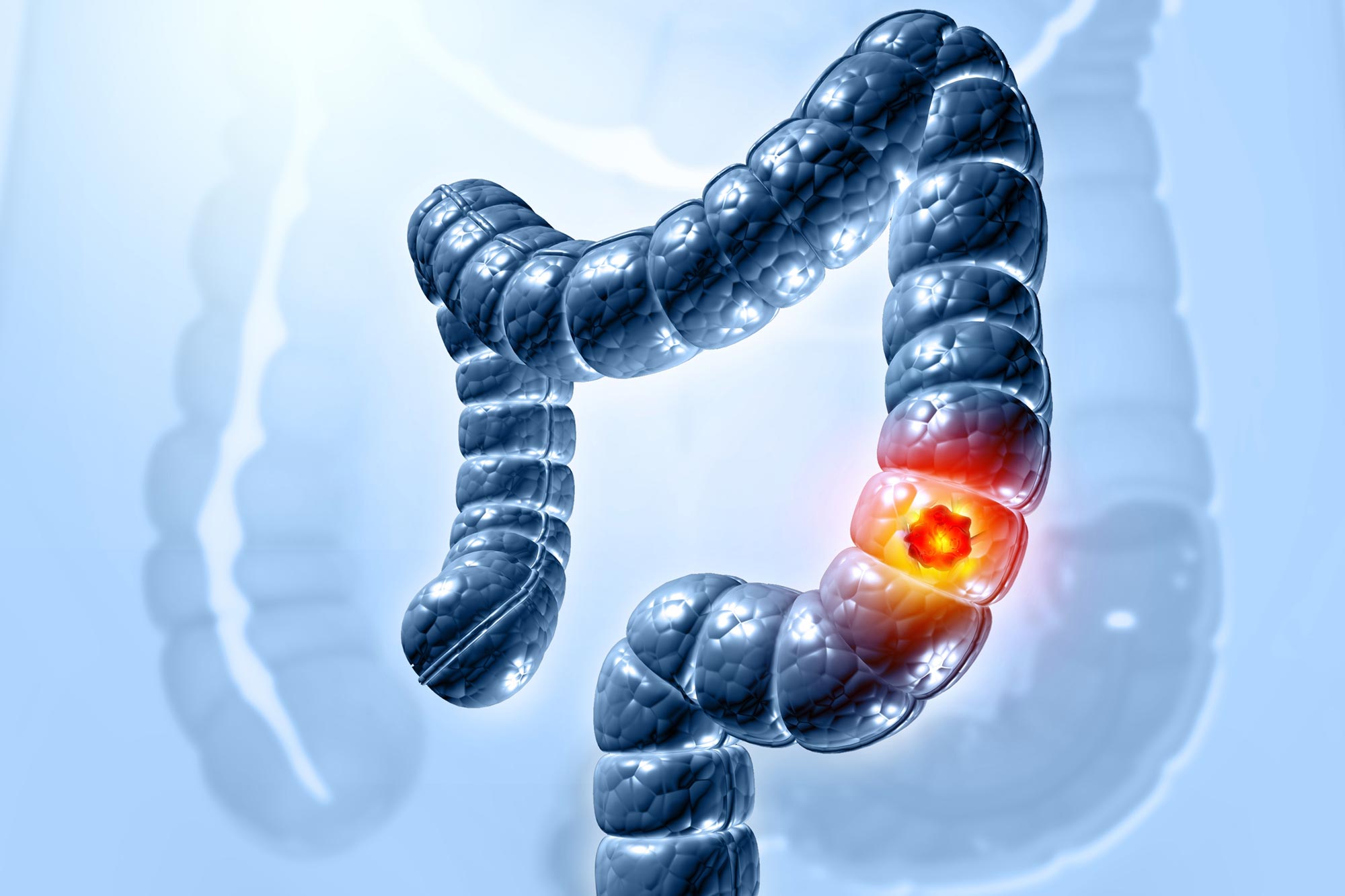
Obesity may boost activity in a tissue repair pathway that helps colon cancer spread, offering a potential target for drugs to prevent metastasis.
Most colon cancer deaths occur when tumor cells spread beyond the primary site to invade other organs, most frequently the liver followed by the lungs, in a process called metastasis. In the United States, patients are typically diagnosed at stage 2 or stage 3, before the cancer has spread to distant organs. Yet even after successful surgery, up to a third of these individuals suffer a relapse from metastatic disease. Identifying what triggers that outward spread has long stumped researchers, who searched the genome for new mutational drivers without success
MIT biologists have now found that a protein called YAP1 helps colon cancer cells spread by switching on a program normally used to repair damaged tissue. Their study, published in Science, also connects diet to that change. In mice, a high-fat diet increased production of fatty molecules called ceramides, which allowed cancer cells to activate the repair program more strongly.
“Many studies have looked for a genetic driver of metastasis and come up empty,” says Omer Yilmaz, a professor of biology at MIT and director of the MIT Stem Cell Initiative. “There isn’t a defining mutational signature that separates metastatic cells from the primary tumor, which points to metastasis being driven largely by changes in which genes are switched on and off, rather than by new mutations.”
YAP1 activity linked to lower survival
By analyzing RNA sequencing data from patients with colorectal cancer, which reveal patterns of gene activity, the researchers found that YAP1 was more active in metastatic cancer cells. Patients with higher body mass index (BMI) also had higher expression of genes activated by YAP1 than normal-weight patients, and higher expression of those genes was associated with lower survival rates.
“We don’t think that the YAP1 program is specific to obesity. It’s just that it becomes accentuated in obesity, and that may account for why obesity is known to drive the progression of colorectal cancer,” Yilmaz says.
Colon tumors hijack a repair program
To investigate the gene activity that enables metastasis, the team studied tumor organoids, three-dimensional tumor models grown in the lab, from patients with colorectal cancer and mouse models of several types of colon cancer. The researchers looked for epigenetic programs, changes in how cells use their genetic instructions rather than changes to the DNA sequence itself. Across the models, metastatic cells shared activation of the YAP1 program.
YAP1 works with partner proteins to switch on genes involved in development, stem cell maintenance, and regeneration. In healthy tissue, it is active during fetal development and after injury, when tissue needs to heal. In the gut, that repair response involves a rare, fetal-like cell type that normally appears only briefly to rebuild the damaged intestinal lining.
“The regenerative program that we described is generally observed in the gut when there is severe injury or infection and the gut needs to regenerate. We see the tumor cells hijack this program to drive metastatic progression,” says Swagata Goswami, an MIT postdoc who shares lead authorship with fellow MIT postdocs Qiming Zhang and Abdullah Burak Yildiz.
Blocking ceramide production reduces spread in mice
Although YAP1 has been linked to cancer for years, the new work shows that lipids derived from the diet push tumor cells into this particular regenerative state. Entering that state enables the cells to multiply, break away from the original tumor, and spread elsewhere in the body.
In mice fed a high-fat diet, cancer cells activated YAP1 more strongly than in mice fed a healthy diet because the diet activated enzymes that produce ceramides, a type of lipid. Those molecules released a molecular brake that normally keeps YAP1 inactive, allowing the protein to enter the cell’s nucleus and switch on its target genes.
Genetically targeting either YAP1 or genes involved in ceramide production markedly reduced the spread of colon cancer to the liver in mice. The researchers hope to use that connection to develop treatments that prevent tumor cells from activating the repair program.
“We’ve found a pathway that we think is druggable. If we shut down the enzymes that make ceramides, tumor cells can’t switch on this regenerative program, and they largely fail to seed metastases in the liver,” Yilmaz says.
Yilmaz, who is also a member of MIT’s Koch Institute for Integrative Cancer Research and a gastrointestinal pathologist and director of translational research in pathology at Beth Israel Deaconess Medical Center, shares senior authorship with Nilay Sethi and Alpaslan Tasdogan. Sethi is an associate professor of medicine at Harvard Medical School and Dana Farber Cancer Institute. Tasdogan heads the Institute for Tumor Metabolism and is a professor in the Department of Dermatology at University Hospital Essen and the German Cancer Consortium (DKTK).
The researchers now plan to develop drugs that inhibit DEGS1 and DEGS2, two enzymes involved in ceramide production, in hopes of preventing colon cancer metastasis. Such treatments would need to act selectively because ceramides are also essential in healthy tissues. The findings do not yet translate into dietary advice for patients who have already been diagnosed.
Reference: “Ceramide synthesis mediates colorectal cancer metastasis through a YAP-driven regenerative program” by Swagata Goswami, Qiming Zhang, Abdullah Burak Yildiz, Upasana Das Adhikari, Akhouri Kishore Raghawan, Manon Bulliard, Sabhyata Sedhain, Odai Darawshi, Cigdem Elif Celik, Feyza Cansiz, Constantin P. Krempe, Jonas Rösler, Gabriele Allies, Sven W. Meckelmann, Chiashin Chi, Felix-Levin Hormann, Sven Heiles, Joseph Sedlak, Wesley Grace, George Eng, Ethan Reich, Chiara Alquati, Kevin J. Williams, Benjamin J. Read, Edrees H. Rashan, Zhixin Li, Anup Jnawali, Jose A. Ortiz, Chesta Jain, Charles A. Whittaker, Osman H. Yilmaz, Vikram Deshpande, Oliver J. Schmitz, Albert Sickmann, Autumn G. York, Douglas S. Kwon, Ulf Neumann, Maria Fedorova, Matthew G. Vander Heiden, Besim Ogretmen, Nilay S. Sethi, Alpaslan Tasdogan and Ömer H. Yilmaz, 24 September 2026, Science.
DOI: 10.1126/science.adw8520
The research was funded by the National Institutes of Health/National Cancer Institute, the MIT Stem Cell Initiative, a Koch Institute Frontier grant, and the NRW Junior Research Program.
Never miss a breakthrough: Join the SciTechDaily newsletter.
Follow us on Google and Google News.