

KLF5 appears to fuel pancreatic cancer metastasis by reprogramming epigenetic controls, offering a potential new therapeutic target.
In experiments using lab-grown pancreatic cancer cells, researchers at Johns Hopkins Medicine identified a gene that appears to play a central role in helping these tumors spread.
The gene, known as KLF5 (Krueppel-like factor 5), does not drive metastasis by creating new mutations in the cancer cell DNA sequence. Instead, it reshapes how DNA is chemically modified and packaged, a process called epigenetics, which determines which genes are switched on or off.
Epigenetics, not mutations, drives spread
“Epigenetic alterations are underappreciated as a major route to developing and fueling the growth of cancer metastasis,” says Andrew Feinberg, M.D., Bloomberg Distinguished Professor in the Johns Hopkins University schools of medicine, engineering, and public health. In earlier work published in 2017, Feinberg and colleagues showed that the most common type of pancreatic cancer often spreads not because of new genetic mutations in the primary tumor, but because of widespread epigenetic changes that reprogram tumor cells and allow them to metastasize.
These earlier insights set the stage for the new research, which was supported in part by the National Institutes of Health and is now published in Molecular Cancer. The team set out to pinpoint which genes are most critical in driving cancer cell growth and spread.
CRISPR screen pinpoints KLF5
To identify key players, the researchers used CRISPR, a gene editing tool that can precisely cut DNA and shut down specific genes. By systematically turning off targeted genes in pancreatic cancer cells, they were able to see which ones had the strongest impact on cell growth. Genes whose silencing caused the most dramatic slowdown in cancer cell proliferation were considered especially important when active.
Among all the genes tested, KLF5 stood out. It had the most powerful effect in promoting the growth and invasive behavior of metastatic cancer cells. In tissue samples from patients, 10 of 13 individuals with pancreatic cancer showed higher levels of KLF5 activity in at least one metastatic tumor compared with their original primary tumor, reinforcing its potential role in driving disease progression.
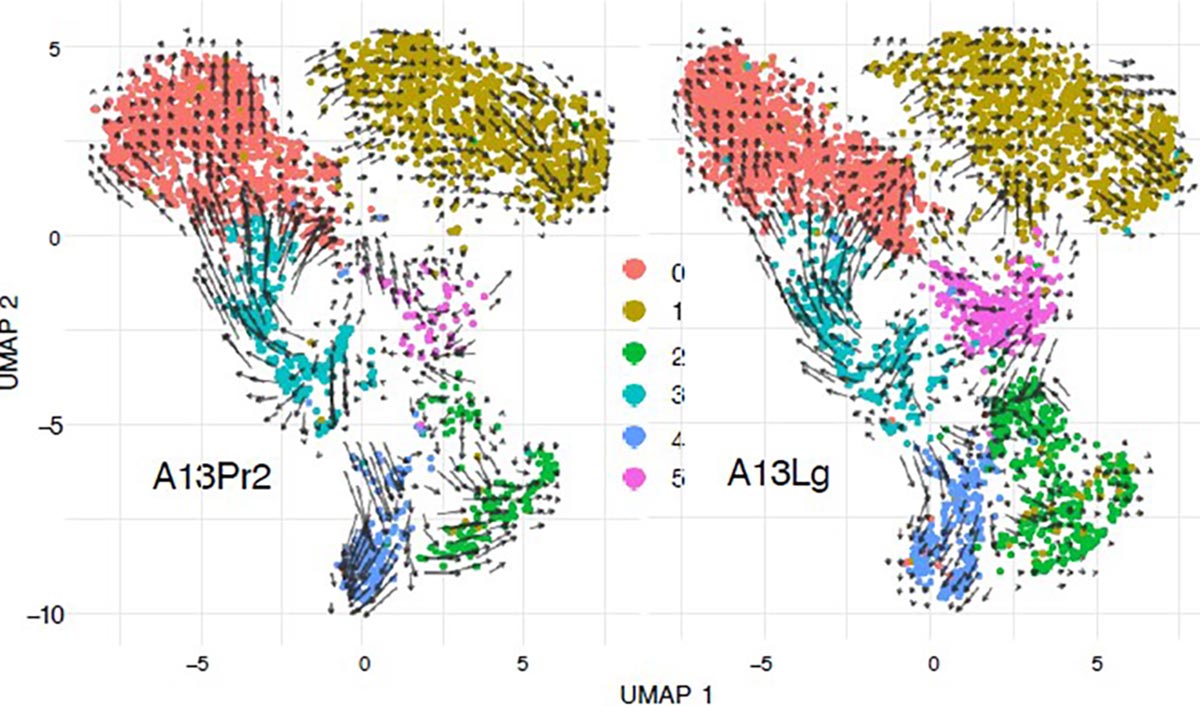
The research team also did other experiments to validate KLF5’s impact on metastatic cell growth and found that KLF5 controls the tight packaging of DNA, an epigenetic factor that enables genes to be turned on or off.
Small shifts, major consequences
The scientists concluded that slight changes in KLF5 expression levels in the metastatic group of cells appeared to make relatively larger changes in the cells’ ability to grow and spread. “This could suggest that, to develop treatments for pancreatic cancer metastasis, the gene may not need to be entirely shut down to have a positive effect,” says Feinberg, who notes that several anti-cancer compounds targeting KLF5 are in development.
The scientists also found that KLF5 regulates at least two other genes, NCAPD2 and MTHFD1, in metastatic but not primary laboratory-grown pancreatic cancer cells. The two genes are known as epigenetic modifier genes, which turn genes on or off not through the genetic code but by adding chemical groups to the DNA and helping to alter its packaging.
“We are adding to evidence that cancer metastases are not caused by additional mutations in the primary cancer, but by additional epigenetic changes, enabling the cancer to thrive and grow,” says first author Kenna Sherman, a graduate student in the Johns Hopkins Human Genetics and Genomics program. “KLF5 seems to be a master gene that drives such changes and impacts a pathway of genes known to control invasion and the ability to resist treatments.”
Reference: “CRISPR screen of human pancreatic cancer xenografts identifies a KLF5 proliferation vulnerability through epigenetic modifiers NCAPD2 and MTHFD1” by Masahiro Maeda, Kenna Sherman, Weiqiang Zhou, Jiaqi Cheng, Yuta Nihongaki, Adrian Idrizi, Rakel Tryggvadottir, Oscar Camacho, Xingbo Shang, Jimin Min, Michael A. Koldobskiy, Anirban Maitra, Andre Levchenko, Barbara S. Slusher, Hongkai Ji and Andrew P. Feinberg, 10 February 2026, Molecular Cancer.
DOI: 10.1186/s12943-026-02575-z
The research in this study was supported by the National Institutes of Health (CA54358, R01HG010889, R01HG013409, T32GM148383), a Celgene License Pathway Agreement and a gift from the friends and family of Jasmine Lampadarios.
Never miss a breakthrough: Join the SciTechDaily newsletter.
Follow us on Google and Google News.