

AI model crossNN identifies over 170 tumor types with high accuracy using genetic material, offering fast, non-invasive cancer diagnosis.
An MRI scan revealed a brain tumor located in a difficult area, and performing a biopsy would carry significant risks for the patient, who had initially sought medical help due to double vision. Cases like this, discussed by a multidisciplinary team of cancer specialists, led researchers at Charité – Universitätsmedizin Berlin, along with their collaborators, to search for alternative diagnostic methods.
Their solution is an AI model that analyzes specific features in the genetic material of tumors, particularly their epigenetic fingerprint, which can be obtained from sources such as cerebrospinal fluid. As reported in the journal Nature Cancer, the model classifies tumors both rapidly and with high accuracy.
Today, many more types of tumors are recognized than the number of organs from which they originate. Each tumor has distinct traits, including specific tissue structures, growth patterns, and metabolic behaviors. Even so, tumors with similar molecular profiles can often be grouped together. Effective treatment depends heavily on correctly identifying the tumor type.
Modern targeted therapies focus on specific structures within tumor cells or block the signals that drive abnormal growth. Chemotherapy regimens can be tailored to the tumor type and adjusted in dosage. For rare tumor types, participation in innovative clinical studies may also be an option.
“Against the backdrop of increasingly personalized, rapidly developing cancer medicine, precise diagnosis at a certified tumor center is the way forward for successful treatment,” as Prof. Martin E. Kreis, Chief Medical Officer at Charité, stated. While a comprehensive molecular, cellular, and functional analysis of a tumor based on tissue samples provides the necessary information, physicians are also confronted with cases in which it is not possible or very risky to extract tissue samples from the tumor. What’s more, even a histological examination alone is not capable of providing as precise a diagnosis as the new AI model.
Looking into the genome instead of into the tissue
A new approach has been developed to characterize brain tumors, one that moves away from traditional microscopic diagnostics and instead focuses on modifications in the tumor’s genetic material—its epigenetic features. These features serve as a kind of cellular memory, determining which sections of genetic information are activated and when.
“Hundreds of thousands of epigenetic modifications act as on and off switches for individual gene sections. Their patterns form a unique, unmistakable fingerprint,” explains Dr. Philipp Euskirchen, a scientist at the Berlin site of the German Cancer Consortium and the Institute of Neuropathology at Charité, who led the recently published study. “In tumor cells, the epigenetic information is altered in a characteristic way. Based on their profiles, we can differentiate between tumors and classify them.”
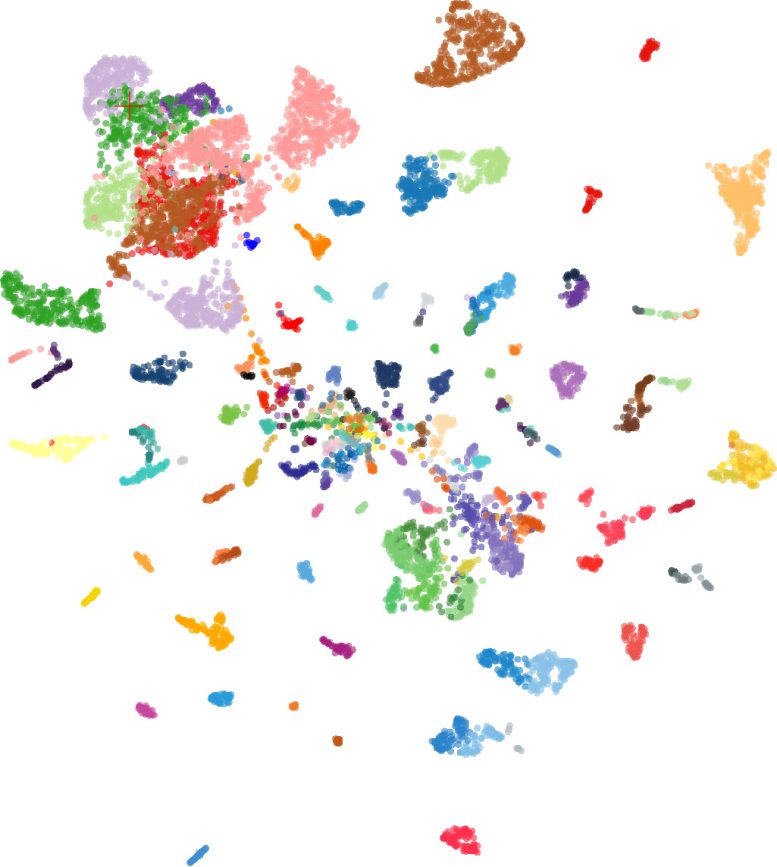
For brain tumors, even a sample of cerebrospinal fluid may be sufficient in some cases and can be collected relatively easily, avoiding the need for surgery.
To match an unknown epigenetic fingerprint with thousands of known cancer profiles and assign it to a specific tumor type, machine learning methods—artificial intelligence—are needed due to the complexity and size of the data. Additionally, various DNA sequencing techniques have been used in the past, and epigenetic analysis is often limited to specific patterns and gene segments associated with individual tumor types.
“Consequently, our aim was to develop a model that accurately classifies tumors, even if they are only based on parts of the entire tumor epigenome or the profiles were collected by means of different techniques and varying degrees of accuracy,” says Dr. Sören Lukassen, head of the Medical Omics working group at the Berlin Institute of Health at Charité (BIH).
Reliable and traceable
A newly developed AI model goes by the name of crossNN, whose architecture is based on a simple neural network. The model was trained with a large number of reference tumors and subsequently tested on more than 5,000 tumors.
“Our model allows a very precise diagnosis of brain tumors in 99.1 percent of all cases and is more accurate than the AI solutions at work to date,” as Philipp Euskirchen related. “In addition, we were able to train an AI model in the same way that can differentiate between over 170 tumor types from all organs, while achieving accuracy of 97.8 percent. This means that it can be used for cancers of all organs, in addition to the relatively rare brain tumors.”
The decisive factor for future approvals in clinical application is that the models are fully explainable, i.e., it must be possible to understand how the decisions are arrived at.
The molecular fingerprint that the AI model receives for determination can stem from a tissue sample or from body fluids. In the case of specific brain tumors, the Department of Neuropathology at Charité already offers non-invasive diagnostics based on cerebrospinal fluid, known as liquid biopsy. This allows a diagnosis to be made without a stressful operation, also in difficult situations. The patient who consulted us with double vision was one of the beneficiaries.
“We examined the cerebrospinal fluid using nanopore sequencing, a novel, very fast and efficient form of genetic analysis. The classification by our models revealed that it was a lymphoma of the central nervous system, enabling us to promptly initiate appropriate chemotherapy,” Philipp Euskirchen explains.
crossNN in clinical trials
The accuracy of the methodology even took the researchers by surprise. “Although the architecture of our AI model is far more simple than previous approaches and therefore remains explainable, it delivers more precise predictions and therefore greater diagnostic certainty,” says Sören Lukassen.
Together with the German Cancer Consortium (DKTK), the research team is therefore planning clinical trials with crossNN at all eight DKTK locations in Germany. In addition, intraoperative use is also to be tested. The aim is to transfer the precise and comparatively inexpensive tumor determination based on DNA samples to routine care.
Reference: “crossNN is an explainable framework for cross-platform DNA methylation-based classification of tumors” by Dongsheng Yuan, Robin Jugas, Petra Pokorna, Jaroslav Sterba, Ondrej Slaby, Simone Schmid, Christin Siewert, Brendan Osberg, David Capper, Skarphedinn Halldorsson, Einar O. Vik-Mo, Pia S. Zeiner, Katharina J. Weber, Patrick N. Harter, Christian Thomas, Anne Albers, Markus Rechsteiner, Regina Reimann, Anton Appelt, Ulrich Schüller, Nabil Jabareen, Sebastian Mackowiak, Naveed Ishaque, Roland Eils, Sören Lukassen and Philipp Euskirchen, 6 June 2025, Nature Cancer.
DOI: 10.1038/s43018-025-00976-5
The work at the Institute of Neuropathology at Charité and the Berlin Institute of Health at Charité (BIH) was made possible by the German Cancer Consortium (DKTK) and the non-profit organization The Brain Tumour Charity, UK.
Never miss a breakthrough: Join the SciTechDaily newsletter.
Follow us on Google and Google News.