
Close Menu
    Facebook X (Twitter) Instagram
    SciTechDaily
    • Biology
    • Chemistry
    • Earth
    • Health
    • Physics
    • Science
    • Space
    • Technology
    Facebook X (Twitter) Pinterest YouTube RSS
    SciTechDaily
    Home»Health»Startling Discovery: Cancer Can Arise Without Genetic Mutations
    Health

    Startling Discovery: Cancer Can Arise Without Genetic Mutations

    By CNRSApril 24, 20242 Comments3 Mins Read
    Facebook Twitter Pinterest Telegram LinkedIn WhatsApp Email Reddit
    Share
    Facebook Twitter LinkedIn Pinterest Telegram Email Reddit
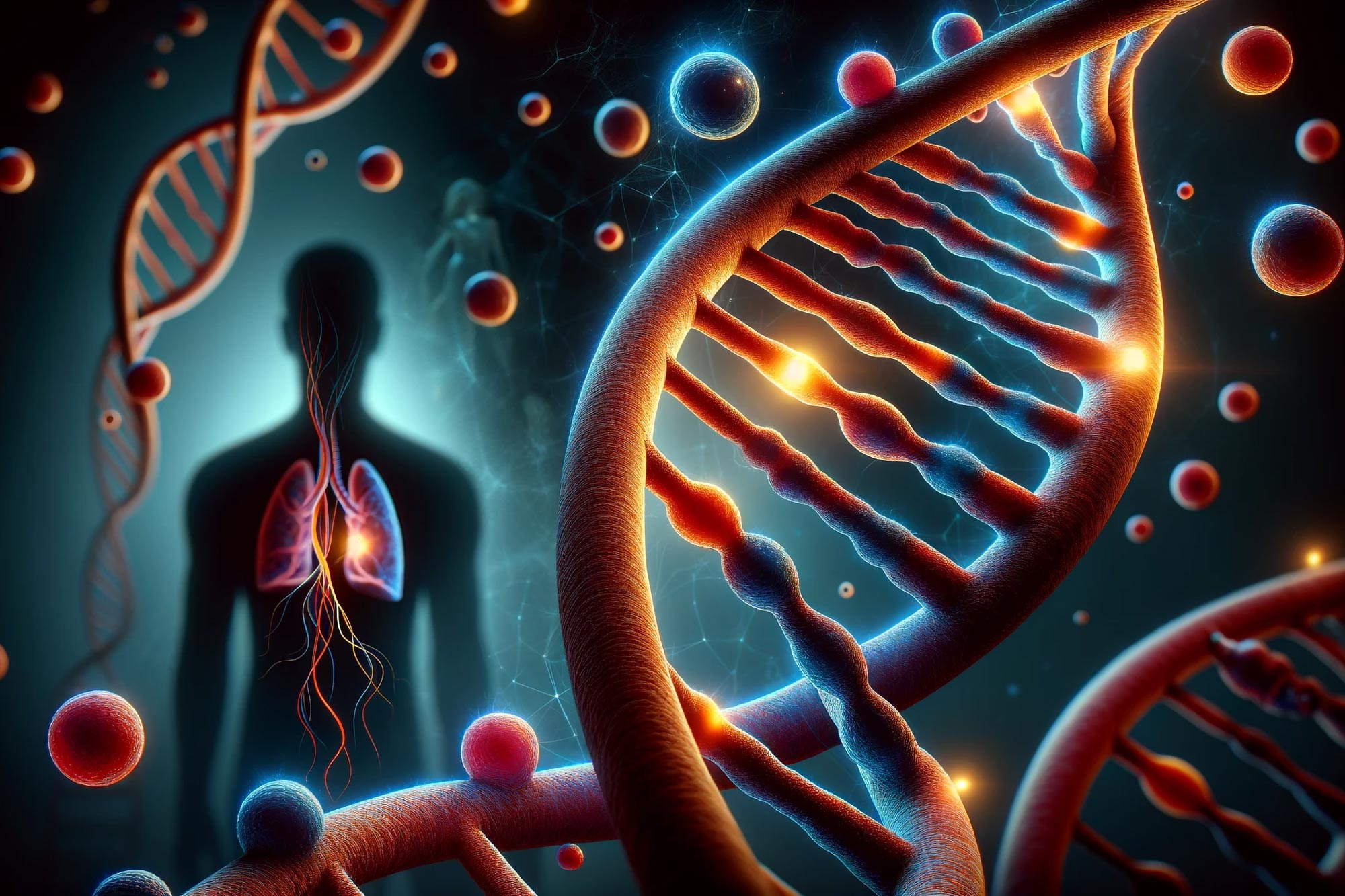
    Cancers of Epigenetic Origin Without DNA Mutation
    Researchers have discovered that cancer can originate solely from epigenetic changes, not just genetic mutations. This revelation, demonstrated through experiments with Drosophila, shows that induced epigenetic dysregulation can cause a permanent tumor state, challenging traditional views of cancer as primarily a genetic disease. Credit: SciTechDaily.com

    A new study reveals that cancer can develop purely from epigenetic changes, challenging the conventional belief that genetic mutations are necessary for the disease.

    A research team including scientists from the CNRS[1] has discovered that cancer, one of the leading causes of death worldwide, can be caused entirely by epigenetic changes,[2] in other words, changes that contribute to how gene expression is regulated, and partly explain why, despite an identical genome, an individual develops very different cells (neurons, skin cells, etc.)

    While studies have already described the influence of these processes in the development of cancer, this is the first time that scientists have demonstrated that genetic mutations are not essential for the onset of the disease.

    This discovery forces us to reconsider the theory that, for more than 30 years, has assumed that cancers are predominantly genetic diseases caused necessarily by DNA mutations that accumulate at the genome level.[3]
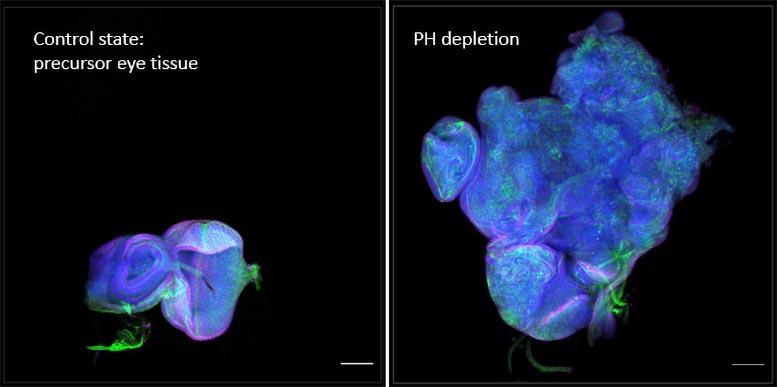
    Tumor Obtained by Reducing the Expression Levels of a Polycomb Protein
    Example of a tumor obtained by reducing the expression levels of a Polycomb protein. On the left is an example of precursor tissue of the eye during normal development. On the right, a tumor has been initiated by reducing the level of a Polycomb protein. DNA is stained blue. In green, a protein located at the end of the cells is labeled to visualize how cells organize in the tissue. Normal organization is lost in the tumor. Scale: 100 micrometers. Credit: © Giacomo Cavalli

    To show this, the research team focused on epigenetic factors that can alter gene activity. By causing epigenetic dysregulation[4] in Drosophila, and then restoring the cells to their normal state, scientists have found that part of the genome remains dysfunctional. This phenomenon induces a tumor state that is maintained autonomously and continues to progress, keeping in memory the cancerous status of these cells even though the signal that caused it has been restored.

    These conclusions, to be published on April 24, 2024, in the journal Nature, open up new therapeutic avenues in oncology.

    Notes

    1. Working at the Institut de Génétique Humaine (CNRS/Université de Montpellier).
    2. Epigenetics is the study of the mechanisms that allow the inheritance of different gene expression profiles in the presence of the same DNA sequence.
    3. The genome is defined as the set of genetic material – and therefore the entire DNA sequence – contained in a cell or organism.
    4. Scientists focused on epigenetic factors called Polycomb proteins, which regulate the expression of key genes, and are dysregulated in many human cancers. When these proteins are experimentally removed, the activity of the targeted genes is disrupted: some can activate their own transcription and self-maintain. When Polycomb proteins are integrated back into the cell, a subset of the genes are resistant to the proteins and remain dysregulated through cell division, allowing the cancer to continue its progression.

    Reference: “Transient loss of Polycomb components induces an epigenetic cancer fate” by V. Parreno, V. Loubiere, B. Schuettengruber, L. Fritsch, C. C. Rawal, M. Erokhin, B. Győrffy, D. Normanno, M. Di Stefano, J. Moreaux, N. L. Butova, I. Chiolo, D. Chetverina, A.-M. Martinez and G. Cavalli, 24 April 2024, Nature.
    DOI: 10.1038/s41586-024-07328-w

    Never miss a breakthrough: Join the SciTechDaily newsletter.
    Follow us on Google and Google News.

    Cancer CNRS Epigenetics Genetics Oncology Popular
    Share. Facebook Twitter Pinterest LinkedIn Email Reddit

    Related Articles

    Scientists Discover How To “Switch Off” Cancer Genes for Good

    New Discovery Exposes the Hidden Weak Spot Cancer Uses to Survive DNA Damage

    Concerning New Research Reveals Colon Cancer Is Skyrocketing in Adults Under 50

    Stanford Scientists Overturn Mendel’s Law With Shocking Cancer Discovery

    Mysterious Circular DNA Causes Cancer in Children – Surprising New Insights Into Cancer Genetics

    Neu5Gc Sugar is Related to the Appearance of Spontaneous Tumors in Humans

    Researchers Find a New Target to Treat a Wide Spectrum of Cancers

    BubR1 Protein Could Fight Cancer & Aging

    New Study Questions the Benefits of Mammograms

    2 Comments

    1. Hannah on April 26, 2024 7:59 am

      Curious as to why and how so many actual scientists would have presumed something like that for so long, seems to be the antithesis of science. No?

      Reply
      • Andrew Rudge on February 19, 2026 3:16 am

        I agree, but if they’ve nothing else to hang their hat on other than a hypothesis then they’ll keep on believing that until something better comes along.

        Reply
    Leave A Reply Cancel Reply

    • Facebook
    • Twitter
    • Pinterest
    • YouTube

    Don't Miss a Discovery

    Subscribe for the Latest in Science & Tech!

    Trending News

    New “Nanozyme Hypothesis” Could Rewrite the Story of Life’s Origins

    Anatomy Isn’t Finished: The Human Body Still Holds Secrets

    “Pretty Close to Home”: The Hidden Earthquake Threat Beneath Seattle

    The Surprising Reason You Might Want To Sleep Without a Pillow

    Scientists Say This Natural Hormone Reverses Obesity by Targeting the Brain

    35-Million-Year-Old Mystery: Strange Arachnid Discovered Preserved in Amber

    Is AI Really Just a Tool? It Could Be Altering How You See Reality

    JWST Reveals a “Forbidden” Planet With a Baffling Composition

    Follow SciTechDaily
    • Facebook
    • Twitter
    • YouTube
    • Pinterest
    • Newsletter
    • RSS
    SciTech News
    • Biology News
    • Chemistry News
    • Earth News
    • Health News
    • Physics News
    • Science News
    • Space News
    • Technology News
    Recent Posts
    • Scientists Freeze a Spinning Nanoparticle to Its Quantum Limit
    • A 100x Faster Breakthrough Could Fix Quantum Computers’ Biggest Problem
    • New Memory Chip Survives 1300°F, Hotter Than Lava
    • Scientists Unveil Microscopy Breakthrough That Reveals “Invisible” Molecular States
    • Scientists Finally Crack the Mystery of Water’s Strangest Behavior After Decades of Research
    Copyright © 1998 - 2026 SciTechDaily. All Rights Reserved.
    • Science News
    • About
    • Contact
    • Editorial Board
    • Privacy Policy
    • Terms of Use

    Type above and press Enter to search. Press Esc to cancel.