
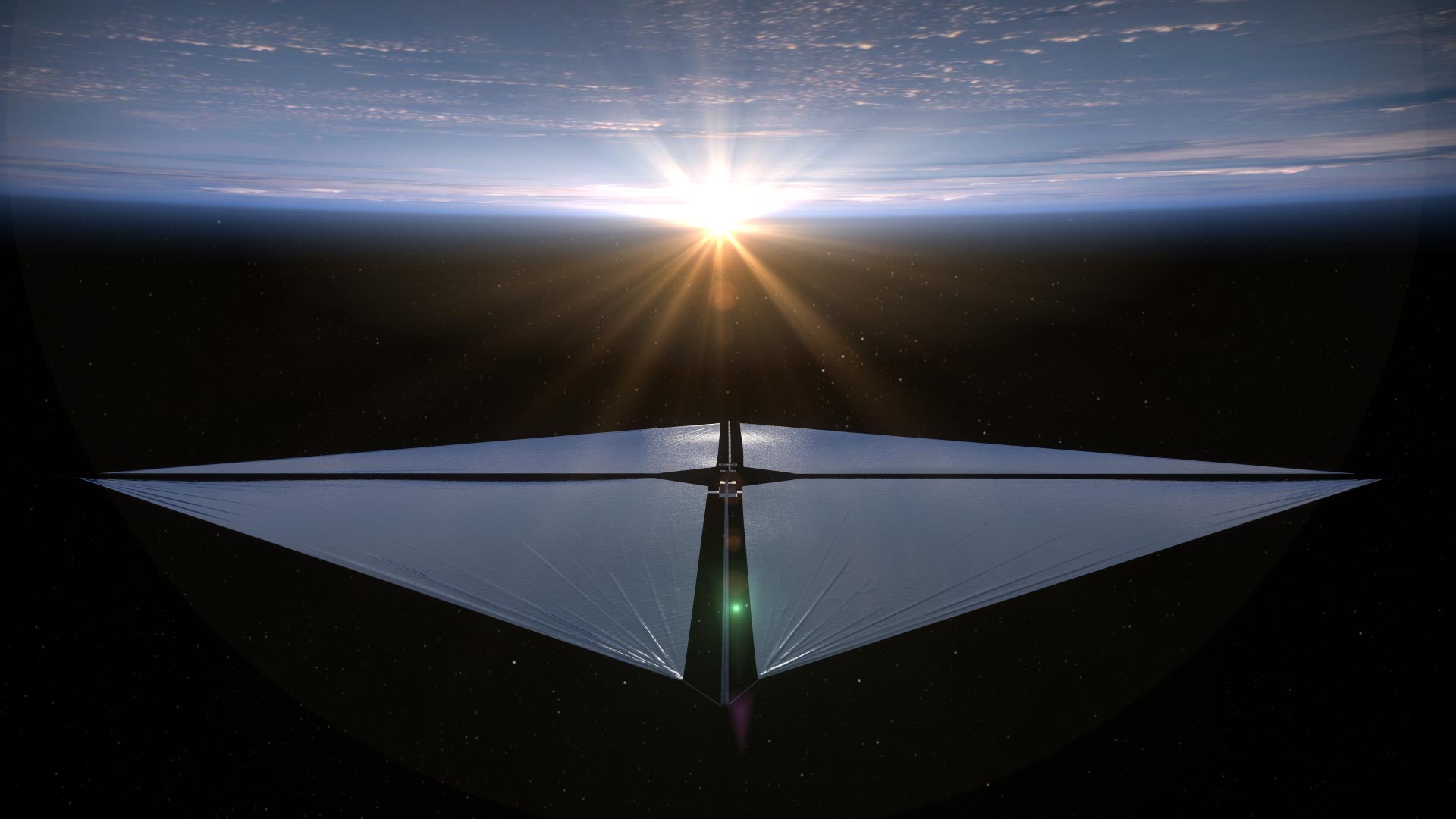
NASA’s Advanced Composite Solar Sail System Mission is on its way! The spacecraft lifted off from the launch pad aboard Rocket Lab’s Electron rocket at the company’s Launch Complex 1 in Māhia, New Zealand at 10:33 a.m. on April 24 New Zealand time.
The microwave oven-sized satellite is on its way to low Earth orbit to test its next-generation solar sail technology, using the power of sunlight as propulsion.
Solar Sail Technology
Sailing through space might sound like something out of science fiction, but the concept is no longer limited to books or the big screen. A next-generation solar sail technology – known as the Advanced Composite Solar Sail System – just launched aboard a Rocket Lab Electron rocket. The technology could advance future space travel and expand our understanding of our Sun and solar system.
Solar sails use the pressure of sunlight for propulsion, angling toward or away from the Sun so that photons bounce off the reflective sail to push a spacecraft. This eliminates heavy propulsion systems and could enable longer duration and lower-cost missions. Although mass is reduced, solar sails have been limited by the material and structure of the booms, which act much like a sailboat’s mast. But NASA is about to change the sailing game for the future.
NASA’s New Lightweight Sailor
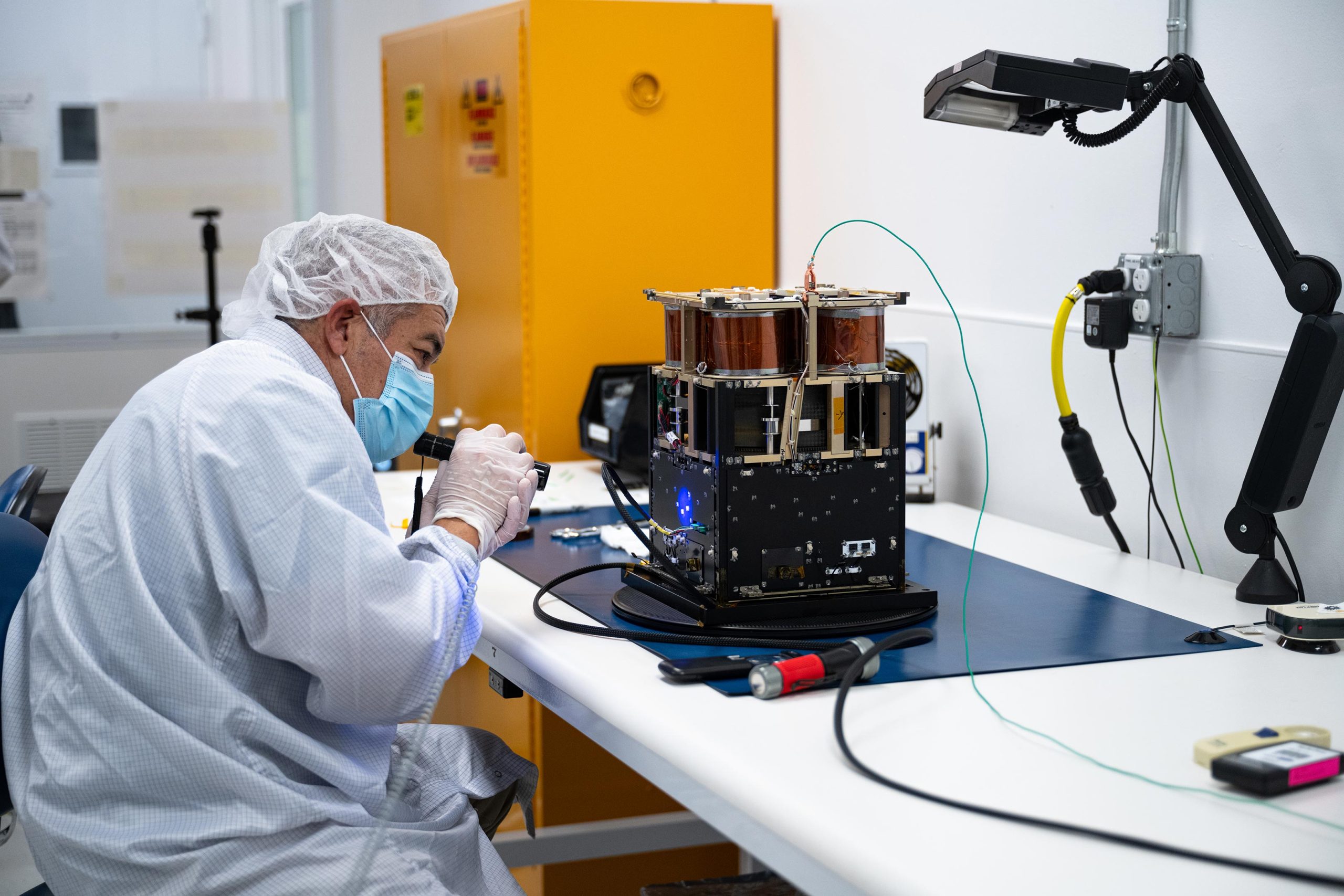
The Advanced Composite Solar Sail System demonstration uses a twelve-unit (12U) CubeSat built by NanoAvionics to test a new composite boom made from flexible polymer and carbon fiber materials that are stiffer and lighter than previous boom designs. The mission’s primary objective is to successfully demonstrate new boom deployment, but once deployed, the team also hopes to prove the sail’s performance.
Like a sailboat turning to capture the wind, the solar sail can adjust its orbit by angling its sail. After evaluating the boom deployment, the mission will test a series of maneuvers to change the spacecraft’s orbit and gather data for potential future missions with even larger sails.
“Booms have tended to be either heavy and metallic or made of lightweight composite with a bulky design – neither of which work well for today’s small spacecraft. Solar sails need very large, stable, and lightweight booms that can fold down compactly,” said Keats Wilkie, the mission’s principal investigator at NASA’s Langley Research Center in Hampton, Virginia. “This sail’s booms are tube-shaped and can be squashed flat and rolled like a tape measure into a small package while offering all the advantages of composite materials, like less bending and flexing during temperature changes.”
Deployment and Visibility of the Solar Sail
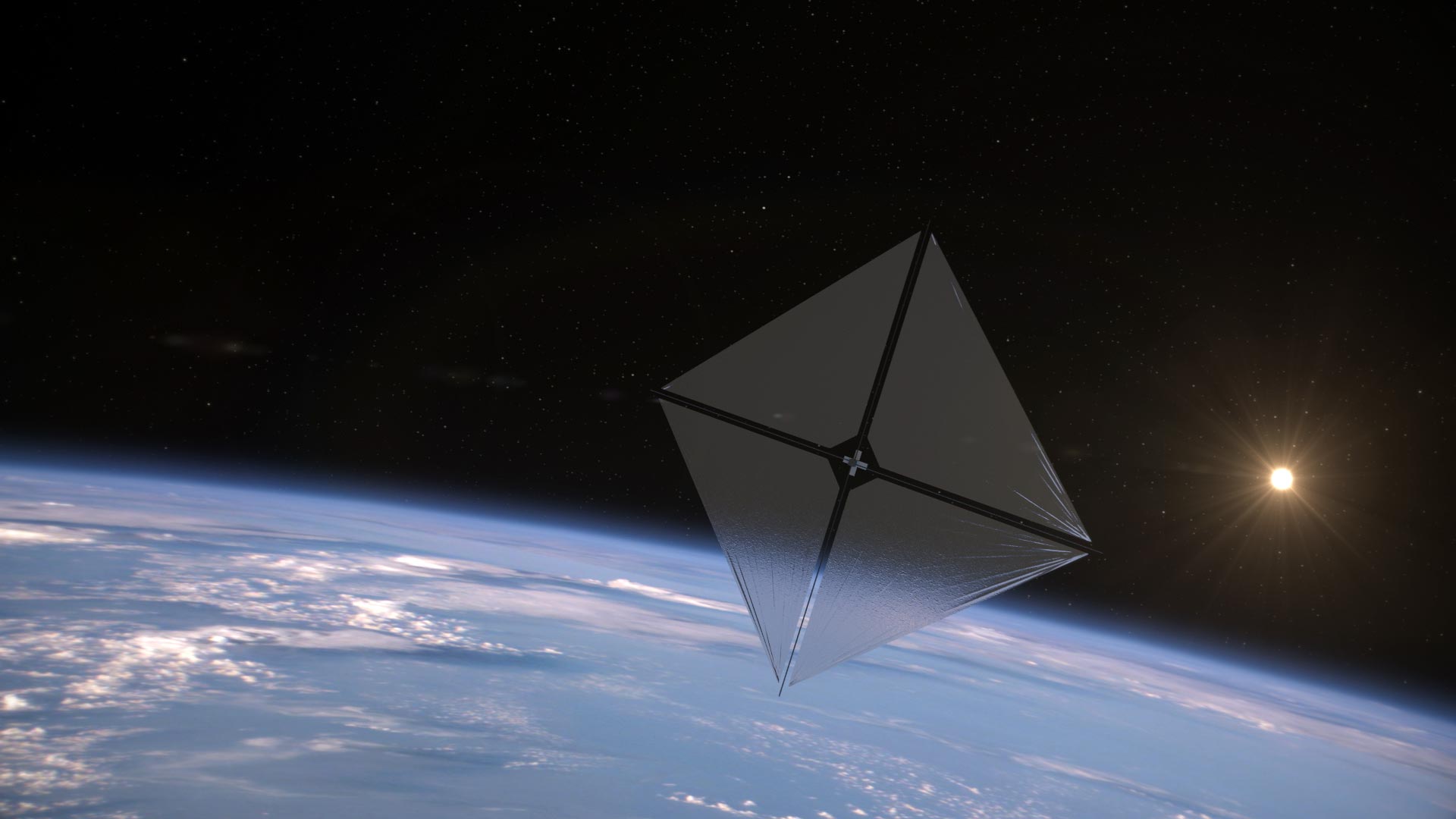
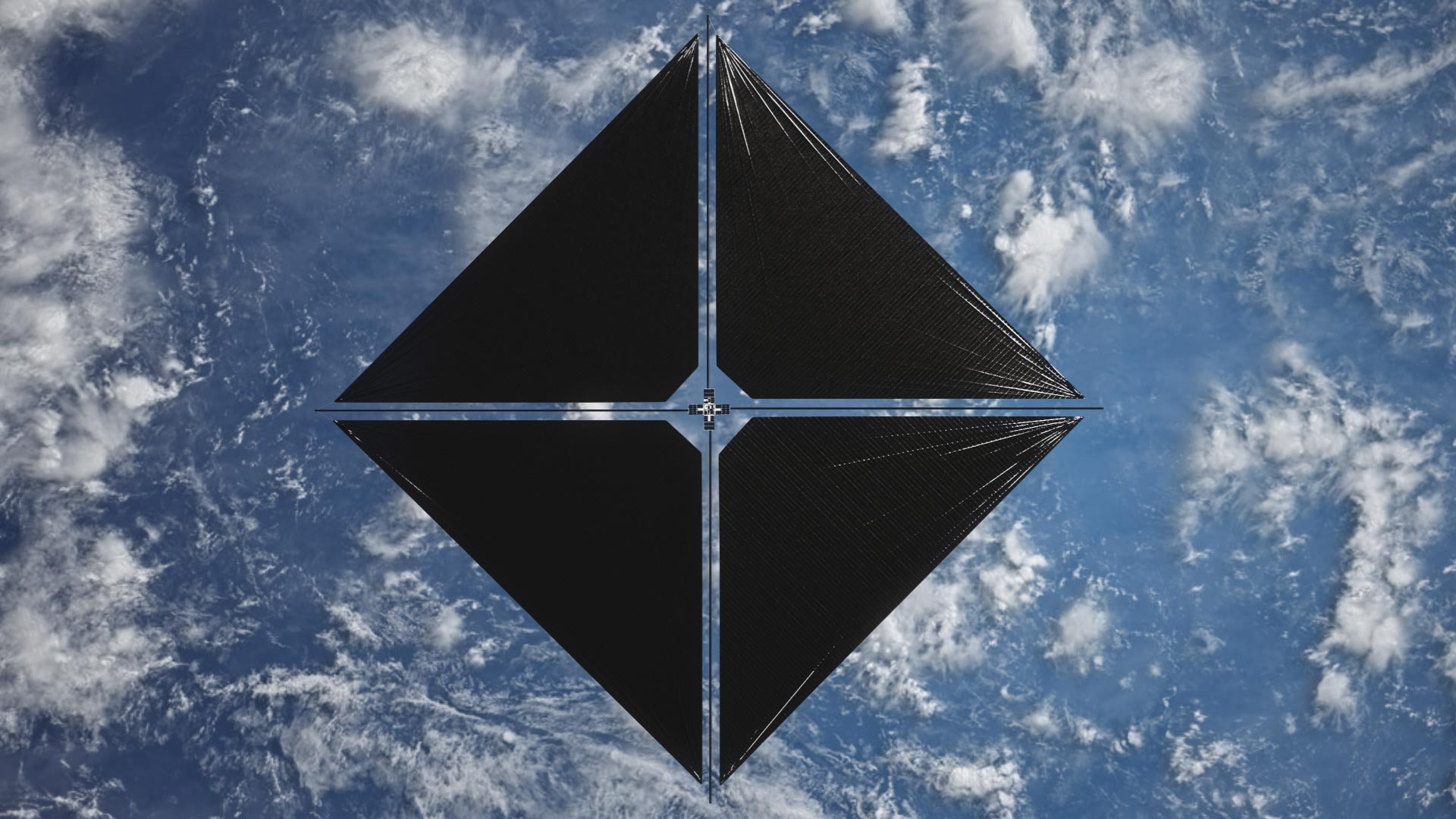
After reaching its Sun-synchronous orbit, about 600 miles (1,000 kilometers) above Earth, the spacecraft will begin unrolling its composite booms, which span the diagonals of the polymer sail. After approximately 25 minutes the solar sail will fully deploy, measuring about 860 square feet (80 square meters) – about the size of six parking spots. Spacecraft-mounted cameras will capture the sail’s big moment, monitoring its shape and symmetry during deployment.
With its large sail, the spacecraft may be visible from Earth if the lighting conditions are just right. Once fully expanded and at the proper orientation, the sail’s reflective material will be as bright as Sirius, the brightest star in the night sky.
“Seven meters of the deployable booms can roll up into a shape that fits in your hand,” said Alan Rhodes, the mission’s lead systems engineer at NASA’s Ames Research Center in California’s Silicon Valley. “The hope is that the new technologies verified on this spacecraft will inspire others to use them in ways we haven’t even considered.”
Enabling Future Innovations
Through NASA’s Small Spacecraft Technology program, successful deployment and operation of the solar sail’s lightweight composite booms will prove the capability and open the door to larger scale missions to the Moon, Mars, and beyond.
This boom design could potentially support future solar sails as large as 5,400 square feet (500 square meters), about the size of a basketball court, and technology resulting from the mission’s success could support sails of up to 21,500 square feet (2,000 square meters) – about half a soccer field.
“The Sun will continue burning for billions of years, so we have a limitless source of propulsion. Instead of launching massive fuel tanks for future missions, we can launch larger sails that use “fuel” already available,” said Rhodes. “We will demonstrate a system that uses this abundant resource to take those next giant steps in exploration and science.”
Because the sails use the power of the Sun, they can provide constant thrust to support missions that require unique vantage points, such as those that seek to understand our Sun and its impact on Earth. Solar sails have long been a desired capability for missions that could carry early warning systems for monitoring solar weather. Solar storms and coronal mass ejections can cause considerable damage on Earth, overloading power grids, disrupting radio communications, and affecting aircraft and spacecraft.
Composite booms might also have a future beyond solar sailing: the lightweight design and compact packing system could make them the perfect material for constructing habitats on the Moon and Mars, acting as framing structures for buildings or compact antenna poles to create a communications relay for astronauts exploring the lunar surface.
“This technology sparks the imagination, reimagining the whole idea of sailing and applying it to space travel,” said Rudy Aquilina, project manager of the solar sail mission at NASA Ames. “Demonstrating the abilities of solar sails and lightweight, composite booms is the next step in using this technology to inspire future missions.”
NASA Ames manages the Advanced Composite Solar Sail System project and designed and built the onboard camera diagnostic system. NASA Langley designed and built the deployable composite booms and solar sail system. NASA’s Small Spacecraft Technology (SST) program office based at NASA Ames and led by the agency’s Space Technology Mission Directorate (STMD), funds and manages the mission. NASA STMD’s Game Changing Development program developed the deployable composite boom technology. Rocket Lab USA, Inc of Long Beach, California is providing launch services. NanoAvionics is providing the spacecraft bus.
Never miss a breakthrough: Join the SciTechDaily newsletter.
Follow us on Google and Google News.