
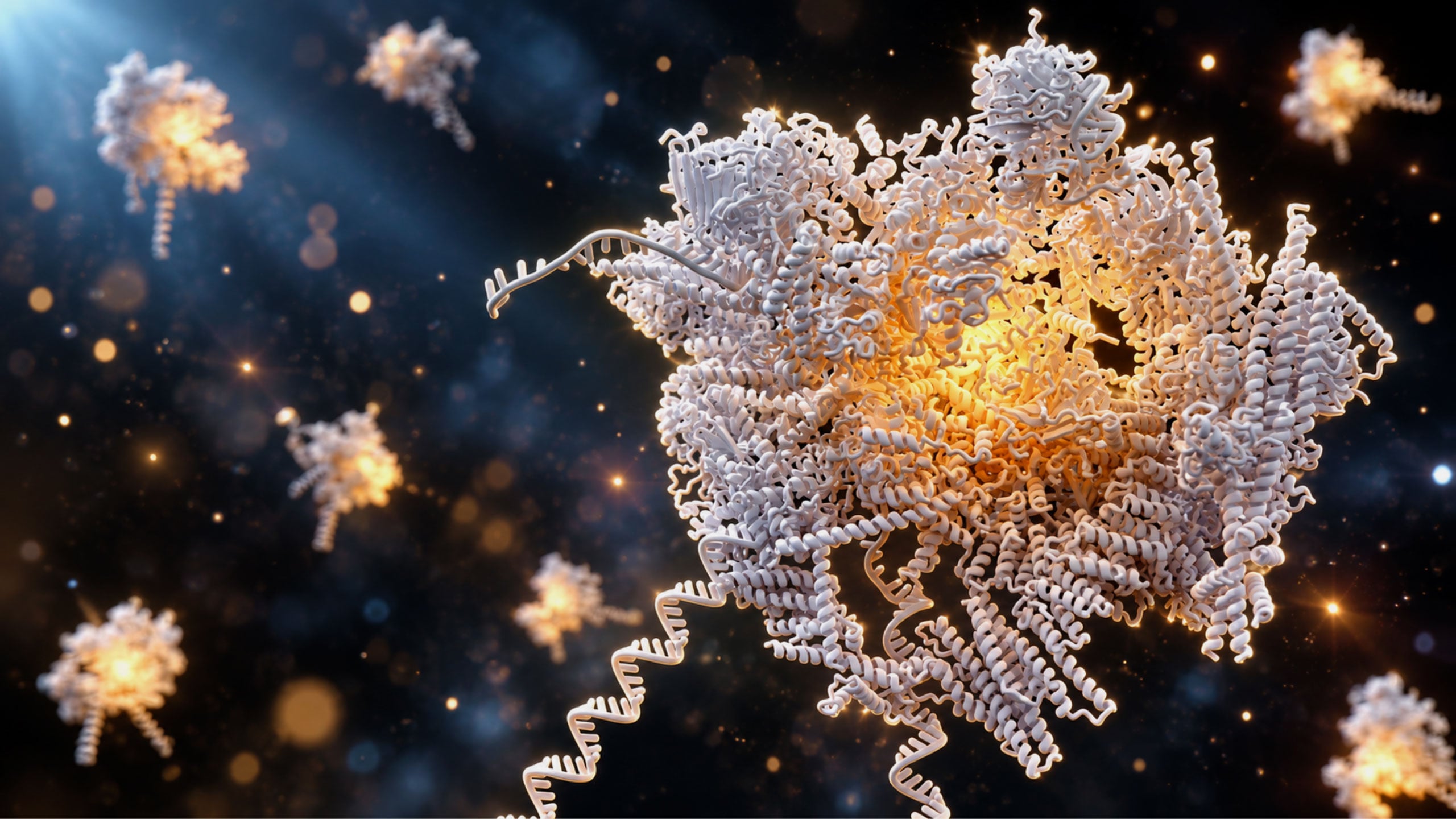
Researchers have visualized two key stages of RNA processing in parasites that cause diseases such as sleeping sickness, Chagas’ disease, and leishmaniasis.
For nearly 40 years, scientists have known that trypanosomatid parasites depend on an unusual system for processing RNA. Now researchers have captured that machinery at near-atomic resolution, showing how its components assemble and operate during a reaction the parasites need to survive.
The study, conducted by researchers at the University of Liège and Rockefeller University, reconstructed the three-dimensional architecture of the trans-spliceosome, a massive molecular machine that prepares genetic messages for use inside trypanosomatid cells. The structures also identify features that differ from the RNA processing machinery found in humans, providing a potential starting point for developing drugs that interfere selectively with the parasites.
Parasites With an Unusual Way of Processing RNA
Trypanosomatids include the organisms that cause leishmaniasis, sleeping sickness, and Chagas’ disease, illnesses that affect several million people worldwide. Available treatments can be limited by toxicity, incomplete effectiveness, and drug resistance. Related parasites also infect livestock and plants, contributing to agricultural and economic losses.
Like human cells, trypanosomatids copy genetic information from DNA into RNA before proteins can be produced. Newly made messenger RNA must first be processed. In conventional RNA splicing, cellular machinery removes segments called introns and joins the remaining RNA sequences together.
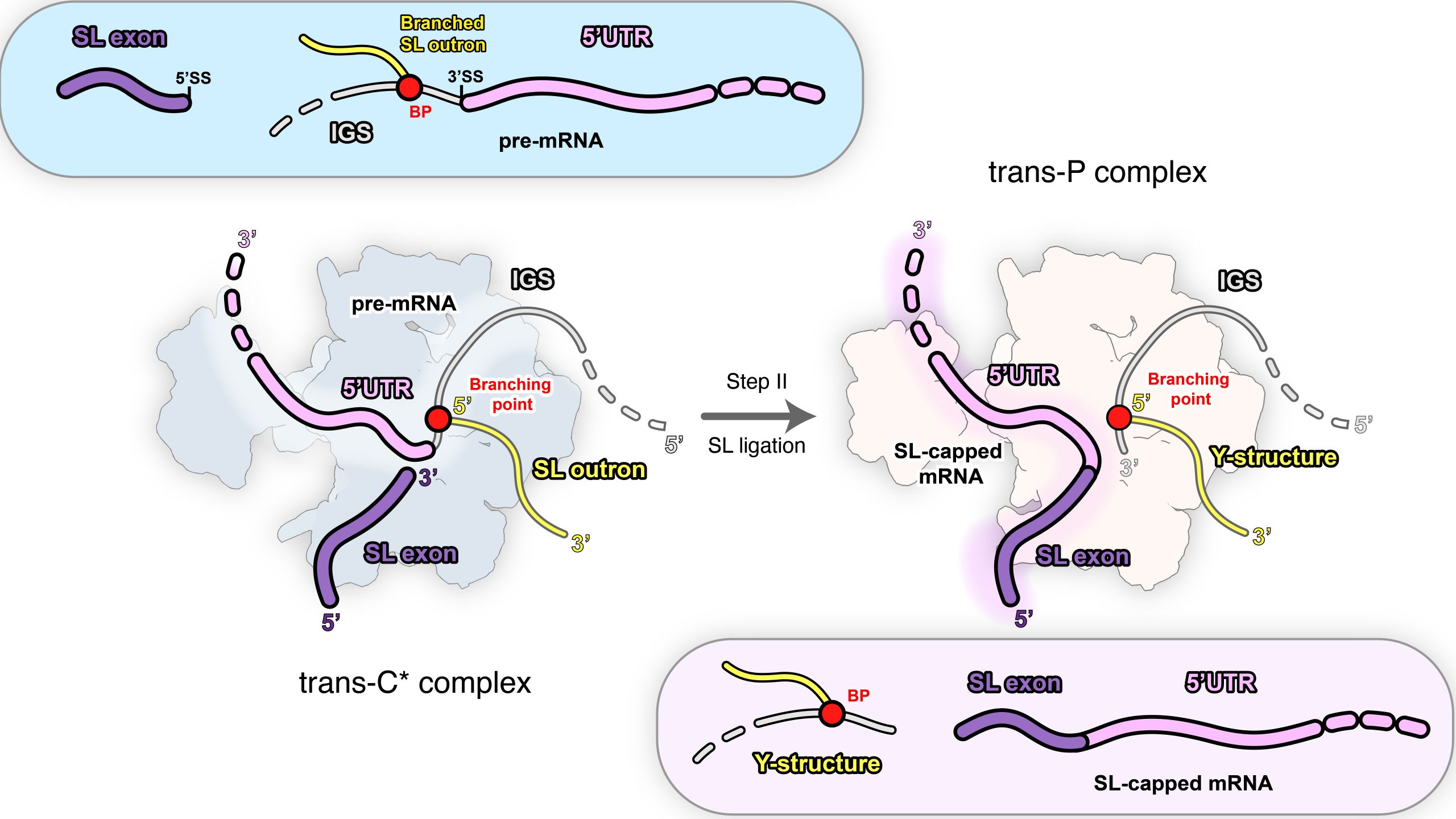
Trypanosomatids rely heavily on a different process. “Trypanosomatids use a very specific form of this process, known as Spliced Leader (SL) RNA trans-splicing,” explains Arnaud Vanden Broeck, a biologist heading the Laboratory of RNA Structural Biology and Biochemistry at the University of Liège.
“In these organisms, conventional intron splicing is extremely rare. Instead, virtually all of their messenger RNAs receive the same short RNA sequence, known as the SL RNA, at their 5’ end. This step is essential for the maturation of their RNAs and therefore for the functioning of their cells.”
Capturing the Trans-Spliceosome in Action
The trans-spliceosome carries out that RNA modification. Although scientists identified the machinery decades ago, its detailed organization and the coordination of its components had remained difficult to resolve.
“We didn’t know precisely how its various components were organized or how they worked together to carry out this reaction,” Vanden Broeck says. “To obtain high-resolution snapshots of this machine in action, we used cryogenic electron microscopy (cryo-EM), a technique that involves freezing molecules very rapidly and then reconstructing their three-dimensional structure from hundreds of thousands of images.”
Using cryo-EM, the researchers captured two consecutive stages of the reaction. One structure shows the point at which the SL RNA is attached to messenger RNA. The second captures the machinery immediately after that reaction has been completed.
A Molecular Machine With Parasite-Specific Parts
The reconstructions reveal how RNA molecules are positioned inside the trans-spliceosome and how the machine’s central components are arranged during the reaction. They also clarify the roles of several proteins found in trypanosomatids but absent from humans.
“Despite some similarities with the splicing machinery found in our own cells, the trans-spliceosome has numerous distinctive adaptations.”
Those adaptations show how an ancient form of RNA processing machinery has been remodeled in trypanosomatids to perform trans-splicing on a vast scale. Because the process is essential to the parasites and differs substantially from human RNA processing, some of its parasite-specific components could provide targets for future drug development. Identifying structural differences, however, is only an initial step toward determining whether particular molecules can be safely and effectively targeted.
A Structural Blueprint for Future Drug Research
The near-atomic structures provide researchers with a detailed molecular framework for studying how the trans-spliceosome works and how its individual components might be disrupted. Such structural information can help scientists identify binding sites and test compounds designed to interfere with proteins or RNA interactions unique to the parasite.
“Beyond advancing our fundamental understanding of the evolution of life, our study provides a concrete basis for designing molecules capable of specifically disrupting this machinery in parasites, while sparing human cells,” concludes Arnaud Vanden Broeck.
Reference: “Structural basis of step II spliced leader RNA trans-splicing in trypanosomatid parasites” by Théo Nadenoen, Franco Agustín Biglione, Marylène Vandevenne and Arnaud Vanden Broeck, 23 September 2026, Nature Communications.
DOI: 10.1038/s41467-026-77480-6
Never miss a breakthrough: Join the SciTechDaily newsletter.
Follow us on Google and Google News.