
Close Menu
    Facebook X (Twitter) Instagram
    SciTechDaily
    • Biology
    • Chemistry
    • Earth
    • Health
    • Physics
    • Science
    • Space
    • Technology
    Facebook X (Twitter) Pinterest YouTube RSS
    SciTechDaily
    Home»Biology»Genetic Predisposition to Severe COVID-19 Discovered by Russian Researchers
    Biology

    Genetic Predisposition to Severe COVID-19 Discovered by Russian Researchers

    By HSE UniversityFebruary 22, 20212 Comments3 Mins Read
    Facebook Twitter Pinterest Telegram LinkedIn WhatsApp Email Reddit
    Share
    Facebook Twitter LinkedIn Pinterest Telegram Email Reddit
    DNA COVID-19 Fingerprint Concept
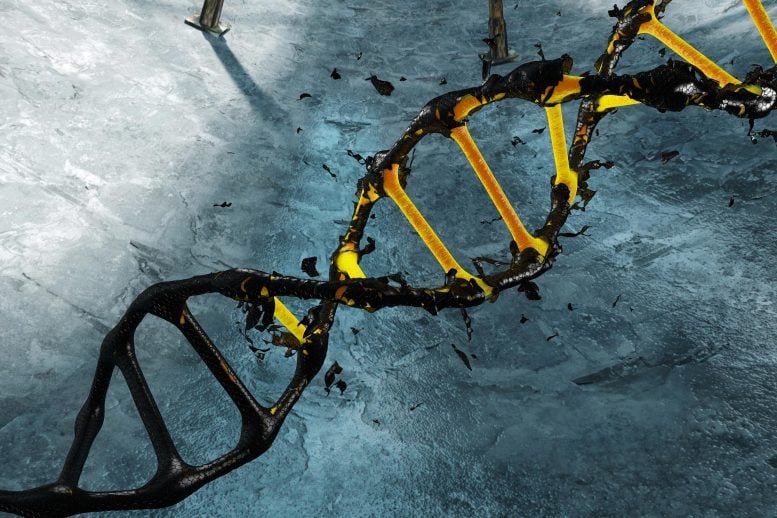
    Human leukocyte antigen class I (HLA-I) molecules, inherited from parents, influence virus detection. A proficient set prompts a fast immune response, while an inefficient set increases the likelihood of severe disease. Researchers explored the link between HLA-I genotype and COVID-19 severity.

    HSE University researchers have become the first in the world to discover genetic predisposition to severe COVID-19. The results of the study were published in the journal Frontiers in Immunology.

    T-cell immunity is one of the key mechanisms used by the human body to fight virus infections. The staging ground for cell immunity development is the presentation of virus peptides on the surface of infected cells. This is followed by activation of T lymphocytes, which start to kill the infected cells. The ability to successfully present virus peptides is largely determined by genetics. In human cells, human leukocyte antigen class I (HLA-I) molecules are responsible for this presentation. The set of six such molecules is unique in every human and is inherited from an individual’s parents. In simple terms, if the set of alleles detects the virus well, then the immune cells will detect and destroy the infected cells fast; if a person has a set that is bad at such detection, a more severe case of disease is more likely to be observed.
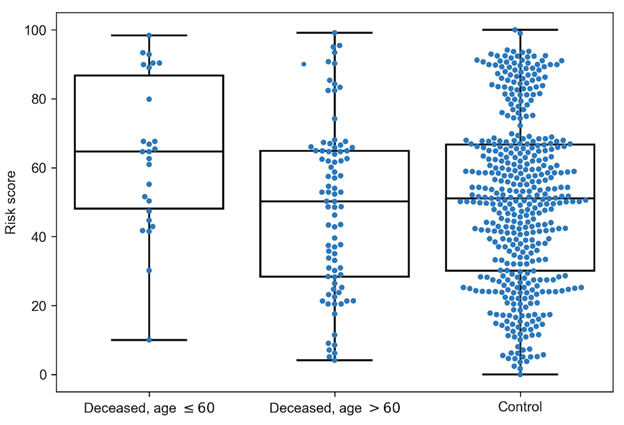
    Risk Score in Sample of Patients From Moscow
    The risk score suggested by the researchers (vertical axis) is considerably higher in the group of patients suffering severe COVID-19 (sample of patients from Moscow). Credit: S. Nersisyan et al.

    Researchers from the HSE Faculty of Biology and Biotechnology — Maxim Shkurnikov, Stepan Nersisyan, Alexei Galatenko and Alexander Tonevitsky — together with colleagues from Pirogov Russian National Research Medical University and Filatov City Clinical Hospital (Tatjana Jankevic, Ivan Gordeev, Valery Vechorko) studied the interconnection between HLA-I genotype and the severity of COVID-19.

    Using machine learning, they built a model that provides an integral assessment of the possible power of T-cell immune response to COVID-19: if the set of HLA-I alleles allows for effective presentation of the SARS-CoV-2 virus peptides, those individuals received low risk score, while people with lower presentation capability received higher risk scores (in the range from 0 to 100). To validate the model, genotypes of over 100 patients who had suffered from COVID-19 and over 400 healthy people (the control group) were analyzed. It turned out that the modeled risk score is highly effective in predicting the severity of COVID-19.
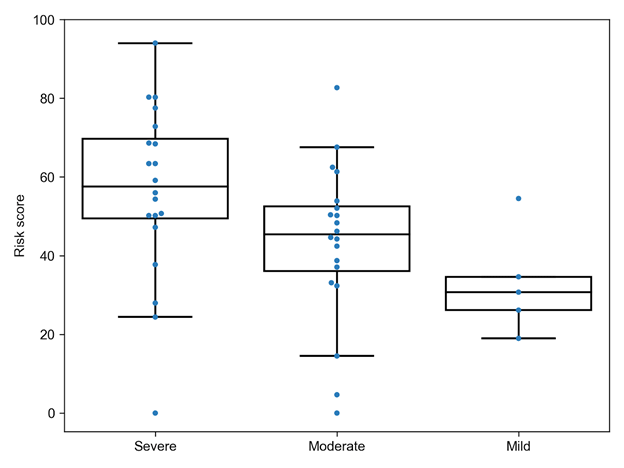
    Risk Score in Sample of Patients From Spain
    Risk score in a sample of patients from Spain. Credit: S. Nersisyan et al.

    In addition to analyzing the Moscow population, the researchers used their model on a sample of patients from Madrid, Spain. The high precision of prediction was confirmed on this independent sample as well: the risk score of patients suffering severe COVID-19 was significantly higher than in patients with moderate and mild cases of the disease.

    “In addition to the discovered correlations between the genotype and COVID-19 severity, the suggested approach also helps to evaluate how a certain COVID-19 mutation can affect the development of T-cell immunity to the virus. For example, we will be able to detect groups of patients for whom infection with new strains of SARS-CoV-2 can lead to more severe forms of the disease,” Alexander Tonevitsky said.

    Reference: “Association of HLA Class I Genotypes With Severity of Coronavirus Disease-19” by Maxim Shkurnikov, Stepan Nersisyan, Tatjana Jankevic, Alexei Galatenko, Ivan Gordeev, Valery Vechorko and Alexander Tonevitsky, 23 February 2021, Frontiers in Immunology.
    DOI: 10.3389/fimmu.2021.641900

    Never miss a breakthrough: Join the SciTechDaily newsletter.
    Follow us on Google and Google News.

    COVID-19 Genetics Immunology Infectious Diseases Machine Learning Microbiology Molecular Biology Popular
    Share. Facebook Twitter Pinterest LinkedIn Email Reddit

    Related Articles

    Watching SARS-CoV-2 Spread in Animal Models in Real Time Using New “Reporter Viruses”

    Novel Coronavirus Discovered in British Bats – Related to the Virus That Causes COVID-19

    Structural Changes Identified in COVID Alpha and Beta Variants – Suggests Need for Updated Vaccine Booster

    Probiotic Protection? Gut Bacteria Discovered That Protects the Intestine From Invasion of the COVID-19 Virus

    New Discovery Helps Explain How COVID-19 Overpowers the Immune System

    New $2 Test Can Accurately Detect COVID-19 Antibodies in a Drop of Blood in Less Than an Hour

    Genetic Comparison of 24 Coronaviruses – Including SARS-CoV-2 Viruses From the U.S. and China – Yields Clues to COVID-19 Treatments

    DNA May Not Be the Blueprint for Life – Just a Scrambled List of Ingredients

    COVID-19 Treatment May Lie in Pangolin Genetics – May Possess Evolutionary Advantage Against Coronavirus

    2 Comments

    1. Mike Hall on April 29, 2021 2:21 am

      This research is very interesting!

      Maybe they could contact the company 24Genetics in Spain to make a synergy, as I know that they are carrying out a genetic research of predisposition to Covid… According to Nacho Esteban (24Genetics): “There is a correlation between the mutations of some genes and how covid-19 develops”.
      24Genetics, specialized in genetic testing and DNA testing and directed by this man from Pontevedra, collaborates with the international consortium Covid-19 HGI.

      I have left this information, because in these times you have to join forces!

      Thank you for all the efforts you make in research.

      Reply
    2. Answerswouldbe nice on April 7, 2022 9:23 am

      What about long covid with autism spectrum people? Specifically ONLY LONG COVID smell and taste issues, not the rest of the symptoms? I know 5 people on the spectrum with long covid smell and taste issues, and its been OVER A YEAR, not getting any better. Nothing is working.. and they all complain of the SAME SMELLS SMELLING WEIRD.. SAME FOODS< SAME SCENTS>> ALL SPECTRUM PEOPLE.

      Reply
    Leave A Reply Cancel Reply

    • Facebook
    • Twitter
    • Pinterest
    • YouTube

    Don't Miss a Discovery

    Subscribe for the Latest in Science & Tech!

    Trending News

    Largest-Ever Study Finds Medicinal Cannabis Ineffective for Anxiety, Depression, PTSD

    250-Million-Year-Old Egg Solves One of Evolution’s Biggest Mysteries

    Living With Roommates Might Be Changing Your Gut Microbiome Without You Knowing

    Century-Old Cleaning Chemical Linked to 500% Increased Risk of Parkinson’s Disease

    What if Your Memories Never Happened? Physicists Take a New Look at the Boltzmann Brain Paradox

    One of the Universe’s Largest Stars May Be Getting Ready To Explode

    Scientists Discover Enzyme That Could Supercharge Ozempic-Like Weight Loss Drugs

    Popular Sweetener Linked to DNA Damage – “It’s Something You Should Not Be Eating”

    Follow SciTechDaily
    • Facebook
    • Twitter
    • YouTube
    • Pinterest
    • Newsletter
    • RSS
    SciTech News
    • Biology News
    • Chemistry News
    • Earth News
    • Health News
    • Physics News
    • Science News
    • Space News
    • Technology News
    Recent Posts
    • Challenging the Narrative: New Study Shows U.S. Life Expectancy Is Rising Across All States
    • Mystery Illness Kills 5 in Burundi As Doctors Scramble for Answers
    • Bone-Strengthening Discovery Could Reverse Osteoporosis
    • The Most Elusive Number in Physics Just Got Even More Mysterious
    • Scientists Uncover Hidden Trigger Behind Stem Cell Aging
    Copyright © 1998 - 2026 SciTechDaily. All Rights Reserved.
    • Science News
    • About
    • Contact
    • Editorial Board
    • Privacy Policy
    • Terms of Use

    Type above and press Enter to search. Press Esc to cancel.