
Close Menu
    Facebook X (Twitter) Instagram
    SciTechDaily
    • Biology
    • Chemistry
    • Earth
    • Health
    • Physics
    • Science
    • Space
    • Technology
    Facebook X (Twitter) Pinterest YouTube RSS
    SciTechDaily
    Home»Chemistry»New Dye Molecule Constructed for Visualizing Stress in Plastics
    Chemistry

    New Dye Molecule Constructed for Visualizing Stress in Plastics

    By Chemnitz University of TechnologyAugust 15, 2021No Comments3 Mins Read
    Facebook Twitter Pinterest Telegram LinkedIn WhatsApp Email Reddit
    Share
    Facebook Twitter LinkedIn Pinterest Telegram Email Reddit
    Visualizing Stress in Plastics
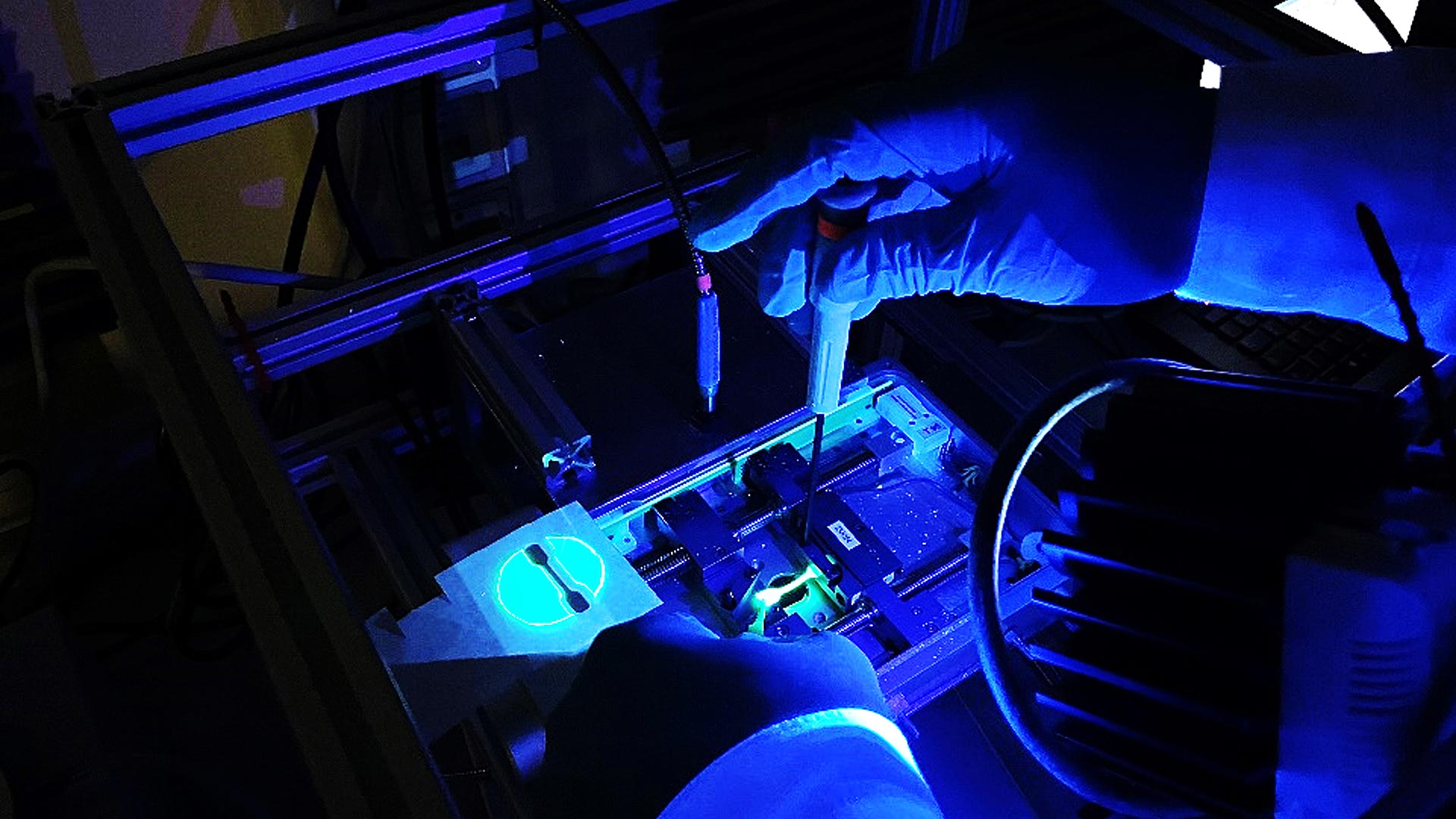
    The developed dye shows stress of different magnitudes in plastic components. Whether this works was investigated using mechanical experiments on test specimens containing the dye. Credit: Maximilian Raisch (Professorship of Polymer Chemistry at Chemnitz University of Technology)

    Research team led by Chemnitz University of Technology develops dyes that continuously translate stress plastics by changing color.

    A research team led by Prof. Dr. Michael Sommer, Professorship of Polymer Chemistry at Chemnitz University of Technology, and PD Dr. Michael Walter, project leader at the Cluster Of Excellence Living, Adaptive, and Energy-autonomous Materials Systems (livMatS) at the University of Freiburg, has succeeded in constructing a new dye molecule from the area of so-called mechanophores.

    Thanks to this molecule, the stress of different magnitudes in plastic components can be visualized continuously by color changes. The concept of such dyes is not new, but most previous mechanophores were able to only indicate the presence or absence of stress in plastics. The current research now allows differentiation between stresses of different magnitudes. This adds up to great advantages whenever it is important to map stress distributions in macroscopic plastic components to monitor the integrity of the material at all times. The research team is now one step further to developing this effective form of deformation and damage analysis, bringing it closer to practical applications.

    The results of the study were published in the journal Nature Communications on July 9, 2021.

    Molecular spring shows the strength of the load in terms of color

    As the researchers report in their publication, by combining a molecularly designed dye with a suitable and, above all, non-brittle plastic, macroscopic forces can now be brought down to the molecular scale. These acting forces can be, for example, external pressure or tension.

    The dye molecule thus “feels” the force acting within the plastic components and continues to indicate changes in force by increasing changes in color. If the external load is taken off, the dye molecule returns into its original state. This is why this dye is termed a “molecular spring” – it stretches and “springs” – depending on external tension.

    Compared to existing molecular switches that translate stress in plastics by changing color, the advantages here clearly lie in the stepless mapping of forces of different magnitudes as well as the spring-like behavior of the molecule, which can thus be used again and again.

    Better mechanical properties — better understanding and applying damping 

    “This is a bold step towards directly visualizing external residual stresses of plastics with simple analytical methods, which is of great help for the further development of materials with improved mechanical properties made by, for example, 3D printing,” summarizes Prof. Michael Sommer.

    But it could also allow a more fundamental understanding of damping properties of synthetic materials and natural systems: For example, there are large and heavy fruits that fall from trees from large heights but remain undamaged. Nature serves as a model here, and molecular springs could help to better understand and imitate such systems.

    Future efforts will therefore focus on adapting molecular force springs for use in various plastics. This will require joint efforts with other research groups and the use of computer-assisted methods.

    Reference: “A mechanochromic donor-acceptor torsional spring” by Maximilian Raisch, Wafa Maftuhin, Michael Walter and Michael Sommer, 9 July 2021, Nature Communications.
    DOI: 10.1038/s41467-021-24501-1

    Never miss a breakthrough: Join the SciTechDaily newsletter.
    Follow us on Google and Google News.

    Plastic Polymers
    Share. Facebook Twitter Pinterest LinkedIn Email Reddit

    Related Articles

    Solving the Plastic Shortage With an Efficient New Chemical Catalyst

    Microbes in Cow Stomachs Can Break Down Plastic – Sustainable Way to Reduce Plastic Litter

    Worrying New Insights Into the Chemicals in Plastics – Significant Risk to People and the Environment

    Making Cleaner, Greener, Biodegradable Plastics From Waste Fish Parts

    Discovery of a New Molecule Advances Route to Chemically Recyclable Plastics

    Bacterial Strain Uncovered for Producing Bioplastics From Sewage Sludge and Wastewater

    New Recycling Process Could Cut Down on Millions of Tons of Plastic Waste

    A Sustainable Alternative to Crude Oil: Bio-Based High-Performance Polyamide

    Scientists Turn Plastic Waste Into Valuable Chemicals With Sunlight

    Leave A Reply Cancel Reply

    • Facebook
    • Twitter
    • Pinterest
    • YouTube

    Don't Miss a Discovery

    Subscribe for the Latest in Science & Tech!

    Trending News

    Artificial Sweeteners May Harm Future Generations, Study Suggests

    Splashdown! NASA Artemis II Returns From Record-Breaking Moon Mission

    What If Consciousness Exists Beyond Your Brain

    Scientists Finally Crack the 100-Million-Year Evolutionary Mystery of Squid and Cuttlefish

    Beyond “Safe Levels”: Study Challenges What We Know About Pesticides and Cancer

    Researchers Have Found a Dietary Compound That Increases Longevity

    Scientists Baffled by Bizarre “Living Fossil” From 275 Million Years Ago

    Your IQ at 23 Could Predict Your Wealth at 27, Study Finds

    Follow SciTechDaily
    • Facebook
    • Twitter
    • YouTube
    • Pinterest
    • Newsletter
    • RSS
    SciTech News
    • Biology News
    • Chemistry News
    • Earth News
    • Health News
    • Physics News
    • Science News
    • Space News
    • Technology News
    Recent Posts
    • Scientists Discover New Way To Make Protein Shakes Taste Better
    • Scientists Break Optical Limits With Quantum Dot-Powered Nanoscopy
    • Scientists Shrink a Lab Spectrometer to the Size of a Grain of Sand
    • Quantum Reality Gets Stranger: Physicists Put a Lump of Metal in Two Places at Once
    • 34-Million-Year-Old Snake Found in Wyoming Rewrites Our Understanding of Evolution
    Copyright © 1998 - 2026 SciTechDaily. All Rights Reserved.
    • Science News
    • About
    • Contact
    • Editorial Board
    • Privacy Policy
    • Terms of Use

    Type above and press Enter to search. Press Esc to cancel.