Close Menu
    Facebook X (Twitter) Instagram
    SciTechDaily
    • Biology
    • Chemistry
    • Earth
    • Health
    • Physics
    • Science
    • Space
    • Technology
    Facebook X (Twitter) Pinterest YouTube RSS
    SciTechDaily
    Home»Space»Webb Space Telescope Reveals “Mind-Blowing” Structure in 19 Nearby Spiral Galaxies
    Space

    Webb Space Telescope Reveals “Mind-Blowing” Structure in 19 Nearby Spiral Galaxies

    By Space Telescope Science InstituteFebruary 7, 20241 Comment8 Mins Read
    Facebook Twitter Pinterest Telegram LinkedIn WhatsApp Email Reddit
    Share
    Facebook Twitter LinkedIn Pinterest Telegram Email Reddit
    Webb’s Stunning Collection of 19 Face-On Spiral Galaxies
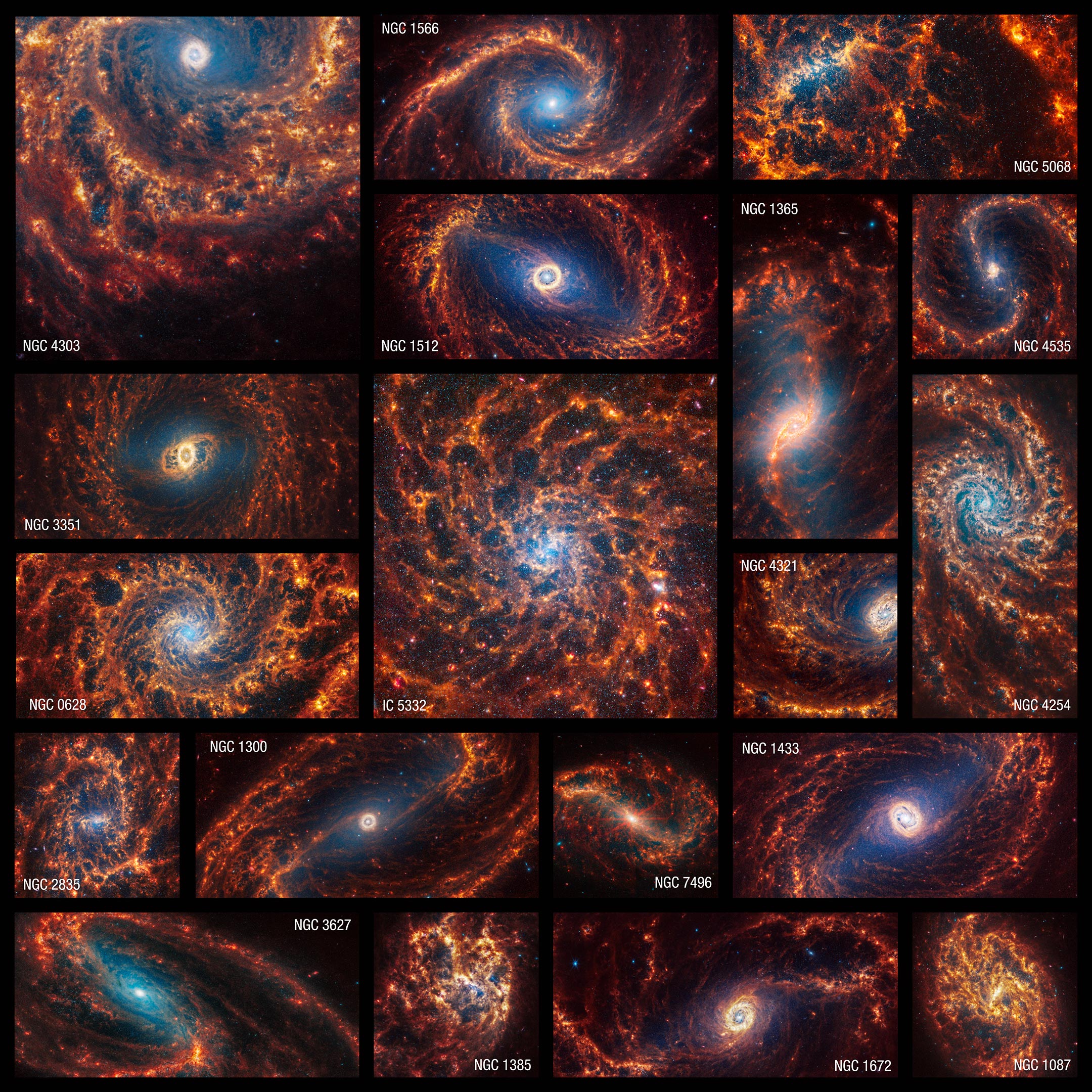
    This collection of 19 face-on spiral galaxies from the James Webb Space Telescope in near- and mid-infrared light is at once overwhelming and awe-inspiring. “Webb’s new images are extraordinary,” said Janice Lee, a project scientist for strategic initiatives at the Space Telescope Science Institute in Baltimore, Maryland. “They’re mind-blowing even for researchers who have studied these same galaxies for decades. Bubbles and filaments are resolved down to the smallest scales ever observed, and tell a story about the star formation cycle.” Credit: NASA, ESA, CSA, STScI, Janice Lee (STScI), Thomas Williams (Oxford), PHANGS Team, Elizabeth Wheatley (STScI)

    A new treasure trove of Webb images has arrived! Near- and mid-infrared images show off every facet of these face-on spiral galaxies.

    Humanity has spent centuries mapping Earth’s features – and we frequently repeat the process by using more advanced instruments. When we combine the data, we get a more complete understanding of our planet.

    Now, look outward into space. Astronomers have observed nearby, face-on spiral galaxies for decades. Both space- and ground-based telescopes have contributed to a cache of data in wavelengths from radio to ultraviolet light. Astronomers have long planned to use NASA’s James Webb Space Telescope to obtain the highest resolution near- and mid-infrared images ever taken of these galaxies, and today they are publicly available.

    Everyone can explore Webb’s newest set of exquisite images, which show stars, gas, and dust on small scales beyond our own galaxy. Teams of researchers are studying these images to uncover the origins of these intricate structures. The research community’s collective analysis will ultimately inform theorists’ simulations, and advance our understanding of star formation and the evolution of spiral galaxies.
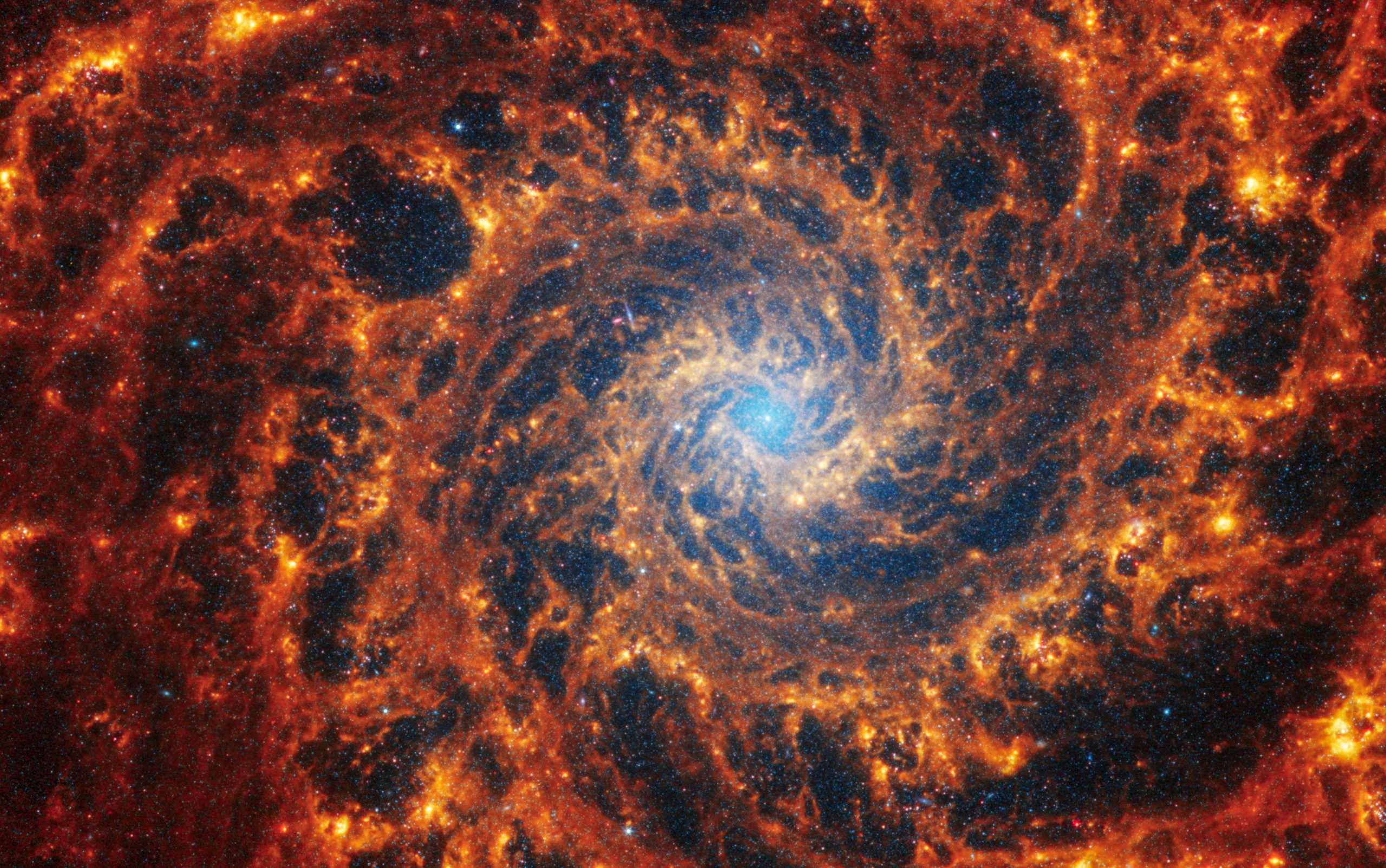
    Webb Spiral Galaxy NGC 628
    James Webb Space Telescope’s observation of Face-on spiral galaxy, NGC 628. Credit: NASA, ESA, CSA, STScI, Janice Lee (STScI), Thomas Williams (Oxford), PHANGS Team

    Webb Space Telescope Depicts Staggering Structure in 19 Nearby Spiral Galaxies

    It’s oh-so-easy to be absolutely mesmerized by these spiral galaxies. Follow their clearly defined arms, which are brimming with stars, to their centers, where there may be old star clusters and – sometimes – active supermassive black holes. Only NASA’s James Webb Space Telescope can deliver highly detailed scenes of nearby galaxies in a combination of near- and mid-infrared light – and a set of these images was publicly released today.

    These Webb images are part of a large, long-standing project, the Physics at High Angular resolution in Nearby GalaxieS (PHANGS) program, which is supported by more than 150 astronomers worldwide. Before Webb took these images, PHANGS was already brimming with data from NASA’s Hubble Space Telescope, the Very Large Telescope’s Multi-Unit Spectroscopic Explorer, and the Atacama Large Millimeter/submillimeter Array, including observations in ultraviolet, visible, and radio light. Webb’s near- and mid-infrared contributions have provided several new puzzle pieces.

    “Webb’s new images are extraordinary,” said Janice Lee, a project scientist for strategic initiatives at the Space Telescope Science Institute in Baltimore. “They’re mind-blowing even for researchers who have studied these same galaxies for decades. Bubbles and filaments are resolved down to the smallest scales ever observed, and tell a story about the star formation cycle.”

    Excitement rapidly spread throughout the team as the Webb images flooded in. “I feel like our team lives in a constant state of being overwhelmed – in a positive way – by the amount of detail in these images,” added Thomas Williams, a postdoctoral researcher at the University of Oxford in the United Kingdom.

    Follow the Spiral Arms

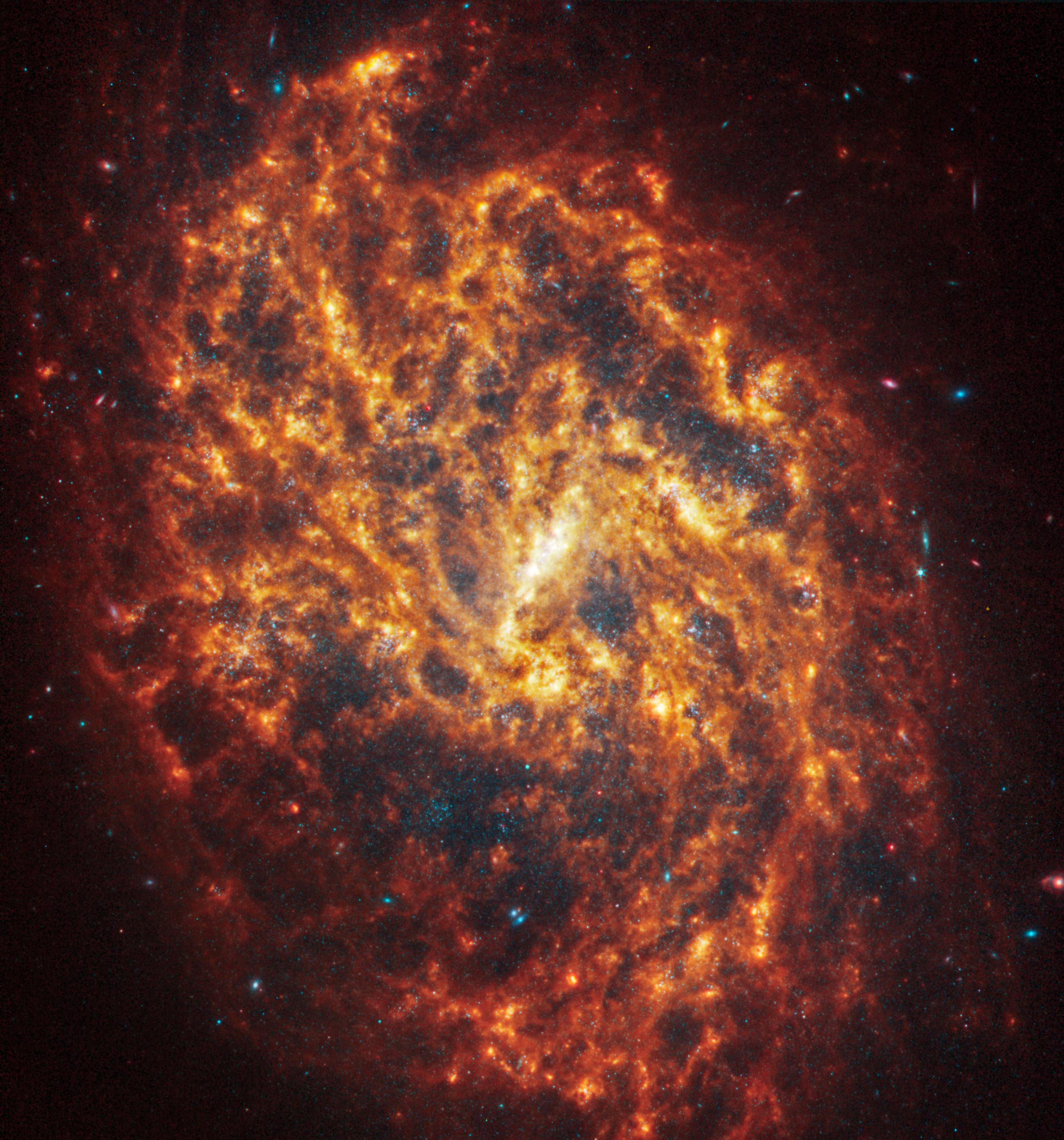
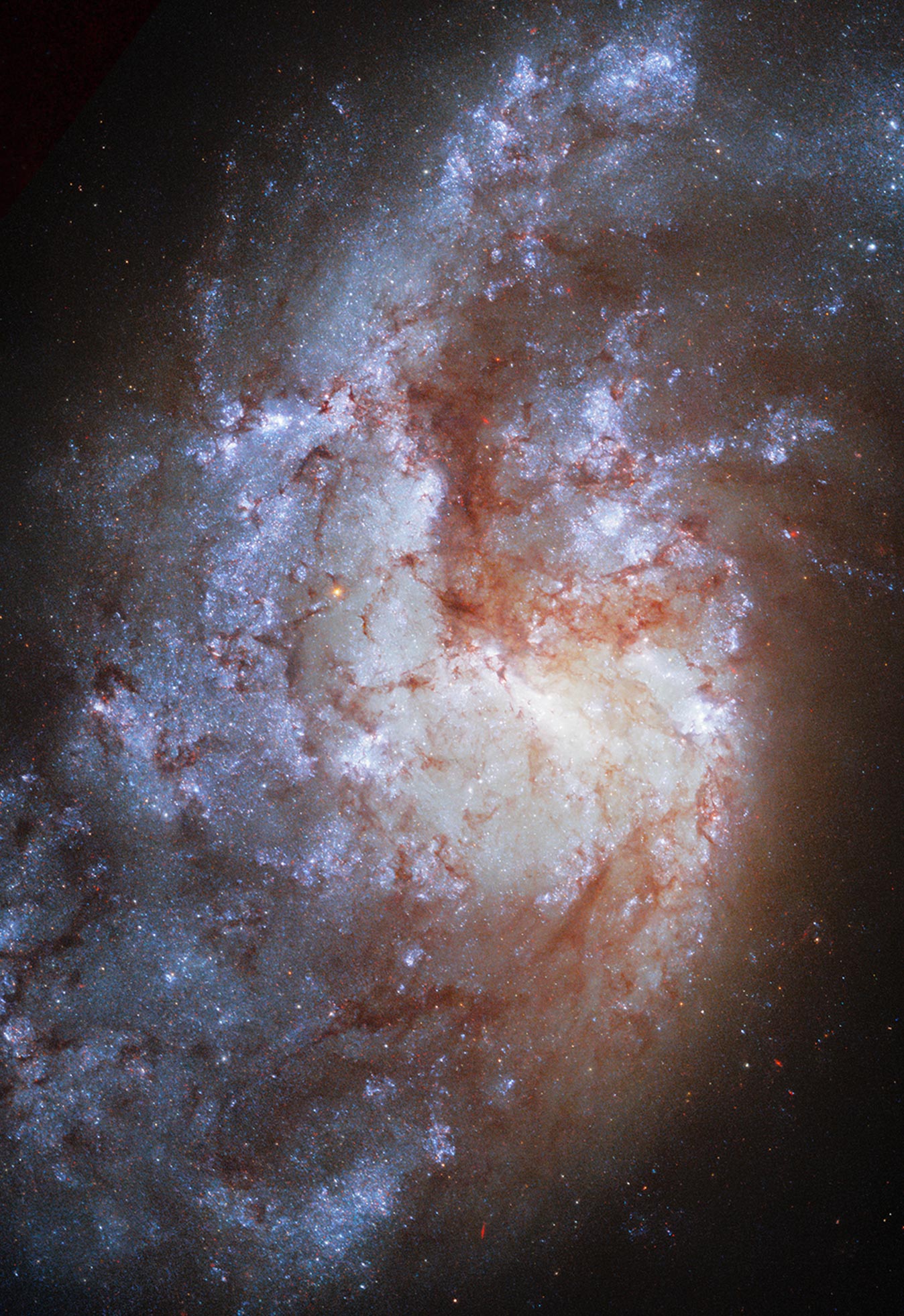
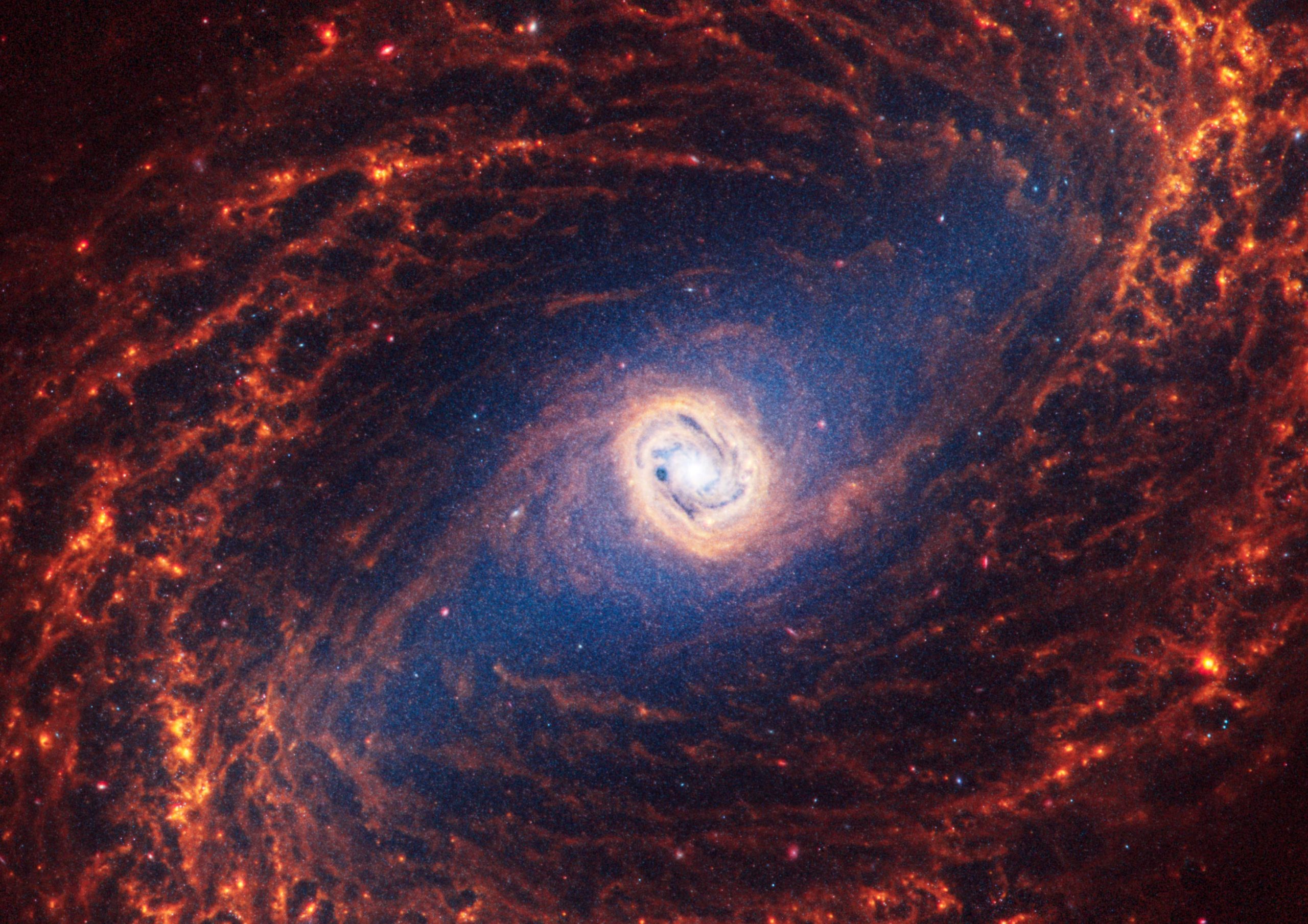
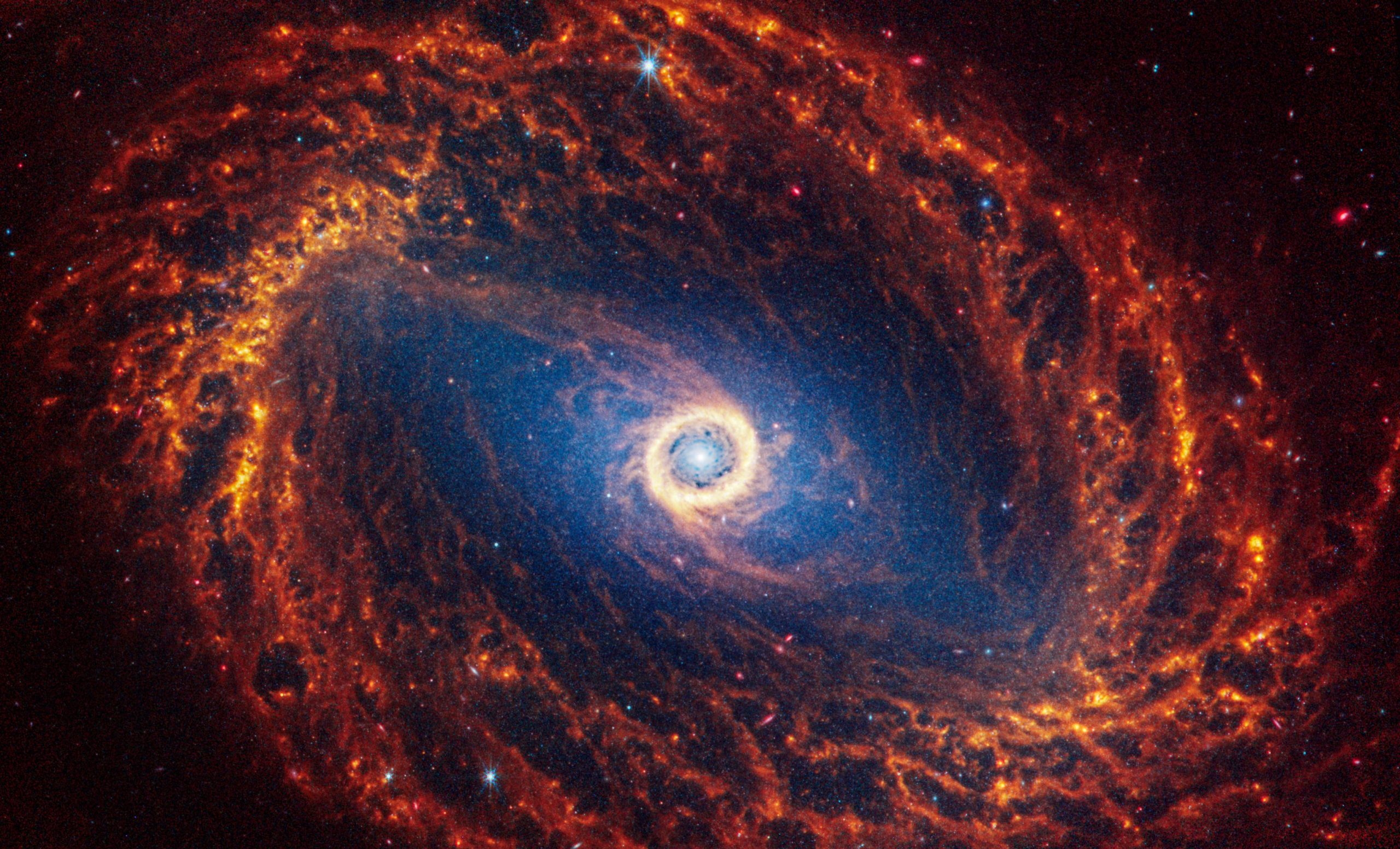
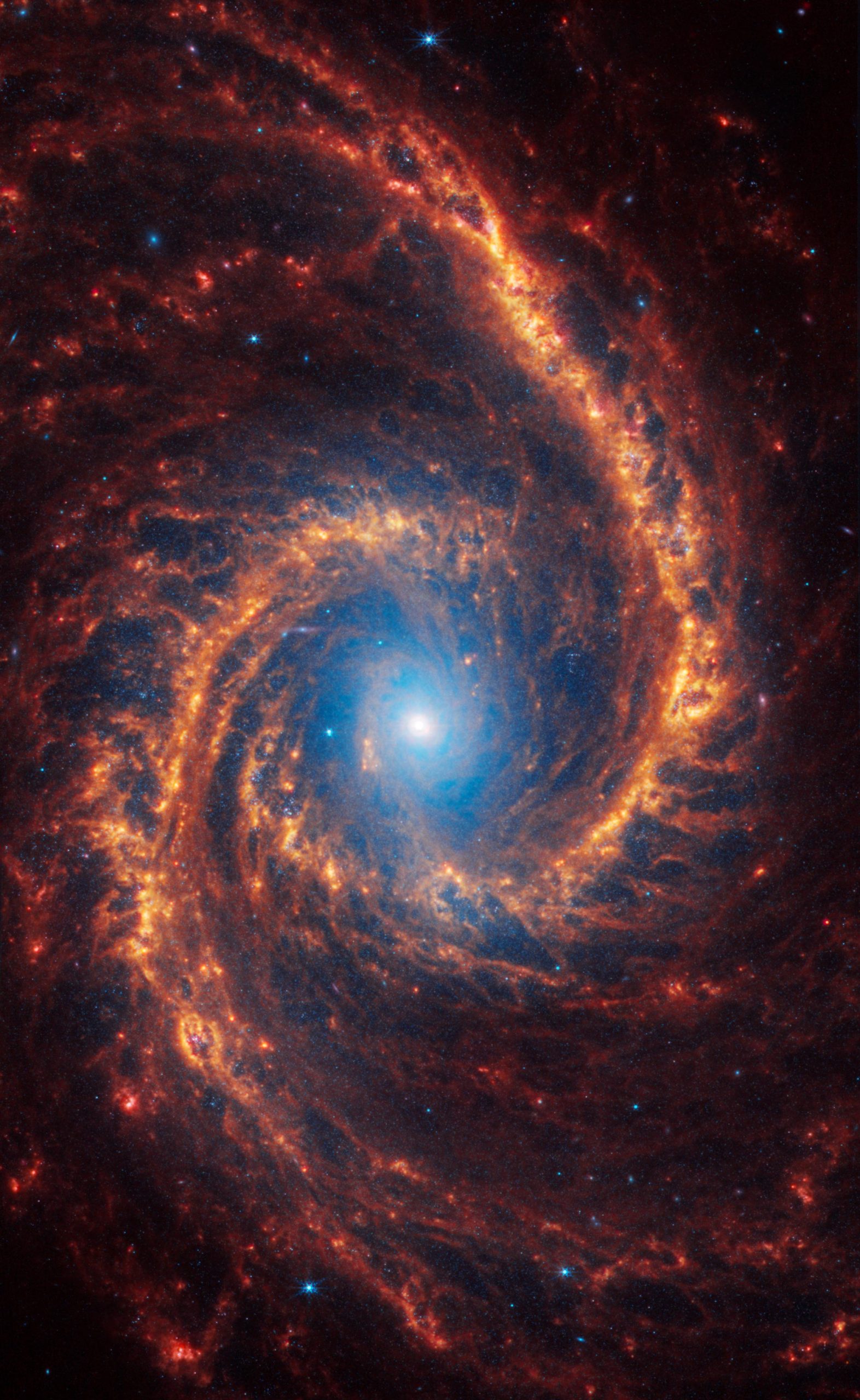
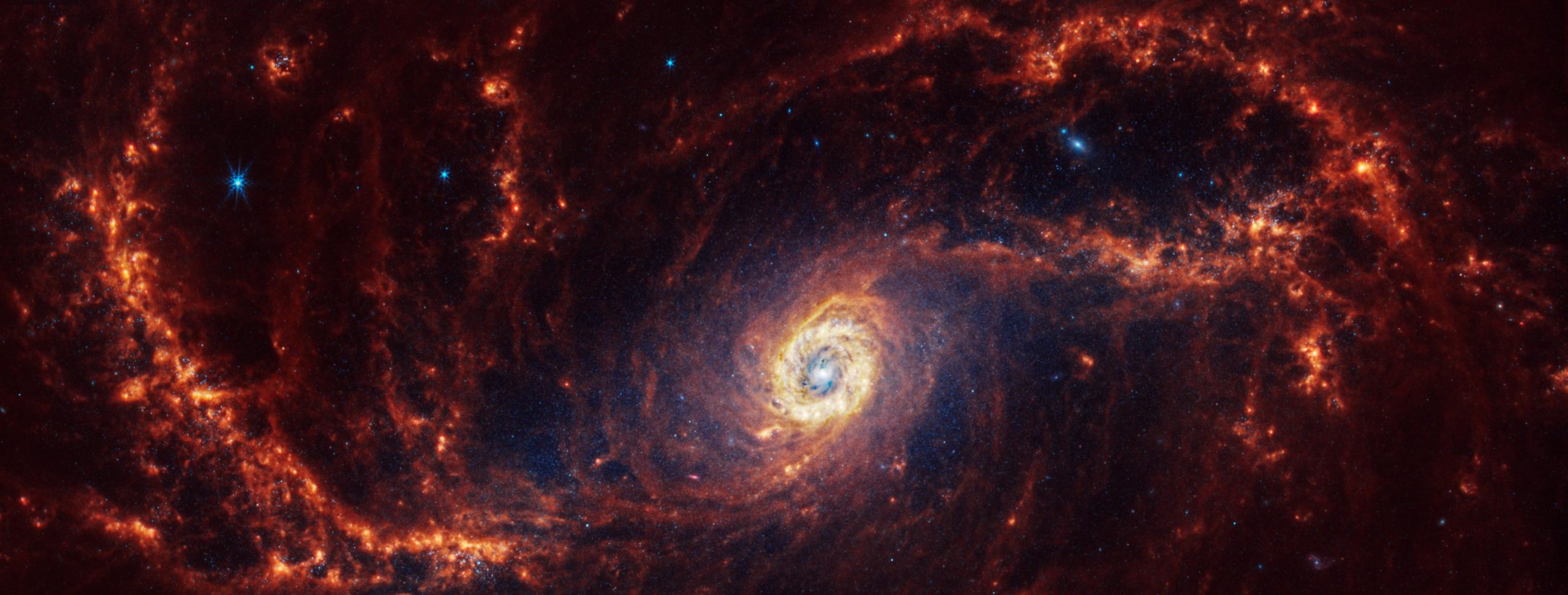
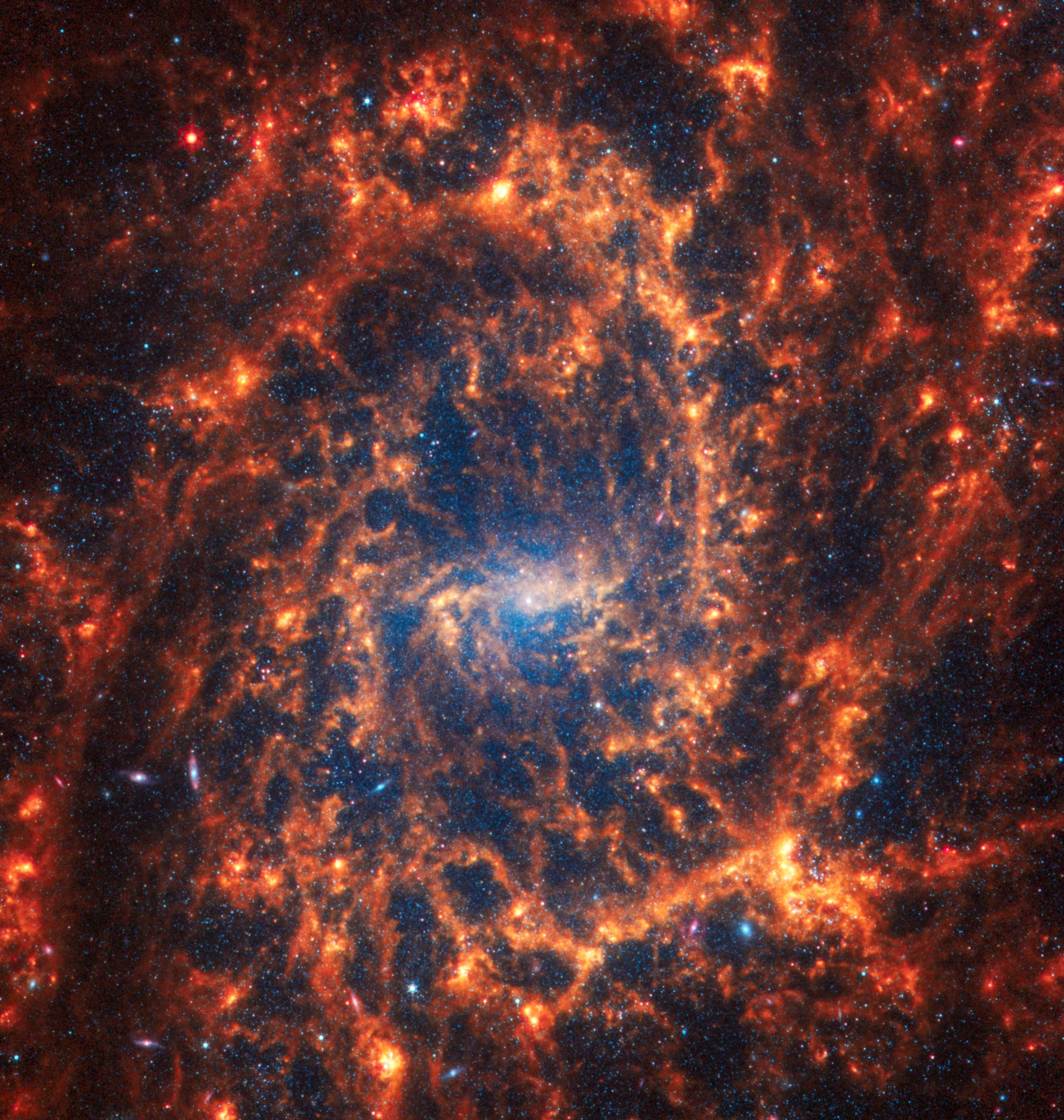
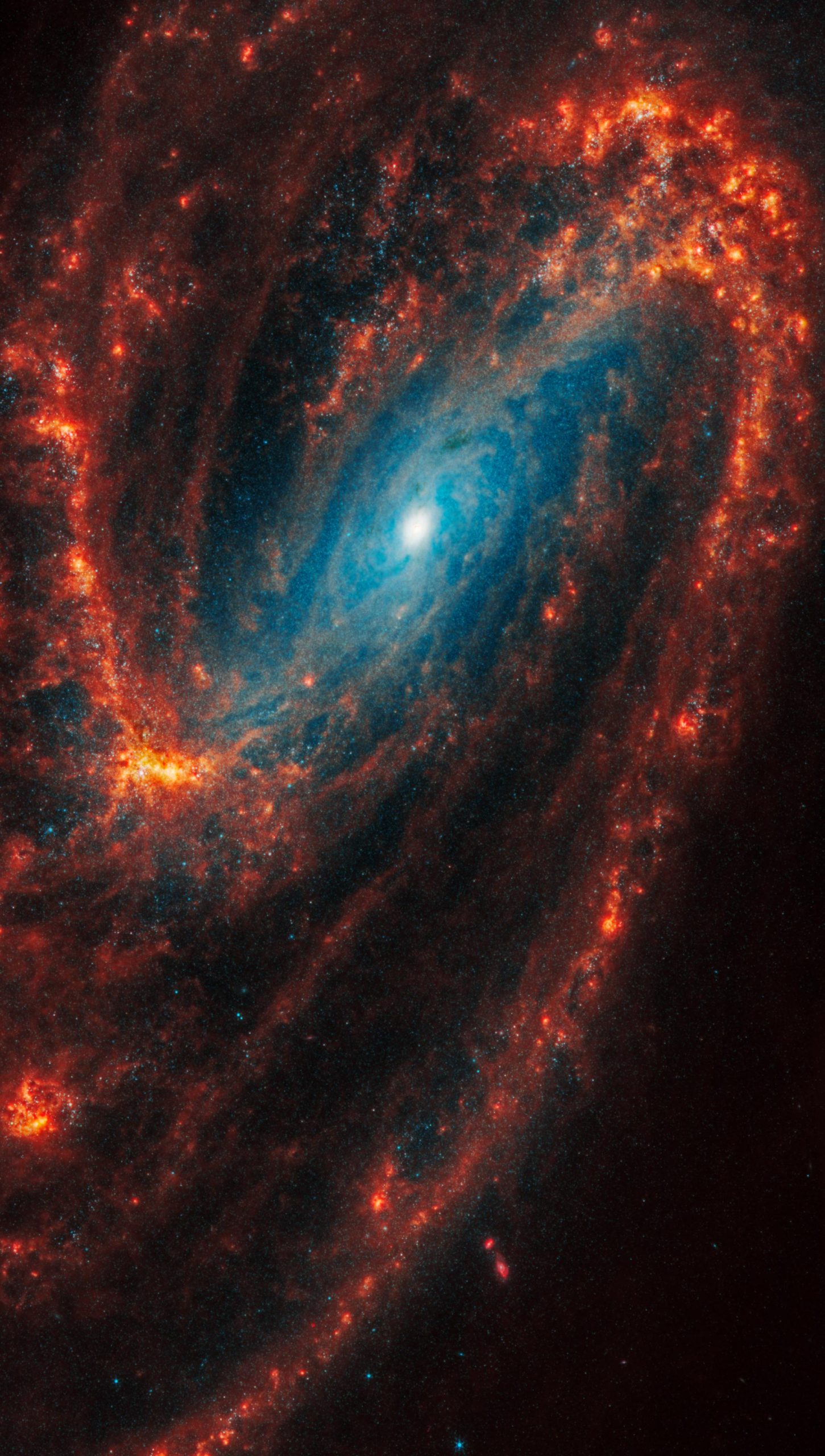
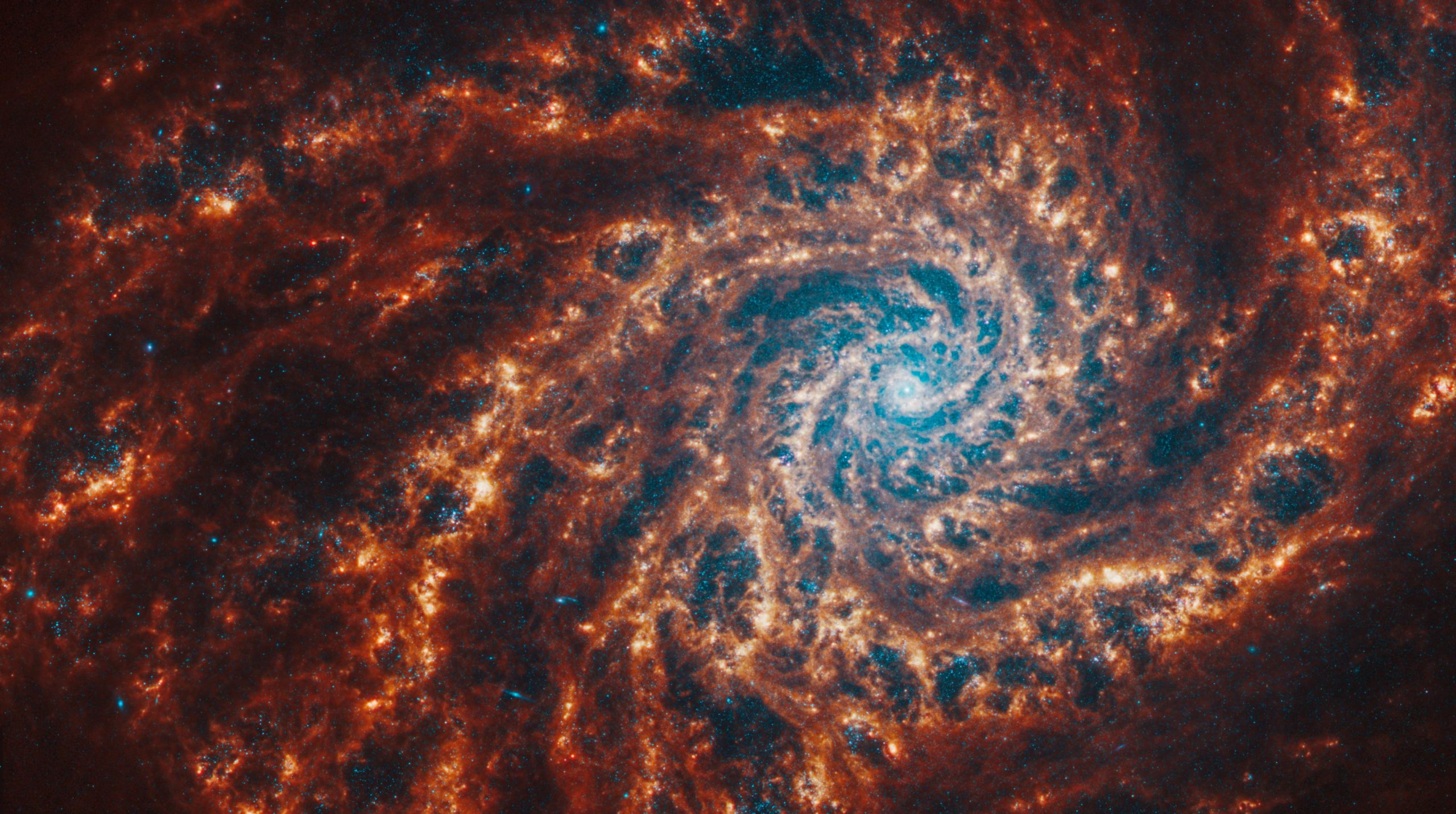
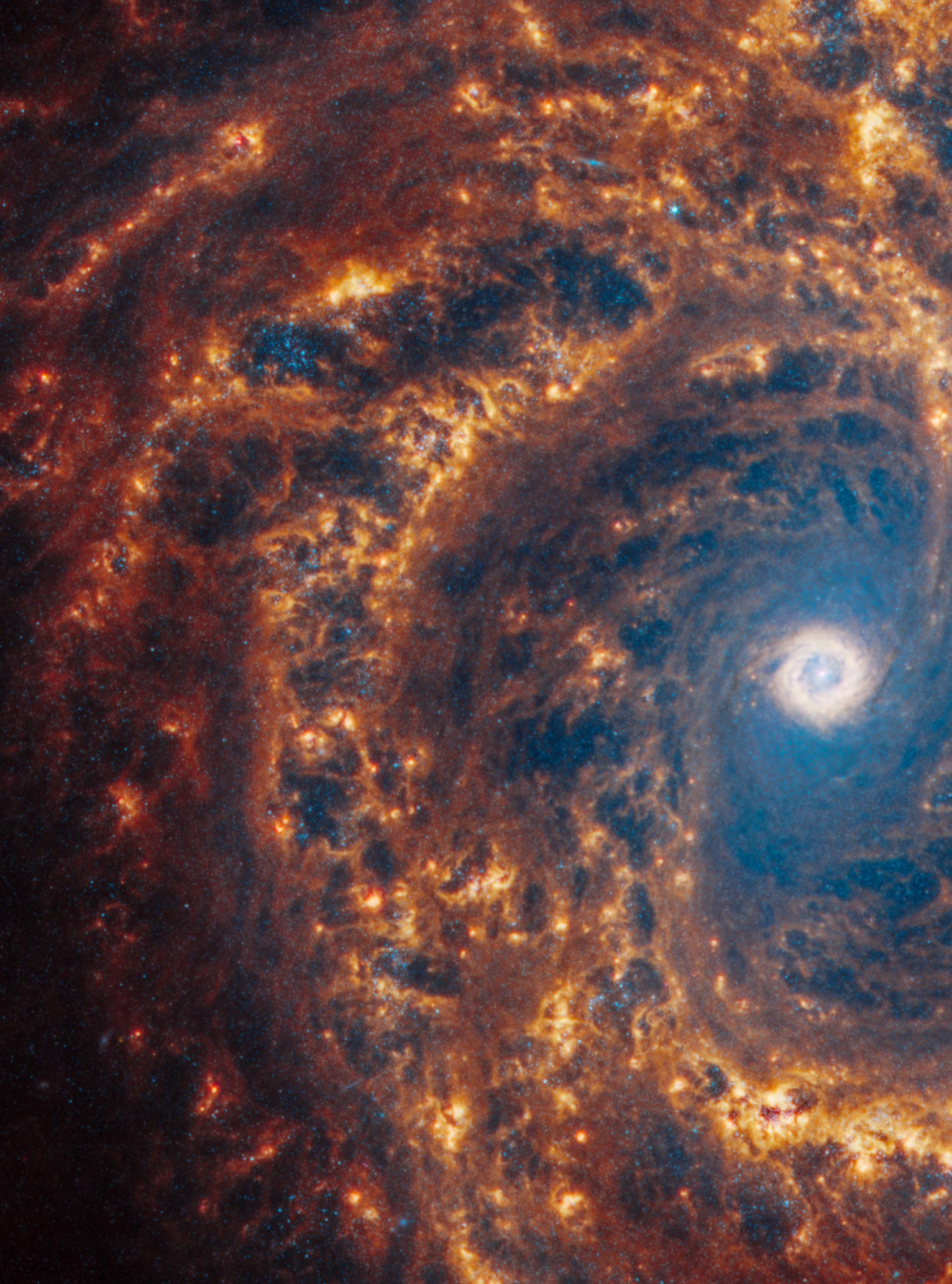
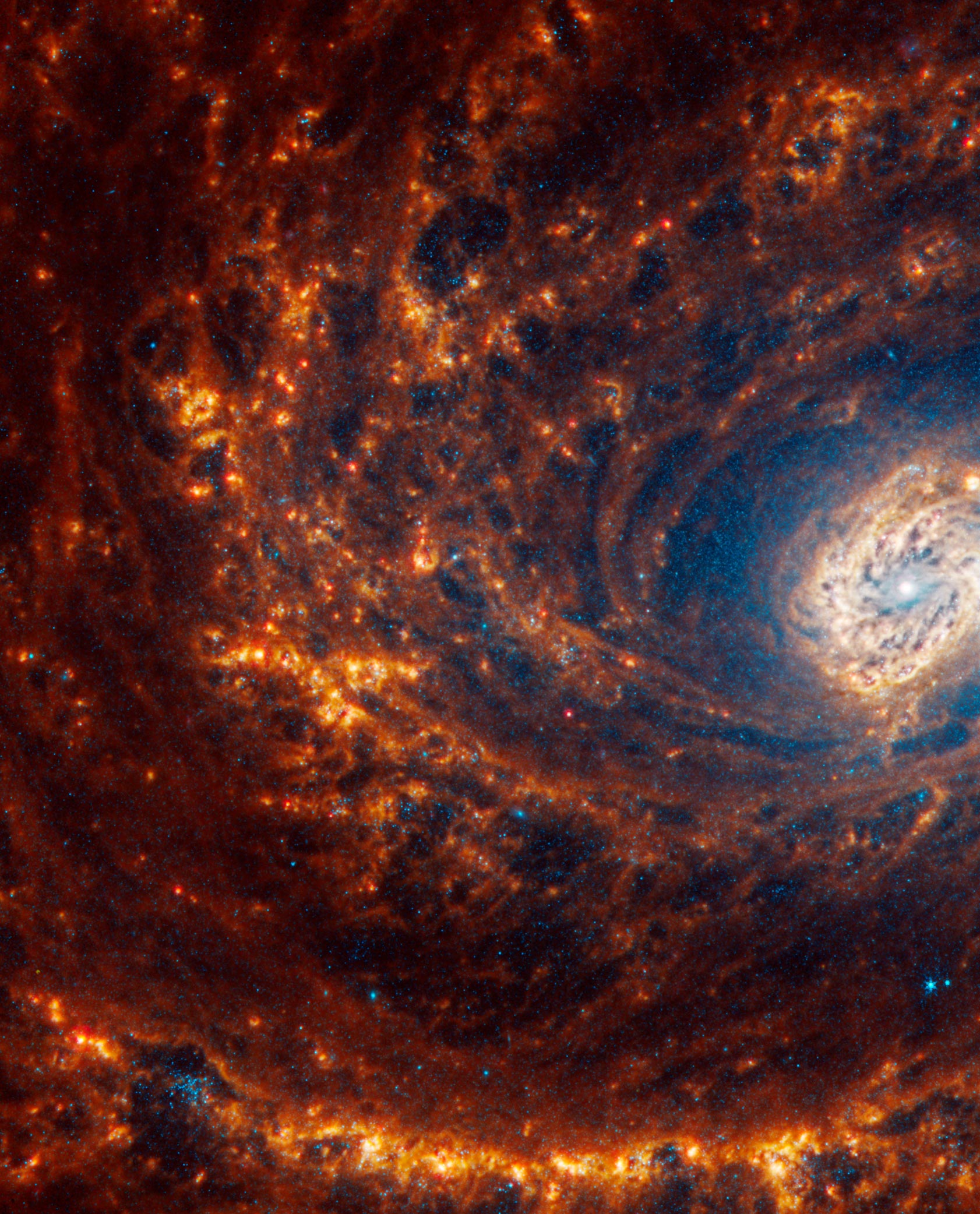
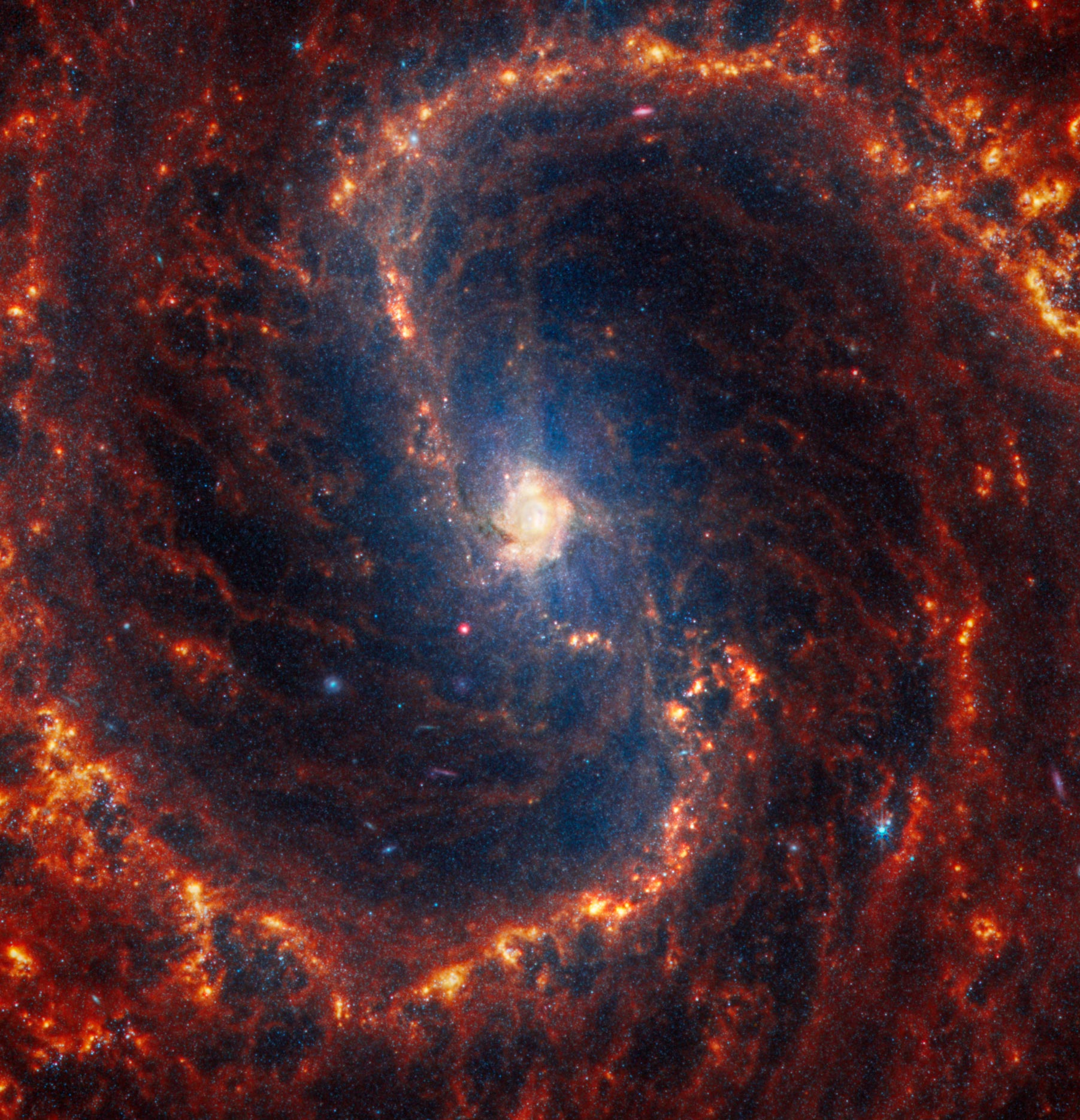
    Webb’s NIRCam (Near-Infrared Camera) captured millions of stars in these images, which sparkle in blue tones. Some stars are spread throughout the spiral arms, but others are clumped tightly together in star clusters.

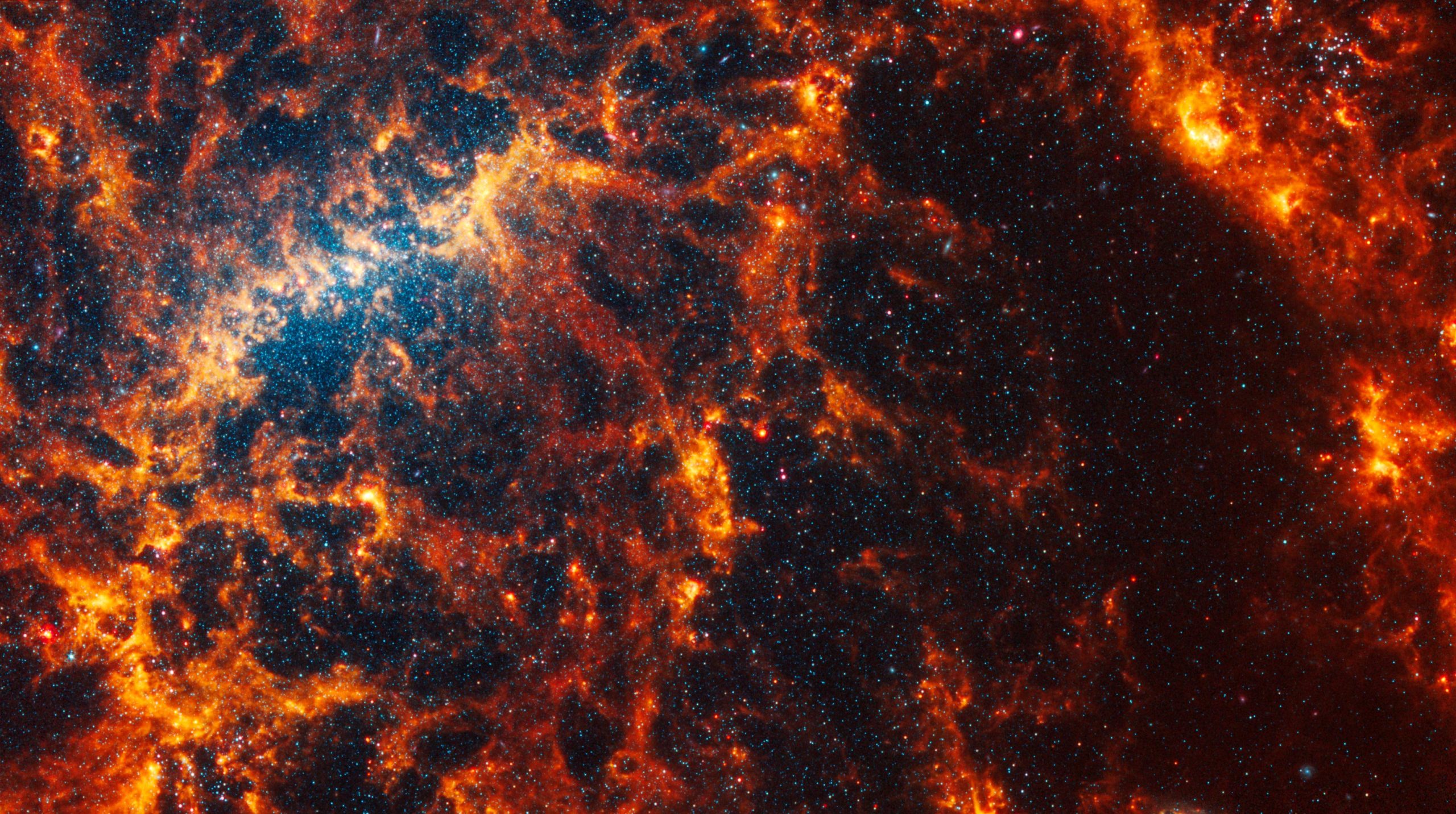
    The telescope’s MIRI (Mid-Infrared Instrument) data highlights glowing dust, showing us where it exists around and between stars. It also spotlights stars that haven’t yet fully formed – they are still encased in the gas and dust that feed their growth, like bright red seeds at the tips of dusty peaks. “These are where we can find the newest, most massive stars in the galaxies,” said Erik Rosolowsky, a professor of physics at the University of Alberta in Edmonton, Canada.

    Something else that amazed astronomers? Webb’s images show large, spherical shells in the gas and dust. “These holes may have been created by one or more stars that exploded, carving out giant holes in the interstellar material,” explained Adam Leroy, a professor of astronomy at the Ohio State University in Columbus.

    Now, trace the spiral arms to find extended regions of gas that appear red and orange. “These structures tend to follow the same pattern in certain parts of the galaxies,” Rosolowsky added. “We think of these like waves, and their spacing tells us a lot about how a galaxy distributes its gas and dust.” Study of these structures will provide key insights about how galaxies build, maintain, and shut off star formation.

    Dive Into the Interior

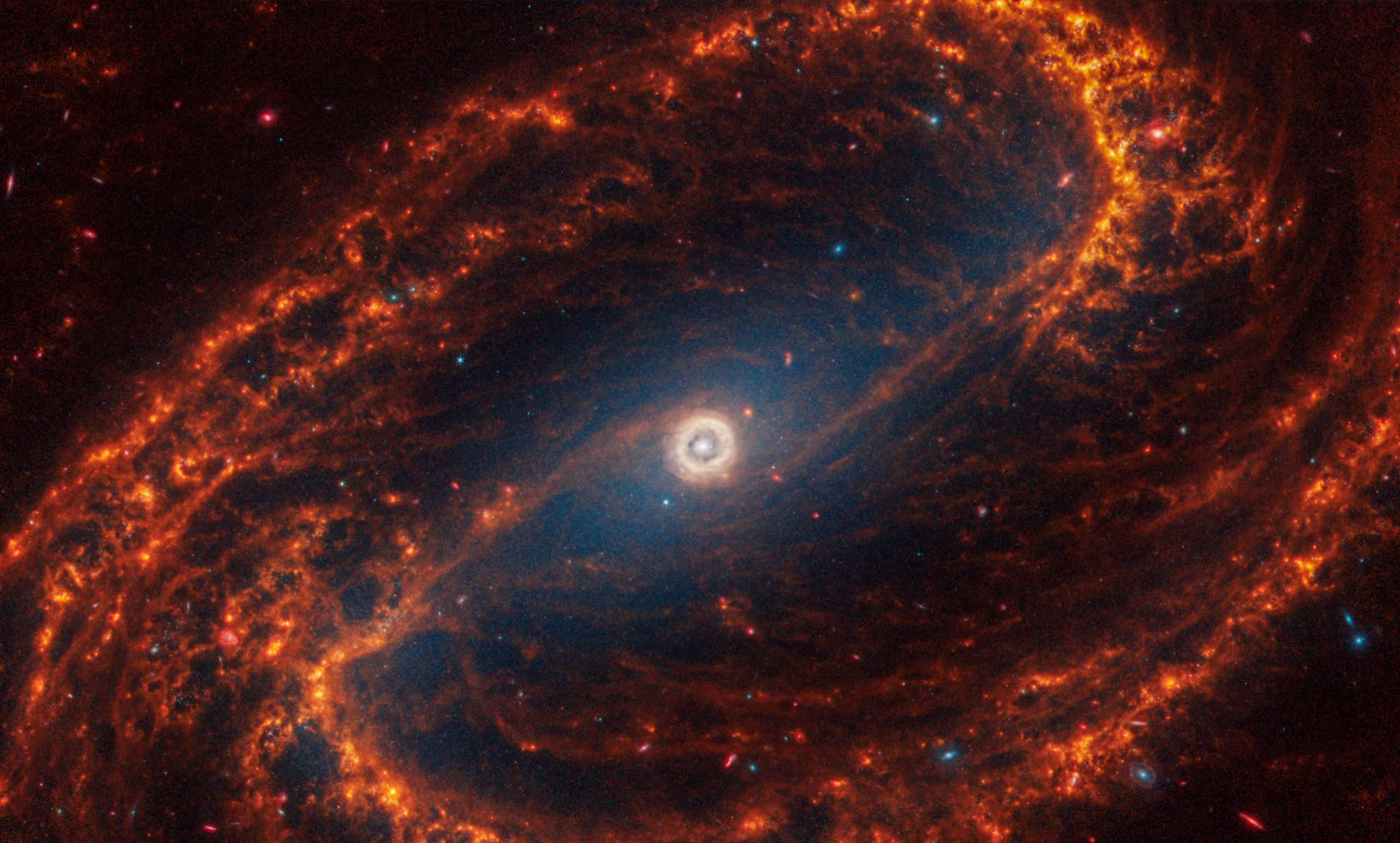
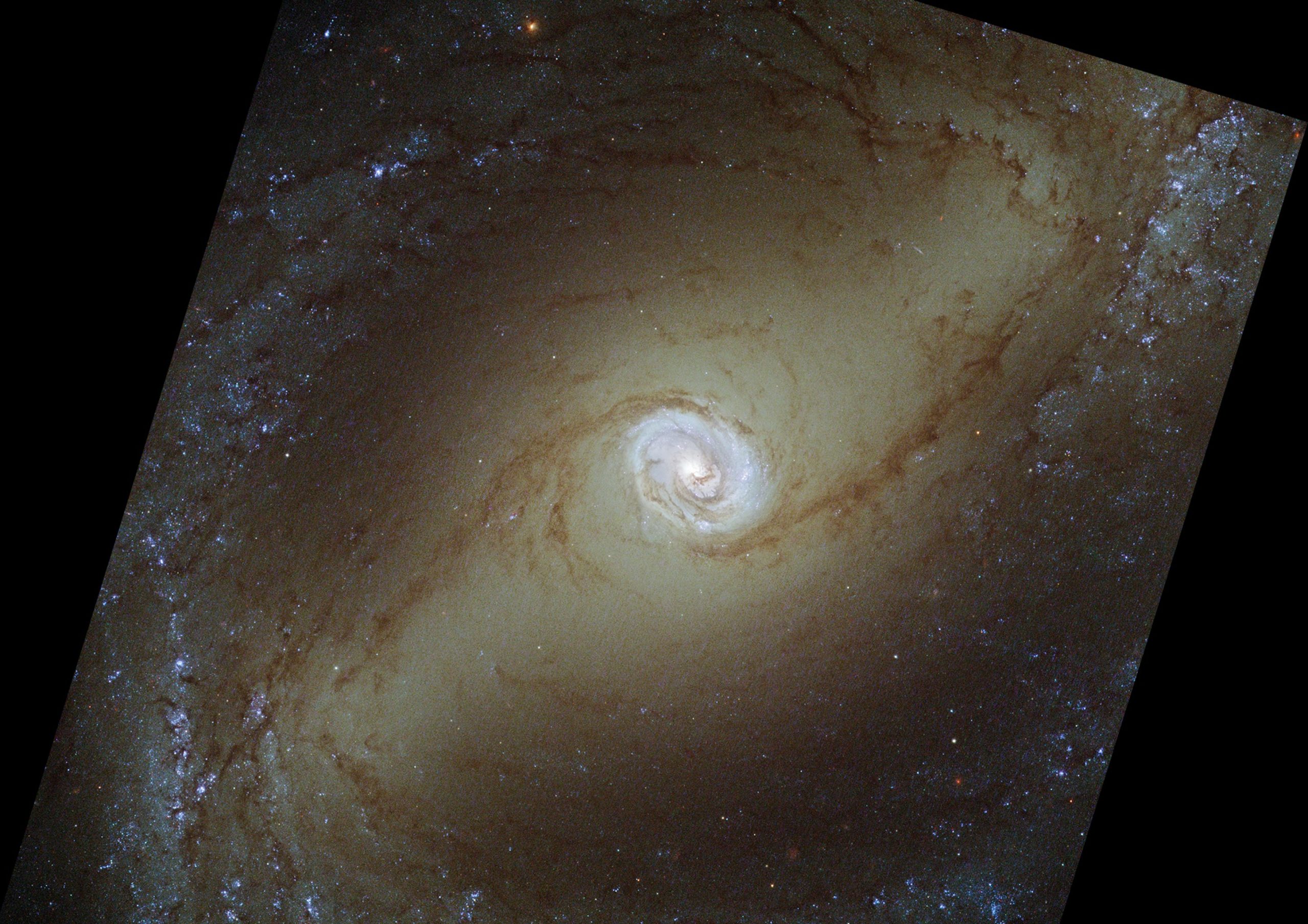
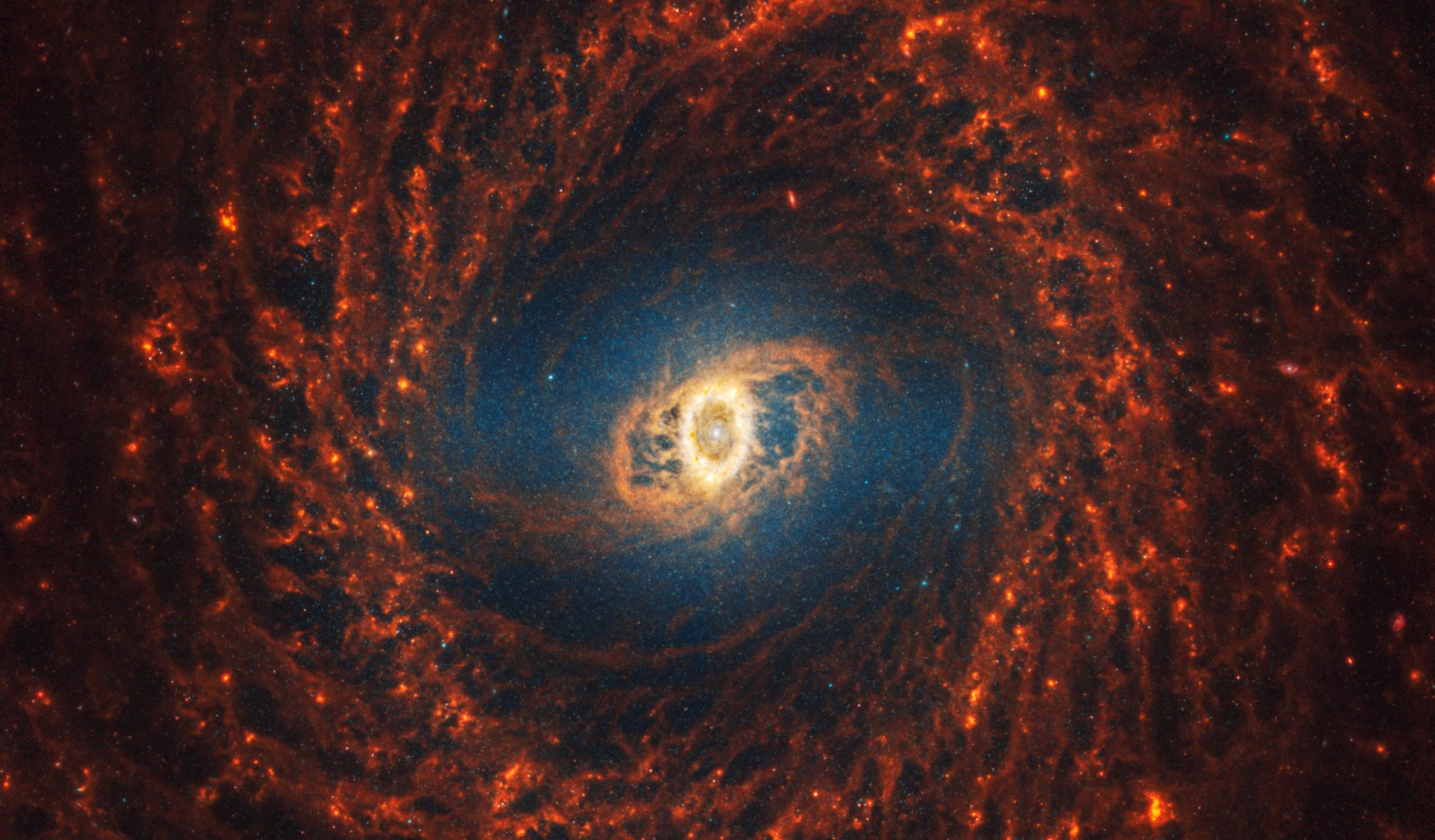
    Evidence shows that galaxies grow from inside out – star formation begins at galaxies’ cores and spreads along their arms, spiraling away from the center. The farther a star is from the galaxy’s core, the more likely it is to be younger. In contrast, the areas near the cores that look lit by a blue spotlight are populations of older stars.

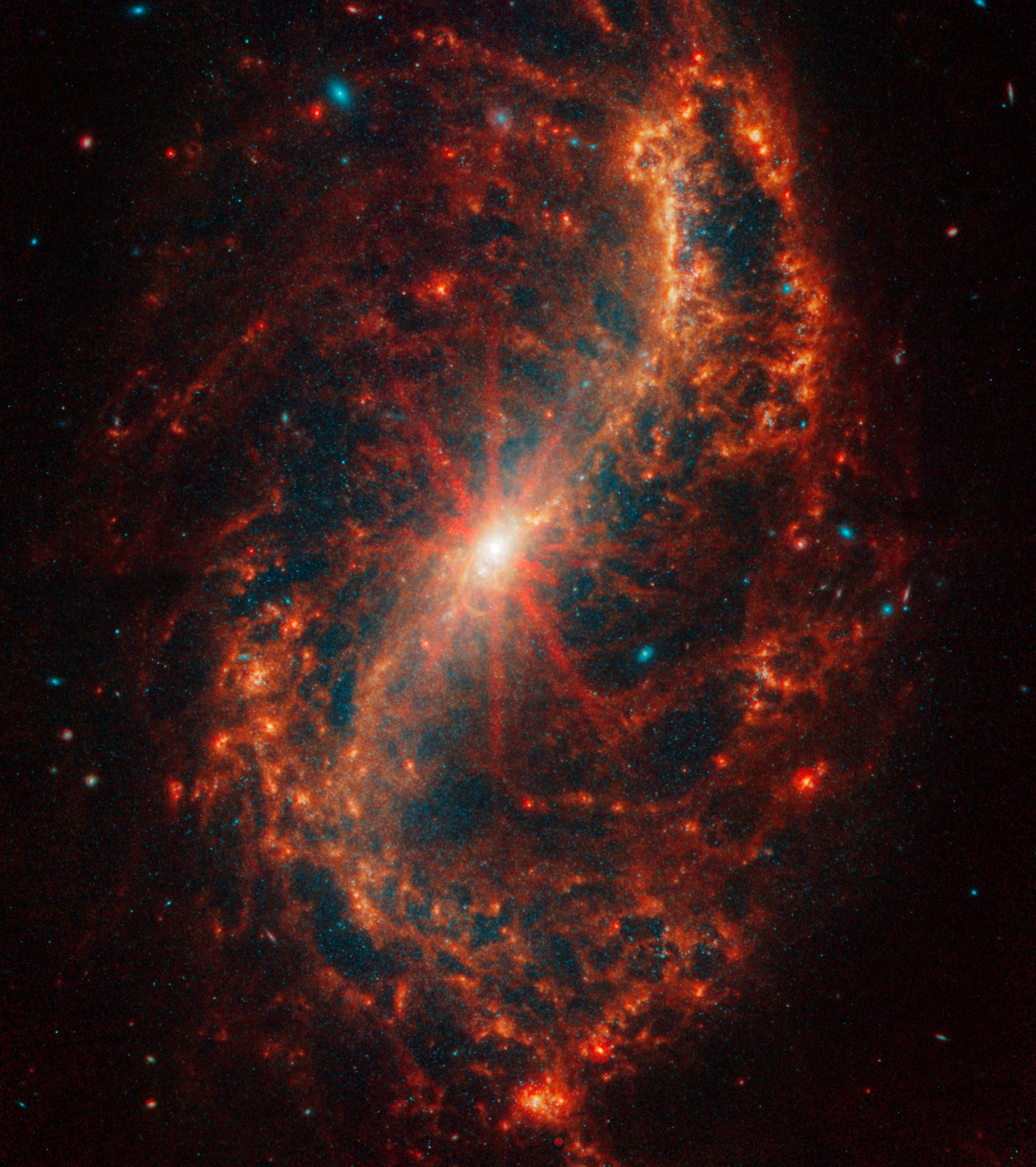
    What about galaxy cores that are awash in pink-and-red diffraction spikes? “That’s a clear sign that there may be an active supermassive black hole,” said Eva Schinnerer, a staff scientist at the Max Planck Institute for Astronomy in Heidelberg, Germany. “Or, the star clusters toward the center are so bright that they have saturated that area of the image.”

    Research Galore

    There are many avenues of research that scientists can begin to pursue with the combined PHANGS data, but the unprecedented number of stars Webb resolved are a great place to begin. “Stars can live for billions or trillions of years,” Leroy said. “By precisely cataloging all types of stars, we can build a more reliable, holistic view of their life cycles.”

    In addition to immediately releasing these images, the PHANGS team has also released the largest catalog to date of roughly 100,000 star clusters. “The amount of analysis that can be done with these images is vastly larger than anything our team could possibly handle,” Rosolowsky emphasized. “We’re excited to support the community so all researchers can contribute.”

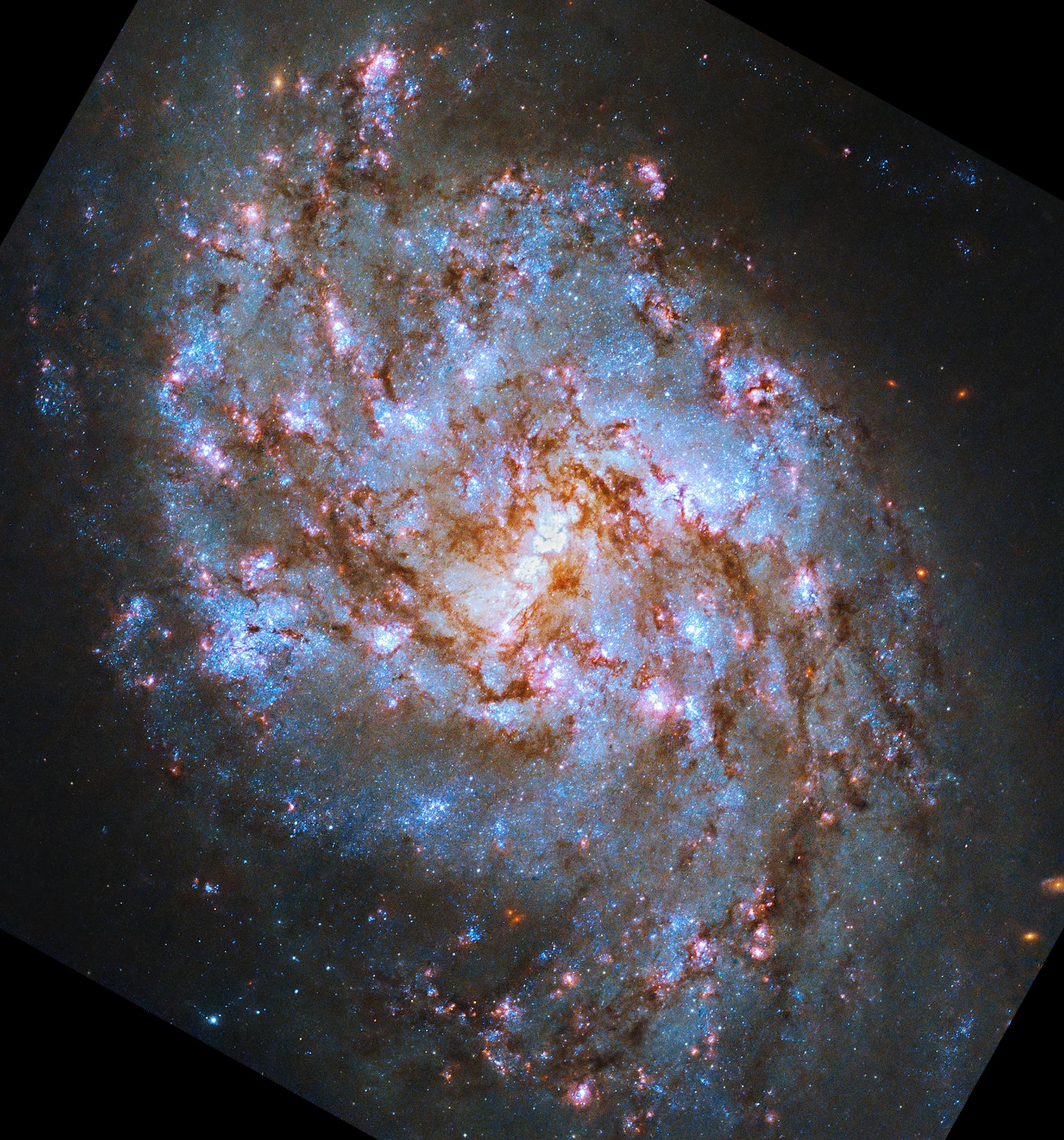
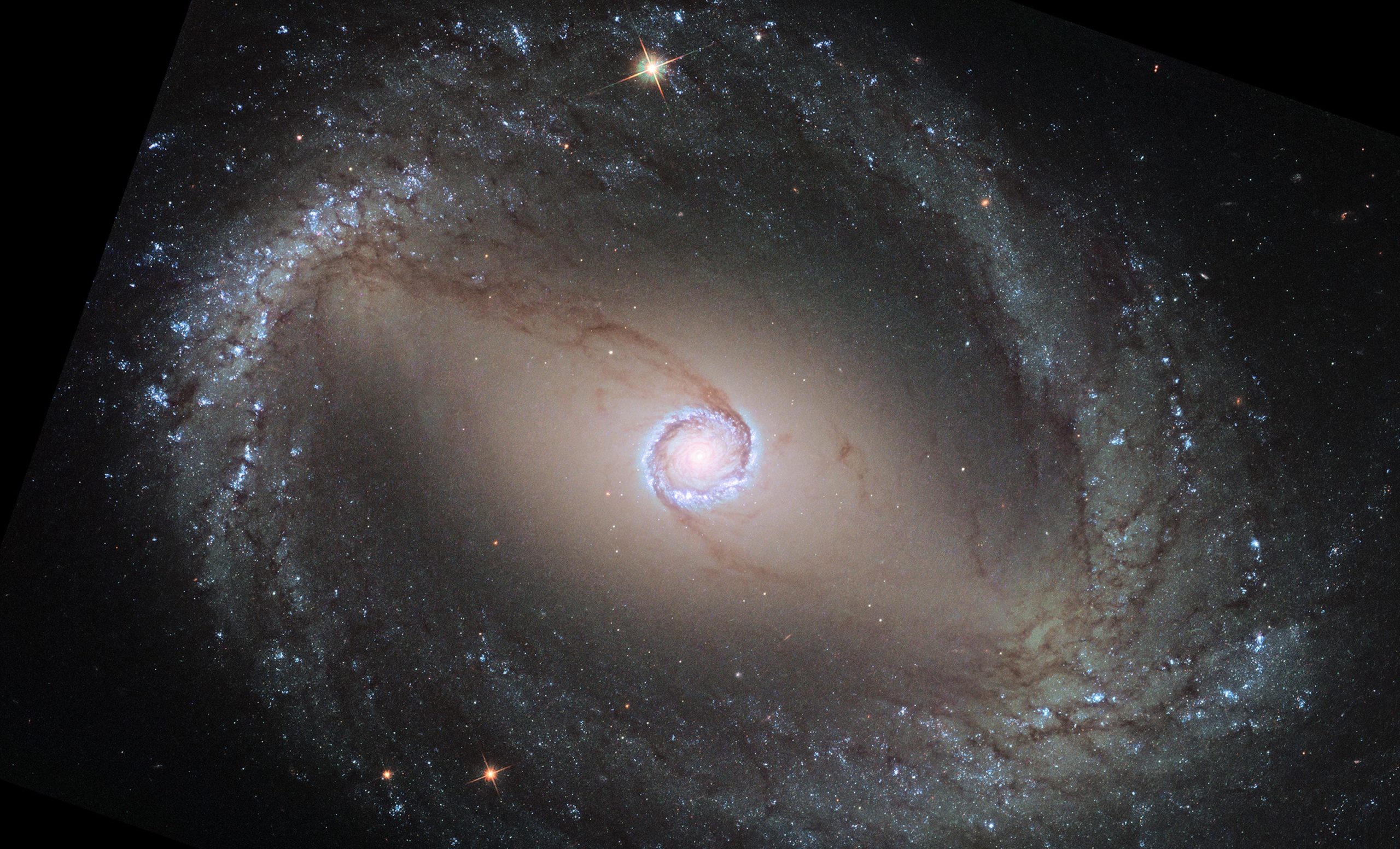
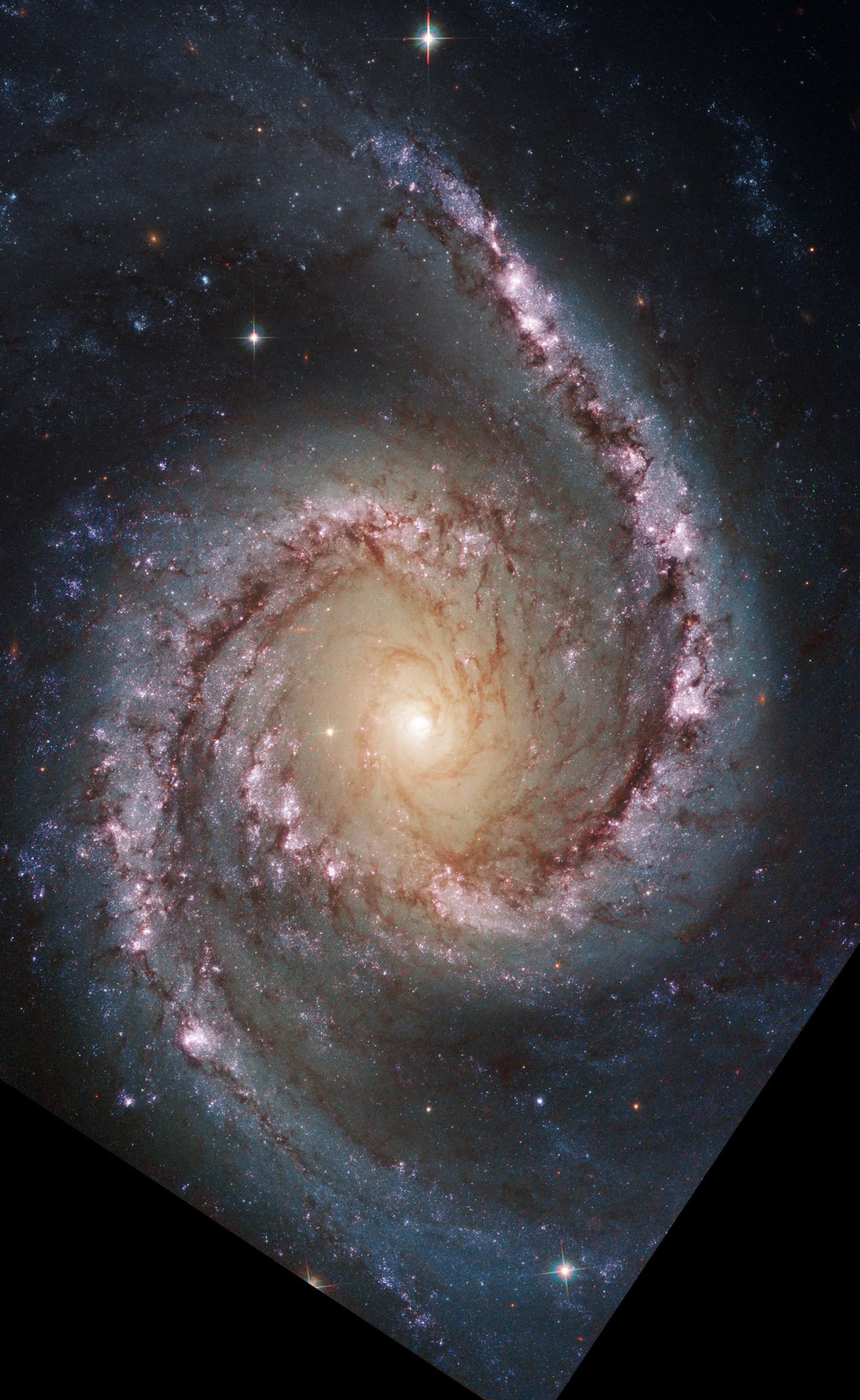
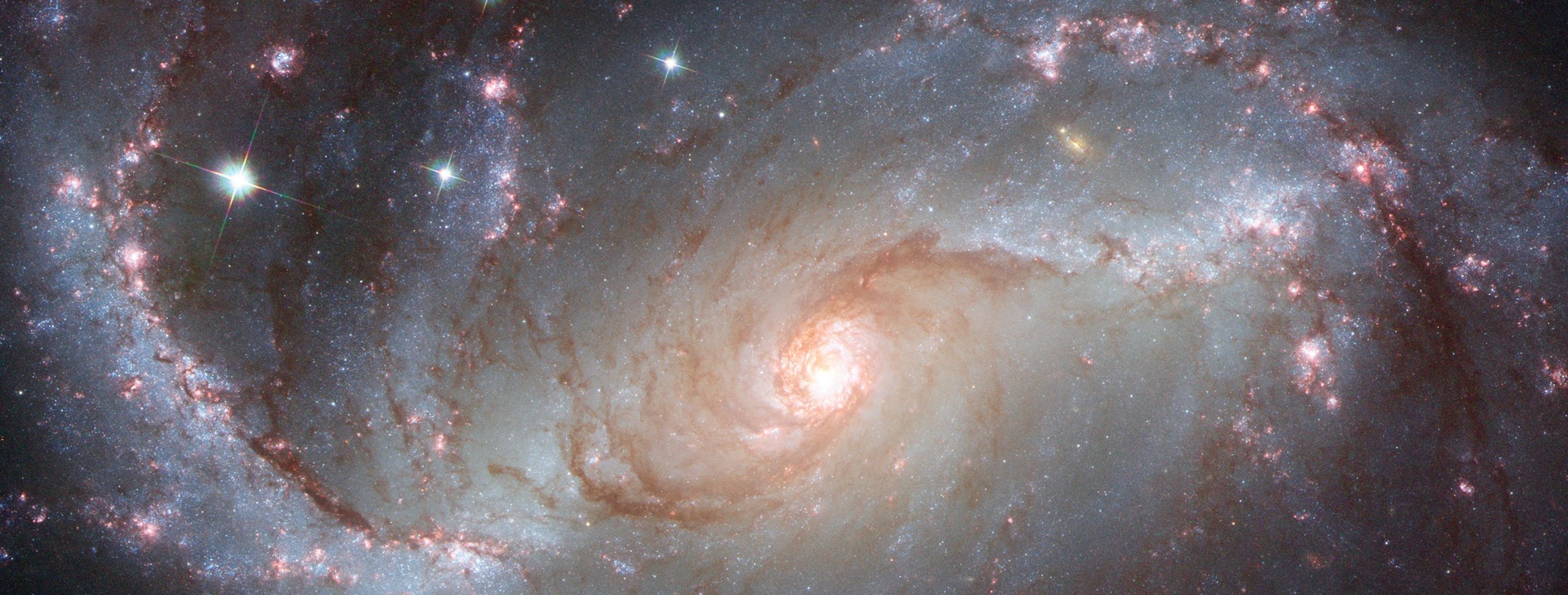
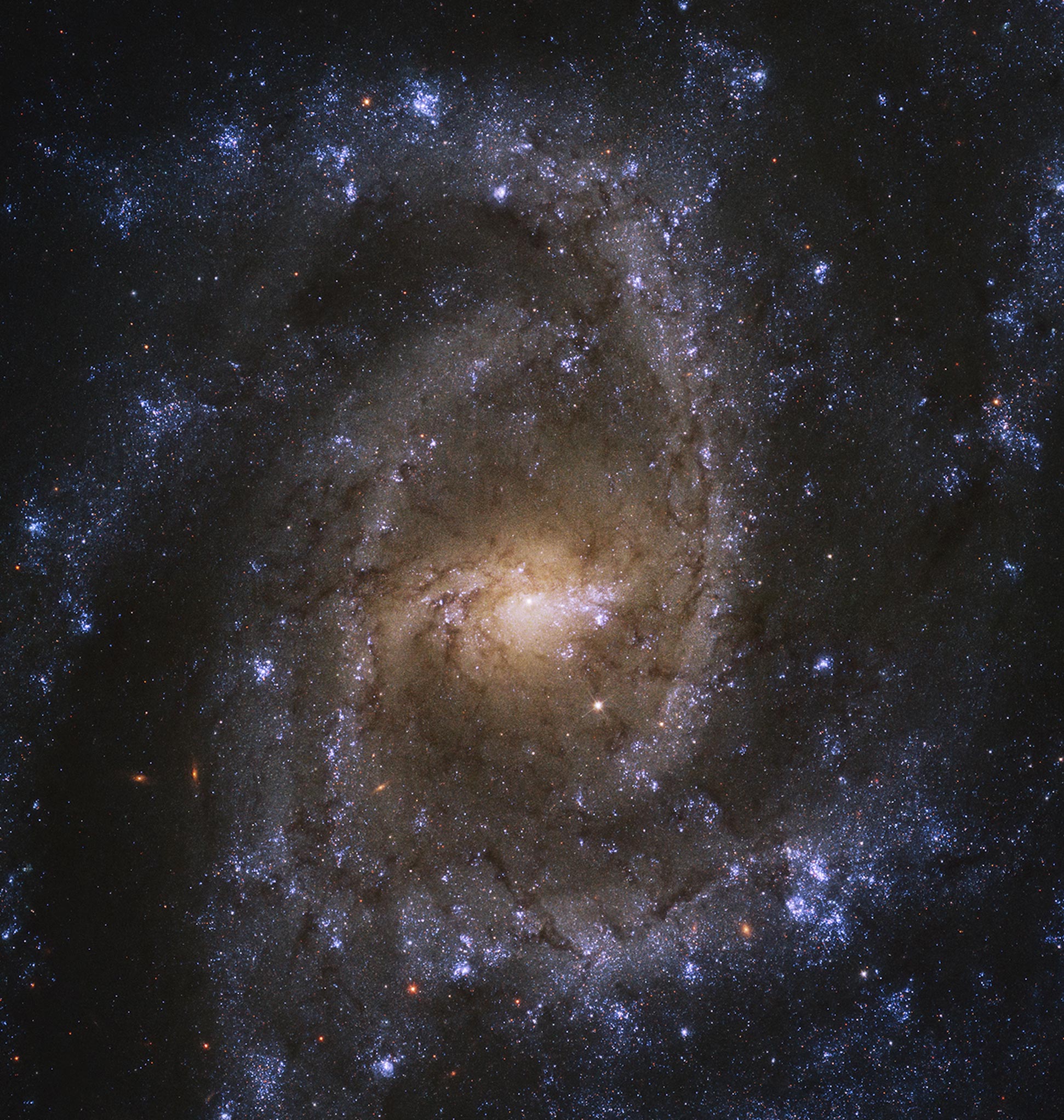
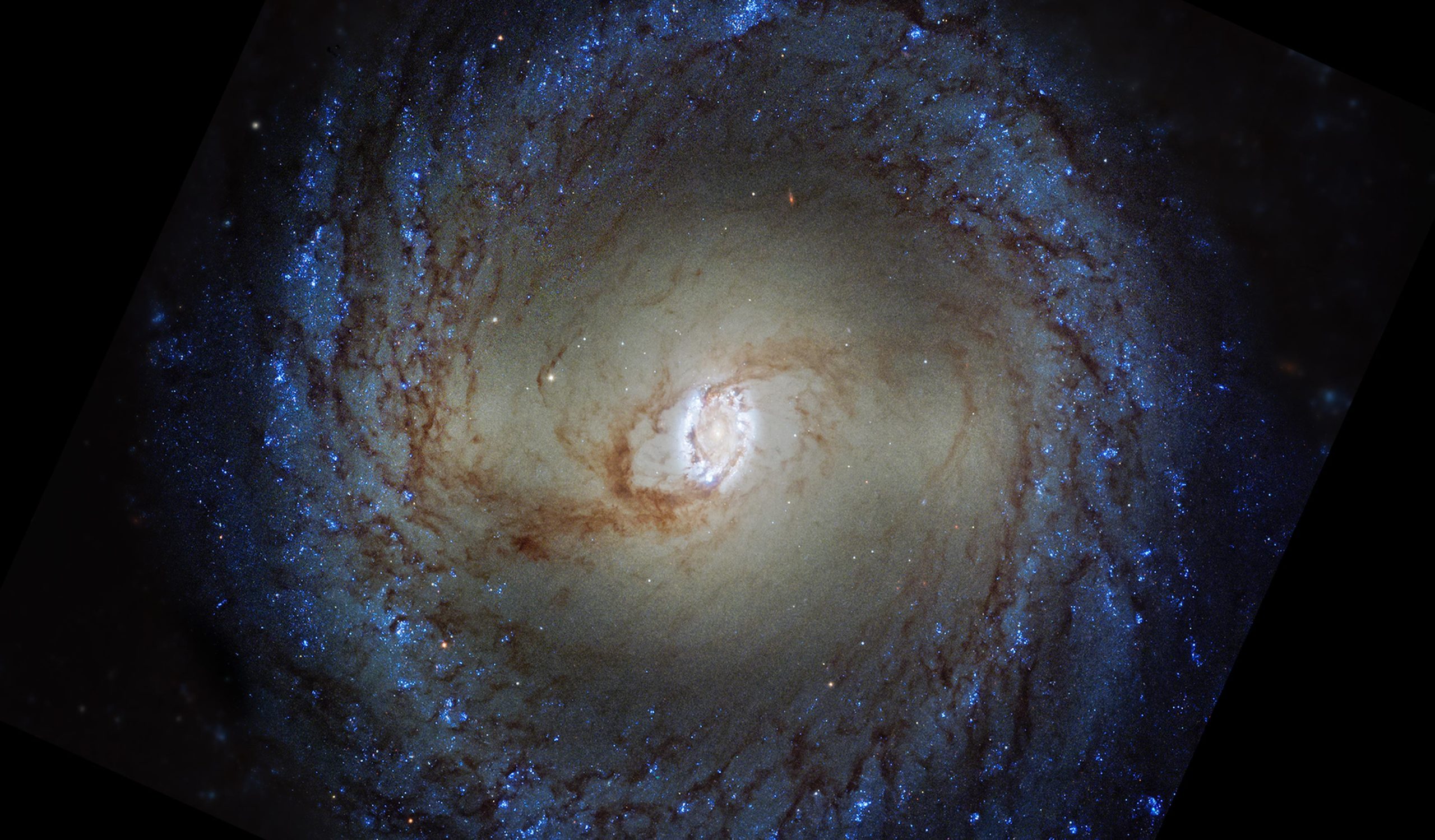
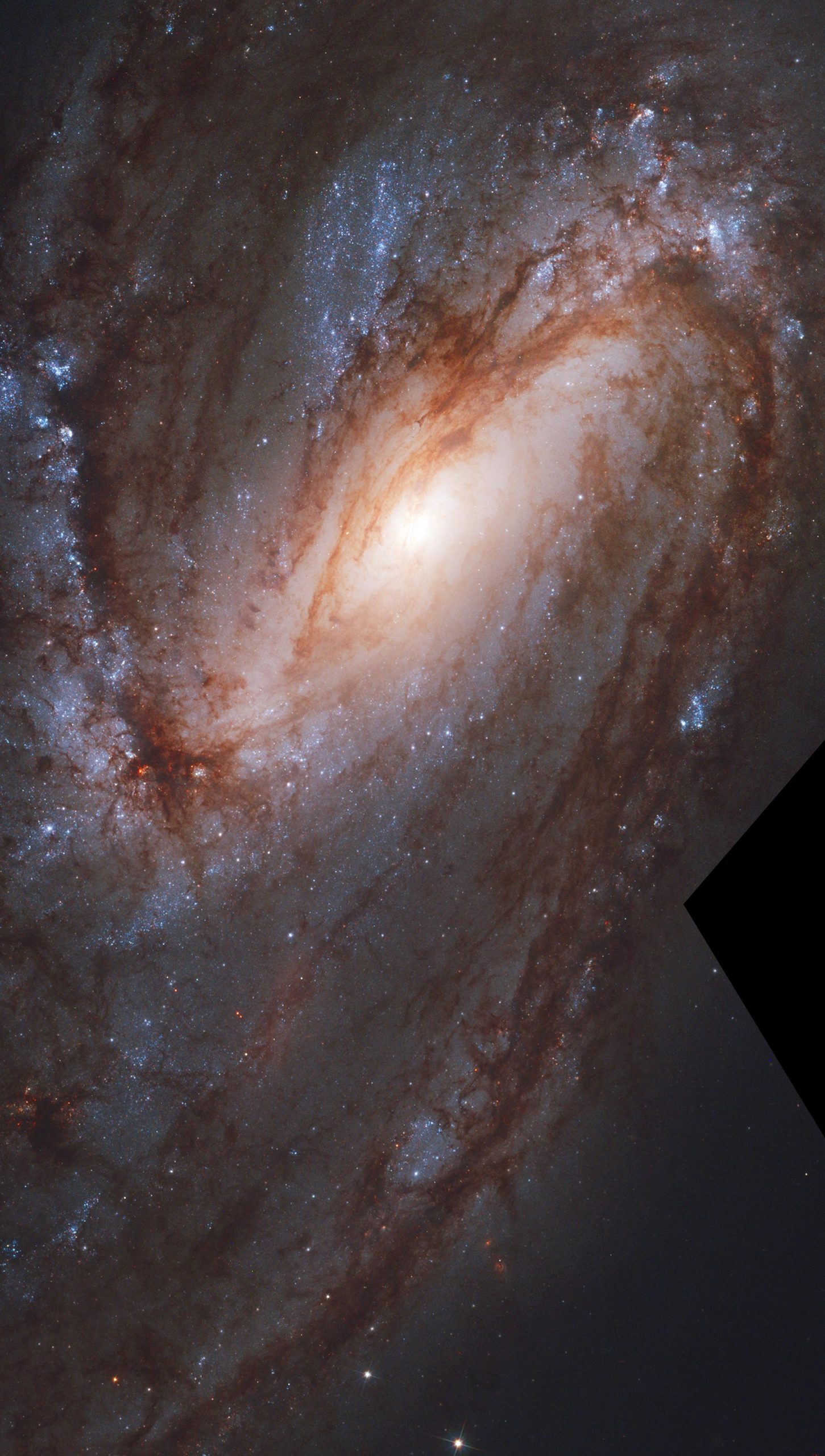
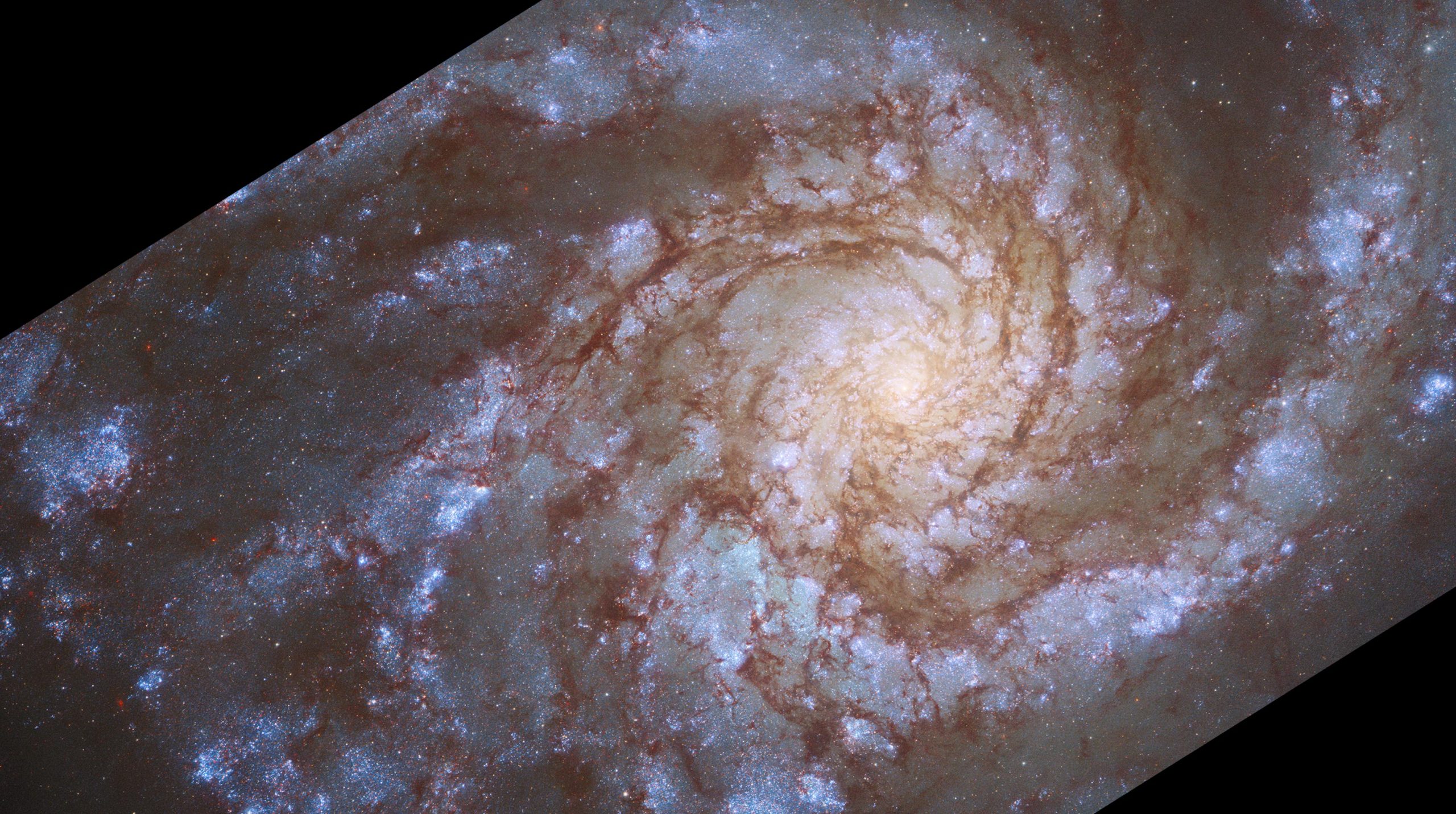
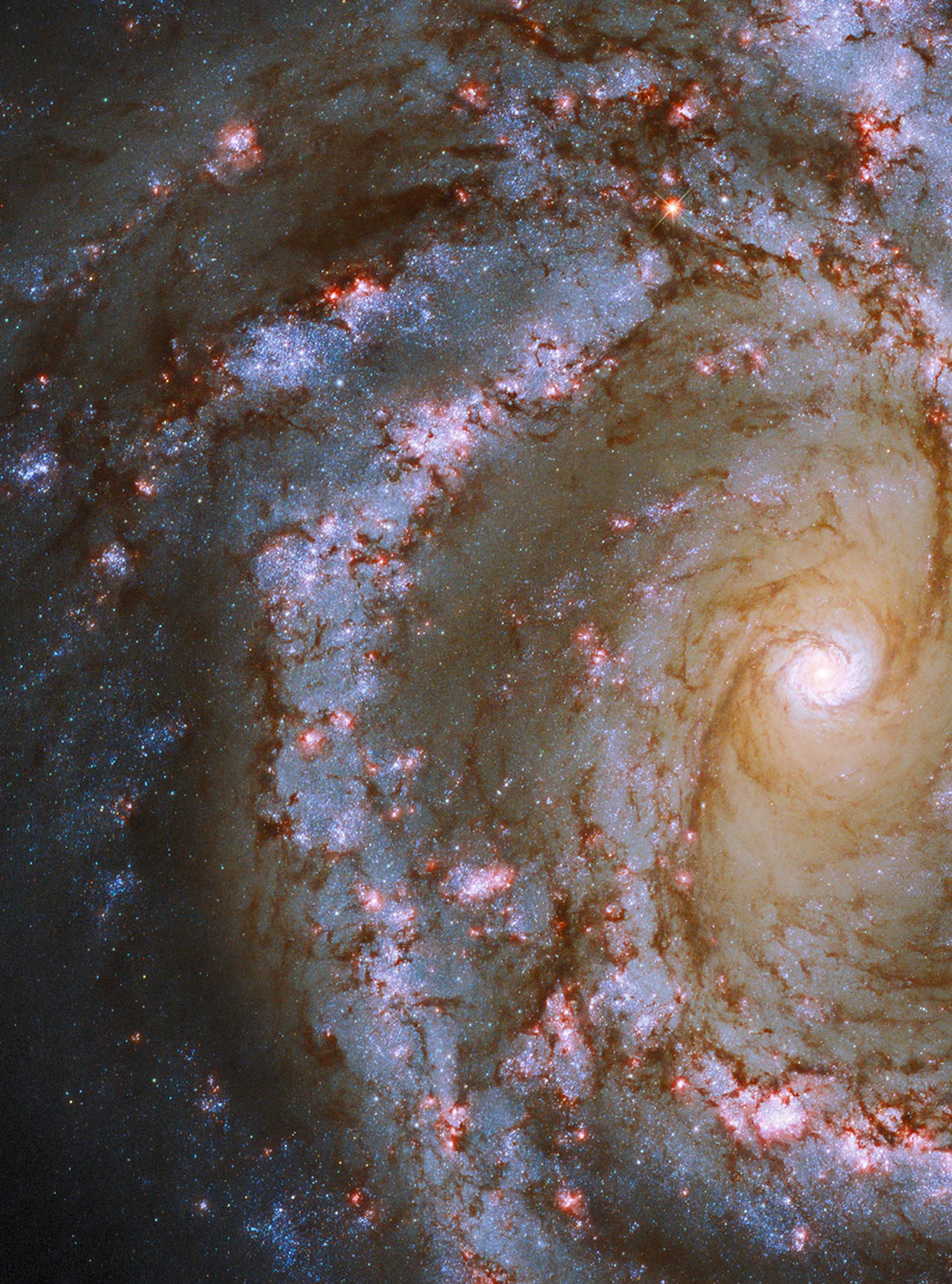
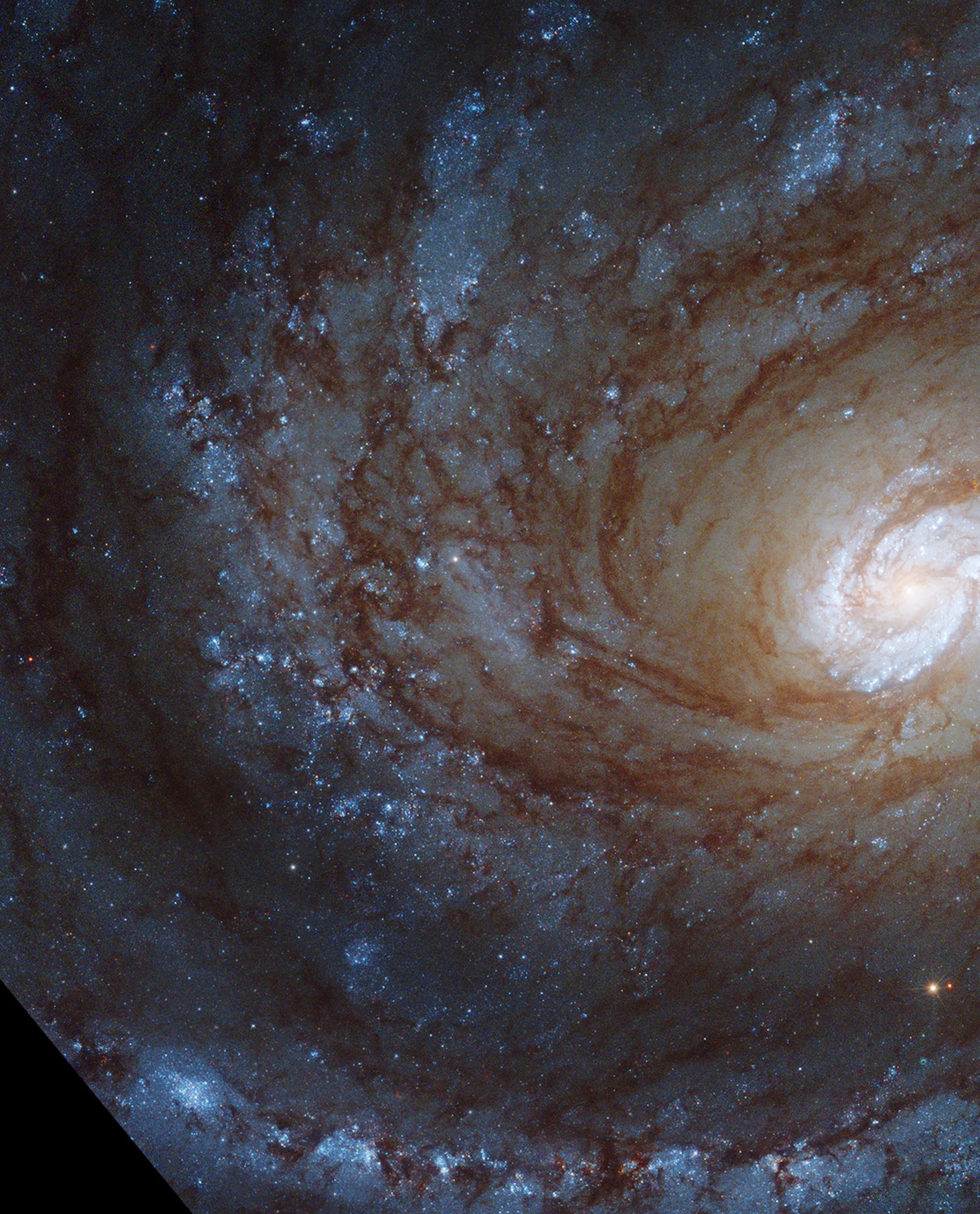
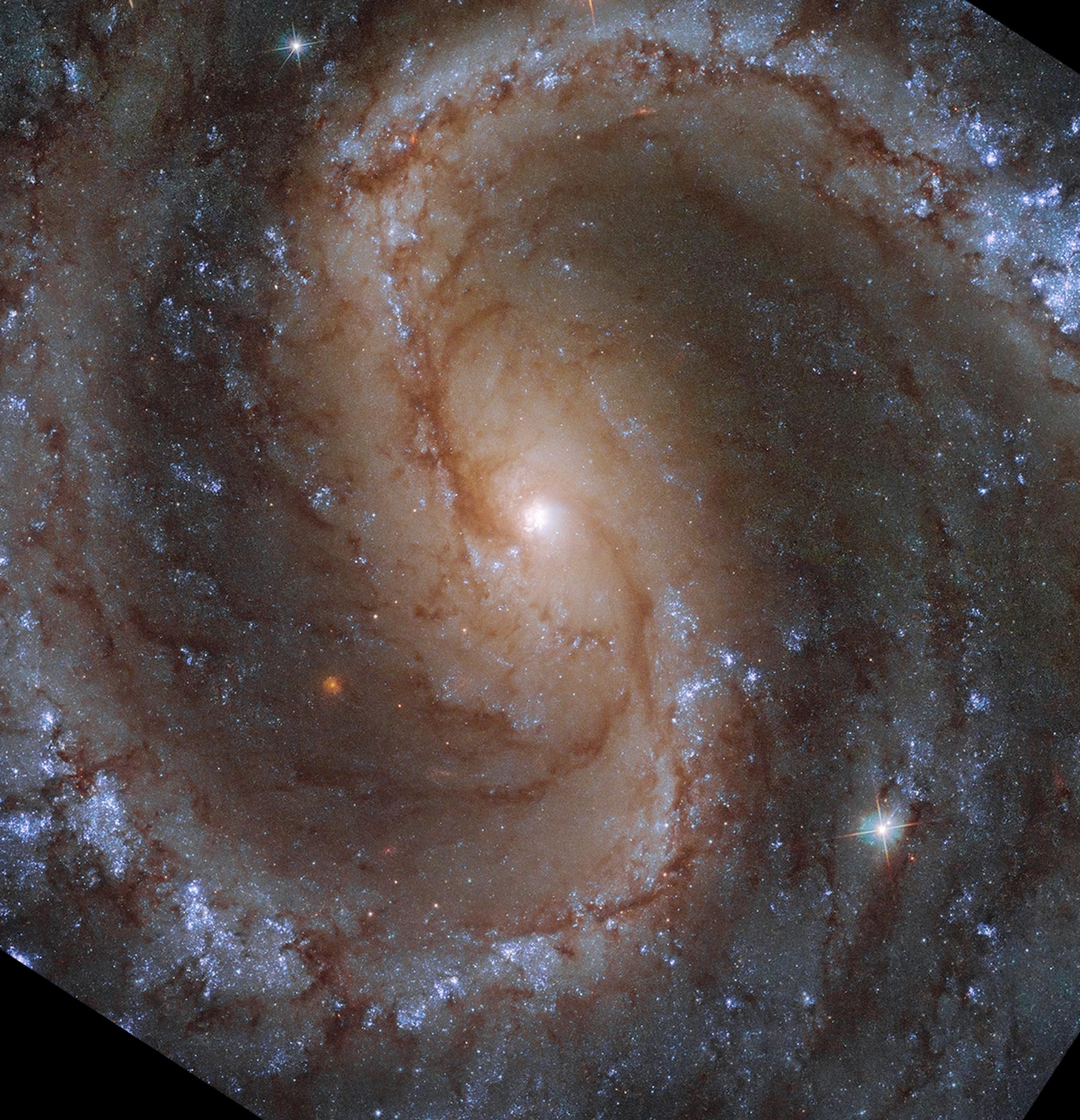
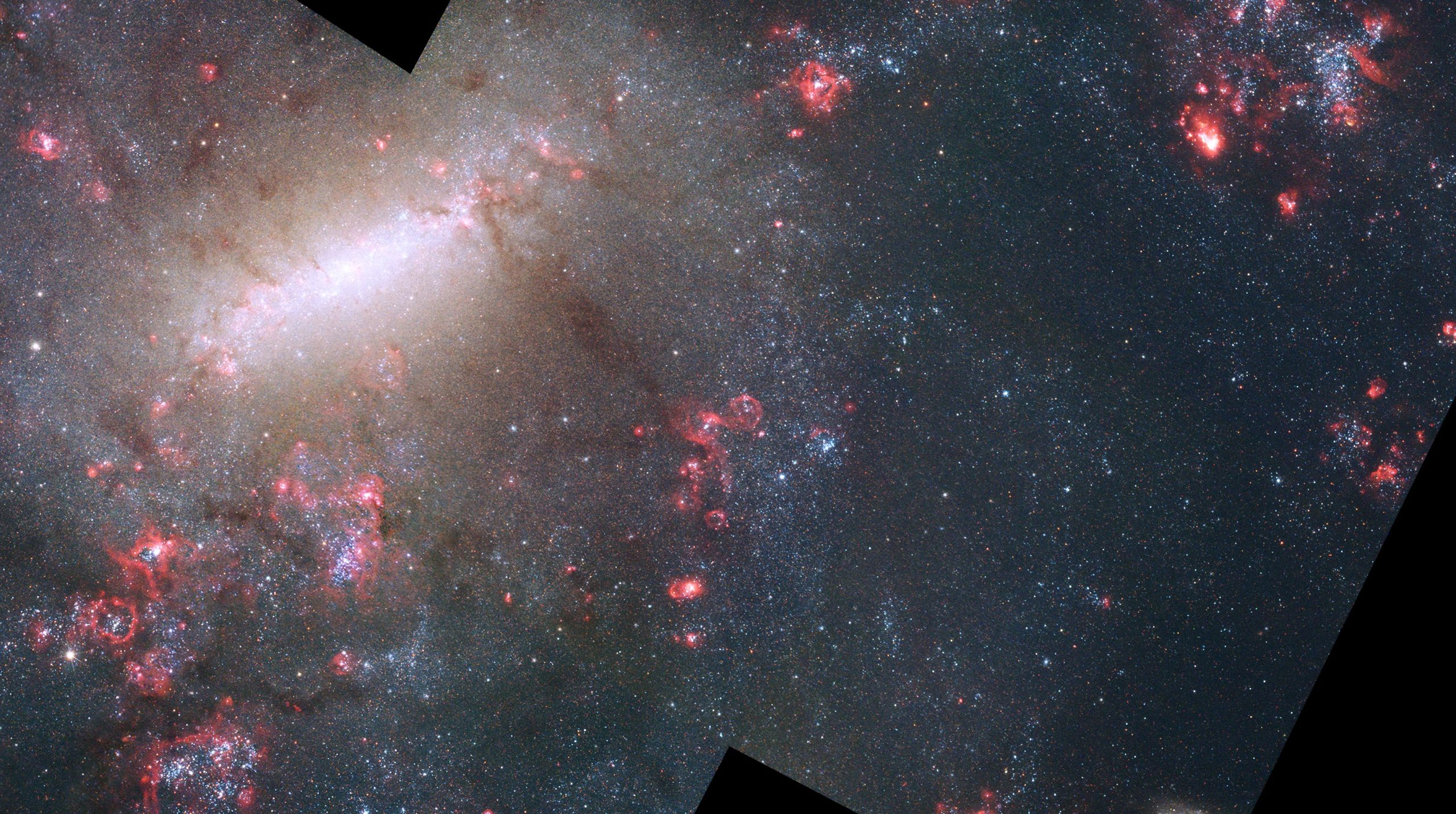
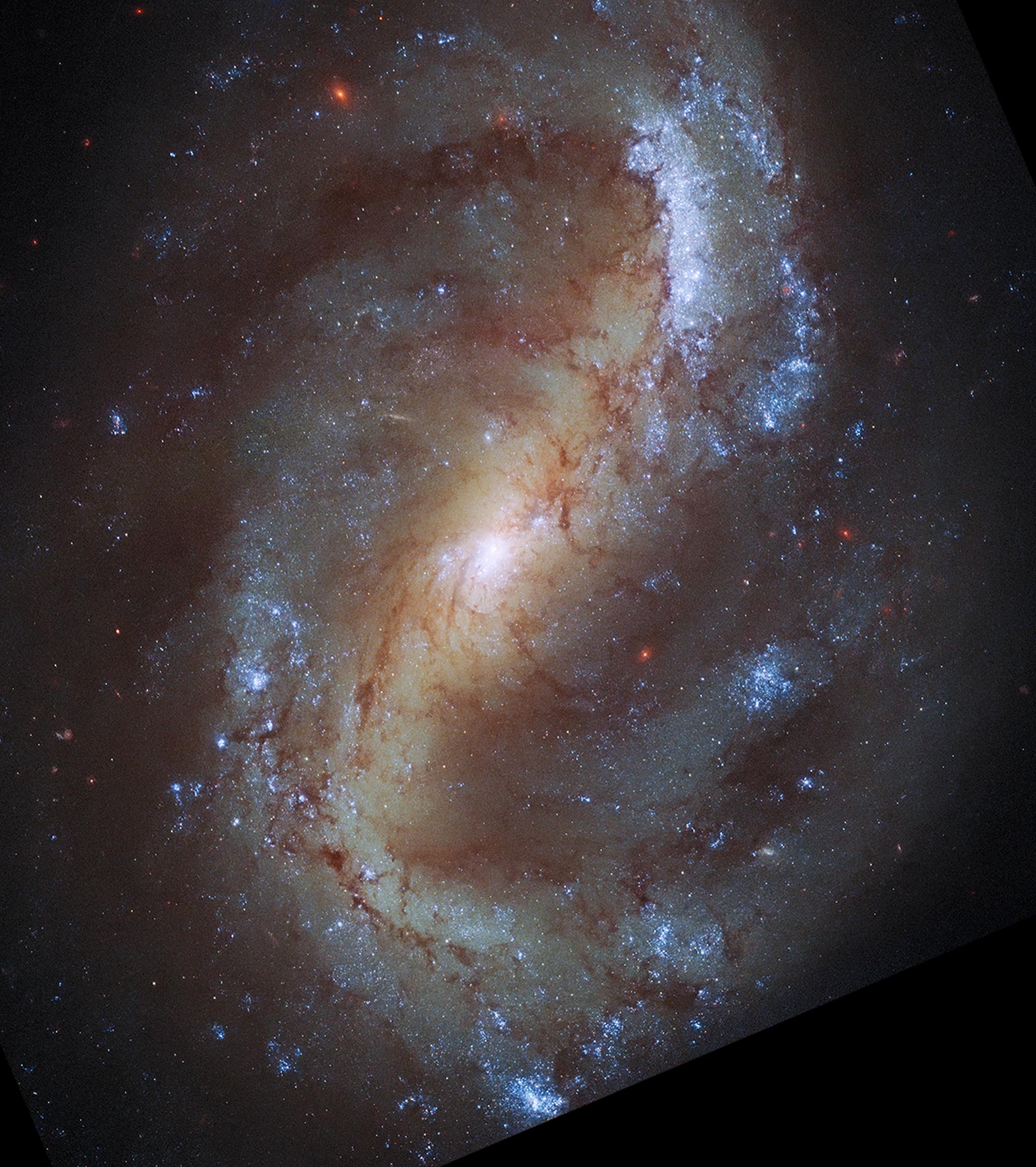
    Don’t miss the images below: Webb’s images are split with those of the same galaxies taken by NASA’s Hubble Space Telescope.
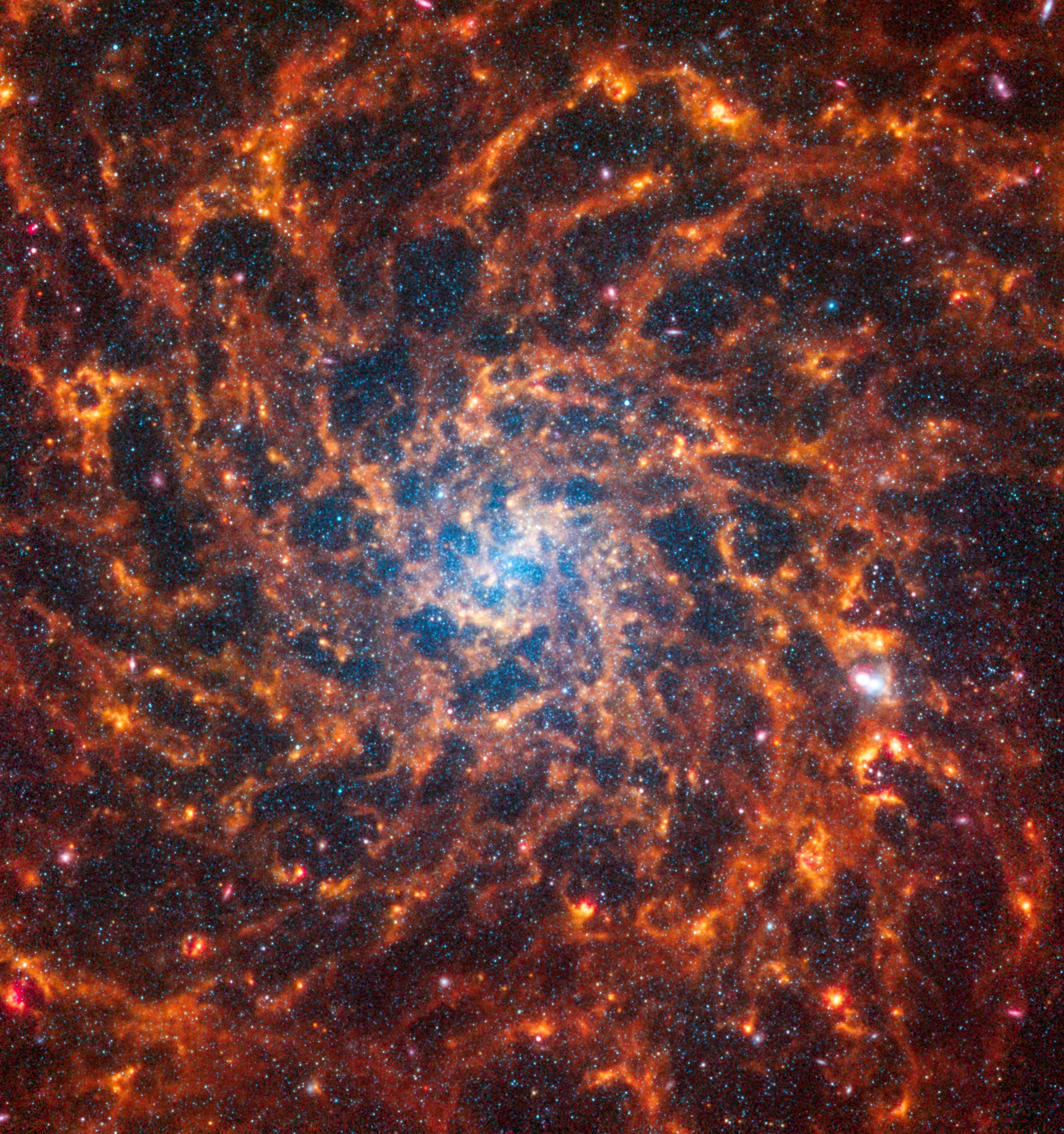
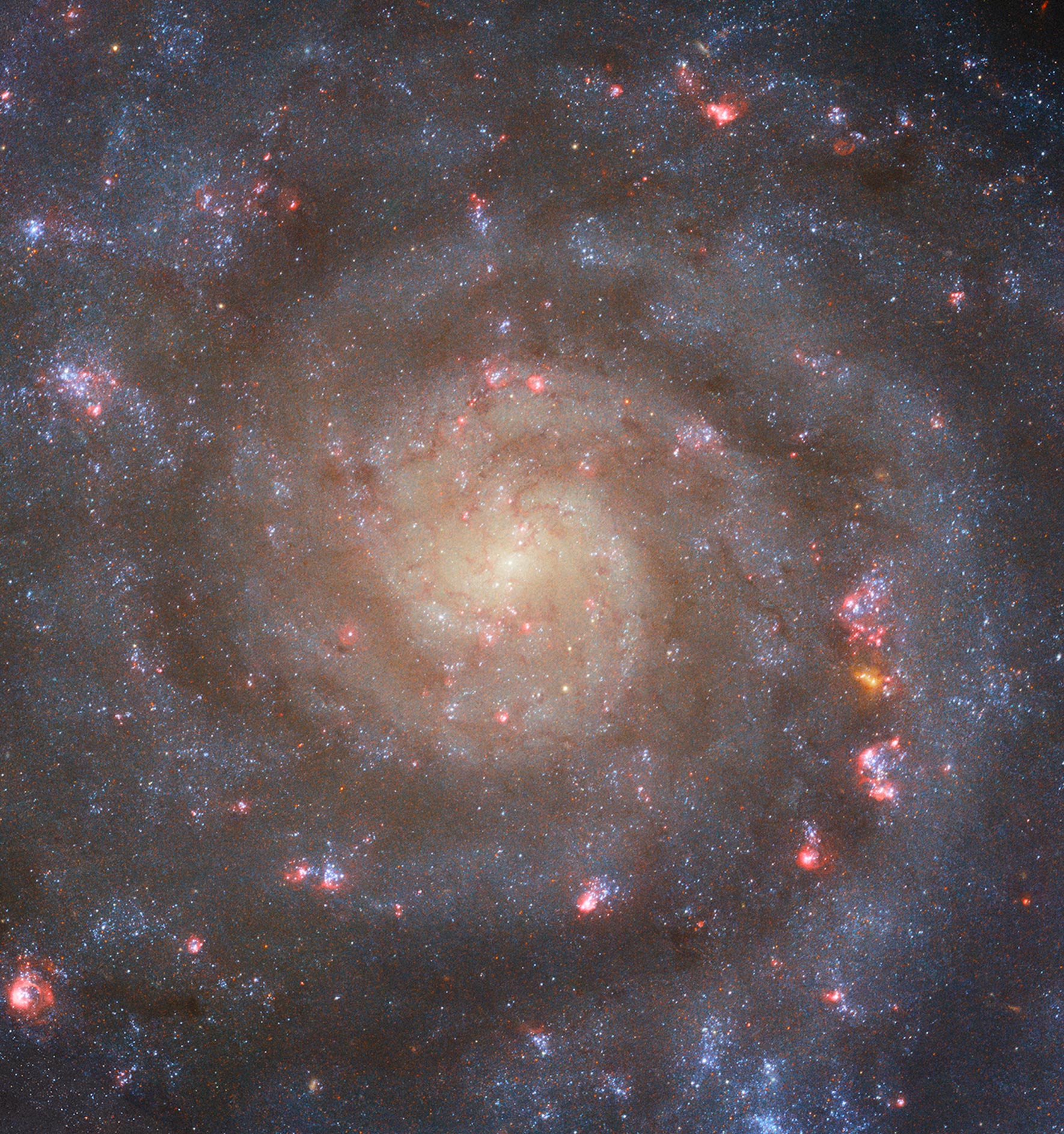
    Webb Spiral Galaxy IC 5332
    Webb’s view of Spiral Galaxy IC 5332
    Hubble Spiral Galaxy IC 5332
    Hubble’s view of Spiral Galaxy IC 5332
    Webb Spiral Galaxy NGC 628
    Webb’s view of Galaxy NGC 628
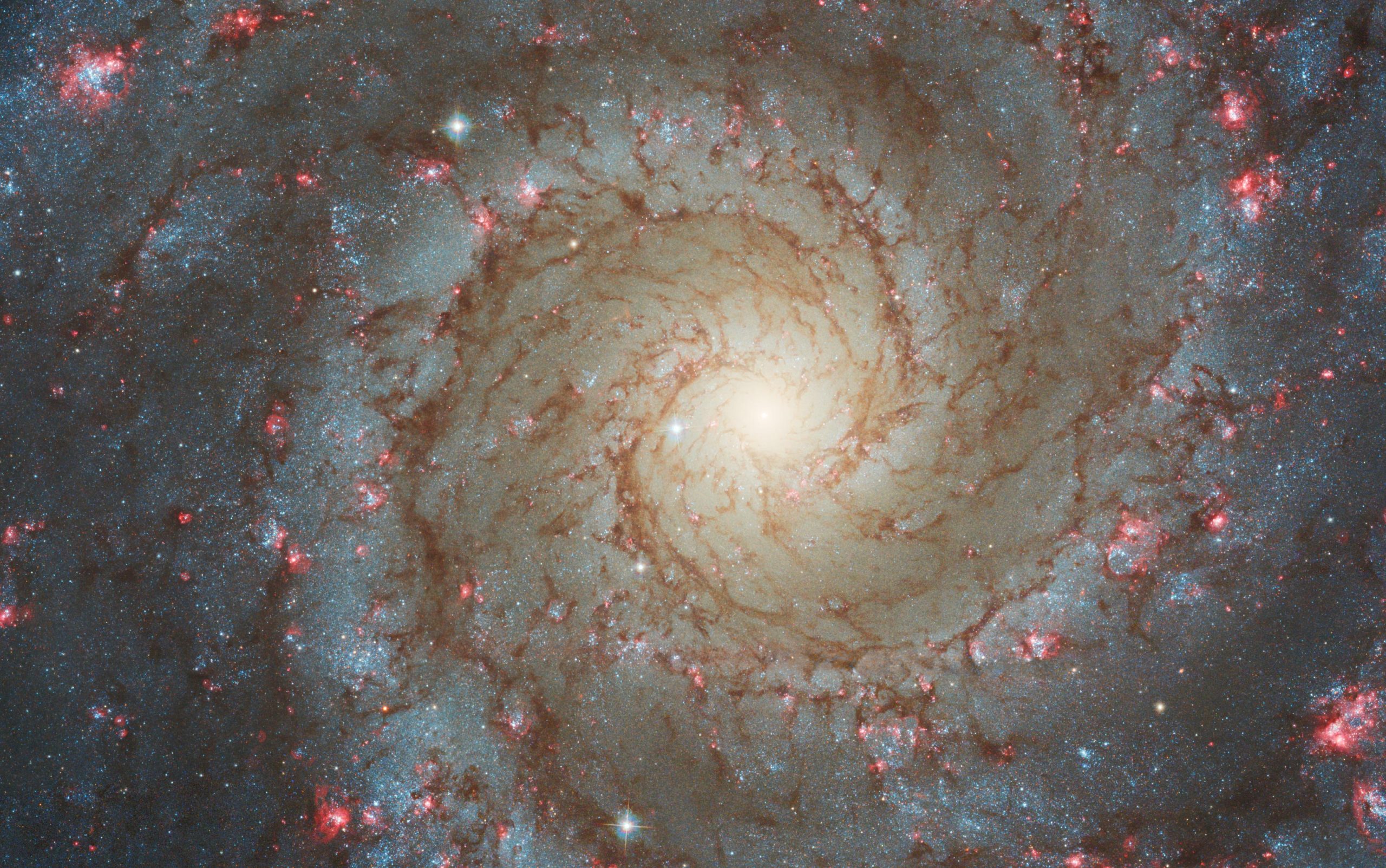
    Hubble Spiral Galaxy NGC 628
    Hubble’s view of Spiral Galaxy NGC 628
    Webb Spiral Galaxy NGC 1087
    Webb’s view of Spiral Galaxy NGC 1087
    Hubble Spiral Galaxy NGC 1087
    Hubble’s view of Spiral Galaxy NGC 1087
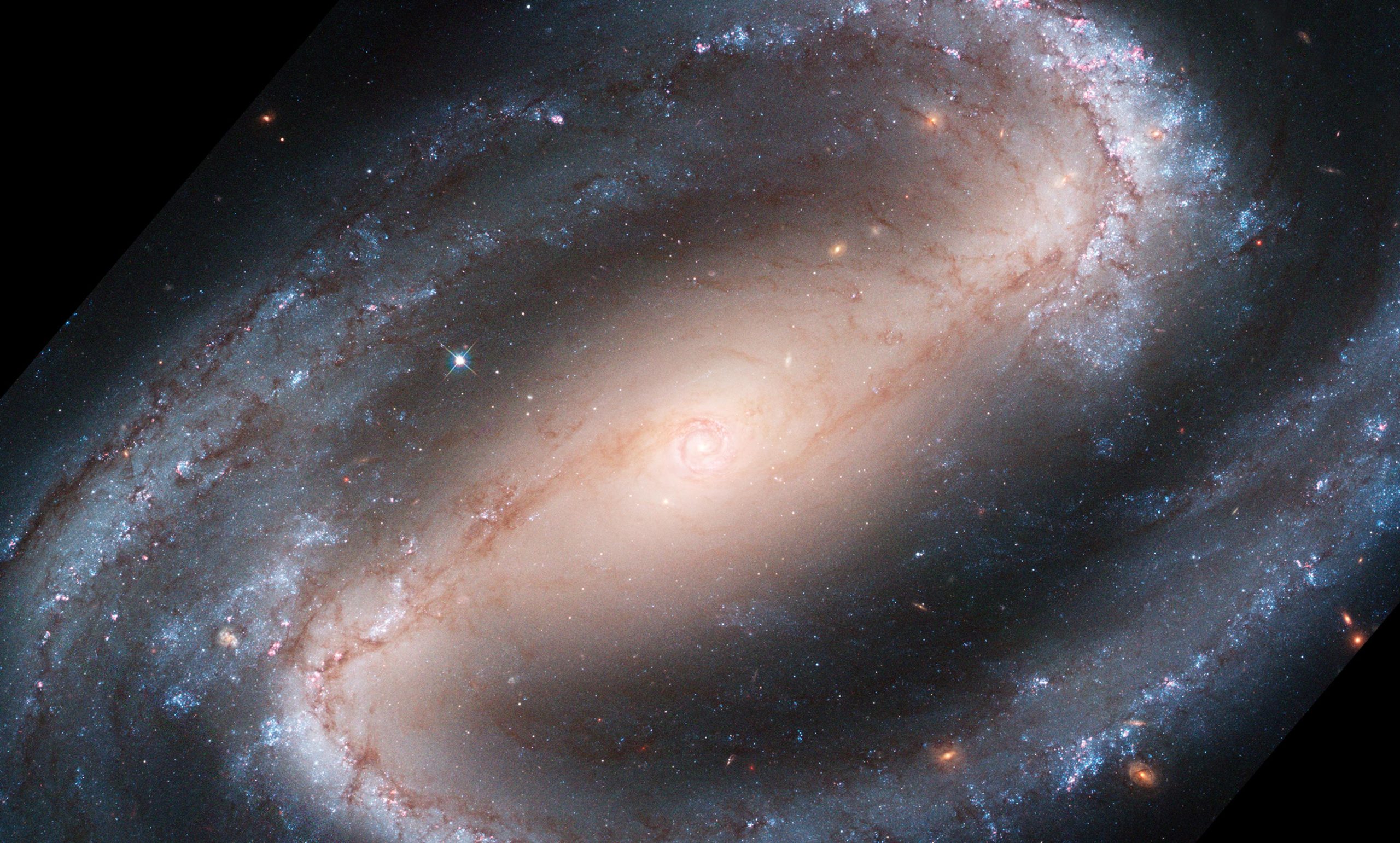
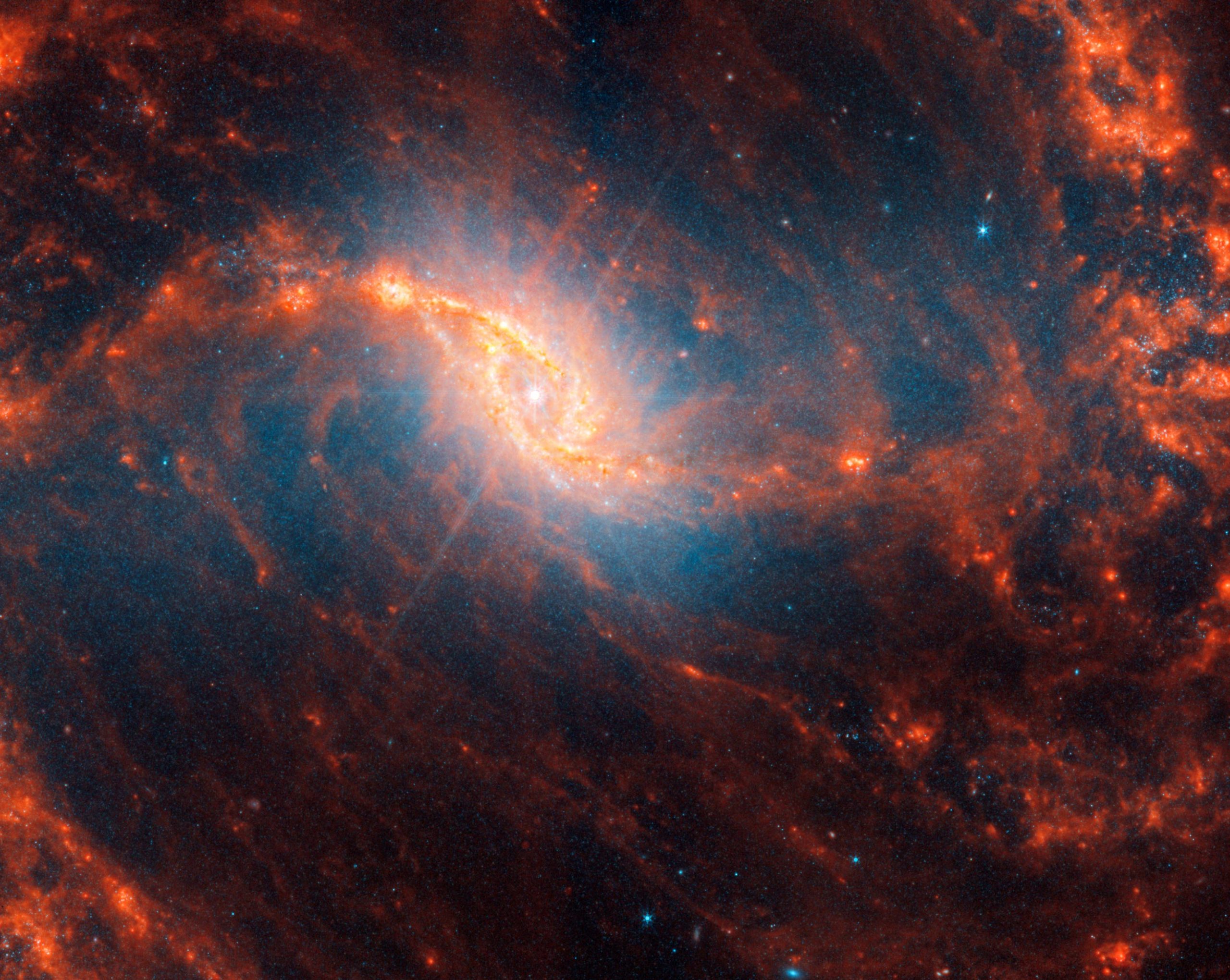
    Webb Spiral Galaxy NGC 1300
    Webb’s view of Spiral Galaxy NGC 1300
    Hubble Spiral Galaxy NGC 1300
    Hubble’s view of Spiral Galaxy NGC 1300
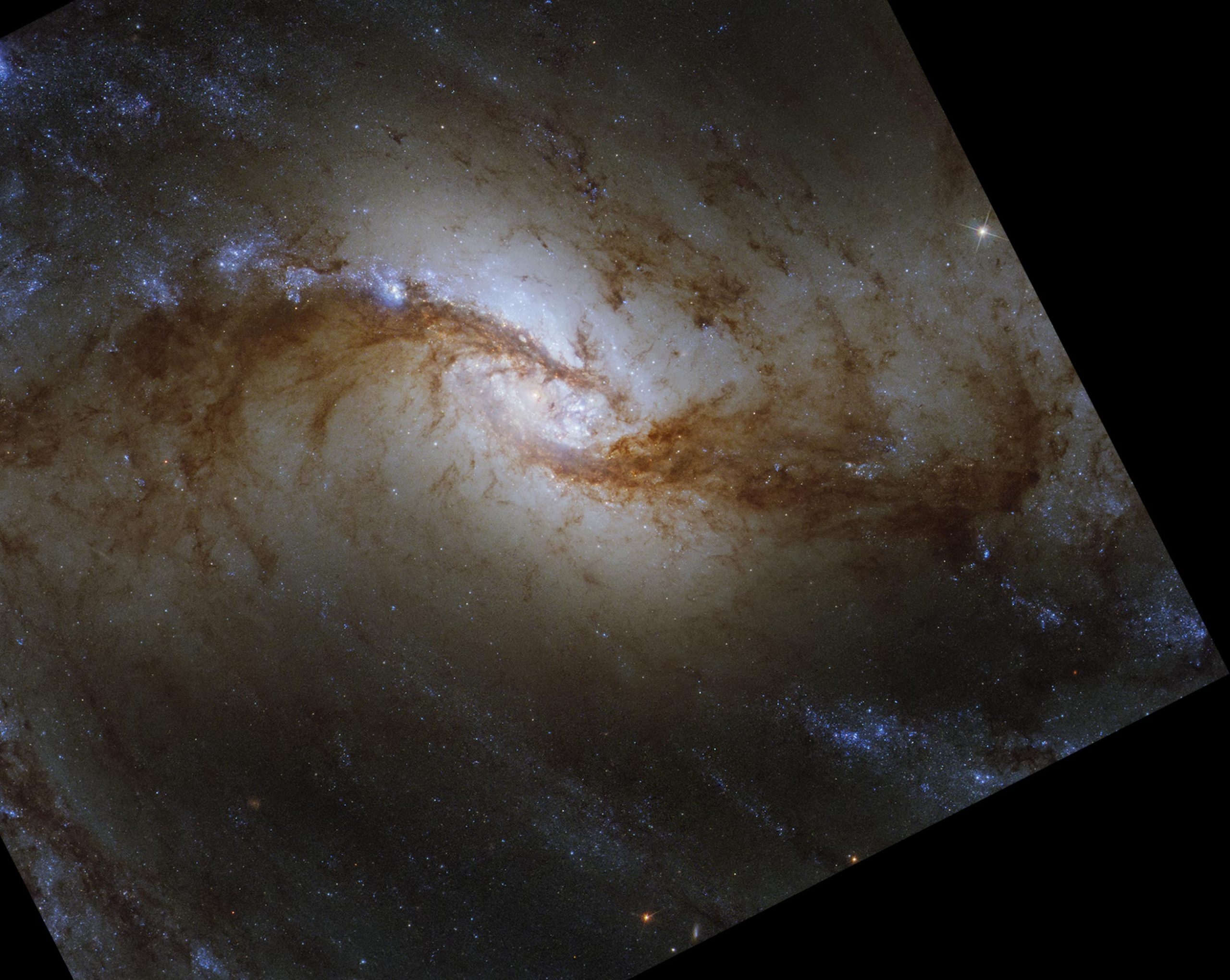
    Webb Spiral Galaxy NGC 1365
    Webb’s view of Spiral Galaxy NGC 1365
    Hubble Spiral Galaxy NGC 1365
    Hubble’s view of Spiral Galaxy NGC 1365
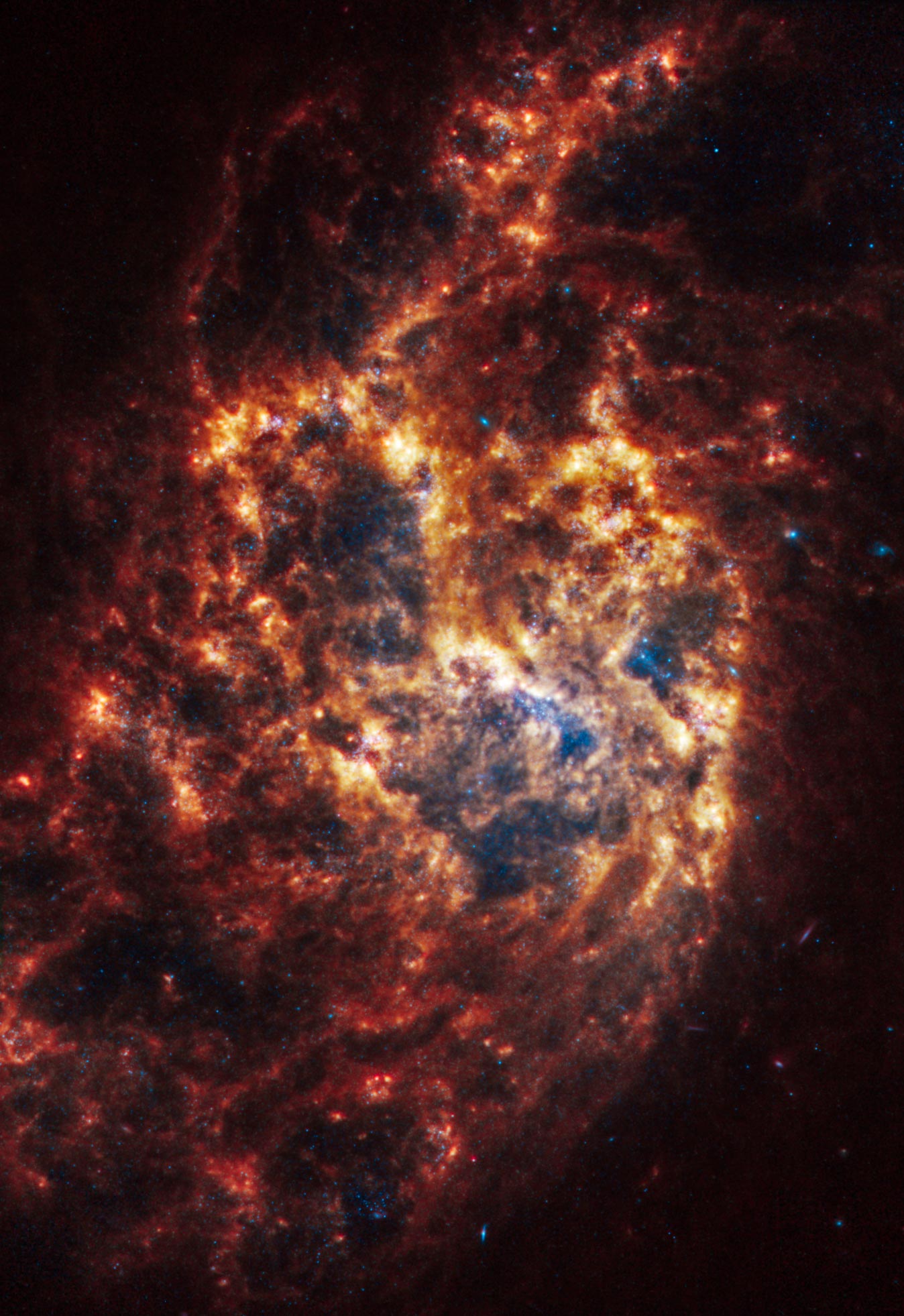
    Webb Spiral Galaxy NGC 1385
    Webb’s view of Spiral Galaxy NGC 1385
    Hubble Spiral Galaxy NGC 1385
    Hubble’s view of Spiral Galaxy NGC 1385
    Webb Spiral Galaxy NGC 1433
    Webb’s view of Spiral Galaxy NGC 1433
    Hubble Spiral Galaxy NGC 1433
    Hubble’s view of Spiral Galaxy NGC 1433
    Webb Spiral Galaxy NGC 1512
    Webb’s view of Spiral Galaxy NGC 1512
    Hubble Spiral Galaxy NGC 1512
    Hubble’s view of Spiral Galaxy NGC 1512
    Webb Spiral Galaxy NGC 1566
    Webb’s view of Spiral Galaxy NGC 1566
    Hubble Spiral Galaxy NGC 1566
    Hubble’s view of Spiral Galaxy NGC 1566
    Webb Spiral Galaxy NGC 1672
    Webb’s view of Spiral Galaxy NGC 1672
    Hubble Spiral Galaxy NGC 1672
    Hubble’s view of Spiral Galaxy NGC 1672
    Webb Spiral Galaxy NGC 2835
    Webb’s view of Spiral Galaxy NGC 2835
    Hubble Spiral Galaxy NGC 2835
    Hubble’s view of Spiral Galaxy NGC 2835
    Webb Spiral Galaxy NGC 3351
    Webb’s view of Spiral Galaxy NGC 3351
    Hubble Spiral Galaxy NGC 3351
    Hubble’s view of Spiral Galaxy NGC 3351
    Webb Spiral Galaxy NGC 3627
    Webb’s view of Spiral Galaxy NGC 3627
    Hubble Spiral Galaxy NGC 3627
    Hubble’s view of Spiral Galaxy NGC 3627
    Webb Spiral Galaxy NGC 4254
    Webb’s view of Spiral Galaxy NGC 4254
    Hubble Spiral Galaxy NGC 4254
    Hubble’s view of Spiral Galaxy NGC 4254
    Webb Spiral Galaxy NGC 4303
    Webb’s view of Spiral Galaxy NGC 4303
    Hubble Spiral Galaxy NGC 4303
    Hubble’s view of Spiral Galaxy NGC 4303
    Webb Spiral Galaxy NGC 4321
    Webb’s view of Spiral Galaxy NGC 4321
    Hubble Spiral Galaxy NGC 4321
    Hubble’s view of Spiral Galaxy NGC 4321
    Webb Spiral Galaxy NGC 4535
    Webb’s view of Spiral Galaxy NGC 4535
    Hubble Spiral Galaxy NGC 4535
    Hubble’s view of Spiral Galaxy NGC 4535
    Webb Spiral Galaxy NGC 5068
    Webb’s view of Spiral Galaxy NGC 5068
    Hubble Spiral Galaxy NGC 5068
    Hubble’s view of Spiral Galaxy NGC 5068
    Webb Spiral Galaxy NGC 7496
    Webb’s view of Spiral Galaxy NGC 7496
    Hubble Spiral Galaxy NGC 7496
    Hubble’s view of Spiral Galaxy NGC 7496

    The James Webb Space Telescope is the world’s premier space science observatory. Webb is solving mysteries in our solar system, looking beyond to distant worlds around other stars, and probing the mysterious structures and origins of our universe and our place in it. Webb is an international program led by NASA with its partners, ESA (European Space Agency) and the Canadian Space Agency.

    Never miss a breakthrough: Join the SciTechDaily newsletter.
    Follow us on Google and Google News.

    Astronomy Astrophysics James Webb Space Telescope NASA Popular Space Telescope Science Institute
    Share. Facebook Twitter Pinterest LinkedIn Email Reddit

    Related Articles

    Webb Space Telescope Reveals Extreme Starburst Galaxy’s Hidden Secrets

    Webb’s Historic Discovery: The Farthest Active Supermassive Black Hole Ever Found

    Webb Telescope’s Startling Reveal: Many Early Galaxies Looked Like Pool Noodles and Surfboards

    Webb’s Infrared Eye Uncovers Bizarre “Cat’s Tail” Dust Structure in Beta Pictoris

    NASA’s Webb Telescope Discovers Record-Breaking Miniature Brown Dwarf

    Webb’s Galactic Surprise: Reveals Rocky Planet Secrets in Cosmic Extremes

    Hidden Wonders: Webb Space Telescope Detects Unexplained Structures in Heart of Milky Way

    Webb’s Window Into Cosmic Birth: Ice Pebble Drift Sparks Planetary Life

    Galactic Collision Captured in Stunning Detail: NASA’s Webb & Hubble Unite To Create Most Colorful View of Universe

    1 Comment

    1. Jeff on February 10, 2024 5:45 am

      Nice CGI from the fakoscope

      Reply
    Leave A Reply Cancel Reply

    • Facebook
    • Twitter
    • Pinterest
    • YouTube

    Don't Miss a Discovery

    Subscribe for the Latest in Science & Tech!

    Trending News

    Breakthrough Bowel Cancer Trial Leaves Patients Cancer-Free for Nearly 3 Years

    Natural Compound Shows Powerful Potential Against Rheumatoid Arthritis

    100,000-Year-Old Neanderthal Fossils in Poland Reveal Unexpected Genetic Connections

    Simple “Gut Reset” May Prevent Weight Gain After Ozempic or Wegovy

    2.8 Days to Disaster: Scientists Warn Low Earth Orbit Could Suddenly Collapse

    Common Food Compound Shows Surprising Power Against Superbugs

    5 Simple Ways To Remember More and Forget Less

    The Atomic Gap That Could Cost the Semiconductor Industry Billions

    Follow SciTechDaily
    • Facebook
    • Twitter
    • YouTube
    • Pinterest
    • Newsletter
    • RSS
    SciTech News
    • Biology News
    • Chemistry News
    • Earth News
    • Health News
    • Physics News
    • Science News
    • Space News
    • Technology News
    Recent Posts
    • Powerful Antioxidant Found To Play a Key Role in Proper Protein Folding
    • MIT Laser Breakthrough Lets Scientists Watch Drugs Enter the Brain in Real Time
    • Study Reveals Malaria’s Hidden Role in Human Evolution
    • Scientists Print Artificial Neurons That Can Talk to the Brain
    • Bowel and Ovarian Cancers Are Dramatically Rising in Young Adults and Scientists Aren’t Sure Why
    Copyright © 1998 - 2026 SciTechDaily. All Rights Reserved.
    • Science News
    • About
    • Contact
    • Editorial Board
    • Privacy Policy
    • Terms of Use

    Type above and press Enter to search. Press Esc to cancel.