
Close Menu
    Facebook X (Twitter) Instagram
    SciTechDaily
    • Biology
    • Chemistry
    • Earth
    • Health
    • Physics
    • Science
    • Space
    • Technology
    Facebook X (Twitter) Pinterest YouTube RSS
    SciTechDaily
    Home»Space»Vehicle Stacking: NASA’s Perseverance Mars Rover Spacecraft Put in Launch Configuration
    Space

    Vehicle Stacking: NASA’s Perseverance Mars Rover Spacecraft Put in Launch Configuration

    By Jet Propulsion LaboratoryMay 10, 2020No Comments4 Mins Read
    Facebook Twitter Pinterest Telegram LinkedIn WhatsApp Email Reddit
    Share
    Facebook Twitter LinkedIn Pinterest Telegram Email Reddit
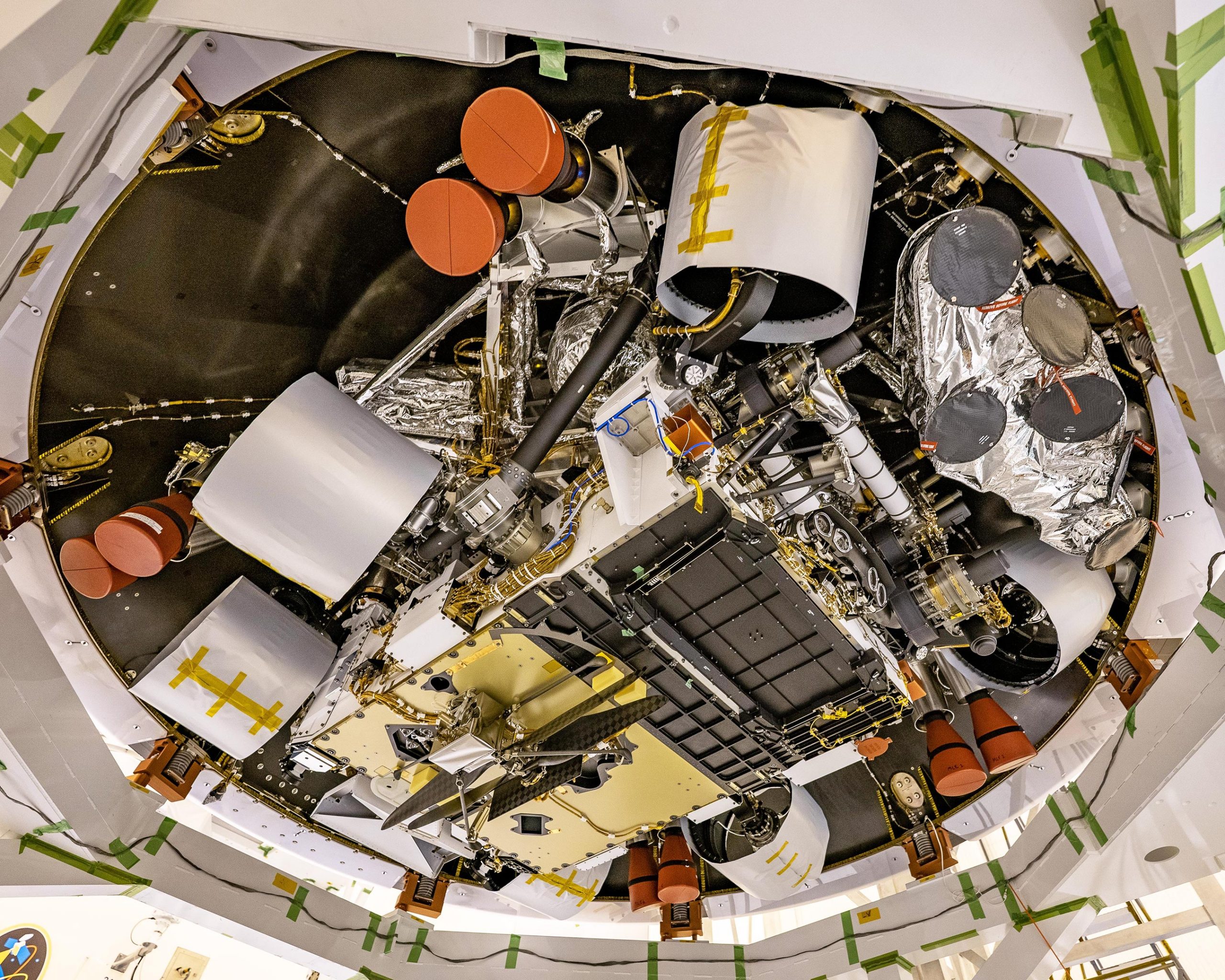
    Perseverance From Below
    NASA’s Mars Perseverance rover’s descent stage was recently stacked atop the rover at Kennedy Space Center, and the two were placed in their back shell. The Ingenuity helicopter can be seen attached to the rover’s underside (lower center of the image). Credit: NASA/JPL-Caltech

    Stacking spacecraft components on top of each other is one of the final assembly steps before a mission launches to the Red Planet.

    Engineers working on NASA’s Perseverance rover mission at the Kennedy Space Center in Florida have begun the process of placing the Mars-bound rover and other spacecraft components into the configuration they’ll be in as they ride on top of the United Launch Alliance Atlas V rocket. The launch period for the mission opens on July 17 — just 70 days from now.

    Called “vehicle stacking,” the process began on April 23 with the integration of the rover and its rocket-powered descent stage. One of the first steps in the daylong operation was to lift the descent stage onto Perseverance so that engineers could connect the two with flight-separation bolts.
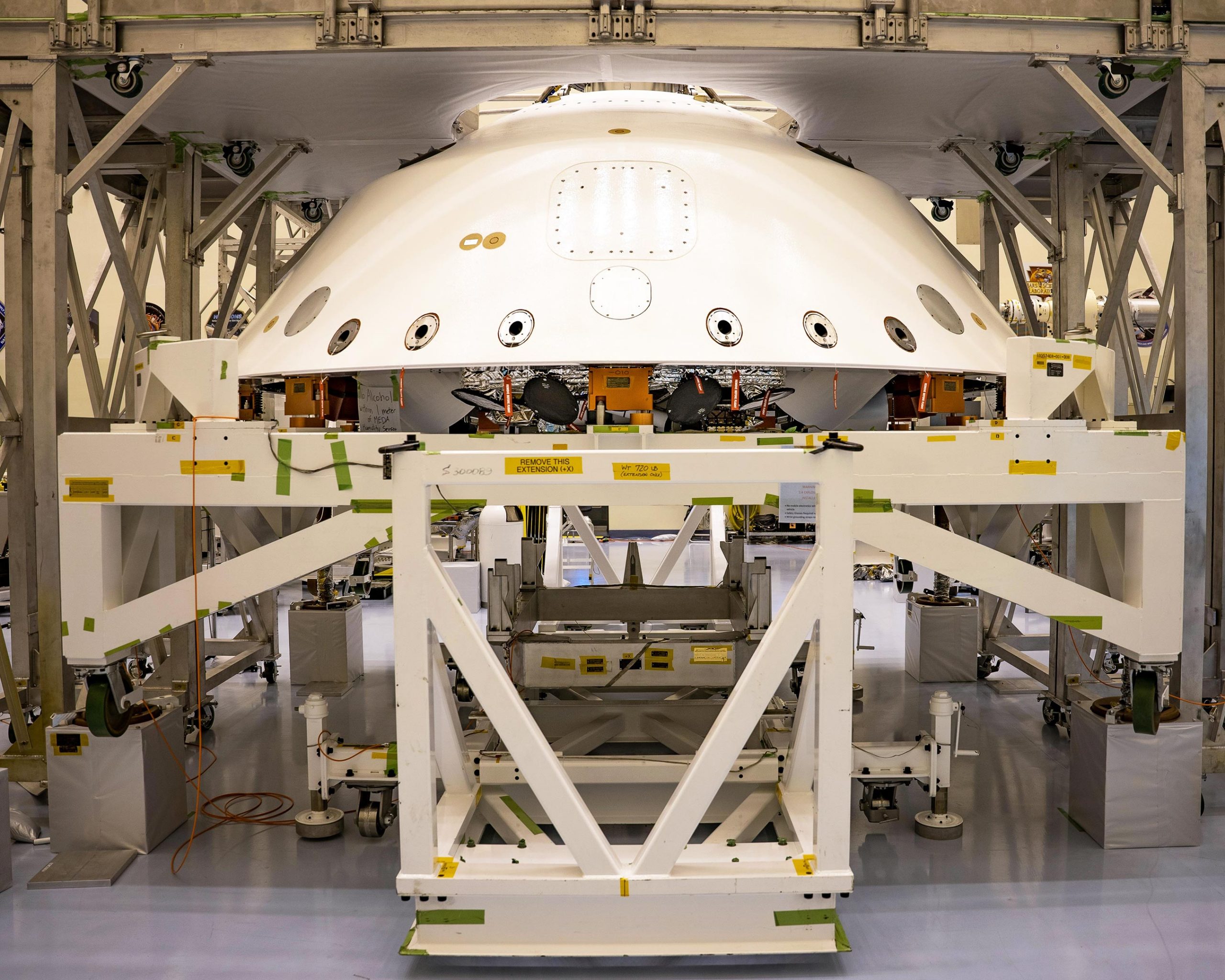
    Protecting NASA's Perseverance Mars Rover
    The cone-shaped back shell for NASA’s Perseverance rover mission is shown in this April 29, 2020, image from the Kennedy Space Center in Florida. Credit: NASA/JPL-Caltech

    When it’s time for the rover to touch down on Mars, these three bolts will be released by small pyrotechnic charges, and the spacecraft will execute the sky crane maneuver: Nylon cords spool out through what are called bridle exit guides to lower the rover 25 feet (7.6 meters) below the descent stage. Once Perseverance senses it’s on the surface, pyrotechnically-fired blades will sever the cords, and the descent stage flies off. The sky crane maneuver ensures Perseverance will land on the Martian surface free of any other spacecraft components, eliminating the need for a complex deployment procedure.

    “Attaching the rover to the descent stage is a major milestone for the team because these are the first spacecraft components to come together for launch, and they will be the last to separate when we reach Mars,” said David Gruel, the Perseverance rover assembly, test, and launch operations manager at NASA’s Jet Propulsion Laboratory in Southern California, which manages rover operations. “These two assemblies will remain firmly nestled together until they are about 65 feet [20 meters] over the surface of Mars.”
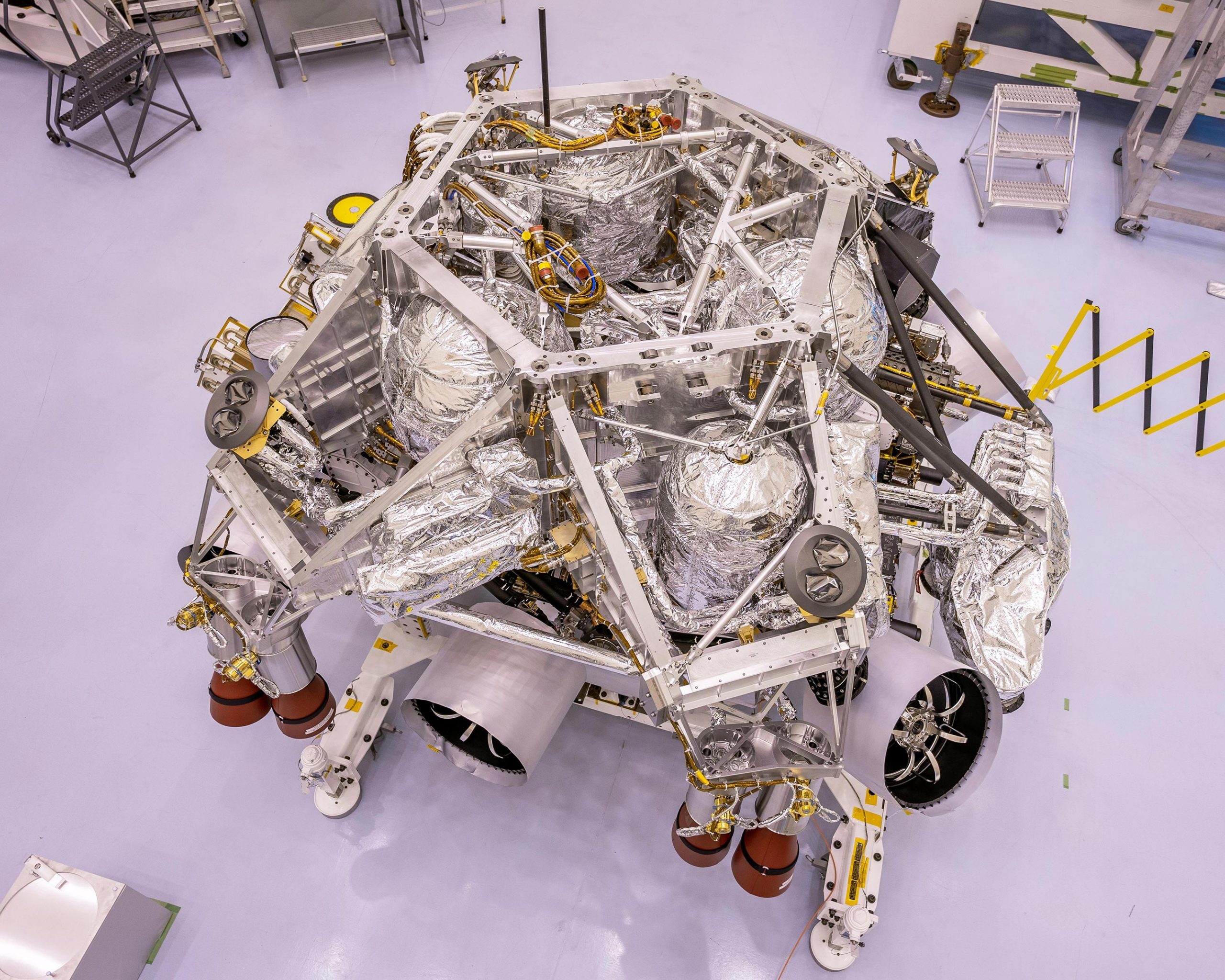
    Perseverance Rover Gets in Launch Shape
    This image of the rocket-powered descent stage sitting on to of NASA’s Perseverance rover was taken in a clean room at Kennedy Space Center on April 29, 2020. Credit: NASA/JPL-Caltech

    On April 29, the rover and descent stage were attached to the cone-shaped back shell, which contains the parachute and, along with the mission’s heat shield, provides protection for the rover and descent stage during Martian atmospheric entry.

    Whether they are working on final assembly of the vehicle at Kennedy Space Center, testing software and subsystems at JPL or (as the majority of the team is doing) teleworking due to coronavirus safety precautions, the Perseverance team remains on track to meet the opening of the rover’s launch period. No matter what day Perseverance launches, it will land at Mars’ Jezero Crater on February 18, 2021.

    The Perseverance rover’s astrobiology mission will search for signs of ancient microbial life. It will also characterize the planet’s climate and geology, collect samples for future return to Earth, and pave the way for human exploration of the Red Planet. The Perseverance rover mission is part of a larger program that includes missions to the Moon as a way to prepare for human exploration of the Red Planet. Charged with returning astronauts to the Moon by 2024, NASA will establish a sustained human presence on and around the Moon by 2028 through NASA’s Artemis lunar exploration plans.

    Never miss a breakthrough: Join the SciTechDaily newsletter.
    Follow us on Google and Google News.

    JPL Mars Mars 2020 Perseverance Rover NASA Popular
    Share. Facebook Twitter Pinterest LinkedIn Email Reddit

    Related Articles

    NASA’s Mars Perseverance Rover Now Selects Its Own Targets To Zap With Its Laser

    NASA’s Ingenuity Mars Helicopter in Contact With Perseverance Rover After Communications Dropout

    NASA’s Ingenuity Mars Helicopter Scouts Ridgeline for Perseverance Science Team

    NASA Ingenuity Helicopter Spots Spacecraft Wreckage on Mars – Perseverance’s Cone-Shaped Backshell

    We’ve Arrived! NASA’s Mars Perseverance Rover Starts the Delta Front Campaign

    Incredible Video of Solar Eclipse on Mars – Captured by NASA’s Perseverance Rover

    NASA’s Mars Perseverance Rover Arrives at Ancient Delta for New Science Campaign

    NASA Perseverance Rover’s Self-Driving Capabilities Put to the Test in Rush to Martian Delta

    NASA’s Mars Perseverance Rover Picks Up an Unwanted Hitchhiker

    Leave A Reply Cancel Reply

    • Facebook
    • Twitter
    • Pinterest
    • YouTube

    Don't Miss a Discovery

    Subscribe for the Latest in Science & Tech!

    Trending News

    Scientists Uncover Potential Brain Risks of Popular Fish Oil Supplements

    Scientists Discover a Surprising Way To Make Bread Healthier and More Nutritious

    After 60 Years, Scientists Uncover Unexpected Brain Effects of Popular Diabetes Drug Metformin

    New Research Uncovers Hidden Side Effects of Popular Weight-Loss Drugs

    Scientists Rethink Extreme Warming After Surprising Ocean Discovery

    Landmark Study Links Never Marrying to Significantly Higher Cancer Risk

    Researchers Discover Unknown Beetle Species Just Steps From Their Lab

    Largest-Ever Study Finds Medicinal Cannabis Ineffective for Anxiety, Depression, PTSD

    Follow SciTechDaily
    • Facebook
    • Twitter
    • YouTube
    • Pinterest
    • Newsletter
    • RSS
    SciTech News
    • Biology News
    • Chemistry News
    • Earth News
    • Health News
    • Physics News
    • Science News
    • Space News
    • Technology News
    Recent Posts
    • Not Just Alzheimer’s: Scientists Uncover Clues to a Second, Overlooked Disorder
    • Scientists Uncover Dangerous Connection Between Serotonin and Heart Valve Disease
    • Scientists Discover a “Protector” Protein That Could Help Reverse Hair Loss
    • Powerful Lasers Reveal How Matter Becomes Plasma in Trillionths of a Second
    • A Simpler Path to Super-Resolution: Scientists Reinvent Microscopy
    Copyright © 1998 - 2026 SciTechDaily. All Rights Reserved.
    • Science News
    • About
    • Contact
    • Editorial Board
    • Privacy Policy
    • Terms of Use

    Type above and press Enter to search. Press Esc to cancel.