
A mouse study suggests that neighboring visual areas may build agreement by sustaining shared activity patterns while mismatches fade.
A shape in the dark might briefly resemble a face, or an orange might momentarily look like an apple. To make sense of what we see, the brain must coordinate information from regions with different specialties. A study in mice now suggests how two neighboring visual areas may reach a consistent interpretation, with shared activity persisting while mismatches quickly fade.
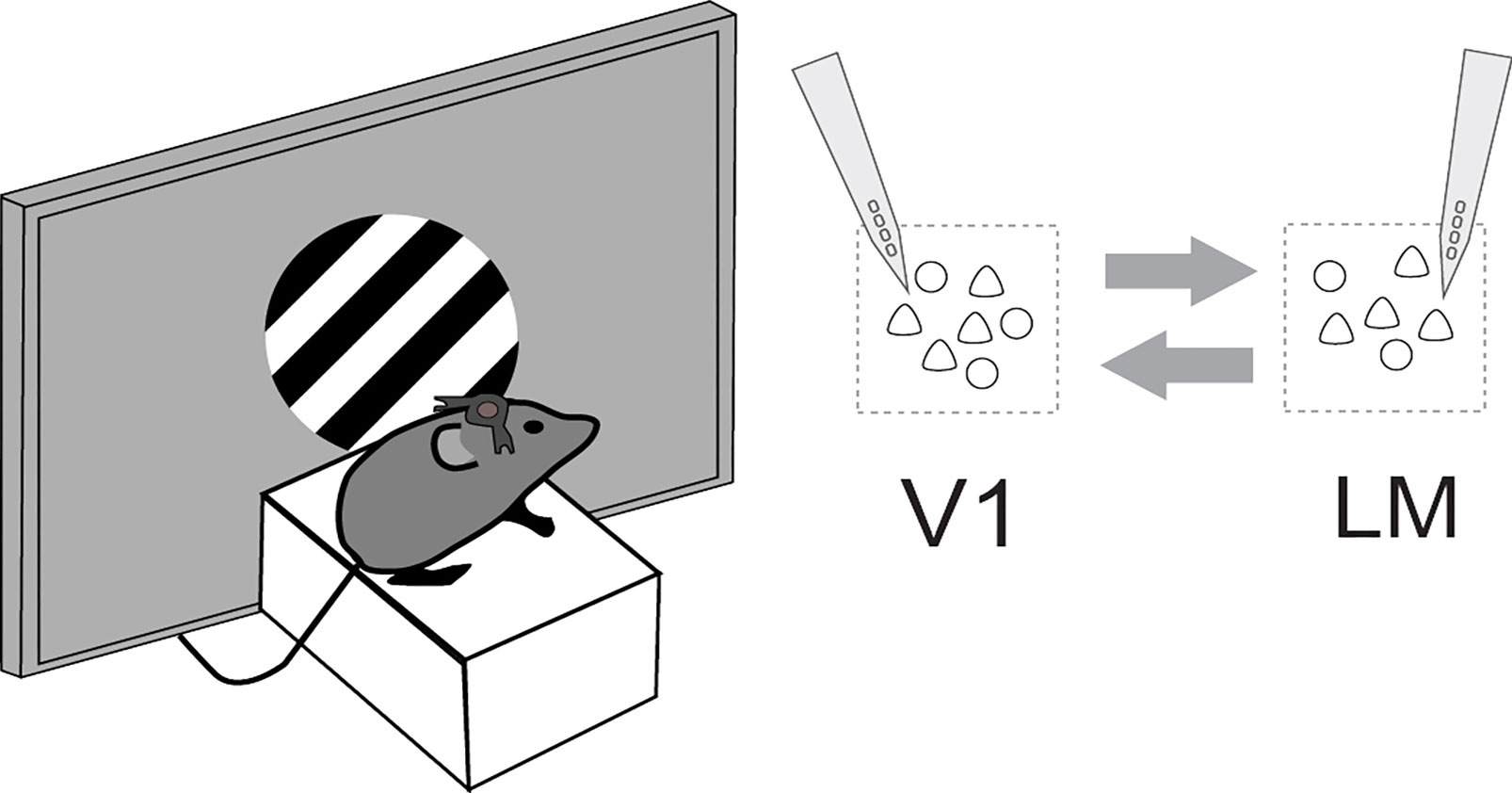
The research, published in Nature Neuroscience, examined the primary visual cortex, known as V1, and the lateromedial visual area, or LM. Both belong to the visual cortex, the part of the brain that processes sight. When activity patterns in the two areas agreed, they lasted longer. When the patterns disagreed, the mismatch dissipated within a fraction of a second.
The finding addresses a question that extends beyond vision for Mitra Javadzadeh, a Cynthia R. Stebbins Fellow at Cold Spring Harbor Laboratory, who conducted the research with collaborators at the University of Cambridge and University College London.
“While we understand individual building blocks of the brain, what is the glue that puts them together?” Javadzadeh asks. “Knowing that can finally help us understand how the brain works as a whole.”

How two visual areas build consensus
V1 and LM communicate in both directions, allowing each area to influence its neighbor rather than simply pass information along a one-way route. To investigate that relationship, the researchers trained mice to distinguish between two visual patterns tilted at opposite angles. The mice received a reward for only one orientation. During the task, the team briefly silenced either V1 or LM and recorded how the other area functioned without its partner’s input.
Using those recordings, the researchers built an artificial neural network model representing the V1-LM circuit. The model allowed them to simulate how the circuit would respond when specific neurons were manipulated and investigate how connections between the areas shaped the persistence of their activity.
“We find that over time, these types of connections between areas implement a mechanism we call consensus building,” Javadzadeh explains.
Such coordination could help explain how specialized groups of neurons, each receiving distinct streams of sensory information, contribute to a unified interpretation. “We are trying to understand how you can have such a high level of specialization between these different blocks, yet always have a consistent holistic outcome,” Javadzadeh says.
When sight and sound disagree
The experiments tested mice distinguishing tilted patterns, rather than the everyday visual mix-ups that help illustrate the broader question. They also focused on just two visual areas. Javadzadeh’s team is now investigating whether similar principles apply throughout the neocortex, the larger brain structure that includes V1 and LM, and potentially help reconcile information from different senses.
“For example, when what you see contradicts with what you hear, do you still use the same kind of mechanisms to reconcile these two?” she wonders.
If consensus building operates more broadly, it could help researchers understand what happens when brain regions fail to reach a consistent interpretation of the world. The same principles could also inspire approaches to reconciling conflicting information in artificial intelligence systems.
Reference: “Reciprocal connections dynamically build consensus between neocortical areas” by Mitra Javadzadeh, Marine Schimel, Sonja B. Hofer, Yashar Ahmadian and Guillaume Hennequin, 18 September 2026, Nature Neuroscience.
DOI: 10.1038/s41593-026-02437-3
Funding: UKRI Engineering and Physical Sciences Research Council, Gatsby Charitable Foundation, Wellcome Foundation, Cynthia R. Stebbins Fellows Program, Pershing Square Foundation
Never miss a breakthrough: Join the SciTechDaily newsletter.
Follow us on Google and Google News.