
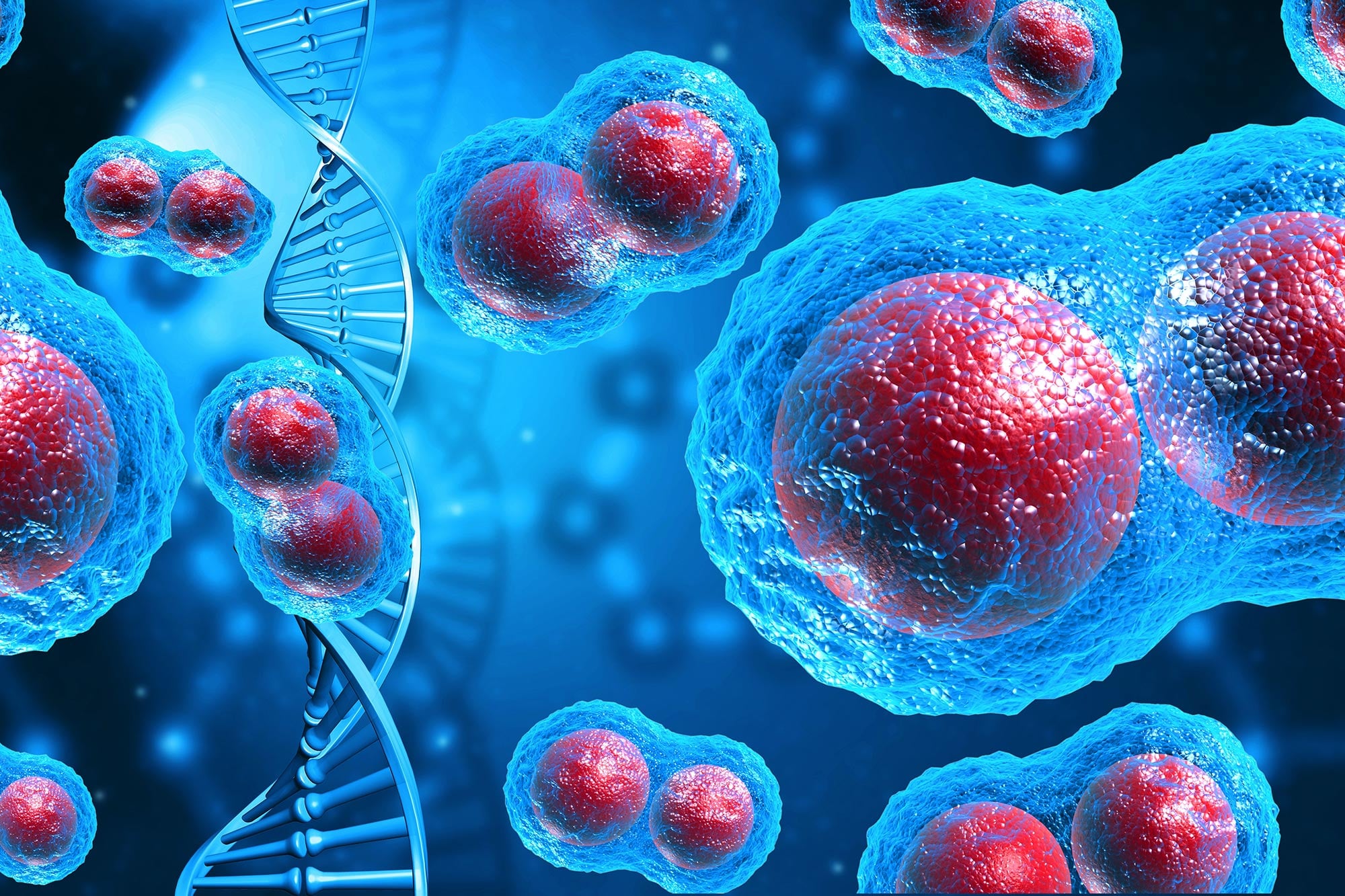
Researchers found that blocking a key DNA repair protein destabilizes rogue DNA circles that help drive aggressive cancers, exposing a potential weakness in tumors that rely on ecDNA.
Some aggressive cancers carry extra copies of cancer-driving genes on circles of DNA that float outside the cell’s normal chromosomes. These rogue DNA circles can help tumors grow faster, resist treatment, and become harder to control, yet their unusual structure raises a puzzle: how do cancer cells keep such unstable genetic material from falling apart?
Known as extrachromosomal DNA, or ecDNA, these circular fragments occur in roughly 1 in 6 human cancers. ecDNA can amplify cancer-causing genes, and its presence has been linked to faster tumor growth, treatment resistance, and poorer survival. Scientists, however, have not completely understood how cancer cells preserve these fragile circles long enough to gain those advantages.
A hidden weakness in ecDNA
Researchers at Memorial Sloan Kettering Cancer Center (MSK) and their collaborators have now identified a two-part system that protects ecDNA from damage. The work, published in Nature, also revealed a structural weakness that could potentially be exploited to selectively destabilize ecDNA in cancer cells.
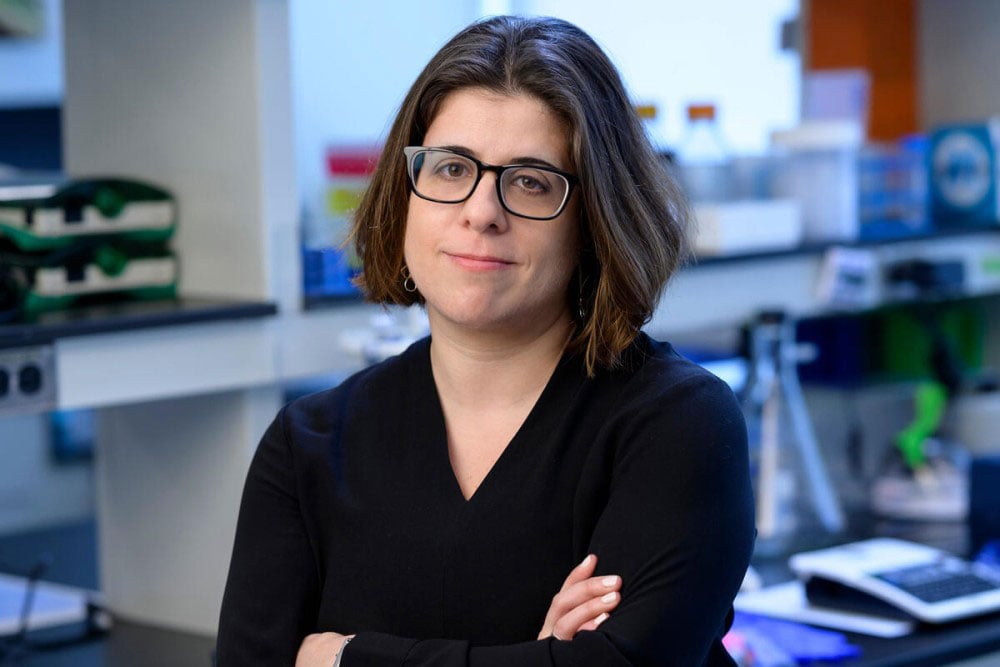
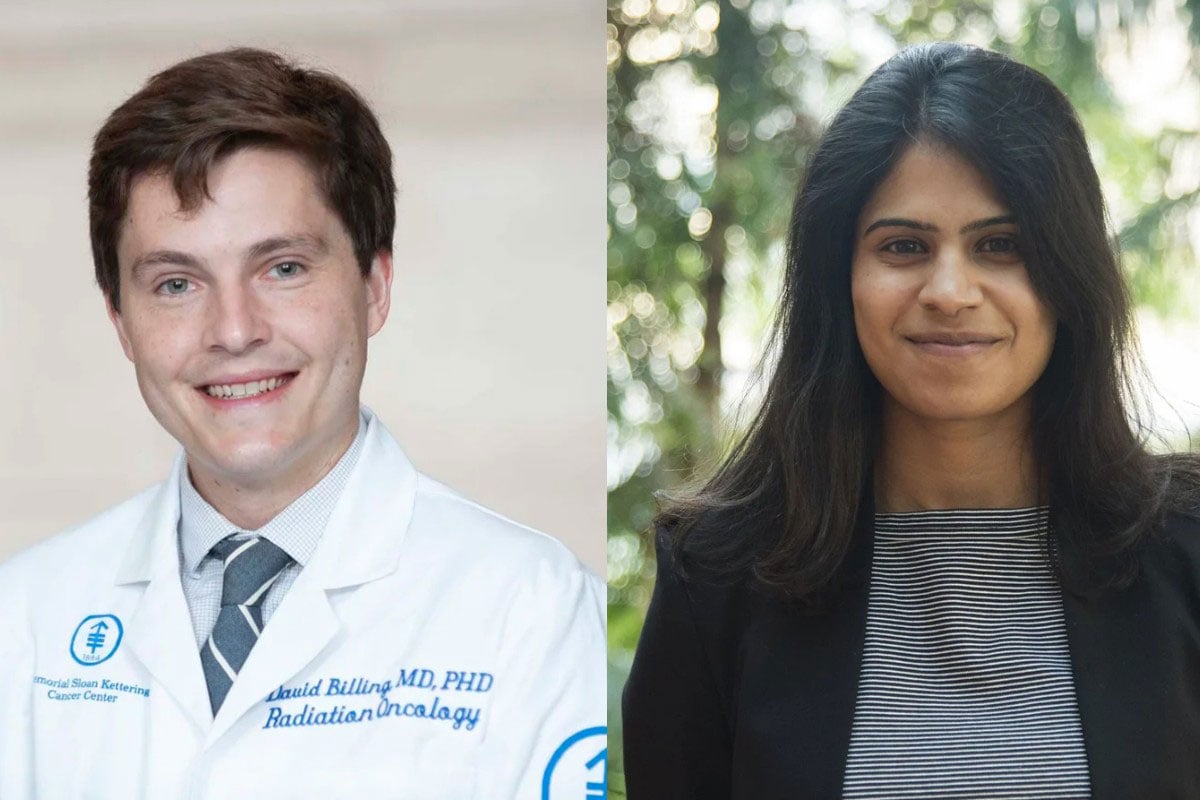
The team, led by the lab of Agnel Sfeir, PhD, at MSK’s Sloan Kettering Institute, found that repetitive stretches of DNA form weak points where ecDNA is especially prone to breaking. Radiation oncologist David Billing, MD, PhD, and graduate student Monica Selvaraj co-led the study.
Those vulnerable regions contain alternating T and A letters in the DNA code, known as TA repeats. Instead of remaining in a conventional DNA shape, these sequences can fold into unusual cross-shaped structures that are especially fragile and susceptible to breaks.
“We were surprised to find that ecDNA has a built-in fragility,” Dr. Sfeir says. “The circular shape that allow genes to rapidly amplify and that give cancer cells a growth advantage are also inherently prone to breaking. That means cancer cells depend on repair to keep them intact, and that dependency is something we may be able to exploit.”
Two proteins keep ecDNA intact
The fragility of those TA repeats leaves cancer cells dependent on two proteins that protect ecDNA at different stages of damage. FANCM acts before a break occurs by smoothing out problematic DNA structures, while the repair protein polymerase theta, or Polθ, patches damage after the DNA has already broken.
When the researchers blocked Polθ with an experimental inhibitor, damage accumulated in the ecDNA, the circles became increasingly unstable, and cancer cells progressively lost them. Cells without ecDNA, by comparison, were largely unaffected.
The researchers observed the same pattern across several cancer cell lines, including prostate, gastric, and colorectal cancers. Evidence from human tumors also pointed to the same vulnerable regions. When the team analyzed large tumor sequencing datasets, the TA repeat regions where ecDNA breaks clustered were also frequent sites of DNA rearrangements across multiple cancer types.
Disrupting both defenses increases instability
The effect grew stronger when the researchers disrupted both layers of protection at once, with Polθ inhibition combined with FANCM depletion causing even greater ecDNA instability. The result points to a possible combination treatment strategy that would interfere with both the prevention and repair of ecDNA breaks.
Several Polθ inhibitors are already in clinical development, raising the possibility that the newly identified dependency could eventually be used to destabilize ecDNA and potentially counter treatment resistance in cancers that rely on these DNA circles.
“This gives us a new way to think about targeting ecDNA,” says Dr. Sfeir, who holds the PaineWebber Chair in Cancer Genetics at MSK. “There’s still much to learn, but we’re excited to see where the discovery of this vulnerability can take us.”
Reference: “MMEJ repair of breaks at TA repeats maintains ecDNA and cancer fitness” by David Billing, Monica Selvaraj, Megan E. Kelley, Gabriel Matos-Rodrigues, Benton Bailey, Finnja Becker, Gang Zhen, Matthew A. Myers, Alessandra Brambati, Oluchi Ezekwenna, Ashley Nichols, Yi-Zhen Jiang, Lucia Wang, Shih-Chun Wang, Marie-Claude Mathieu, Davide Pradella, Hugo Poirier, Elias Rodriguez-Fos, Stephen J. Morris, Michal Zimmermann, Elsa Callen, Michael Zinda, Andrea Ventura, John Maciejowski, Andrew McPherson, Sohrab P. Shah, Anton George Henssen, André Nussenzweig and Agnel Sfeir, 23 September 2026, Nature.
DOI: 10.1038/s41586-026-11048-8
This work was supported by grants from the National Cancer Institute (R01CA229161, U01CA231019, F32CA298730-01, R37CA261183, R01CA270102, RM1HG011014, R01CA281928-01, U24CA264028, P30CA08748); the MSK’s Halvorsen Center for Computational Oncology; a Cancer Grand Challenges partnership funded by Cancer Research (CGCATF-2021/100017) and the National Cancer Institute (OT2CA278644); the Deutsche Krebshilfe Mildred Scheel Professorship program (70114107); the European Research Council under the European Union’s Horizon 2020 research and innovation program (949172); and the Deutsche Forschungsgemeinschaft (377984878).
Never miss a breakthrough: Join the SciTechDaily newsletter.
Follow us on Google and Google News.