
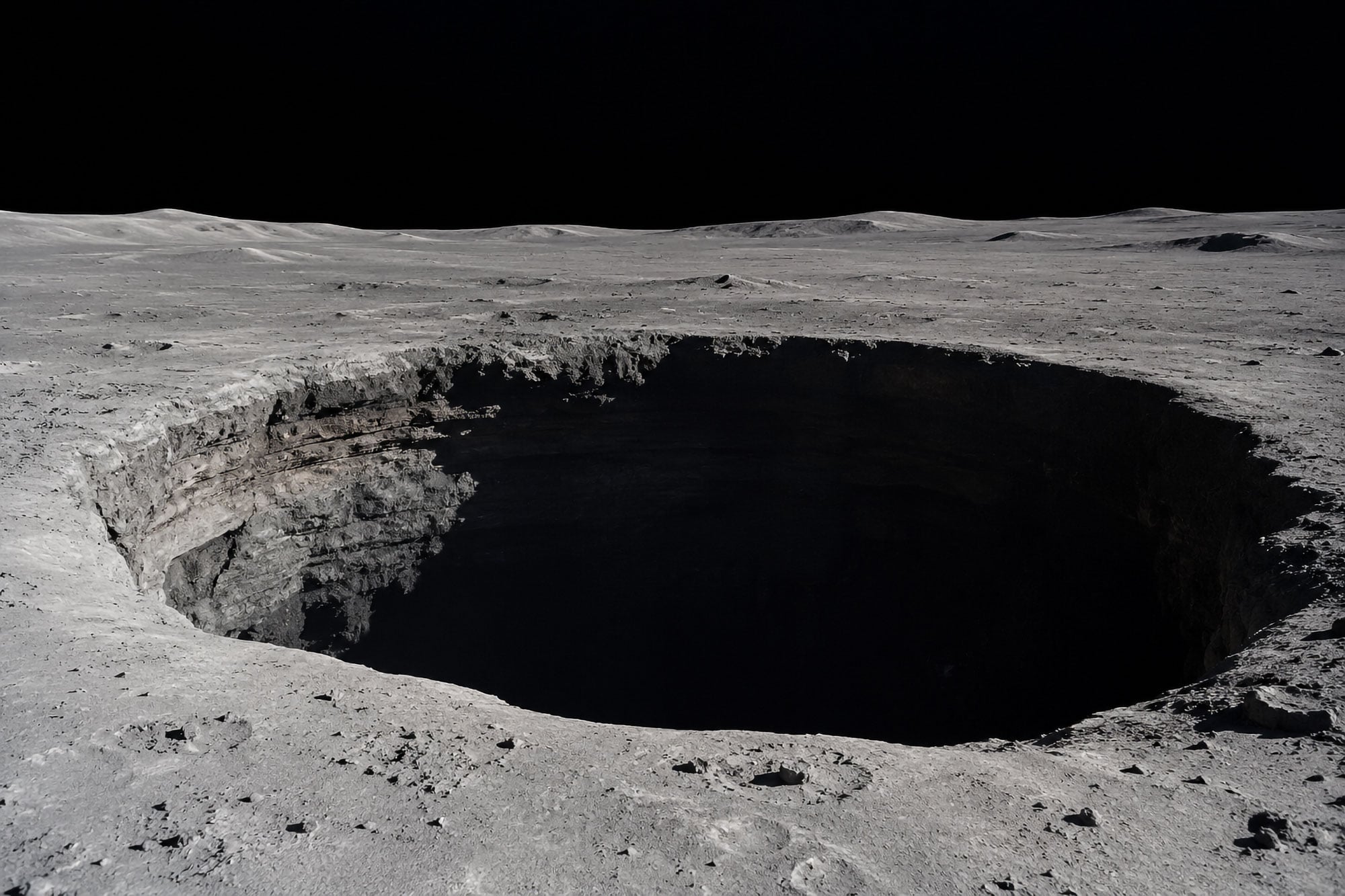
NASA is backing a search for a hidden lunar cave that could reveal how ancient volcanic activity shaped the Moon.
Scientists have gathered compelling evidence from lunar orbit for caves and lava tubes beneath the Moon’s surface, places that could one day shelter astronauts from radiation and extreme temperature swings.
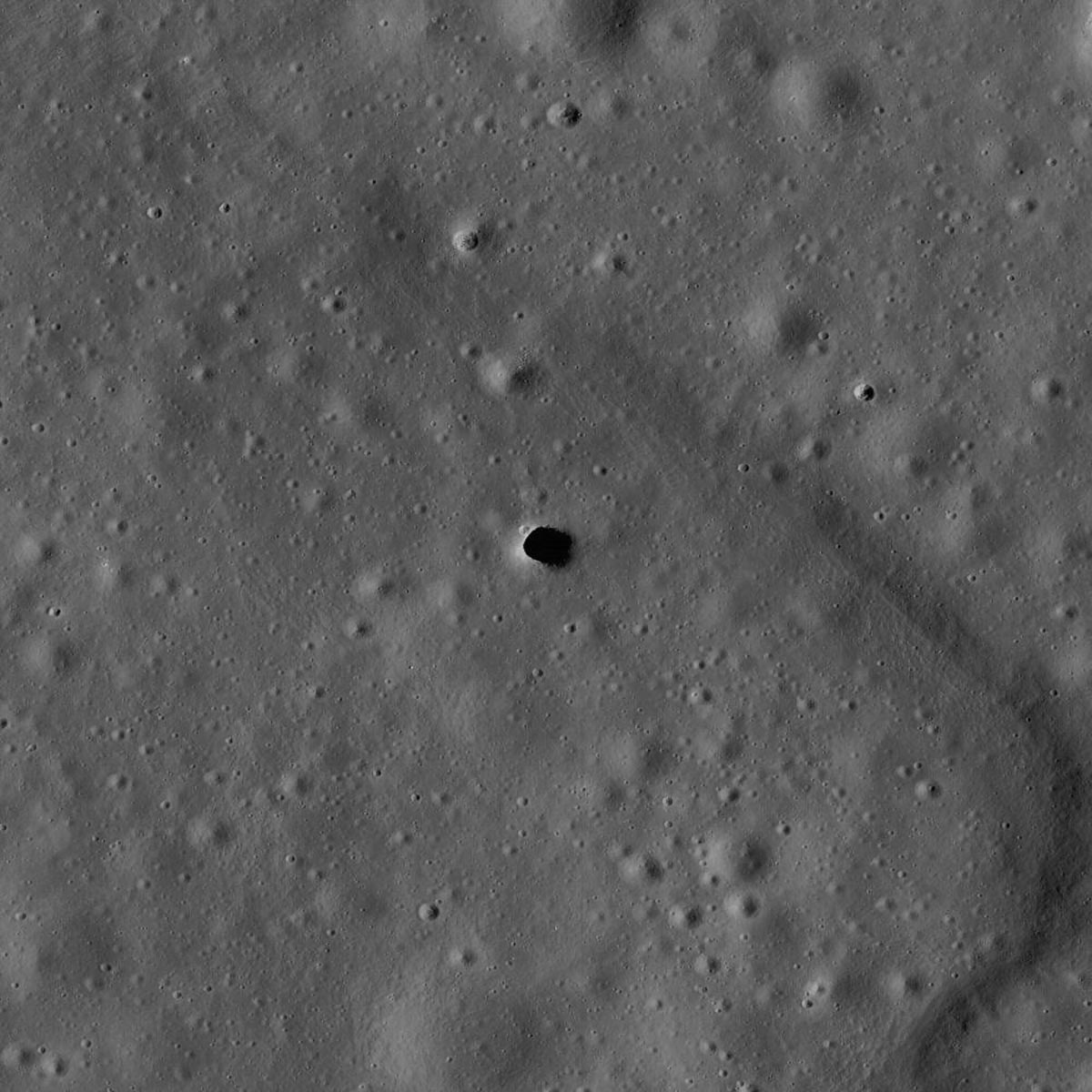
NASA has selected a Planetary Science Institute (PSI)-led project to investigate whether a potentially large cave extends beyond the opening of the Marius Hill Pit (MHP).
Sizing up a possible lunar cave
A lander and rover will carry the instruments for the Geophysical Instruments for Marius Lunar pit Investigation, or GIMLI. Ground-penetrating radar will probe buried structures with radio waves, while seismic sensors will record how deliberately generated vibrations travel through the ground. The team will combine those readings with gravity measurements from a gravimeter and camera images of the surface and pit walls to investigate the surrounding material and estimate the size of any void it finds.
“It’s long been a desire of mine to reintroduce intentional active-source seismic methods to planetary science, as it has essentially not been done since the Apollo astronauts conducted the first seismic surveys on the Moon,” said GIMLI leader Than Putzig, PSI Associate Director and Senior Scientist. “Combining that method with ground-penetrating radar and gravity measurements makes it all the more exciting, as these methods together will allow us to get a much better understanding of subsurface properties — including the anticipated detection of a lava tube extending away from the Marius Hills pit.”
Honeybee Robotics, a Blue Origin company, will build much of the equipment, including instrumentation for the active-source seismic system, gravimeter, and cameras. As PSI’s commercial partner, the company will also provide project management services, integrate all the instruments onto the lander and rover, and jointly lead their lunar surface operations with PSI.
The Norwegian Space Agency will supply the ground-penetrating radar and partner with PSI on its work. Co-investigators from Boise State University, Johns Hopkins University, the Lunar and Planetary Institute, and the University of Oslo will also contribute to the project.
NASA will fund GIMLI through its Payloads and Research Investigations on the Surface of the Moon (PRISM) program, which sends scientific instruments to the Moon aboard spacecraft supplied by Commercial Lunar Payloads Services (CLPS) initiative providers. A CLPS provider will supply the lander and rover.
“GIMLI represents the type of ambitious planetary science that PSI was built to pursue,” said PSI Director and CEO Amanda Hendrix. “Than and his team are taking a scientific question we’ve been studying from orbit and have developed a way to investigate it directly on the Moon. We’re excited to have PSI leading this effort and to be partnering with NASA and Honeybee Robotics to learn more about the Moon and its volcanic past.”
A volcanic record in the pit’s walls
MHP is a large hole in one of the Moon’s most volcanically diverse regions, and its walls expose layers of lava flows and regolith, the loose material covering the surface, that usually lie hidden underground. Studying these layers could reveal how lava traveled through the region during its long volcanic history and whether lengthy intervals separated eruptions. If GIMLI finds a cave or lava tube, its interior could preserve further evidence of the ancient volcanic activity that may have formed it.
“Confirming a substantial lava tube would give us an insight into how volcanism operated on the Moon,” explained Gareth Morgan, PSI Senior Scientist and Deputy Principal Investigator on the GIMLI program. “Lava tubes are a common feature of basaltic volcanism on Earth, so identifying them on the Moon means we could use knowledge of such terrestrial caves to better understand lunar history.”
Even if GIMLI finds no cave or lava tube, its measurements of the surrounding subsurface could help explain how the pit formed and clarify the geology and volcanic history of the site.
The project will be funded through NASA’s Payloads and Research Investigations on the Surface of the Moon (PRISM) program, which sends scientific instruments to the Moon on spacecraft provided by the Commercial Lunar Payloads Services (CLPS) initiative providers.
Never miss a breakthrough: Join the SciTechDaily newsletter.
Follow us on Google and Google News.