
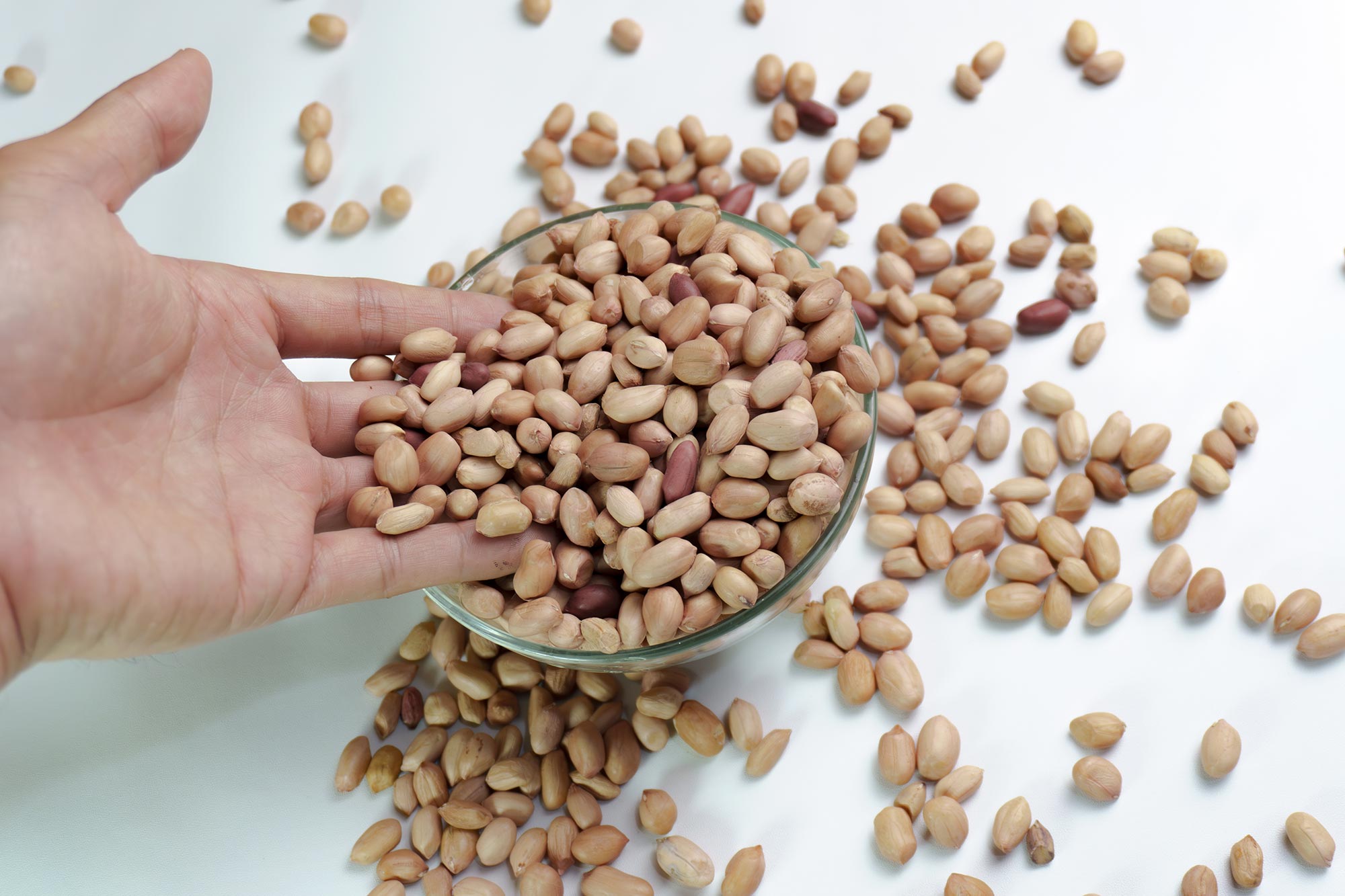
A daily serving of peanuts may improve insulin sensitivity in the aging brain, potentially supporting memory.
Peanuts may offer more than a convenient source of protein and healthy fats. New research suggests that eating them regularly could help the aging brain respond more effectively to insulin, a hormone that plays an important role in memory, learning, and communication between nerve cells. As people grow older, the brain can become less sensitive to insulin, a change linked to age-related cognitive decline.
In a small clinical trial, researchers at Maastricht University Medical Center in the Netherlands found that eating unsalted, skin-roasted peanuts daily for 16 weeks improved insulin responsiveness in brain regions involved in memory. The study, conducted by the Institute of Nutrition and Translational Research in Metabolism (NUTRIM), was published in Food & Function.
How Peanuts Affected The Aging Brain
“The hormone insulin plays an important role in the brain, where it supports memory and other cognitive processes. As people age, the brain may become less responsive to insulin, which has been linked to age-related cognitive decline,” says Dr. Peter Joris, the study’s senior author and an associate professor in the Department of Nutrition and Movement Sciences at NUTRIM, Maastricht University Medical Center.
The trial included 31 healthy adults aged 60 to 75. Each participant completed a 16-week period of eating peanuts and a control period without them. This randomized, controlled crossover design allowed researchers to compare each person’s results under both conditions.
During the peanut period, participants ate 60 grams (approximately two servings), or about 2.1 ounces, daily. Premeasured packets helped them follow the prescribed amount, which they could eat in one sitting, divide throughout the day, or add to meals. They were instructed to consume the peanuts in the morning or afternoon.
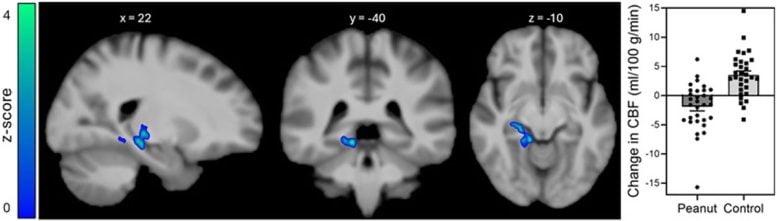
The changes in insulin responsiveness appeared in a cluster on the brain’s right side, encompassing parts of the lingual gyrus, hippocampus, parahippocampal gyrus, and posterior cingulate gyrus. These regions are involved in memory.
Measuring Insulin’s Effects on the Brain
To assess the brain’s response, researchers administered insulin through the nose and measured the resulting changes in regional cerebral blood flow (CBF). They used arterial spin labeling magnetic resonance imaging (ASL-MRI), combining advanced imaging with a controlled dietary intervention lasting several months.
Earlier results from the 16-week peanut intervention, published in 2025 in Clinical Nutrition, showed a 3.6% increase in global cerebral blood flow, which supplies the brain with oxygen and nutrients, alongside a 5.8% improvement in verbal memory.
The team also assessed cognitive performance using the Cambridge Neuropsychological Test Automated Battery (CANTAB) and measured intrahepatic lipid (IHL) content, or liver fat, with abdominal MRI.
“Our study found that daily peanut consumption beneficially affected insulin responsiveness in memory-related brain regions in older adults,” says Dr. Peter Joris, the study’s senior author and an associate professor at Maastricht University Medical Center. “These findings suggest that enhanced regional brain insulin responsiveness may contribute to the cognitive benefits of unsalted, skin-roasted peanut intake.”
“Multiple nutrients present in peanuts, including unsaturated fats, dietary fiber, vitamins and minerals, and bioactive phytochemicals, could potentially contribute to the observed brain benefits,” adds Joris. “Peanuts are also a good source of plant-based protein and are especially rich in L-arginine. L-arginine is a key precursor of nitric oxide (NO), which has been reported to facilitate learning and memory performance.”
Reference: “Daily consumption of unsalted, skin-roasted peanuts beneficially affects regional brain insulin responsiveness in older adults: results of a longer-term randomized controlled trial” by Kerkhof, Lucia, Mensink, Ronald P., Plat, Jogchum, Nijssen, Kevin M. R. and Joris, Peter J., 30 September 2026, Food & Function.
DOI: 10.1039/d6fo03208g
The NUTRIM study was supported by funding from The Peanut Institute Foundation. The funder did not have a role in the study design, implementation, analysis, or interpretation of the data or the writing of the manuscript.
Never miss a breakthrough: Join the SciTechDaily newsletter.
Follow us on Google and Google News.