
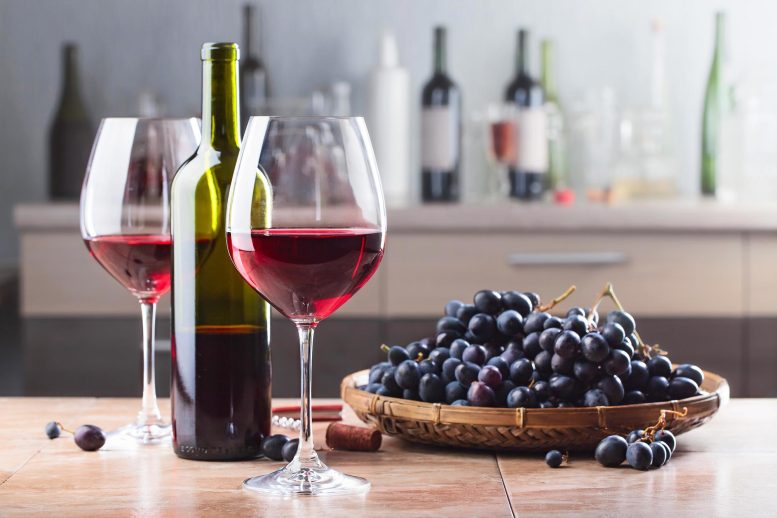
Flavonols in foods like tea and kale may slow cognitive decline, per recent research.
According to new research, people who eat or drink more foods with antioxidant flavonols, which are found in tea and wine as well as several fruits and vegetables, may have a slower rate of memory decline. The study was published in the November 22, 2022, online issue of Neurology, the medical journal of the American Academy of Neurology.
“It’s exciting that our study shows making specific diet choices may lead to a slower rate of cognitive decline,” said study author Thomas M. Holland, MD, MS of Rush University Medical Center in Chicago. “Something as simple as eating more fruits and vegetables and drinking more tea is an easy way for people to take an active role in maintaining their brain health.”
Flavonols are a type of flavonoid (also called bioflavonoids), a group of phytochemicals found in plant pigments known for their beneficial effects on health.
Participants in the study included 961 people without dementia with an average age of 81. They filled out a questionnaire each year on how often they ate certain foods. They also completed annual cognitive and memory tests including recalling lists of words, remembering numbers, and putting them in the correct order. They were also asked about other factors, such as their level of education, how much time they spent doing physical activities, and how much time they spent doing mentally engaging activities such as reading and playing games. They were followed for an average of seven years.
Researchers divided the people into five equal groups based on the amount of flavonols they had in their diet. While the average amount of flavonol intake in US adults is about 16 to 20 milligrams (mg) per day, the study population had an average dietary intake of total flavonols of approximately 10 mg per day. The lowest group had an intake of about 5 mg per day and the highest group consumed an average of 15 mg per day; which is equivalent to about one cup of dark leafy greens.
“Something as simple as eating more fruits and vegetables and drinking more tea is an easy way for people to take an active role in maintaining their brain health.” Thomas M. Holland, MD, MS
To determine rates of cognitive decline, researchers used an overall global cognition score summarizing 19 cognitive tests. The average score ranged from 0.5 for people with no thinking problems to 0.2 for people with mild cognitive impairment to -0.5 for people with Alzheimer’s disease.
Cognitive Decline and Flavonol Intake
After adjusting for other factors that could affect the rate of memory decline, such as age, sex and smoking, researchers found that the cognitive score of people who had the highest intake of flavonols declined at a rate of 0.4 units per decade more slowly than people whose had the lowest intake. Holland noted this is probably due to the inherent antioxidant and anti-inflammatory properties of flavonols.
The study also broke the flavonol class down into the four constituents: kaempferol, quercetin, myricetin, and isorhamnetin. The top food contributors for each category were: kale, beans, tea, spinach, and broccoli for kaempferol; tomatoes, kale, apples, and tea for quercetin; tea, wine, kale, oranges, and tomatoes for myricetin; and pears, olive oil, wine, and tomato sauce for isorhamnetin.
People who had the highest intake of kaempferol had a 0.4 units per decade slower rate of cognitive decline compared to those in the lowest group. Those with the highest intake of quercetin had a 0.2 units per decade slower rate of cognitive decline compared to those in the lowest group. And people with the highest intake of myricetin had a 0.3 units per decade slower rate of cognitive decline compared to those in the lowest group. Dietary isorhamnetin was not tied to global cognition.
Holland noted that the study shows an association between higher amounts of dietary flavonols and slower cognitive decline but does not prove that flavonols directly cause a slower rate of cognitive decline.
Other limitations of the study are that the food frequency questionnaire, although valid, was self-reported, so people may not accurately remember what they eat.
Reference: “Association of Dietary Intake of Flavonols With Changes in Global Cognition and Several Cognitive Abilities” by Thomas Monroe Holland, Puja Agarwal, Yamin Wang, Klodian Dhana, Sue E. Leurgans, Kyla Shea, Sarah L Booth, Kumar Rajan, Julie A. Schneider and Lisa L. Barnes, 22 November 2022, Neurology.
DOI: 10.1212/WNL.0000000000201541
The study was supported by the National Institutes of Health, National Institute on Aging, and USDA Agricultural Research Service.
Never miss a breakthrough: Join the SciTechDaily newsletter.
Follow us on Google and Google News.
3 Comments
It would be great if there was a supplement pill that could provide an optimal daily amount of quercetin, myricetin, isorhamnetin, and kaempferol.
It is irresponsible of any news outlet, but especially one that claims to be science-focused, to promote wine for brain health. Alcohol accelerates cognitive decline and the harmful effects of alcohol far outweigh any benefit from flavonols — which are only in wine because they are in plain grape juice.
Try drinking de alcoholised red wine. The taste is pleasant and you get the benefits of the flavonoids etc. Or just eat red table grapes.