
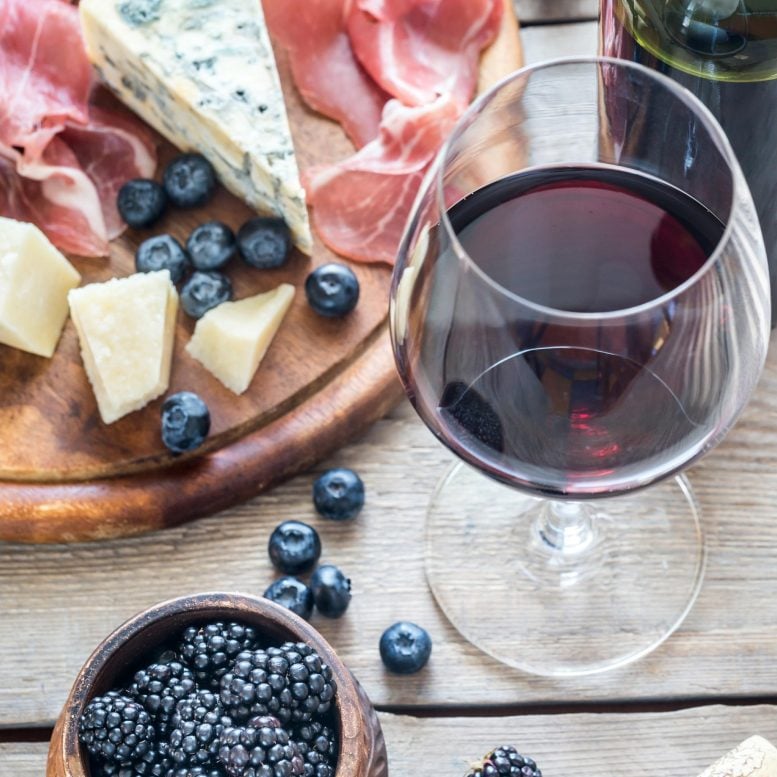
A new study indicates that a diet high in flavonoids, found in foods like tea, apples, berries, and red wine, may reduce mortality risk for people with Parkinson’s disease.
A new study shows that people with Parkinson’s disease who eat a diet that includes three or more servings per week of foods high in flavonoids, like tea, apples, berries, and red wine, may have a lower chance of dying during the study period than people who do not eat as many flavonoids. The research is published in the January 26, 2022, online issue of Neurology®, the medical journal of the American Academy of Neurology. The study looked at several types of flavonoids and found that higher consumption of flavan-3-ols and anthocyanins, both before and after a Parkinson’s diagnosis, was associated with lower risk of death during the study period.
Flavonoids and Their Protective Effects
Flavonoids are naturally occurring compounds found in plants and are considered powerful antioxidants. Previous research has shown that flavonoids may have a protective effect on the brain.
“Our results are exciting because they suggest that people with Parkinson’s in our study who did something as simple as including three or more servings per week of common foods like red berries, apples and orange juice may have improved chances of living longer,” said study author Xiang Gao, MD, PhD, of The Pennsylvania State University in University Park.
The study looked at 1,251 people with Parkinson’s with an average age of about 72. Researchers used a food frequency questionnaire to determine people’s flavonoid intake before and after their diagnosis, for an average of 33 years. Every four years, people were surveyed about how often they ate various foods, including tea, apples, berries, oranges and orange juice. Their intake of different types of flavonoids was calculated by multiplying the flavonoid content of each food by its frequency.
By the end of the study, 944, or 75%, of the participants had died. Of those, 513 people died from Parkinson’s, 112 died from cardiovascular diseases and 69 died from various cancers.
The people in the group that represented the highest 25% of flavonoid consumers, on average, had about 673 milligrams (mg) in their diets each day, compared to the people in the lowest 25% of flavonoid consumers, who had about 134 mg in their diets each day. Strawberries, for example, have about 180 mg of flavonoids per 100 gram serving, while apples have about 113.
After adjusting for factors like age and total calories, the group of highest flavonoid consumers had a 70% greater chance of survival compared to people in the lowest group.
Gao notes that higher consumption of flavonoids before a person’s Parkinson’s diagnosis was associated with a lower risk of dying from any cause in men, but not in women. After diagnosis, of the 163 men in the top group of consumers, 120 died during the study, compared to 129 of the 163 men in the bottom group. Among women, 96 of the 150 in the top group died, compared to 96 of the 149 in the bottom group. However, researchers found that after a person’s diagnosis, higher flavonoid consumption was associated with better survival rates in both men and women.
Researchers also looked at individual flavonoids. For example, the people in the group representing the top 25% consumers of anthocyanins, found in red wine and berries, had an average 66% greater survival rate compared to those who represented the lowest consumers of that particular flavonoid. For flavan-3-ols, found in apples, tea, and wine, the top 25% of consumers, on average, had a 69% greater survival rate compared to the lowest 25% of consumers.
Implications and Limitations
The study does not prove that people with Parkinson’s who eat a diet rich in flavonoids will have a better survival rate. It shows an association.
“More research is needed to understand why people with Parkinson’s who have diets higher in flavonoids may have better survival rates,” Gao said. “However, if someone with Parkinson’s is able to add a few servings of berries, apples, oranges and tea to their weekly diets, our results suggest it may be an easy and low-risk way to possibly improve their outcome. And while we do not encourage people who do not currently drink alcohol to start, people who do drink could consider shifting to red wine.”
A limitation of the study is that results were not adjusted to consider the severity of a person’s Parkinson’s disease at the beginning of the study.
Reference: “Intake of Flavonoids and Flavonoid-Rich Foods, and Mortality Risk Among Individuals With Parkinson Disease: A Prospective Cohort Study” by Xinyuan Zhang, Samantha A. Molsberry, Tian-Shin Yeh, Aedin Cassidy, Michael A. Schwarzschild, Alberto Ascherio and Xiang Gao, 26 January 2022, Neurology.
DOI: 10.1212/WNL.0000000000013275
The study was supported by the National Institute of Neurological Disorders and Stroke.
Never miss a breakthrough: Join the SciTechDaily newsletter.
Follow us on Google and Google News.
3 Comments
I was diagnosed with Parkinson’s disease a year ago at the age of 67. For several months I had noticed tremors in my right hand and the shaking of my right foot when I was sitting. My normally beautiful cursive writing was now small cramped printing. And I tended to lose my balance. Neurologist had me walk down the hall and said I didn’t swing my right arm. I had never noticed! I was in denial for a while as there is no history in my family of parents and five older siblings, but I had to accept I had classic symptoms. I was taking amantadine and carbidopa/levodopa and was about to start physical therapy to strengthen muscles. Finally, I was introduced to Kycuyu Health Clinic and their effective Parkinson’s herbal protocol. This protocol relieved symptoms significantly, even better than the medications I was given. After I completed the treatment, all symptoms were gone. I live a more productive life. I was fortunate to have the loving support of my husband and family. I make it a point to appreciate every day!
Sounds helpful
Sounds very helpful. Would like more information.