
Close Menu
    Facebook X (Twitter) Instagram
    SciTechDaily
    • Biology
    • Chemistry
    • Earth
    • Health
    • Physics
    • Science
    • Space
    • Technology
    Facebook X (Twitter) Pinterest YouTube RSS
    SciTechDaily
    Home»Space»Hubble Spots a Dazzling Cluster in the Cloud
    Space

    Hubble Spots a Dazzling Cluster in the Cloud

    By ESA/HubbleAugust 22, 2021No Comments2 Mins Read
    Facebook Twitter Pinterest Telegram LinkedIn WhatsApp Email Reddit
    Share
    Facebook Twitter LinkedIn Pinterest Telegram Email Reddit
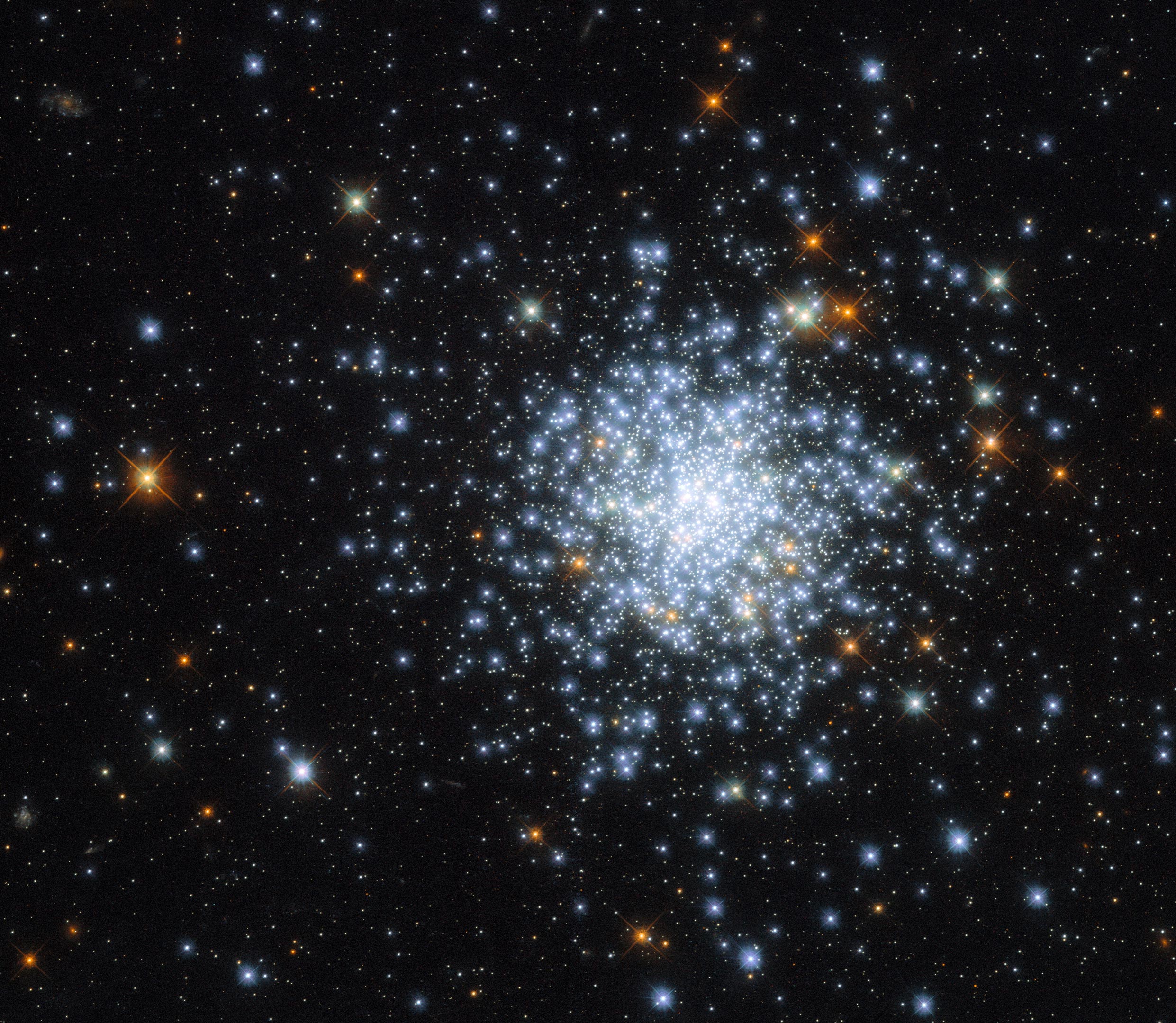
    Open Cluster NGC 2164
    Open cluster NGC 2164 in the Large Magellanic Cloud as imaged by the Hubble Space Telescope. Credit: ESA/Hubble & NASA, J. Kalirai, A. Milone

    NGC 2164 is a young, bright open star cluster nestled within the Large Magellanic Cloud, one of the Milky Way’s closest satellite galaxies.

    This Picture of the Week shows an open cluster known as NGC 2164, which was first discovered in 1826 by a Scottish astronomer named James Dunlop. NGC 2164 is located within one of the Milky Way galaxy’s closest neighbors — the satellite galaxy known as the Large Magellanic Cloud. The Large Magellanic cloud is a relatively small galaxy that lies about 160,000 light-years from Earth. It is considered a satellite galaxy because it is gravitationally bound to the Milky Way. In fact, the Large Magellanic cloud is on a very slow collision course with the Milky Way — it’s predicted that they will collide 2.4 billion years from now.

    The Large Magellanic Cloud only contains about one hundredth as much mass as the Milky Way, but it still contains billions of stars. The open cluster NGC 2164 is in good company in the Large Magellanic Cloud — the satellite galaxy is home to roughly 700 open clusters, alongside about 60 globular clusters. This image of NGC 2164 was taken by the NASA/ESA Hubble Space Telescope’s Wide Field Camera 3 (WFC3), which has previously imaged many other open clusters, including NGC 330 and Messier 11.

    Never miss a breakthrough: Join the SciTechDaily newsletter.
    Follow us on Google and Google News.

    Astronomy European Space Agency Hubble Space Telescope Large Magellanic Cloud NASA
    Share. Facebook Twitter Pinterest LinkedIn Email Reddit

    Related Articles

    This Nearby Galaxy Shows How Frozen Clouds Ignite Into Stars

    This Chaotic Spiral Galaxy Is Still Recovering From a Cosmic Collision

    Hubble Zooms In on a Galaxy That Maps the Universe’s Expansion

    Hubble Captures a Dazzling Spiral Galaxy Alive With Birth and Destruction

    Hubble Spots a Glowing “Ring of Fire” in a Distant Spiral Galaxy

    Cotton Candy Clouds: Hubble Captures a Dwarf Galaxy in Stunning Detail

    Dust, Light & Ancient Collisions: The Sombrero Galaxy Like You’ve Never Seen It

    Star Formation in Motion: Hubble Reveals Spiraling Stars and Sculpted Nebulae

    Hubble Unveils the Brilliant Chaos of Star Birth in the Tarantula Nebula

    Leave A Reply Cancel Reply

    • Facebook
    • Twitter
    • Pinterest
    • YouTube

    Don't Miss a Discovery

    Subscribe for the Latest in Science & Tech!

    Trending News

    Sitting Up Straight Could Actually Help You Make Better Decisions

    Never-Before-Seen Vortices Are Swirling Across the Sun

    This Common Amino Acid May Help the Body Fight Cancer and Viruses

    Low-Protein “Longevity Diet” Linked to Fat Loss, Muscle Preservation, and Healthy Aging

    How Prehistoric Poop Changed Earth’s Ecosystems Forever

    This Fossil Upends a Decades-Old Debate About Snake Evolution

    A Blood Test Years Before Cancer May Reveal a Hidden Warning Sign

    Starlink Satellites Reveal a Hidden Atmosphere 300 Miles Above Earth

    Follow SciTechDaily
    • Facebook
    • Twitter
    • YouTube
    • Pinterest
    • Newsletter
    • RSS
    SciTech News
    • Biology News
    • Chemistry News
    • Earth News
    • Health News
    • Physics News
    • Science News
    • Space News
    • Technology News
    Recent Posts
    • A Simple Feeding Change Makes Zoo Lions Behave More Like They Do in the Wild
    • Scientists Discover a Hidden World of Fungi 1,640 Feet Beneath Michigan
    • Where Were All the Tiny Dinosaurs? Scientists May Finally Have an Answer
    • Astronomers Caught a Star Exploding Almost the Instant It Began
    • Empty Space May Not Be Empty After All: Magnetar Reveals a Bizarre Quantum Effect
    Copyright © 1998 - 2026 SciTechDaily. All Rights Reserved.
    • Science News
    • About
    • Contact
    • Editorial Board
    • Privacy Policy
    • Terms of Use

    Type above and press Enter to search. Press Esc to cancel.