
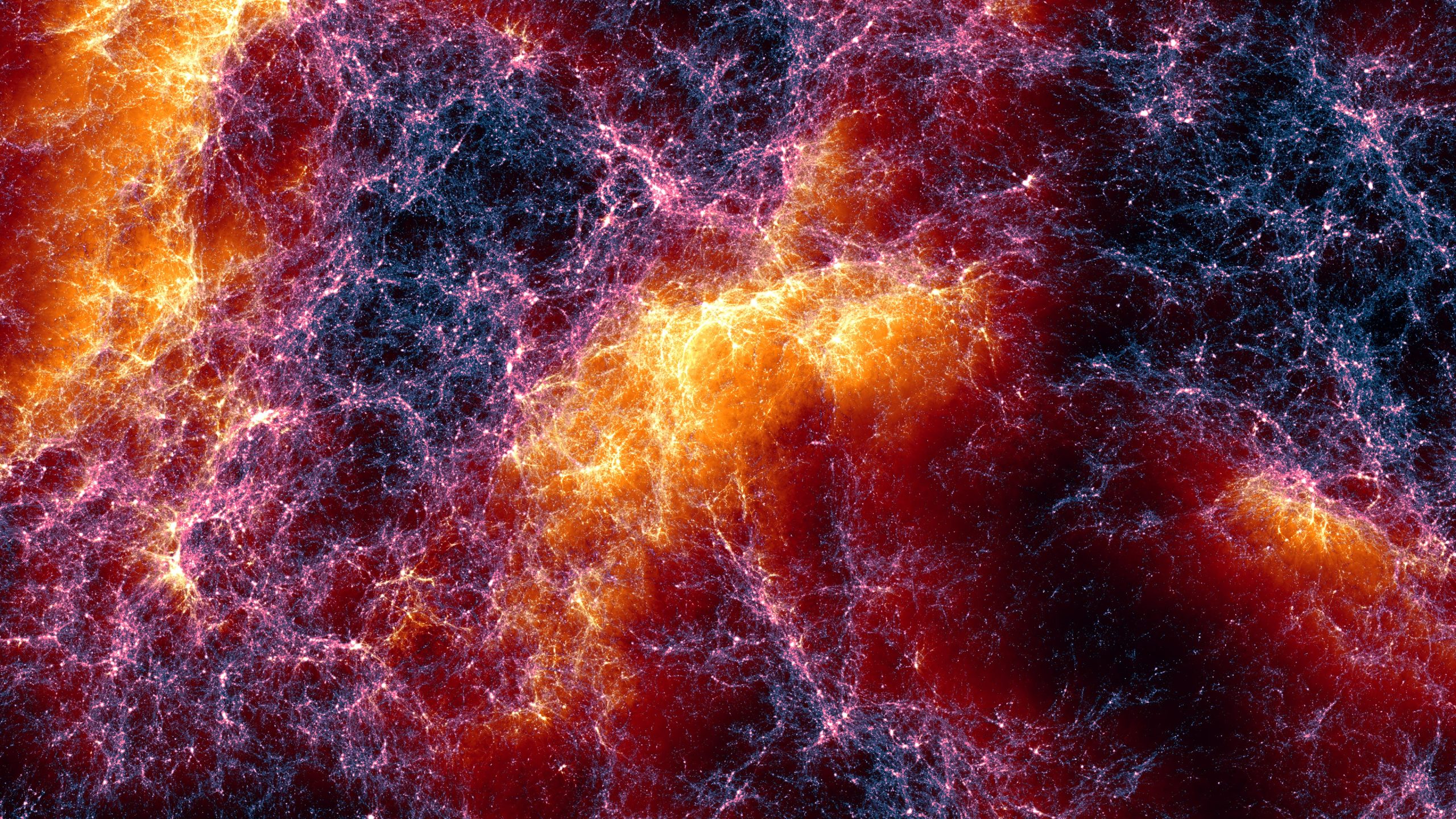
Scientists have recreated the universe’s first 2 billion years in a record-breaking simulation that could reveal new secrets about the Big Bang and the birth of galaxies.
Scientists have recreated the universe’s first 2 billion years in extraordinary detail using one of the world’s most powerful supercomputers. The enormous simulation, called “Lumina,” allows researchers to explore how the earliest stars and galaxies formed, how dark matter influenced their development, and how radiation transformed the young cosmos.
Developed by researchers at the Center for Astrophysics | Harvard & Smithsonian, Lumina is among the largest and most sophisticated simulations of the early universe ever produced. It provides a virtual record of cosmic evolution that scientists can compare with observations from the James Webb Space Telescope (JWST) and the Nancy Roman Space Telescope.
The research, published in Monthly Notices of the Royal Astronomical Society, could help answer fundamental questions about what happened after the Big Bang. By recreating the interactions between ordinary matter, dark matter, and radiation, scientists can test whether their current theories accurately describe the early universe or whether surprising telescope discoveries point to physics that remains unexplained.
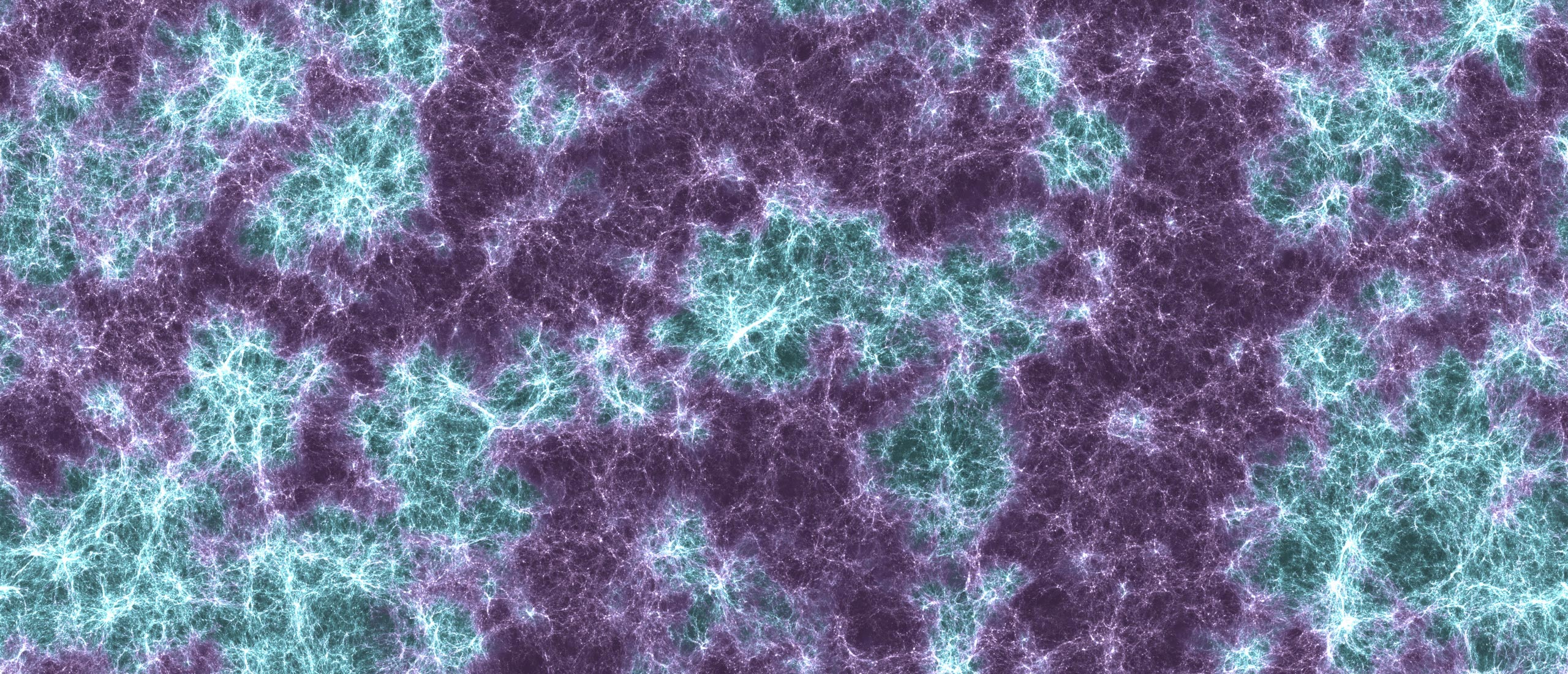
Recreating the Universe to Test Cosmic Theories
Astronomers have spent centuries studying the sky and developing theories to explain the origins of stars, galaxies, and the enormous structures that fill the universe. Modern supercomputers have added a powerful new approach by allowing scientists to simulate how the cosmos should develop if those theories are correct.
These simulations act as virtual laboratories. Researchers can start with conditions in the young universe, apply the known laws of physics, and calculate how matter and energy evolve over billions of years. The results can then be compared with actual telescope observations.
If the simulated universe resembles what astronomers observe, it strengthens confidence in the underlying models. But if important differences emerge, those discrepancies could reveal missing pieces in our understanding of cosmic history.
“With JWST, the early universe has become an exciting new frontier in astrophysics,” said lead author Oliver Zier, an ITC Fellow at the Center for Astrophysics | Harvard & Smithsonian. “To understand what we are seeing with this telescope, we need to translate our theories into detailed predictions. After several years of work, with plenty of ups and downs, it is incredibly rewarding to see the simulation results and watch our predictions come to life in video.”
A Virtual Universe 1.5 Billion Light-Years Across
Lumina sets a new benchmark for a particular class of cosmological simulations known as radiation hydrodynamics simulations. These models calculate how gas, dark matter, and radiation influence one another as the universe develops, making it possible to investigate the processes responsible for creating the earliest galaxies.
Dark matter is an invisible form of matter whose gravitational influence helps shape galaxies and other cosmic structures. Meanwhile, radiation from stars and other luminous objects affects the surrounding gas, changing its temperature and physical state. Capturing these interactions is essential for understanding how the early universe evolved.
Lumina follows these processes across the first 2 billion years of cosmic history, revealing how young galaxies formed and how their light gradually altered the enormous clouds of gas that filled the space between them.
The simulation’s scale is particularly remarkable. It encompasses a cube of space approximately 1.5 billion light-years along each side, representing more than 100 times the volume covered by previous comparable simulations. That enormous region is similar in scale to the volumes of the universe astronomers can investigate with today’s most advanced telescopes.
Capturing a Crucial Transformation in Cosmic History
One of Lumina’s most important advances involves a process called reionization, which fundamentally changed the gas that filled the early universe.
As the first generations of luminous objects emerged, their radiation stripped electrons from atoms of hydrogen and helium, transforming much of the surrounding gas into an ionized state. This transition helped establish the conditions found throughout the universe today.
Lumina is the first simulation of its kind to model helium reionization as it happened while allowing the resulting changes to immediately affect other processes unfolding within the simulated cosmos.
“We feel incredibly fortunate to be building simulations like Lumina,” said Aaron Smith, an assistant professor of physics at the University of Texas at Dallas and an author on the paper. “For the first time, we can follow along as both hydrogen and helium changed into their modern form across such an enormous volume of the universe, while still resolving the galaxies and other luminous objects driving that transformation.”
By capturing both the large-scale evolution of cosmic gas and the smaller structures responsible for transforming it, Lumina gives scientists an unusually comprehensive view of how the young universe developed.
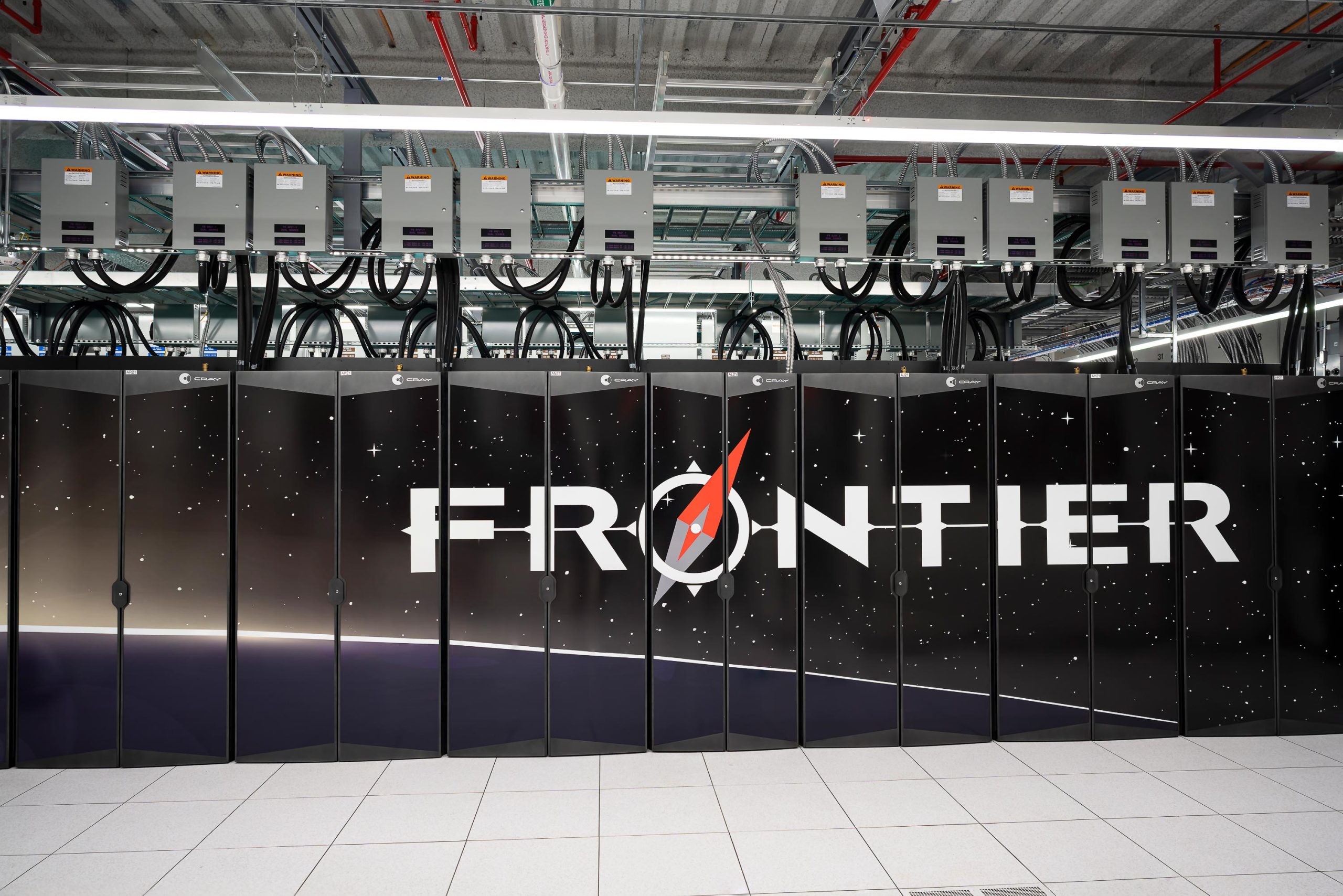
More Than 15,000 Processors Recreate Billions of Years
Building such an enormous and detailed virtual universe required extraordinary computing power.
The team used Frontier, a supercomputer at Oak Ridge National Laboratory in Tennessee that ranks among the fastest machines in the world. More than 15,000 graphics processing units worked together to perform the immense number of calculations needed to produce Lumina.
That processing power made it possible to simulate a much larger region of the early universe than previously comparable models while preserving enough detail to investigate individual galaxies, stars, and black holes.
This combination of scale and precision is especially valuable because cosmic evolution involves processes operating across vastly different distances. Changes occurring around individual galaxies can influence the gas between them, while the overall distribution of matter helps determine where galaxies form.
A New Tool for Uncovering the Universe’s Mysteries
Lumina is designed to do more than recreate the past. It gives astronomers a way to investigate competing explanations for how the universe developed and to make predictions that can be tested against real observations.
Future research will examine how gas travels between galaxies, how radiation left over from the Big Bang influenced cosmic evolution, and how regions of particularly intense star formation emerged and changed over time.
As observations from JWST, Roman, and other telescopes provide increasingly detailed views of the distant universe, Lumina will help researchers interpret what they find.
By comparing the simulated cosmos with the real one, scientists may discover where existing theories succeed, where they fall short, and what new physics might be needed to explain the universe’s earliest chapters.
Reference: “Introducing the lumina project: large-volume radiation-hydrodynamic simulations of the epochs of hydrogen and helium reionization” by Oliver Zier, Aaron Smith, Xuejian Shen, Rongrong Liu, Rahul Kannan, Sonja M Koehler, Volker Springel, Rüdiger Pakmor, Mark Vogelsberger, Teodora-Elena Bulichi and Lars Hernquist, 26 October 2026, Monthly Notices of the Royal Astronomical Society.
DOI: 10.1093/mnras/stag1469
Never miss a breakthrough: Join the SciTechDaily newsletter.
Follow us on Google and Google News.