
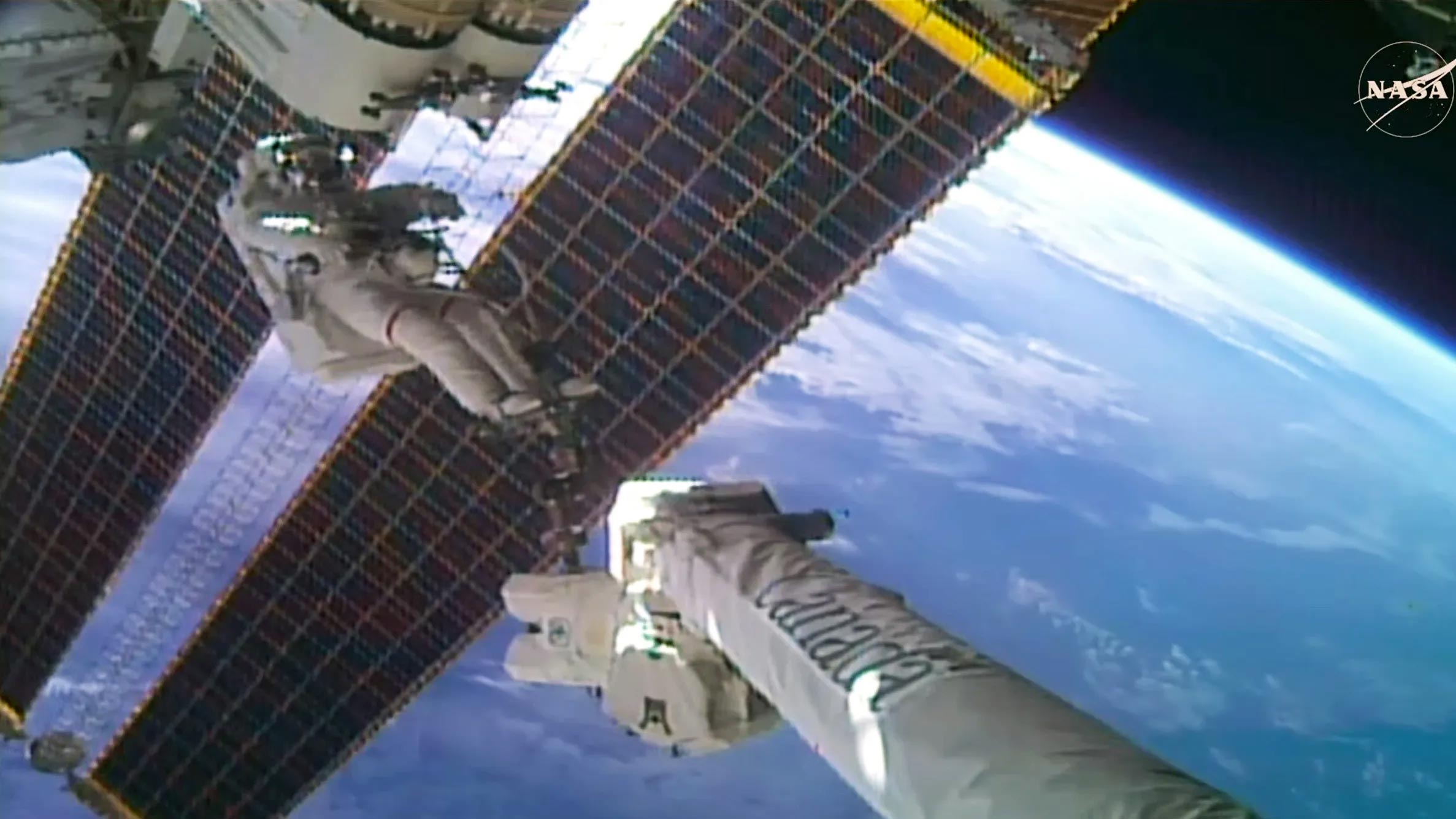
NASA astronauts have completed another major step in upgrading the International Space Station’s power supply. During a spacewalk lasting more than seven hours, two crew members installed a new solar array that will help generate electricity for the orbiting laboratory, supporting everything from scientific experiments to the station’s eventual retirement.
NASA astronaut Anil Menon and CSA (Canadian Space Agency) astronaut Joshua Kutryk finished their spacewalk outside the International Space Station at 3:08 p.m. EDT on October 29. The mission lasted 7 hours and 11 minutes and brought NASA closer to completing a significant expansion of the station’s electrical power system.
Their primary assignment was to install and deploy an International Space Station Roll-Out Solar Array (IROSA) on the station’s 2A electrical power channel. This channel is part of the network that distributes electricity throughout the massive spacecraft, ensuring that its equipment and systems receive the energy they need.
The newly installed equipment is the seventh of eight roll-out solar arrays planned for the station. Together, these additions will substantially increase the electricity available to support daily operations, research activities, and the station’s eventual safe and controlled return to Earth.
How the Space Station’s New Solar Arrays Work
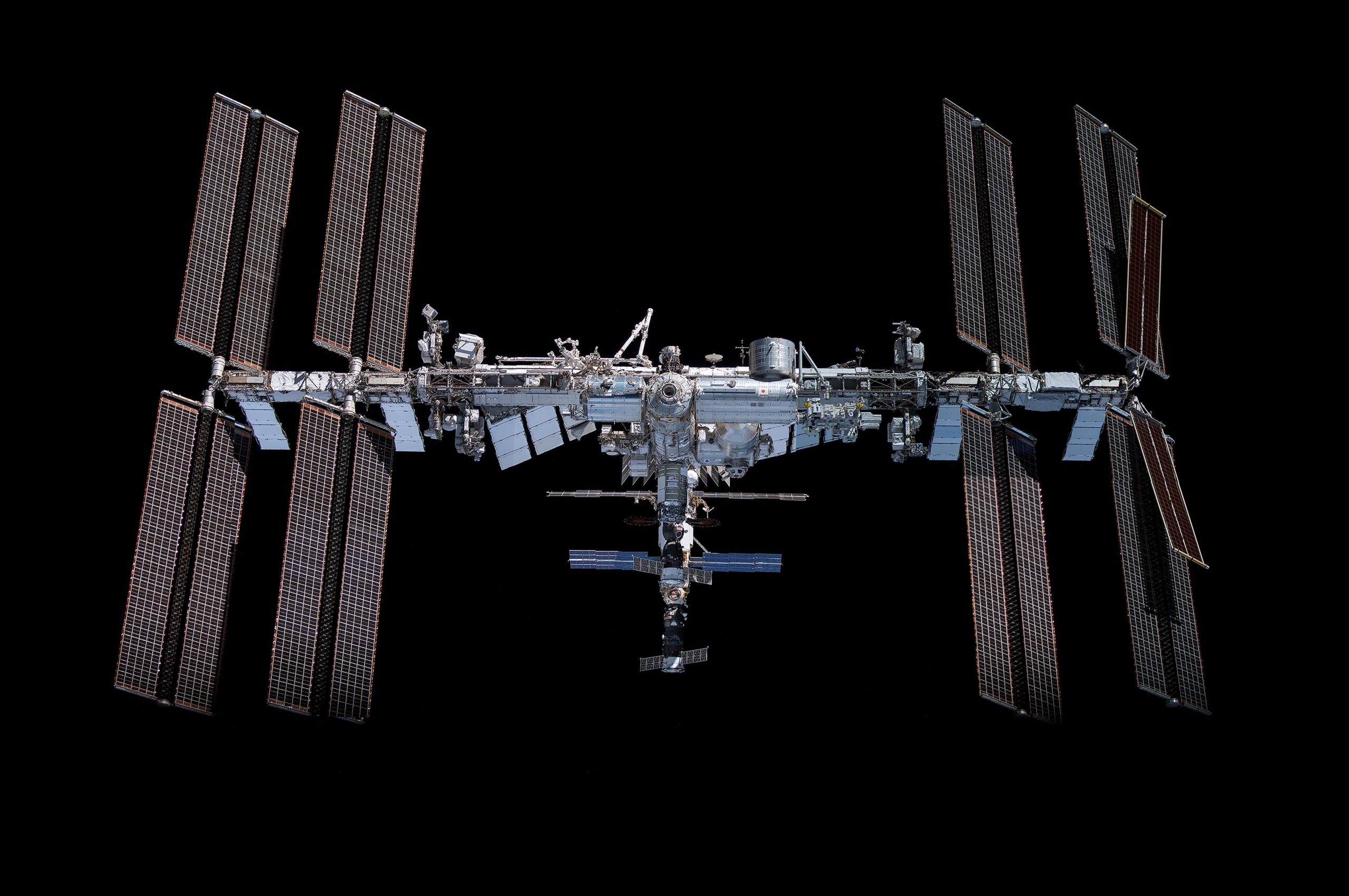
The International Space Station relies on sunlight as its primary source of electricity. Its large solar arrays contain thousands of solar cells that convert sunlight directly into electrical energy, much like solar panels installed on homes and buildings.
That electricity powers essential systems, including life support equipment, communications, temperature regulation, and the scientific instruments used by astronauts. When the station travels into Earth’s shadow and can no longer collect sunlight, rechargeable batteries supply stored electricity to keep everything running.
The newer roll-out solar arrays use a different design from the station’s original solar panels. Rather than requiring a large, rigid structure, the new arrays are lightweight and compact enough to be launched in a rolled configuration. Once positioned outside the station, they gradually unfurl, similar to a yoga mat being unrolled.
Although these newer arrays are roughly half the size of the original solar wings, advances in solar cell technology allow them to generate substantial additional electricity. They supplement the station’s older panels, which have gradually lost some of their generating capability after decades of exposure to the harsh environment of space.

NASA Nears Completion of a 30% Power Upgrade
The latest installation leaves just one solar array remaining. During their spacewalk, Menon and Kutryk also performed preliminary work to help prepare for the next installation, reducing the amount of preparation needed during the upcoming mission.
That final spacewalk is scheduled for Thursday, November 5, when the astronauts are expected to install the eighth IROSA on the station’s 3B power channel. NASA will begin live coverage at 6:45 a.m., with the broadcast available through NASA’s live streaming service.
Once all eight arrays are installed, the station’s solar power expansion will be complete. NASA estimates that the upgrades will increase available power by up to 30%, raising the station’s electricity generation capacity from 160 kilowatts to approximately 215 kilowatts.
The additional energy will provide greater electrical capacity for the station’s demanding operations. It will also help ensure that the aging laboratory can continue supporting scientific research and other essential activities during its remaining years in orbit.
Why the Power Upgrade Matters for the Station’s Final Years
The International Space Station has supported continuous human occupation for more than 25 years, serving as a unique research laboratory where scientists can study everything from human health to materials and fluid behavior in microgravity.
Microgravity is the condition of apparent weightlessness experienced by astronauts in orbit. It allows researchers to investigate how physical and biological processes behave when the familiar effects of gravity are greatly reduced. Many of these experiments help scientists prepare for longer missions to the Moon, Mars, and beyond.
Keeping the station operational requires a reliable supply of electricity, especially as its equipment ages and NASA prepares for the end of its service life.
NASA currently plans to retire the International Space Station around 2030. Rather than allowing the enormous structure to fall back to Earth in an uncontrolled manner, the agency intends to guide it through a carefully planned descent, directing surviving debris toward a remote ocean region away from populated areas.
This process is known as a controlled deorbit. The new solar arrays will help provide electricity for the station’s critical systems as it continues operating and prepares for that eventual final mission.
The latest excursion, designated U.S. spacewalk 100, also marked an important personal milestone for the two astronauts. It was Menon’s fourth spacewalk and Kutryk’s first.
Overall, it was the 285th spacewalk conducted in support of the International Space Station’s construction, maintenance, and upgrades, highlighting the extensive work required to keep one of humanity’s most ambitious engineering projects operating in orbit.
Never miss a breakthrough: Join the SciTechDaily newsletter.
Follow us on Google and Google News.