
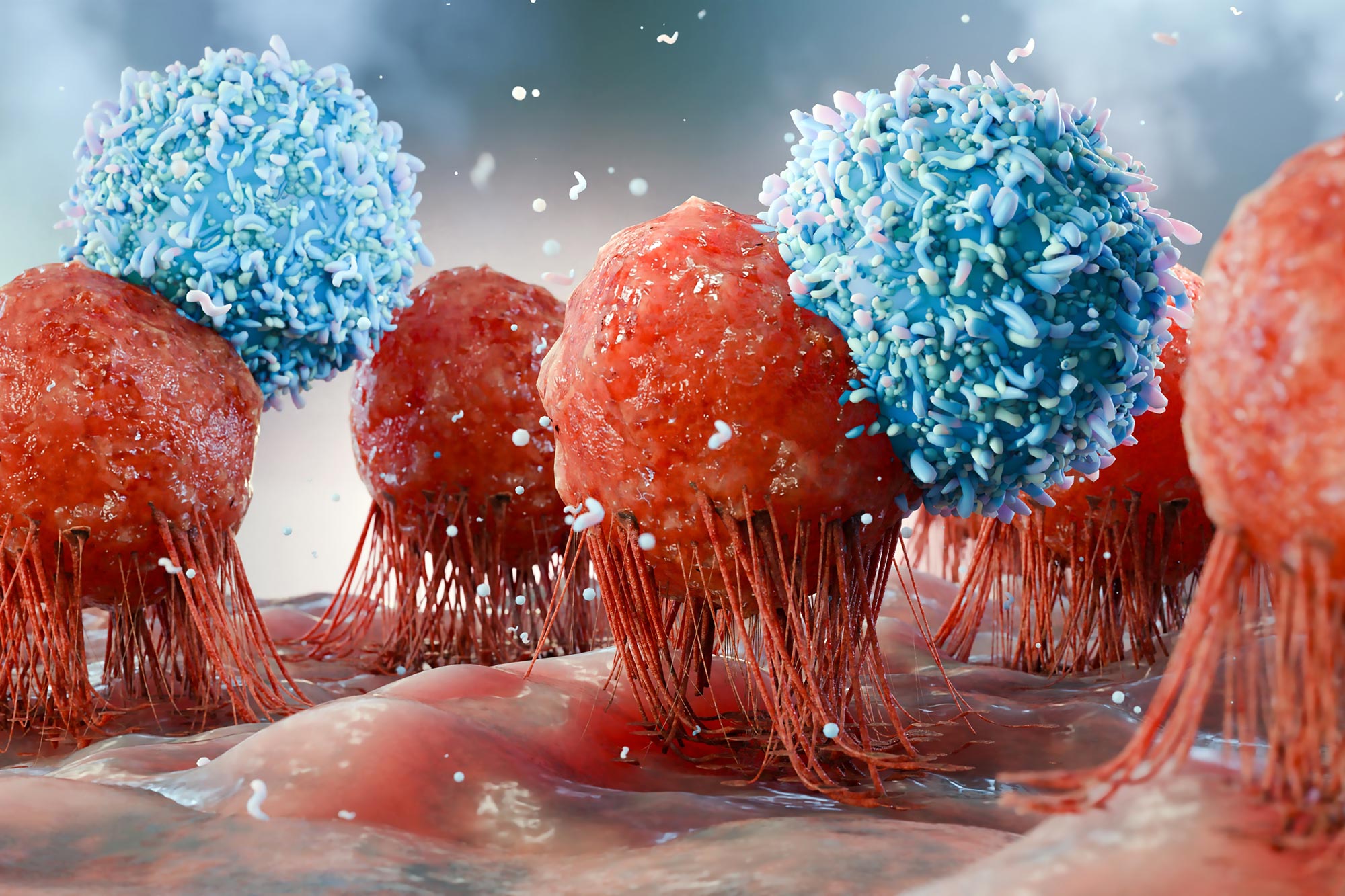
Cancer immunotherapy could become safer by stabilizing the cells that keep immune responses under control, an approach that reversed treatment-related inflammation in mice.
Some cancer patients have to stop immunotherapy when their immune system starts attacking healthy tissue. These reactions can occur with drugs called immune checkpoint inhibitors, which help immune cells known as T cells fight cancer by releasing the brakes that normally restrain them.
Depending on the type of checkpoint inhibitor, 20% to 40% of patients experience these immune-related adverse events. Up to 25% experience severe reactions that result in hospitalization and an end to treatment. There are no U.S. Food and Drug Administration-approved treatments for these side effects.
“Immune-related adverse events are a huge problem and can greatly impact quality of life for patients. In many cases, it impacts their ability to stay on immunotherapy or benefit from treatment,” said Abigail Overacre-Delgoffe, Ph.D., assistant professor in the Department of Immunology at the University of Pittsburgh School of Medicine and a member of the Tumor Microenvironment Center at UPMC Hillman Cancer Center.
Overacre-Delgoffe is the senior author of a study published October 22, 2026, in Cell that identifies unstable immune cells as a potential driver of this inflammation. Her team reversed inflammation in mice by blocking a protein in those cells and found that diet and the gut microbiome, the community of microorganisms living in the digestive tract, influenced the severity of the animals’ reactions.
Diet helps recreate immunotherapy side effects
Studying these side effects has been difficult because they vary considerably among patients. Animal models have also struggled to reproduce the complexity of immune-related inflammation in humans.
“Most existing mouse models relied on genetically modified mice or experimental conditions that didn’t really capture the variability we see in patients,” said lead author Dipyaman Patra, Ph.D., a postdoctoral associate in Overacre-Delgoffe’s lab. “This got us thinking about whether common lifestyle factors, particularly diet and the gut microbiome, could influence the host immune system even before immunotherapy begins.”
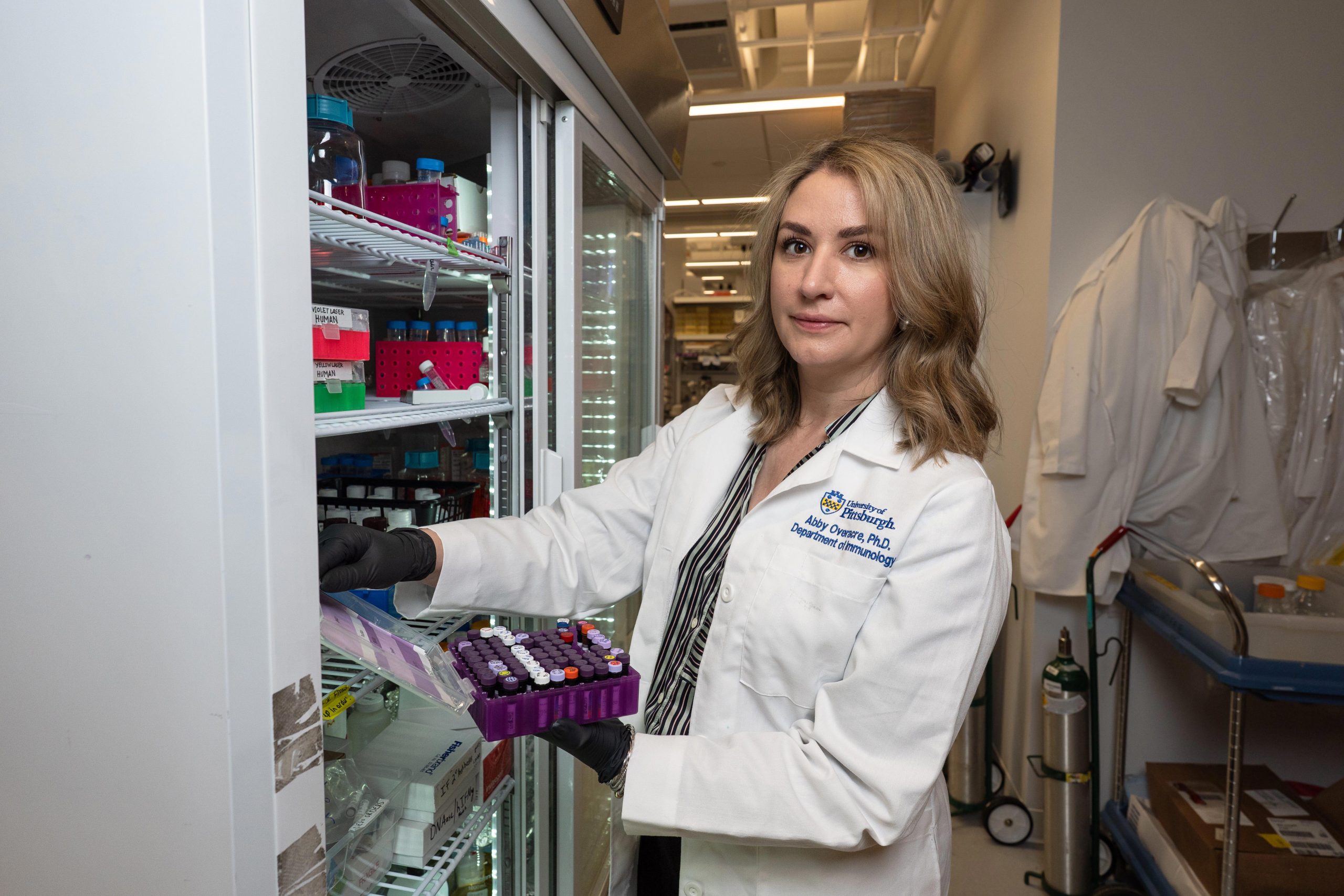
Overacre-Delgoffe’s earlier work had shown that diet and gut microbes can influence cancer patient outcomes and responses to immunotherapy. To investigate their role in treatment side effects, her team fed mice a diet designed to resemble a Western-style human diet, low in fiber and high in fat and processed carbohydrates. The animals began eating it two weeks before checkpoint inhibitor therapy and continued during treatment.
The mice became susceptible to immune-related adverse events and developed immune and microbiome changes resembling many of those seen in affected patients. This gave the researchers a way to test how gut microbes contributed to the inflammation.
Gut microbes can worsen or ease inflammation
Transferring fecal microbes from mice eating the Western-style diet into mice eating a regular, high-fiber diet caused gut inflammation in the recipients. Transfers could also reduce inflammation. Male mice were less susceptible to severe adverse events, and transferring their fecal microbes into female mice reduced the severity of inflammation in the females.
The team also transferred fecal microbes from patients consuming a Western-style diet into germ-free mice, which are raised without microorganisms. Those recipients developed more severe immune-related adverse events. Together, the transfer experiments provided evidence that the microbiome could influence the severity of these reactions in mice.
Stabilizing immune cells reverses inflammation in mice
Within the immune system, the researchers identified a problem involving regulatory T cells. These cells normally suppress excessive immune responses, but stress can make them unstable, a condition called regulatory T cell fragility. Mice eating the Western-style diet showed signs of this fragility during immunotherapy. The researchers found the same instability in regulatory T cells collected from patients with severe immune-related adverse events, but not in cells from patients without the side effect.
Blocking an immune-signaling protein specifically on regulatory T cells restored their stability in mice and reversed inflammation. Switching the animals to a high-fiber diet or giving them supplements containing metabolites, substances produced through metabolism, also stabilized the cells. Restoring stability significantly reduced the severity of adverse events, supporting the interpretation that regulatory T cell fragility is a major underlying cause in this model.
“We were able to generate the first of its kind preclinical mouse model of adverse events that didn’t require full gene knockouts,” said Overacre-Delgoffe. “By combining this novel preclinical model alongside patient data, we were able to identify a very new mechanism of adverse events that hopefully will result in new targeted therapies, allowing more cancer patients to stay on treatment and out of the hospital.”
The model will give researchers a platform to investigate why some patients develop severe reactions and to identify biological markers that might predict susceptibility. Future work will explore drug targets in specific tissues that could limit or eliminate these side effects without disrupting immunotherapy. Metabolite supplementation is another potential approach to reducing susceptibility without interfering with the microbiome, although its promise here comes from experiments in mice.
“We now have some potential targets that we’re going after that seem to limit immune-related adverse events without negatively impacting immunotherapy, which would be the first of its kind and is quite exciting” Overacre-Delgoffe said.
Reference: “Lifestyle-induced regulatory T cell fragility primes adverse events after immune checkpoint blockade” by Dipyaman Patra, Katelyn Wolfgang, Chenxian Ye, Lora Rigatti, Kelsey Ertwine, Kristin M. Morder, Jessica Jana, Ishita Baral, Drew Hurd, Kaitlin Bossong, Steven Mullett, Yingtong Dou, Stacy Gelhaus, Dario A.A. Vignali, Diwakar Davar, Anthony R. Cillo, Greg M. Delgoffe and Abigail E. Overacre-Delgoffe, 22 October 2026, Cell.
DOI: 10.1016/j.cell.2026.09.055
This research received support from the National Institutes of Health (DP2AI177967, S10OD023402, S10OD032141, R35 CA263850, S10 OD032265), Damon Runyon Cancer Research Foundation, Gateway Foundation for Cancer Research (G-22-800), Cancer Research Institute Lloyd J. Old STAR Award (CRI3447), Sy Holzer Endowed Immunotherapy Fund, The Pittsburgh Foundation (MR2023-134140), National Institute of Allergy & Infectious Diseases (R01AI171483, R01AI166598), National Cancer Institute (P30CA047904, R01CA277473, P50CA121973, P50CA097190), and UPMC Hillman Cancer Center Skin Cancer and Head and Neck Cancer SPOREs.
Never miss a breakthrough: Join the SciTechDaily newsletter.
Follow us on Google and Google News.