
Close Menu
    Facebook X (Twitter) Instagram
    SciTechDaily
    • Biology
    • Chemistry
    • Earth
    • Health
    • Physics
    • Science
    • Space
    • Technology
    Facebook X (Twitter) Pinterest YouTube RSS
    SciTechDaily
    Home»Earth»A Chemical Signature Suddenly Disappeared From Earth’s Rocks. Scientists Think They Know Why
    Earth

    A Chemical Signature Suddenly Disappeared From Earth’s Rocks. Scientists Think They Know Why

    By Curtin UniversityNovember 21, 2026No Comments4 Mins Read
    Facebook Twitter Pinterest Telegram LinkedIn WhatsApp Email Reddit
    Share
    Facebook Twitter LinkedIn Pinterest Telegram Email Reddit
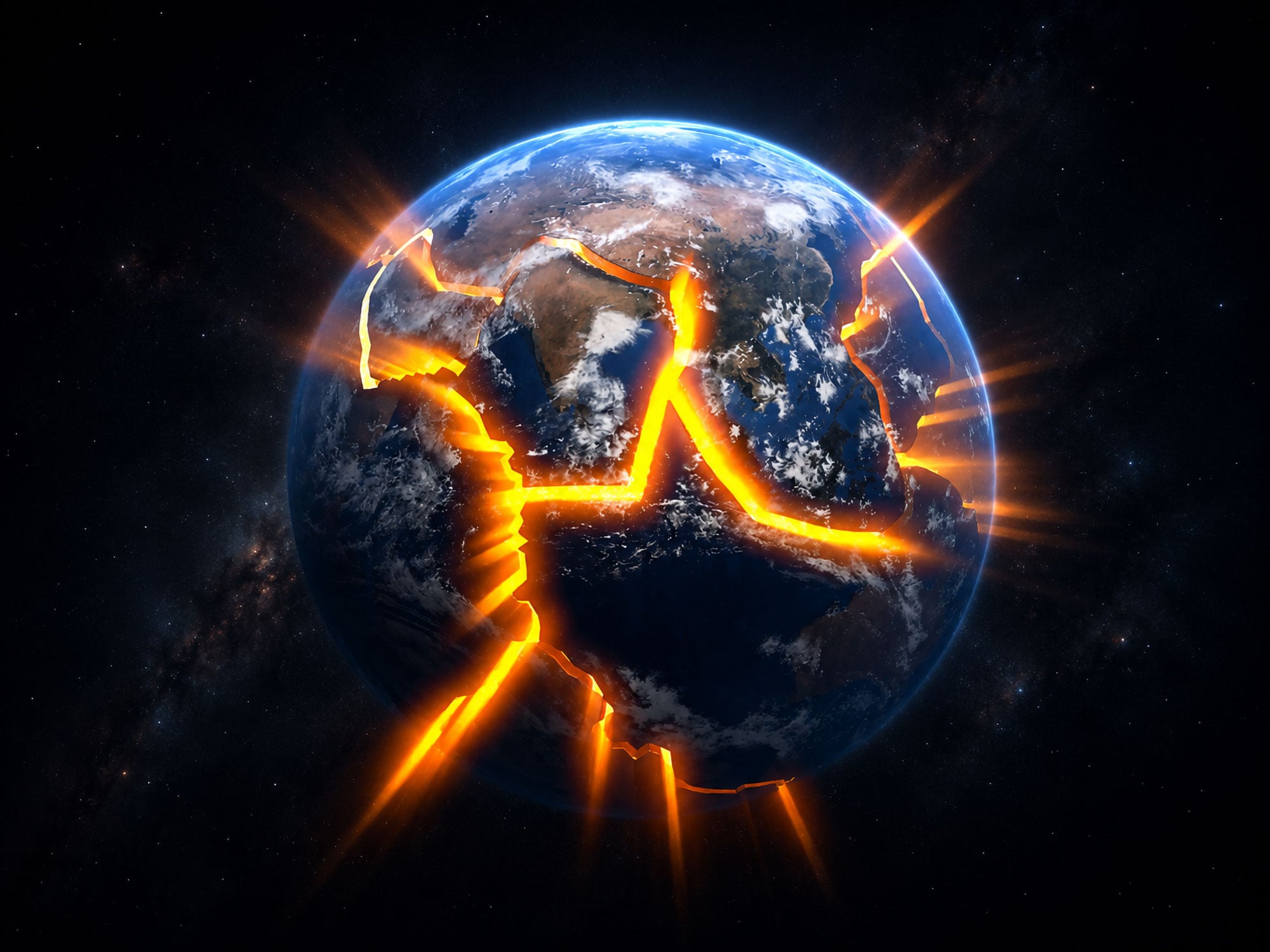
    Tectonic Plates Earth Glowing
    Plate tectonics is the geological process in which massive sections of Earth’s outer shell slowly move across the underlying mantle. This movement shapes continents and oceans, drives earthquakes and volcanic activity, builds mountain ranges, and plays a major role in regulating Earth’s long-term climate. Credit: Stock

    Scientists have uncovered a mysterious chemical change in ancient rocks that reveals a major turning point in Earth’s geological history.

    A chemical fingerprint preserved in some of Earth’s oldest rocks disappears from the geological record around 2.5 billion years ago. Researchers at Curtin University have traced this abrupt change across thousands of rock samples, identifying a major transition in how Earth’s crust formed and recycled. Their findings suggest that the planet was beginning to develop a tectonic system resembling the one operating today.

    Determining when plate tectonics emerged has been a longstanding challenge. The movement of Earth’s tectonic plates continually reshapes continents and ocean basins, while recycling enormous amounts of crust into the planet’s interior. This process destroys much of the geological evidence needed to reconstruct its earliest history.

    A Chemical Fingerprint From Earth’s Ancient Crust

    The researchers investigated chemical signatures that can survive when older crust melts and contributes to the formation of new rock. These signatures can help identify the original material from which younger rocks formed.

    “New crust often forms by melting older rock, leaving behind a distinctive chemical fingerprint,” said lead author Dr. Janne Liebmann, a research fellow at Curtin University. “We searched for this fingerprint in thousands of rocks from around the world, spanning almost four billion years of Earth’s history.”

    “We found it consistently in rocks older than 2.5 billion years, showing they were derived from a pool of ancient crust that formed about four billion years ago.”

    “But after 2.5 billion years ago, that fingerprint disappears from the geological record, and despite examining thousands of rocks, we never see it again.”
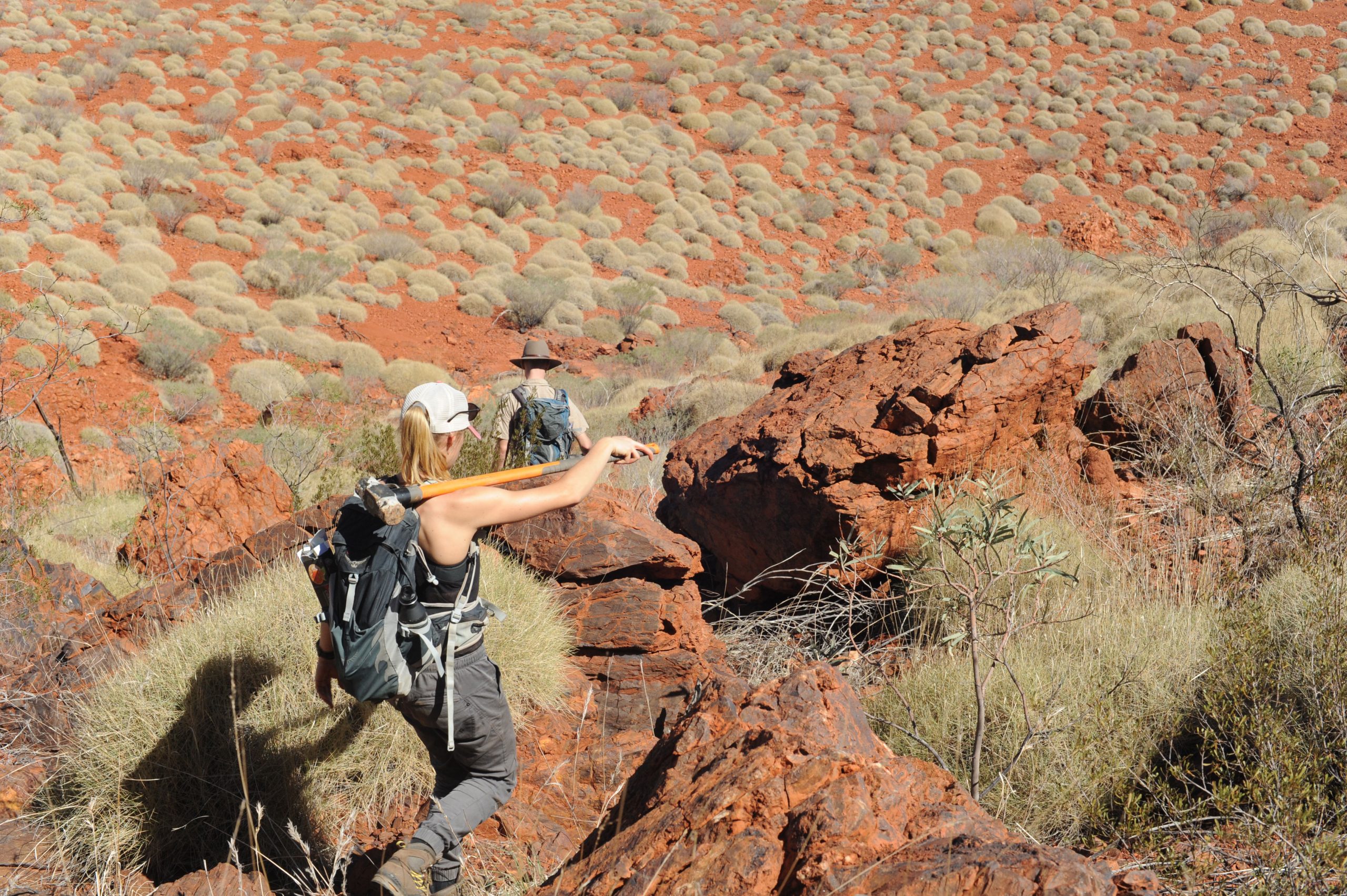
    Janne Liebmann and Fellow Researcher Collecting Rock Samples
    Dr Janne Liebmann and fellow researcher collecting rock samples in the Western Australian outback (credit Bryant Ware) Credit: Bryant Ware

    When Earth’s Crust Began Changing

    The disappearance suggests that the processes responsible for generating new crust underwent a fundamental transformation. Rather than repeatedly melting and reworking ancient crust in place, Earth increasingly developed a system capable of transporting and recycling crust across much larger distances.

    “That tells us something fundamental changed in the way Earth’s crust was being formed and transformed, marking a transition towards the dynamic tectonic system we see today,” Liebmann said.

    Study co-author Professor Chris Kirkland, from Curtin’s School of Earth and Planetary Sciences, connected the findings to the geological processes that distinguish Earth from planets such as Venus and Mars, which lack a comparable global system of active plate tectonics.

    “Plate tectonics is fundamental to the way Earth has evolved over billions of years, continually reshaping the continents and oceans and influencing the planet’s atmosphere and climate,” Kirkland said.

    New Evidence for the Origins of Plate Tectonics

    “What makes this finding remarkable is that we can see the fingerprints of an ancient Earth disappear from the geological record at a very specific point in time.”

    “It marks the transition from an early Earth where ancient crust could be repeatedly melted and reworked in place, to a system capable of moving and recycling crust on a much larger scale.”

    The results identify a major change in crustal evolution around 2.5 billion years ago, although they do not establish that modern plate tectonics began suddenly or that all its defining features emerged simultaneously.

    “This gives us our clearest geological evidence yet for when the tectonic engine that drives the modern Earth ‘switched on’.”

    Reference: “Loss of ancient crustal reservoirs marks a shift in Earth’s geodynamic regime” by Janne Liebmann, Christopher L. Kirkland, Michael I. H. Hartnady and Christopher J. Spencer, 1 November 2026, Proceedings of the Royal Society A: Mathematical, Physical and Engineering Sciences.
    DOI: 10.1098/rspa.2026.0587

    Never miss a breakthrough: Join the SciTechDaily newsletter.
    Follow us on Google and Google News.

    Curtin University Geology Geophysics Seismology Tectonic Plates
    Share. Facebook Twitter Pinterest LinkedIn Email Reddit

    Related Articles

    Scientists Were Wrong. Turkey’s Crust Is Tearing Apart

    Behold! The World’s Next Supercontinent, Amasia

    Possible Chemical Leftovers From Early Earth Sit Near the Planet’s Core

    First Solid Clues Uncovered to Start of Earth’s Supercontinent Cycle

    World’s Longest Erupting Supervolcanoes Fueled by Magma “Conveyor Belt”

    Researchers Dig Into Case of Geologic Amnesia – In Search of a Billion Years Missing From the Geologic Record

    Great 2011 Japan Tsunami Magnified by Shifts in Deep Geologic Structure

    Yale Researchers Find a Soft Spot in the Nazca Plate

    Unusual Indian Ocean Earthquakes May Signal Tectonic Breakup

    Leave A Reply Cancel Reply

    • Facebook
    • Twitter
    • Pinterest
    • YouTube

    Don't Miss a Discovery

    Subscribe for the Latest in Science & Tech!

    Trending News

    Stanford Scientists Discover 3 Hidden Brain Types in Children With ADHD and Anxiety

    What Is a Thought Made Of? Scientists Reveal Why Human Consciousness May Be Beyond the Reach of AI

    Scientists Discover Mysterious Toxic Chemicals Floating in the Air Above America

    Astronomers Discover a Chilling Preview of Our Solar System’s Future

    Scientists Discover Alarming Signs of Extinction Risk Deep Beneath the Ocean

    A Common Gut Antibody May Be the Key to Preventing Colon Cancer Before It Starts

    Scientists Discover a Disturbing Link Between Cannabis Use and Earlier Psychosis

    Scientists Discover Two Monster Black Holes at the Dawn of Time That Shouldn’t Exist

    Follow SciTechDaily
    • Facebook
    • Twitter
    • YouTube
    • Pinterest
    • Newsletter
    • RSS
    SciTech News
    • Biology News
    • Chemistry News
    • Earth News
    • Health News
    • Physics News
    • Science News
    • Space News
    • Technology News
    Recent Posts
    • A Chemical Signature Suddenly Disappeared From Earth’s Rocks. Scientists Think They Know Why
    • New Research Finds Common ADHD Classroom Accommodations May Not Actually Help
    • New Research Reveals Why the Keto Diet Can Trigger Inflammation Instead of Fighting It
    • Why Ozempic Weight Loss Stalls for Some People but Not Others
    • 1,000-Year-Old Welsh Legend May Have Revealed the Location of a Lost Roman Fortress
    Copyright © 1998 - 2026 SciTechDaily. All Rights Reserved.
    • Science News
    • About
    • Contact
    • Editorial Board
    • Privacy Policy
    • Terms of Use

    Type above and press Enter to search. Press Esc to cancel.