
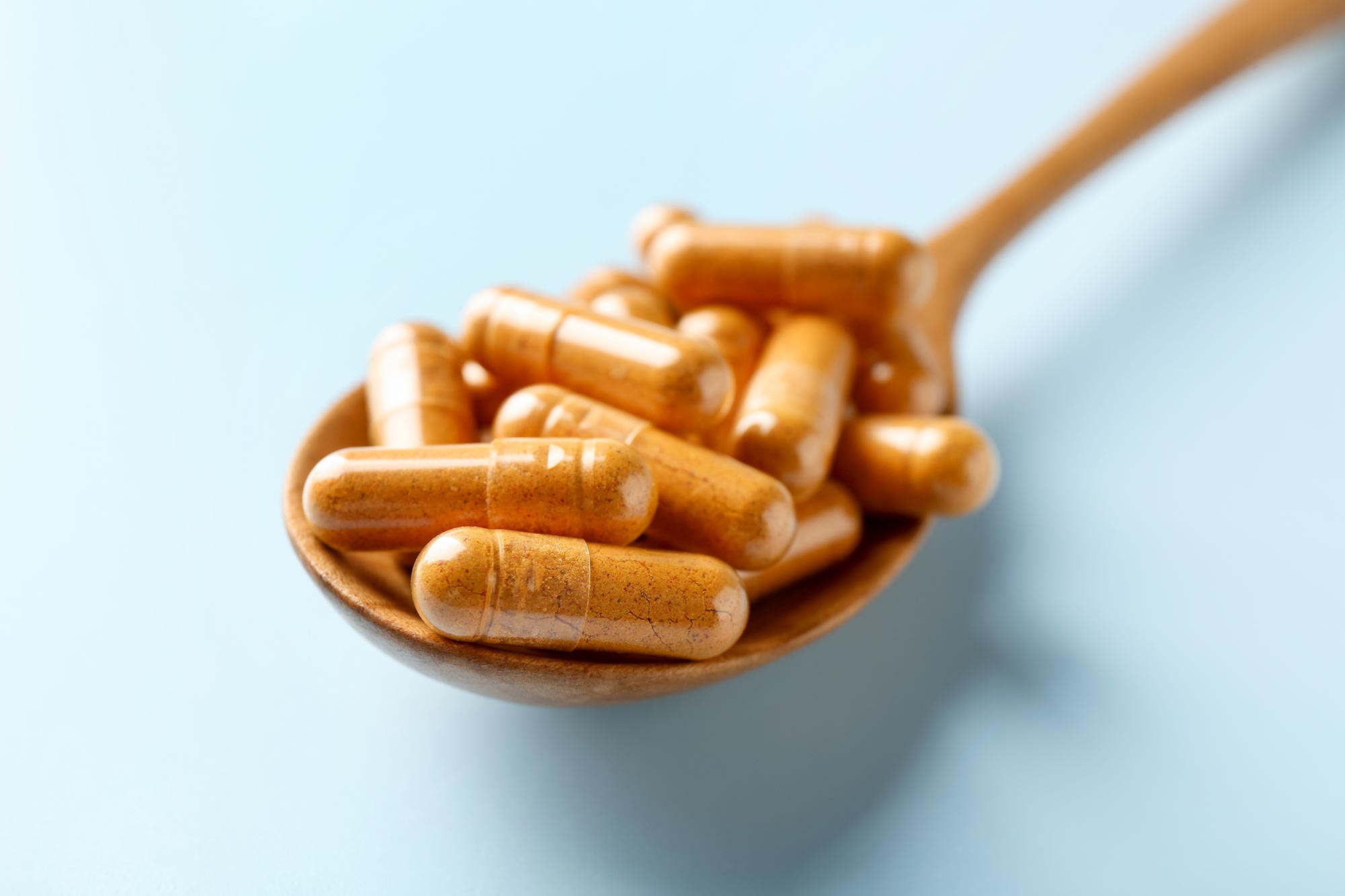
A closer examination of clinical trial reliability raises new questions about earlier research suggesting turmeric could help people with knee osteoarthritis.
Turmeric supplements are widely promoted as a natural way to ease joint pain, but a major new scientific review has cast doubt on their effectiveness for knee osteoarthritis. Researchers found little convincing evidence that the popular supplements provide clinically meaningful pain relief, challenging earlier studies that suggested they could help.
The findings come from a new Cochrane review that examined both the results of clinical trials and the reliability of the research behind them. Although the evidence remains uncertain, the analysis found no clear advantage for turmeric over placebo or commonly used anti-inflammatory medications.
What the Clinical Trials Found
The international research team analyzed nine studies involving 1,245 people with knee osteoarthritis. The trials compared turmeric supplements with placebo, non-steroidal anti-inflammatory drugs (NSAIDs) such as ibuprofen and diclofenac, and paracetamol. Participants received different turmeric extracts and curcuminoid formulations, with treatment periods ranging from four weeks to three months.
Turmeric contains curcuminoids, including curcumin, which have anti-inflammatory properties. These compounds have attracted interest as potential treatments for osteoarthritis, a disease involving damage and changes throughout the joint. Inflammation can contribute to pain and other symptoms, but the condition has multiple underlying causes. Exercise and medications can help manage symptoms, although no cure currently exists.
Why Earlier Studies Suggested Greater Benefits
Previous systematic reviews generally reported improvements in pain and physical function among people taking turmeric supplements. However, the new Cochrane analysis applied more rigorous screening procedures to assess whether individual clinical trials were trustworthy enough to support reliable conclusions.
Ten trials raised concerns during this screening process and were excluded from the analysis while researchers sought clarification from their authors. Earlier reviews had also included broader categories of studies, such as those involving osteoarthritis diagnosed solely through imaging, non-oral turmeric treatments, or curcumin combined with other active ingredients. These methodological differences may partly explain the conflicting conclusions.
“This review highlights the importance of assessing the trustworthiness of clinical trials,” adds Dr Shirinsky. “Such assessments help identify studies that require further clarification before their findings can be used to inform conclusions about treatment effects.”
The researchers used a screening method developed by the Cochrane Pregnancy and Childbirth group. Other approaches, including INSPECT-SR, have since been developed to identify potentially problematic studies before their findings influence scientific reviews.
What the Findings Mean for Osteoarthritis Treatment
Dr. Ivan Shirinsky, the review’s lead author and a practicing rheumatologist, said the results reflect the broader challenges of treating a disease with complex biological mechanisms.
“As a clinician and researcher, I am not surprised by these findings. Osteoarthritis is a complex and still incompletely understood disease. Despite intensive research, effective pharmacological treatment options remain limited, and many promising approaches have yielded limited or inconclusive evidence of clinical benefit. A better understanding of the mechanisms underlying osteoarthritis may help us develop more effective treatments in the future.”
The review does not establish that turmeric supplements are ineffective in every circumstance. Rather, the available research does not provide sufficiently reliable evidence of a clinically important benefit. Shirinsky said this uncertainty would shape how he advises patients considering turmeric for knee pain.
“I would not routinely recommend turmeric supplements to my patients with knee osteoarthritis. However, if a patient asked me about them, I would explain what we know and what remains uncertain about their benefits and potential harms, and help them make an informed decision.”
Reference: “Curcuma longa (turmeric) or its active ingredients for osteoarthritis” by Ivan Shirinsky, Valery Shirinsky, Katerina Filatova, Ze Yu Yu, Fredh Netterström Wedin, Yuan Chi and Chris Bleakley, 19 November 2026, Cochrane Database of Systematic Reviews.
DOI: 10.1002/14651858.CD014683.pub2
Never miss a breakthrough: Join the SciTechDaily newsletter.
Follow us on Google and Google News.