
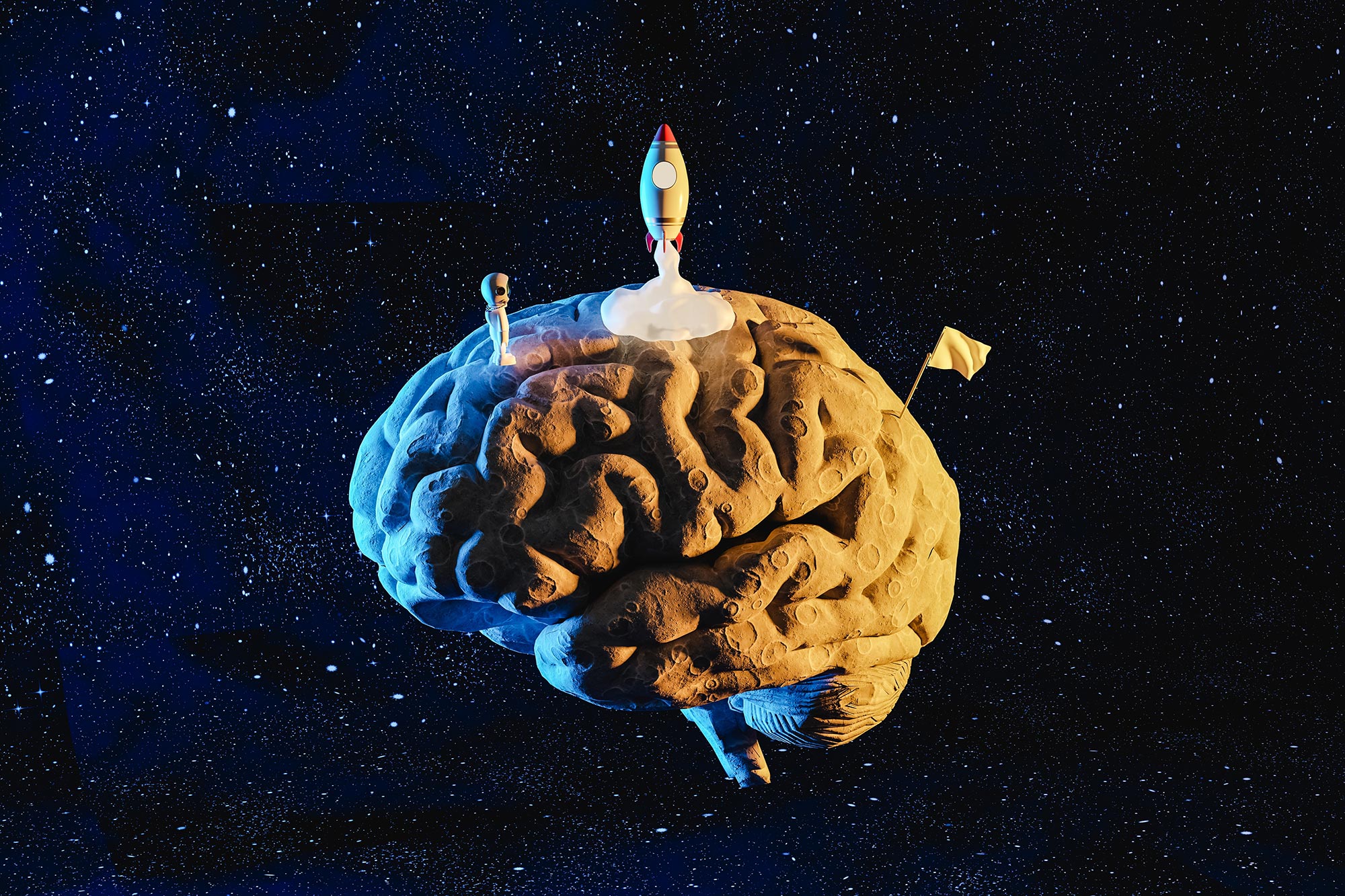
New NASA-funded research reveals that cosmic radiation triggers subtle, sex-specific changes in the brain without causing immediate cognitive problems.
Cosmic radiation can change the brain’s immune cells in different ways in males and females, even when no obvious problems with memory or behavior appear. A new NASA-funded study in mice found distinct molecular responses to simulated space radiation, raising questions about how prolonged exposure could affect astronauts traveling to the Moon, Mars, and beyond.
Earth’s atmosphere and magnetic field shield people from much of the galactic cosmic radiation that fills space. These highly energetic particles, often described as cosmic “rays,” can damage spacecraft electronics and potentially affect living tissue. Understanding their effects on the brain is a major concern for future missions beyond Earth’s protective magnetic field.
Space Radiation Affects Male and Female Brains Differently
Researchers at the University of Rochester exposed male and female mice to simulated galactic cosmic radiation at the NASA Space Radiation Laboratory at Brookhaven National Laboratory. Led by neuroscience graduate student Mark Osabutey, MBChB, the team used single-cell RNA sequencing to examine nearly 16,000 microglia, the brain’s resident immune cells. This technique allowed scientists to investigate how radiation affected gene activity in individual cells.
The analysis, published in Scientific Reports, identified different molecular responses in males and females. Male microglia showed changes involving cellular stress adaptation and metabolism, while female microglia exhibited broader reductions in immune signaling pathways. Neither group showed widespread inflammatory activation or detectable radiation-related cognitive or behavioral impairment at the time of testing.
“Surprisingly, despite clear molecular changes, we found no widespread inflammatory activation or measurable radiation-associated behavioral impairment at the time we examined,” said Osabutey. The findings suggest that cellular responses to radiation can occur without immediately producing measurable functional problems, although their longer-term effects remain unknown.
A Common Molecular Response Emerges
Despite these sex-specific differences, researchers identified one response shared by both groups. Levels of FKBP5, a protein involved in regulating cellular stress responses, increased in the cortex and dentate gyrus of male and female mice. These brain regions contribute to functions including cognition, learning, and memory.
“We now need to understand whether FKBP5 plays a protective or harmful role, and how different radiation exposures and other spaceflight stressors influence long-term brain health,” said Osabutey. “Our findings highlight the importance of considering biological sex when assessing neurological risks during spaceflight and identify potential pathways for developing protective strategies.”
What the Findings Could Mean for Astronauts
University of Rochester Professor of Neuroscience M. Kerry O’Banion, MD, PhD, has investigated the neurological effects of space radiation for more than 15 years. A member of the Del Monte Institute for Neuroscience, O’Banion previously contributed to research indicating that cosmic radiation could accelerate the onset of Alzheimer’s disease.
“We know cognitive changes from exposure to radiation in space are a real risk,” O’Banion said. “It’s important we understand how brain cells are changed. Knowing which mechanisms are impacted and how may help the development of countermeasures to protect or lessen an astronaut’s exposure to space radiation.”
The latest findings do not establish whether the observed immune cell changes are harmful, protective, or temporary. Researchers also cannot yet determine whether they contribute to neurological problems after prolonged exposure. “Additional studies examining other time points and effects in other experimental systems will be required to understand this further,” O’Banion said.
NASA-Supported Research and the Scientists Behind It
Osabutey has participated in NASA-funded research since joining O’Banion’s laboratory. In 2023, he received a NASA predoctoral grant augmentation award to investigate changes in microglial populations following exposure to galactic cosmic radiation. He has also presented the laboratory’s research at a NASA conference and attended the European Space Agency Summer School in Darmstadt, Germany.
“Receiving NASA support has allowed me to contribute to research addressing questions of national and international importance,” said Osabutey. “As a physician-scientist in training, I could not have asked for a better environment in which to train, and the experience has taught me how to pursue meaningful scientific questions through rigorous basic/translational investigation and collaboration, skills that I will carry forward in my future efforts to better understand brain injury and neurological disease.”
The research involved a broader collaboration between University of Rochester scientists and personnel at Brookhaven National Laboratory, where particle accelerators generate radiation conditions relevant to spaceflight.
“Graduate students and postdoctoral fellows have been an essential part of our NASA research effort,” O’Banion said. “It’s comprised of a large team that includes the outstanding organizational skills of our long-time senior research technician, Lee Trojanczyk, as well as support personnel at Brookhaven National Labs. Over time, nearly a dozen University of Rochester trainees have contributed to this work.”
Reference: “Single-cell transcriptomic profiling reveals sex-specific microglial responses to simulated galactic cosmic radiation without broad inflammatory activation” by Mark A. Osabutey, Lia Calcines-Rodríguez, Lee A. Trojanczyk, John A. Olschowka and M. Kerry O’Banion, 20 November 2026, Scientific Reports.
DOI: 10.1038/s41598-026-77661-9
This research was supported by a NASA grant and a NASA Human Research Program Grant Augmentation Award.
Never miss a breakthrough: Join the SciTechDaily newsletter.
Follow us on Google and Google News.