

Close Menu
    Facebook X (Twitter) Instagram
    SciTechDaily
    • Biology
    • Chemistry
    • Earth
    • Health
    • Physics
    • Science
    • Space
    • Technology
    Facebook X (Twitter) Pinterest YouTube RSS
    SciTechDaily
    Home»Space»ESA Sets Goals for Space Exploration
    Space

    ESA Sets Goals for Space Exploration

    By SciTechDailyNovember 23, 2012No Comments2 Mins Read
    Facebook Twitter Pinterest Telegram LinkedIn WhatsApp Email Reddit
    Share
    Facebook Twitter LinkedIn Pinterest Telegram Email Reddit
    Space Exploration Concept
    Space is no longer just an expense; it’s an investment.

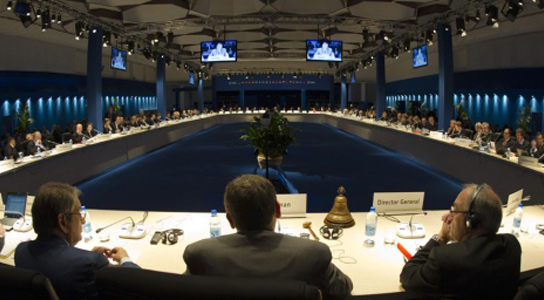
    At a recent meeting in Naples, Italy, EU ministers have agreed to give the European Space Agency (ESA) €10.1 billion ($13 billion) over the next several years, which is less than the total €12 billion that was considered at the beginning of the meeting.

    The ministers were able to resolve issues and strike deals on how to replace the Ariane 5 satellite-launching rocket and how to fund Europe’s contribution to the ISS.

    Space is no longer about expenses, it is an investment.

    All of ESA’s member countries, which currently number 20, contribute towards the mandatory activities, such as developing space-based telescopes and other instruments. They can then choose whether to participate in other projects. With the flat funding of €500 million per year for 2013 to 2017, the program is taking a cut, but it isn’t clear yet which missions will be affected.

    Earth observation took a €900 million cut over four years, which was due to Spain, France, and Italy reducing their contributions and because the ESA will pay for a new generation of European weather-forecasting satellites.
    ESA-funding-reduced
    The European Space Agency’s ministerial council met in Naples, Italy, this week to thrash out project funding. Credit: Photo by S. Corvaja/ESA

    It was agreed that the ESA would develop an upgraded version of the Ariane 5 launcher, called the Midlife Evolution (5ME), which will be able to carry 20% heavier payloads and put satellites in higher orbits. The ESA will also start building a new Ariane 6 rocket, that would be cheaper to launch and more competitive with similar rockets.

    The ESA’s ruling council approved the involvement of Russia in the agency’s ExoMars missions to measure trace gases in Mars’ atmosphere and search for signs of life on the planet’s surface. The Russian space agency, Roscosmos, will provide two Proton rockets for lift-off.

    Never miss a breakthrough: Join the SciTechDaily newsletter.
    Follow us on Google and Google News.

    European Space Agency NASA Space Exploration
    Share. Facebook Twitter Pinterest LinkedIn Email Reddit

    Related Articles

    This Nearby Galaxy Shows How Frozen Clouds Ignite Into Stars

    This Chaotic Spiral Galaxy Is Still Recovering From a Cosmic Collision

    Hubble Zooms In on a Galaxy That Maps the Universe’s Expansion

    Hubble Captures a Dazzling Spiral Galaxy Alive With Birth and Destruction

    Hubble Spots a Glowing “Ring of Fire” in a Distant Spiral Galaxy

    Dust, Light & Ancient Collisions: The Sombrero Galaxy Like You’ve Never Seen It

    Star Formation in Motion: Hubble Reveals Spiraling Stars and Sculpted Nebulae

    Inside the Sombrero Galaxy: Stunning New Insights from James Webb

    NASA’s Orion Spacecraft for Artemis III Hits Major Milestone at Kennedy

    Leave A Reply Cancel Reply

    • Facebook
    • Twitter
    • Pinterest
    • YouTube

    Don't Miss a Discovery

    Subscribe for the Latest in Science & Tech!

    Trending News

    New Study Reveals Why Ozempic Works Better for Some People Than Others

    Climate Change Is Altering a Key Greenhouse Gas in a Way Scientists Didn’t Expect

    New Study Suggests Gravitational Waves May Have Created Dark Matter

    Scientists Discover Why the Brain Gets Stuck in Schizophrenia

    Scientists Engineer “Tumor-Eating” Bacteria That Devour Cancer From Within

    Even “Failed” Diets May Deliver Long-Term Health Gains, Study Finds

    NIH Scientists Discover Powerful New Opioid That Relieves Pain Without Dangerous Side Effects

    Collapsing Plasma May Hold the Key to Cosmic Magnetism

    Follow SciTechDaily
    • Facebook
    • Twitter
    • YouTube
    • Pinterest
    • Newsletter
    • RSS
    SciTech News
    • Biology News
    • Chemistry News
    • Earth News
    • Health News
    • Physics News
    • Science News
    • Space News
    • Technology News
    Recent Posts
    • The Surprising Reason You Might Want To Sleep Without a Pillow
    • Household Cats Could Hold the Secret to Fighting Breast Cancer
    • Scientists Say This Natural Hormone Reverses Obesity by Targeting the Brain
    • This 15,000-Year-Old Discovery Changes What We Know About Early Human Creativity
    • 35-Million-Year-Old Mystery: Strange Arachnid Discovered Preserved in Amber
    Copyright © 1998 - 2026 SciTechDaily. All Rights Reserved.
    • Science News
    • About
    • Contact
    • Editorial Board
    • Privacy Policy
    • Terms of Use

    Type above and press Enter to search. Press Esc to cancel.