
Close Menu
    Facebook X (Twitter) Instagram
    SciTechDaily
    • Biology
    • Chemistry
    • Earth
    • Health
    • Physics
    • Science
    • Space
    • Technology
    Facebook X (Twitter) Pinterest YouTube RSS
    SciTechDaily
    Home»Earth»British and American Teams Hunt for Life Under Antarctic Ice
    Earth

    British and American Teams Hunt for Life Under Antarctic Ice

    By SciTechDailyNovember 22, 2012No Comments3 Mins Read
    Facebook Twitter Pinterest Telegram LinkedIn WhatsApp Email Reddit
    Share
    Facebook Twitter LinkedIn Pinterest Telegram Email Reddit
    lake-ellsworth-drilling
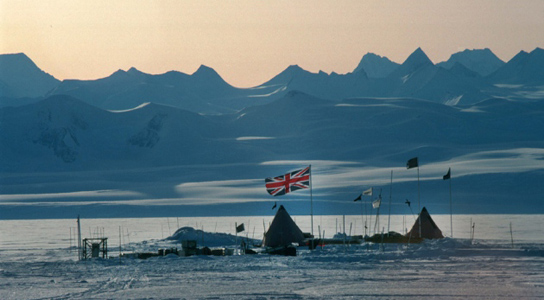
    A British field camp in Antarctica will soon host efforts to drill through the ice to reach Lake Ellsworth. Credit: Photo by BAS

    Next week, UK glaciologists are heading to Lake Ellsworth to prepare for a new drilling stage that will start on December 5. They hope to reach the lake and start examining sediments to find signs of life.

    The team will try to understand the history of the West Antarctic Ice Sheet, which has the potential to reveal how the glacier has waxed and waned over time.

    Roughly 380 subglacial lakes have been discovered and mapped in Antarctica, and they have been explored remotely with ice-penetrating radar, gravity measurements, and seismic sensors. The lakes were created by geothermal heat that melts the Antarctic ice from below. Gravity and pressure force the melt water to flow, and it collects under the ice.
    drilling-map-antarctica
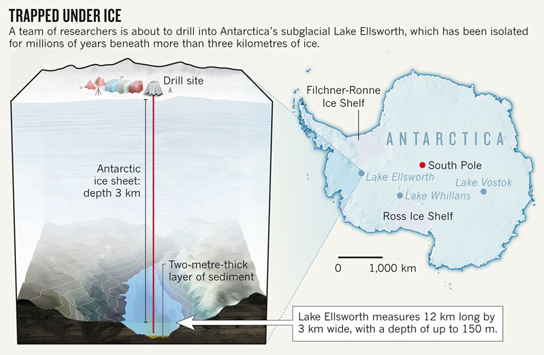
    Trapped under ice. Credit: infographic via Nature

    If everything goes according to plan, Lake Ellsworth will be the second lake to be breached after Lake Vostok was reached in February. A US team is heading to Lake Whillans, a small, shallow body of water close to the edge of the Ross Ice Shelf. The discovery of exotic microbial life, which could have evolved untouched for millennia, is one of the aspects of this research. Scientists have already discovered bacteria that mine their energy from rocks and minerals, and they assume that there are many specialized microbes living underneath Antarctica.

    The Russian team at Lake Vostok found evidence of heat-loving bacteria living in the bedrock surrounding the lake. The clues came from DNA in the sediment that was trapped in accretion ice. The upper layers of the lake itself appeared to be lifeless. No native microbes were turned up from a preliminary analysis of lake water.

    Lake Ellsworth might have more microbes because it offers fewer hiding places. It’s 12 km (7.5 mi) in length, and 3 km (1.9 mi) in width, with an average depth of about 150 meters (490 feet). Vostok is 250 km (155 mi) long by 40 km (25 mi) in width, which makes it one of Earth’s largest freshwater bodies. It’s also nestled in a subglacial valley near the continental divide, where overlying ice moves at its slowest. The site, at about −30 °C (−22 °F), is twice as warm as the ice on the Vostok plateau in East Antarctica.

    The goal is to reach Ellsworth in three days using a drill that will melt the ice with a high-pressure jet of water, heated up to 90 °C (194°F). Once the borehole is completed, the team has about 24 hours to deploy a sediment corer before the hole freezes over.

    The equipment was prepared so that it didn’t contaminate the lake with microbes from the surface. The main challenge involves completing all of the sampling operations within this very short window of time.

    Never miss a breakthrough: Join the SciTechDaily newsletter.
    Follow us on Google and Google News.

    Antarctica Glaciology Ice Lake Ellsworth Lake Vostok Microbial Life Subglacial Lakes
    Share. Facebook Twitter Pinterest LinkedIn Email Reddit

    Related Articles

    Underwater Time Bomb: Meltwater Ponds Threaten Antarctic Stability

    Antarctica’s Ice Deception: New Study Reveals Surprising Thinness of Ice Shelves

    Record Low Antarctic Sea Ice: Lowest Extent Ever Observed Since Start of Satellite Record in 1979

    30% Less Than Average: Antarctic Sea Ice Levels Lowest Ever Recorded

    New Discovery Signals Rapid Decay in Antarctic Glacier

    New Threat to East Antarctic Ice

    NASA Study Reveals West Antarctic Glaciers in Irreversible State of Decline

    British Team Fails to Reach Lake Ellsworth

    Third Pole Glacial Measuring Stations Will Give Monitor Glacier Health in Tibet

    Leave A Reply Cancel Reply

    • Facebook
    • Twitter
    • Pinterest
    • YouTube

    Don't Miss a Discovery

    Subscribe for the Latest in Science & Tech!

    Trending News

    New “Nanozyme Hypothesis” Could Rewrite the Story of Life’s Origins

    Anatomy Isn’t Finished: The Human Body Still Holds Secrets

    “Pretty Close to Home”: The Hidden Earthquake Threat Beneath Seattle

    The Surprising Reason You Might Want To Sleep Without a Pillow

    Scientists Say This Natural Hormone Reverses Obesity by Targeting the Brain

    35-Million-Year-Old Mystery: Strange Arachnid Discovered Preserved in Amber

    Is AI Really Just a Tool? It Could Be Altering How You See Reality

    JWST Reveals a “Forbidden” Planet With a Baffling Composition

    Follow SciTechDaily
    • Facebook
    • Twitter
    • YouTube
    • Pinterest
    • Newsletter
    • RSS
    SciTech News
    • Biology News
    • Chemistry News
    • Earth News
    • Health News
    • Physics News
    • Science News
    • Space News
    • Technology News
    Recent Posts
    • Scientists Capture Hidden Electron Patterns Inside Quantum Materials
    • New Study Challenges Alzheimer’s Theories: It’s Not Just About Plaques
    • Scientists Discover Way To Treat Lung Cancer and Its Deadly Side Effect Together
    • Artificial Sweeteners May Harm Future Generations, Study Suggests
    • The Ocean Current Stronger Than All Rivers Changed Earth Forever
    Copyright © 1998 - 2026 SciTechDaily. All Rights Reserved.
    • Science News
    • About
    • Contact
    • Editorial Board
    • Privacy Policy
    • Terms of Use

    Type above and press Enter to search. Press Esc to cancel.