
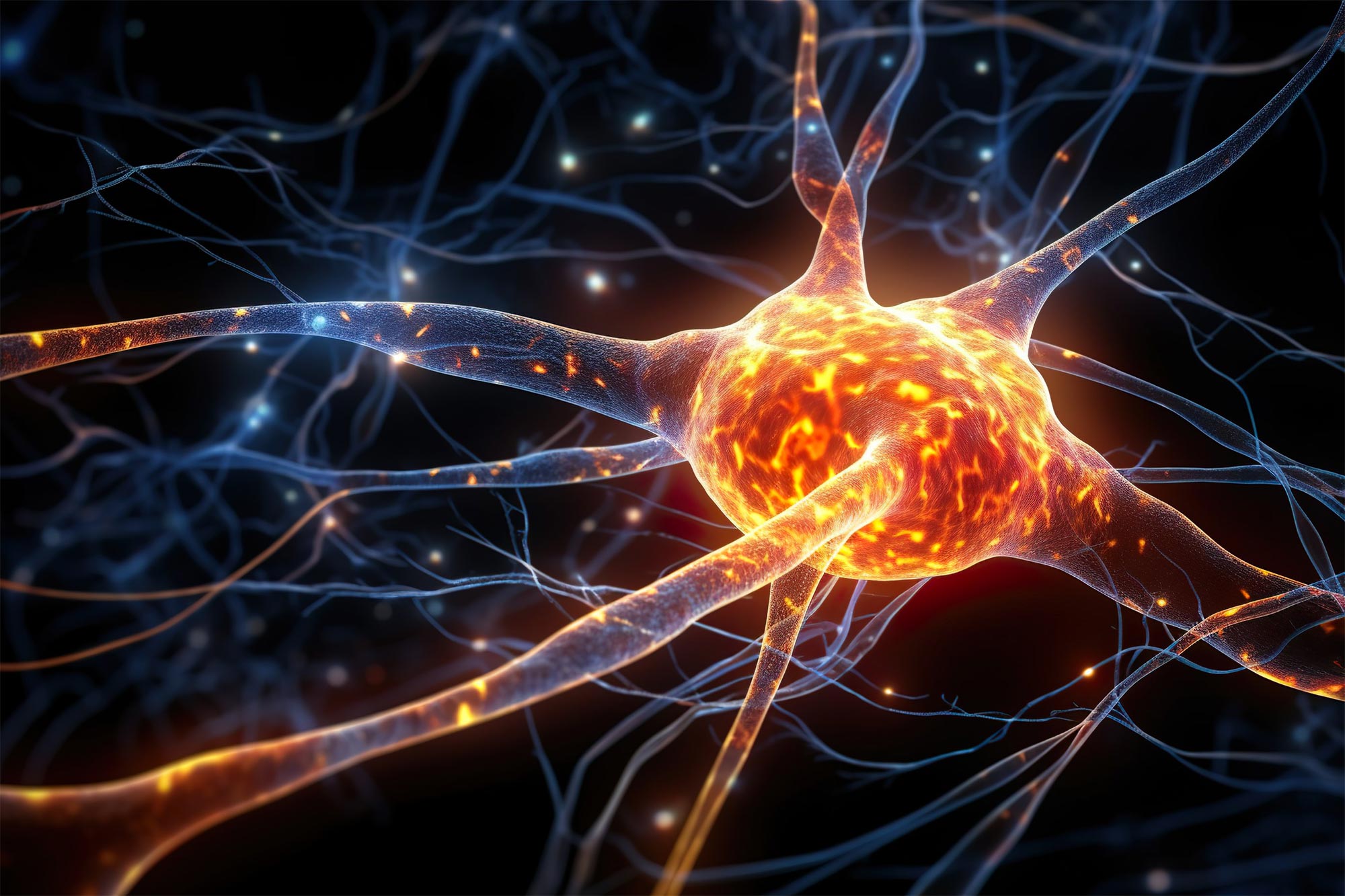
Scientists at Scripps Research unveil the effects of microgravity on brain cells.
Microgravity is known to affect muscles, bones, the immune system, and cognition, but its specific effects on the brain remain largely unexplored. To investigate this, scientists from Scripps Research partnered with the New York Stem Cell Foundation to send tiny clusters of brain cells, known as “organoids,” to the International Space Station (ISS). These organoids were derived from stem cells and designed to mimic certain aspects of brain development.
Remarkably, the organoids returned from their month-long stay in orbit still healthy. However, they exhibited accelerated maturation compared to identical organoids grown on Earth. The space-exposed cells progressed closer to becoming fully developed neurons and showed early signs of specialization. These findings, recently published in Stem Cells Translational Medicine, offer new insights into how space travel might influence neurological development and brain function.
“The fact that these cells survived in space was a big surprise,” says co-senior author Jeanne Loring, PhD, professor emeritus in the Department of Molecular Medicine and founding director of the Center for Regenerative Medicine at Scripps Research. “This lays the groundwork for future experiments in space, in which we can include other parts of the brain that are affected by neurodegenerative disease.”
Innovative Methods for Studying Organoids in Microgravity
On Earth, the team used stem cells to create organoids consisting of either cortical or dopaminergic neurons, which are the neuronal populations impacted in multiple sclerosis and Parkinson’s disease—diseases that Loring has studied for decades. Some organoids also included microglia, a type of immune cell that is resident within the brain, to examine the impact of microgravity on inflammation.

Organoids are usually grown in a nutrient-rich liquid medium that must be changed regularly to ensure that the cells have adequate nutrition, and to remove waste products. To avoid the need for lab work on the ISS, the team pioneered a method for growing smaller-than-usual organoids in cryovials—small, airtight vials that were originally designed for deep freezing.
The organoids were prepared in labs at the Kennedy Space Station and traveled to the ISS in a miniature incubator. After a month in orbit, they returned to Earth, where the team showed that they were healthy and intact.
Gene Expression and Faster Cellular Maturation in Microgravity
To examine how the space environment impacts cellular functions, the team compared the cells’ RNA expression patterns—a measure of gene activity—to identical “ground control” organoids that had remained on Earth. Surprisingly, they found that the organoids grown in microgravity had higher levels of genes associated with maturity and lower levels of genes associated with proliferation compared to the ground controls, meaning that the cells exposed to microgravity developed faster and replicated less than those on Earth.
“We discovered that in both types of organoids, the gene expression profile was characteristic of an older stage of development than the ones that were on ground,” says Loring. “In microgravity, they developed faster, but it’s really important to know these were not adult neurons, so this doesn’t tell us anything about aging.”
The team also noted that, contrary to their hypothesis, there was less inflammation and lower expression of stress-related genes in organoids grown in microgravity, but more research is needed to determine why.
Loring speculates that microgravity conditions may more closely mirror the conditions experienced by cells within the brain compared to organoids grown under conventional lab conditions and in the presence of gravity.
“The characteristics of microgravity are probably also at work in people’s brains, because there’s no convection in microgravity—in other words, things don’t move,” says Loring. “I think that in space, these organoids are more like the brain because they’re not getting flushed with a whole bunch of culture medium or oxygen. They’re very independent; they form something like a brainlet, a microcosm of the brain.”
The paper describes the team’s first space mission, but since then, they have sent four more missions to the ISS. With each one, they’ve replicated the conditions from the first mission and added additional experiments.
“The next thing we plan to do is to study the part of the brain that’s most affected by Alzheimer’s disease,” says Loring. “We also want to know whether there are differences in the way neurons connect with each other in space. With these kinds of studies, you can’t rely on earlier work to predict what the result would be because there is no earlier work. We’re on the ground floor, so to speak; in the sky, but on the ground floor.”
Reference: “Effects of microgravity on human iPSC-derived neural organoids on the International Space Station” by Davide Marotta, Laraib Ijaz, Lilianne Barbar, Madhura Nijsure, Jason Stein, Nicolette Pirjanian, Ilya Kruglikov, Twyman Clements, Jana Stoudemire, Paula Grisanti, Scott A Noggle, Jeanne F Loring and Valentina Fossati, 23 October 2024, Stem Cells Translational Medicine.
DOI: 10.1093/stcltm/szae070
This work was supported by funding from the National Stem Cell Foundation.
In addition to Loring, authors of the study are Jason Stein of Scripps Research; Davide Marotta, Laraib Ijaz, Lilianne Barbar, Madhura Nijsure, Nicolette Pirjanian, Ilya Kruglikov, Scott A. Noggle, and Valentina Fossati of The New York Stem Cell Foundation Research Institute; Twyman Clements and Jana Stoudemire of Space Tango; and Paula Grisanti of the National Stem Cell Foundation.
Never miss a breakthrough: Join the SciTechDaily newsletter.
Follow us on Google and Google News.