
Close Menu
    Facebook X (Twitter) Instagram
    SciTechDaily
    • Biology
    • Chemistry
    • Earth
    • Health
    • Physics
    • Science
    • Space
    • Technology
    Facebook X (Twitter) Pinterest YouTube RSS
    SciTechDaily
    Home»Space»Striking Images of Blood-Red Moonset at Five-Second Intervals
    Space

    Striking Images of Blood-Red Moonset at Five-Second Intervals

    By Richard Hook, ESOJuly 10, 2018No Comments2 Mins Read
    Facebook Twitter Pinterest Telegram LinkedIn WhatsApp Email Reddit
    Share
    Facebook Twitter LinkedIn Pinterest Telegram Email Reddit
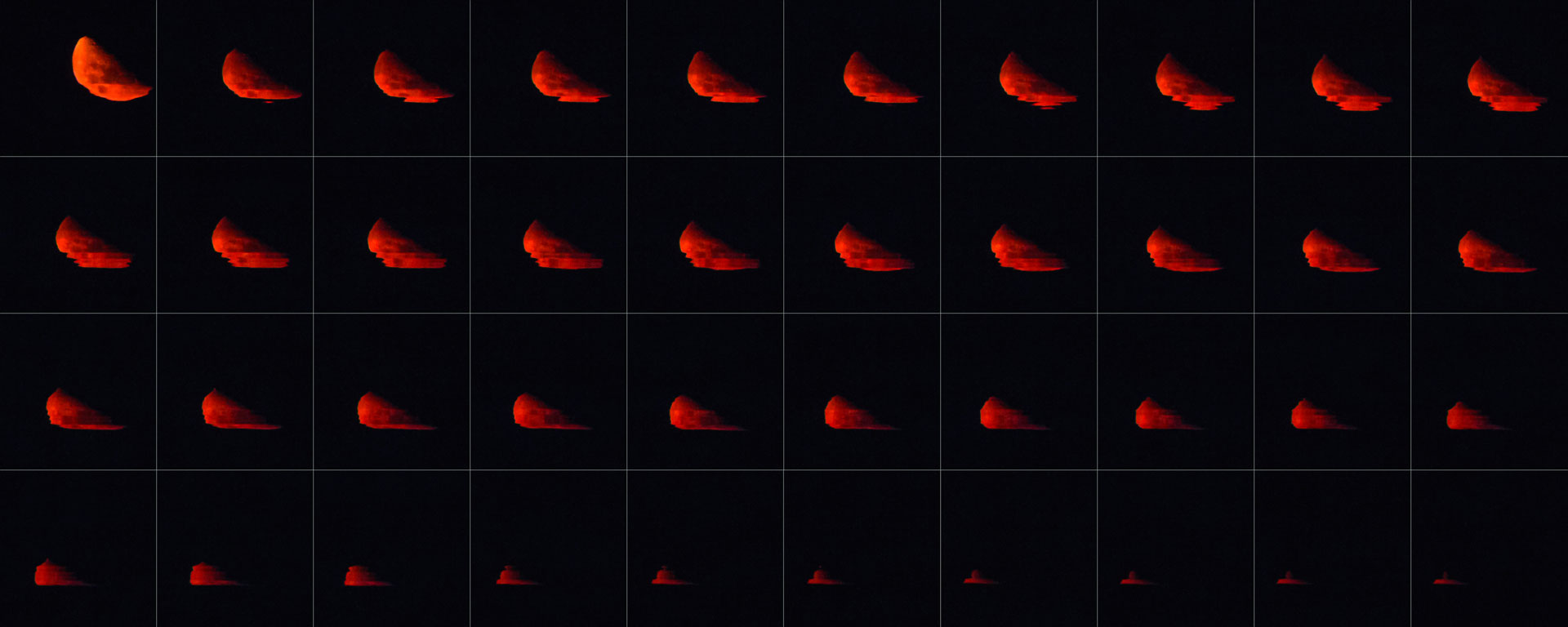
    Image of Blood Red Moon
    This photo montage shows a familiar cosmic object — the Moon — in a very unfamiliar way. Credit: P. Horálek/ESO

    ESO Photo Ambassador Petr Horálek captured this photoset while visiting ESO’s high-altitude Paranal Observatory in Chile, where skies are remarkably clear. He snapped photographs of this striking blood-red moonset at five-second intervals, watching as the Moon sank through the dark sky before finally dipping below the horizon (the frames are ordered chronologically from left to right, and top to bottom).

    The prominent red color of these images is due to the phenomenon of atmospheric refraction. As the Moon approaches the horizon, its reflected light must traverse more and more of the atmosphere before reaching our eyes, meaning that scattering becomes more prominent — in other words, there is more air for the light to push through, and more light is scattered. Of all the colors of visible light, the Earth’s atmosphere scatters and refracts red light the least due to its longer wavelength, casting sunsets and moonsets in a characteristic orange-red hue.

    Alongside the color, the other notable feature of this image is the apparent rippling effect — the Moon appears to be melting! Again, this is an atmospheric effect; light rays are here unusually and unevenly refracted by layers of air with different densities, temperatures, pressures, humidities, and so on. The shape of the Moon also appears flattened due to the lensing power of the atmosphere, which pushes the lower sections upwards to create an oval or egg-like shape. These phenomena are all caused by differential refraction — essentially, each layer of the Earth’s atmosphere deals with the Moon’s light differently, resulting in this distorted, belted effect.

    Never miss a breakthrough: Join the SciTechDaily newsletter.
    Follow us on Google and Google News.

    Astronomy European Southern Observatory Moon
    Share. Facebook Twitter Pinterest LinkedIn Email Reddit

    Related Articles

    Watch the Moon Crown the World’s Largest Telescope in Stunning Image

    When the Moon Plays Tricks: ALMA Reveals Cosmic Secrets

    Don’t Miss the Red Blood Supermoon Total Lunar Eclipse

    Super Lunar Event: Supermoon! Red Blood Lunar Eclipse! All Happening at Once – Here’s What It Means

    “Big Surprise!” – Heavy Metal Vapors Unexpectedly Found in Comets Throughout Our Solar System – and Beyond

    NASA Lunar Crater Radio Telescope: Illuminating the Cosmic Dark Ages

    Don’t Miss the Next Full Moon – A Pink “Supermoon”

    Mysterious Interstellar Visitor May Be the Most Pristine Comet Ever Found

    Don’t Miss the Next Full Moon: The Worm Moon (and, by Some Definitions, a Supermoon)

    Leave A Reply Cancel Reply

    • Facebook
    • Twitter
    • Pinterest
    • YouTube

    Don't Miss a Discovery

    Subscribe for the Latest in Science & Tech!

    Trending News

    Popular GLP-1 Weight-Loss Drugs Linked to 30% Lower Breast Cancer Risk

    A Deadly Fungus Has Found the Perfect Hiding Place: Human Hair Follicles

    Ancient Neanderthal DNA May Give Some People More Muscle

    How a Low-Fat Vegan Diet Helped People Lose Weight Without Counting Calories

    MIT Physicists Zapped a Quantum Crystal With Lasers – and Discovered Something Surprising

    Mushroom Mystery: The Fungus That Makes People See Tiny Humans

    Popular Erectile Dysfunction Drug Linked to Vision-Threatening Eye Disease

    Scientists Find a Smarter Way To Turn Used Coffee Grounds Into Clean Fuel

    Follow SciTechDaily
    • Facebook
    • Twitter
    • YouTube
    • Pinterest
    • Newsletter
    • RSS
    SciTech News
    • Biology News
    • Chemistry News
    • Earth News
    • Health News
    • Physics News
    • Science News
    • Space News
    • Technology News
    Recent Posts
    • Researchers Discover a Potential Weak Spot in One of the Deadliest Brain Cancers
    • New $60 Blood Test Detects Lung Cancer Without Costly DNA Sequencing
    • New Treatment Targets Gum Disease Without Killing Good Bacteria
    • New Museum Discovery Shows Evolution Keeps Reinventing the Seahorse
    • Scientists Discover Hermit Crabs Doing a Job No One Expected
    Copyright © 1998 - 2026 SciTechDaily. All Rights Reserved.
    • Science News
    • About
    • Contact
    • Editorial Board
    • Privacy Policy
    • Terms of Use

    Type above and press Enter to search. Press Esc to cancel.