
Close Menu
    Facebook X (Twitter) Instagram
    SciTechDaily
    • Biology
    • Chemistry
    • Earth
    • Health
    • Physics
    • Science
    • Space
    • Technology
    Facebook X (Twitter) Pinterest YouTube RSS
    SciTechDaily
    Home»Space»When the Moon Plays Tricks: ALMA Reveals Cosmic Secrets
    Space

    When the Moon Plays Tricks: ALMA Reveals Cosmic Secrets

    By European Southern Observatory (ESO)February 16, 2025No Comments2 Mins Read
    Facebook Twitter Pinterest Telegram LinkedIn WhatsApp Email Reddit
    Share
    Facebook Twitter LinkedIn Pinterest Telegram Email Reddit
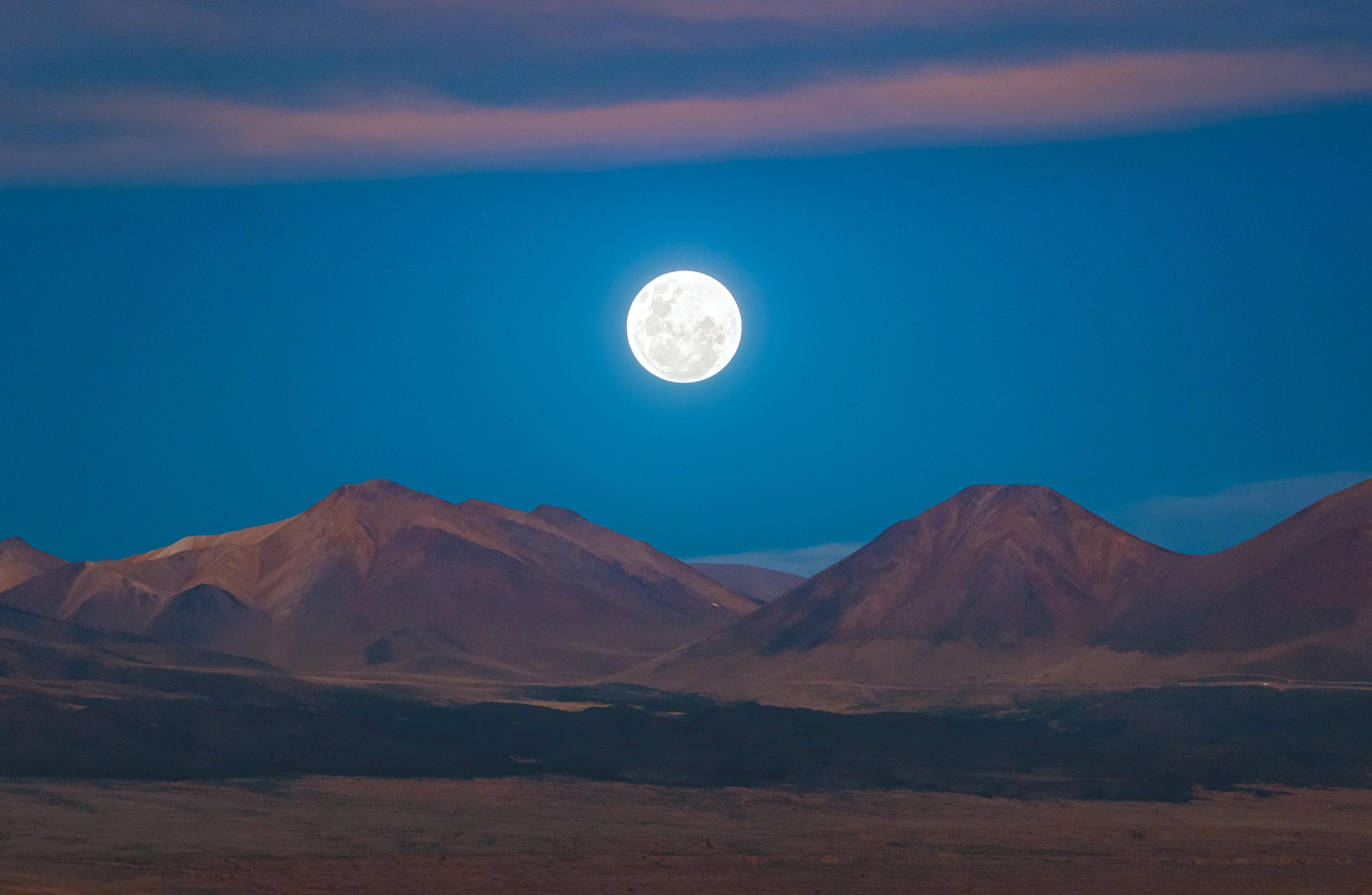
    Full Moon Rises Chajnantor Plateau
    High above the Earth, ALMA’s powerful telescopes peer into the cold, dark universe from the Chajnantor plateau, where the extreme environment provides a perfect observational window. But even in this alien-like landscape, the full Moon rises, a comforting and familiar sight. Credit: P. Horálek/ESO

    On the barren Chajnantor plateau, ALMA observes the depths of space, yet the rising Moon reminds us of home. Its seemingly large size on the horizon is merely an optical illusion, but its true influence on Earth is profound — shaping tides, stabilizing seasons, and making life as we know it possible.

    The Atacama Large Millimeter/submillimeter Array (ALMA), operated by ESO and its international partners, sits high on the Chajnantor Plateau, where the thin, dry air creates ideal conditions for observing the cold, dark universe. In this stunning image, the plateau’s rolling, rust-colored terrain appears more like the surface of an alien planet than a place on Earth.

    Yet, a familiar sight brings us back home — the full Moon rising at sunset. Throughout its phases, the Moon rises and sets at different times, and over the year, it shifts its position along the horizon. When it appears just above the horizon, it often looks unusually large. However, this is merely a well-known optical illusion, not a change in the Moon’s actual size.

    Our Moon is a unique body within the solar system; it’s Earth’s only natural satellite and is a particularly large moon at 25 percent of its host’s size. The Moon, then, exerts extra influence on the Earth, stabilizing seasons and climate and producing tides — things without which we might not have life. The Moon is a wonder to admire, indeed.

    Never miss a breakthrough: Join the SciTechDaily newsletter.
    Follow us on Google and Google News.

    ALMA Astronomy European Southern Observatory Moon
    Share. Facebook Twitter Pinterest LinkedIn Email Reddit

    Related Articles

    Farthest Ever: Galaxy’s Magnetic Field Detected From 11 Billion Light-Years Away

    The Genesis of Jupiters: Incredible New Image Reveals Secrets of Planet Birth

    Exotrojan Unicorns: Astronomers Uncover Possible Sibling Planets

    Shedding Light on Darkness: Historic First Direct Image of a Black Hole Emitting a Powerful Jet

    Astronomers Discover Missing Link: Water on Earth Is Even Older Than Our Sun

    Pinwheel Firework: Stunning Telescope Image Captures Grand Design Spiral Galaxy

    Stunning Reveal: First Image of the Black Hole at the Center of Our Milky Way Galaxy

    Discovery in a Galaxy Over 12 Billion Light-Years Away – Reveals How Element Found in Our Bones Is Forged in the Universe

    First Clear Detection of a Moon-Forming Disc Around a Planet Outside Our Solar System

    Leave A Reply Cancel Reply

    • Facebook
    • Twitter
    • Pinterest
    • YouTube

    Don't Miss a Discovery

    Subscribe for the Latest in Science & Tech!

    Trending News

    Researchers Discover a Hidden Vitamin D Problem That Persists Year-Round

    Interstellar Comet 3I/ATLAS Reveals Strange Chemistry Beyond Our Solar System

    A Newly Found Cellular Shift May Explain Why Aging Leads to Disease

    Scientists Discover Gut Signal That Turns Off Sugar Cravings

    Scientists Discover Rogue Gene That Could Unlock New Cancer Treatments

    Constantly Tired? Scientists Say These Vitamin Deficiencies May Be Why

    A Surprising Discovery Inside Fish Could Change What We Know About the Ocean

    Scientists May Have Finally Solved the Mystery of the Strange Hum Heard Around the World

    Follow SciTechDaily
    • Facebook
    • Twitter
    • YouTube
    • Pinterest
    • Newsletter
    • RSS
    SciTech News
    • Biology News
    • Chemistry News
    • Earth News
    • Health News
    • Physics News
    • Science News
    • Space News
    • Technology News
    Recent Posts
    • Hidden Solar Storms May Be Lighting Japan’s Skies With Massive Red Auroras
    • UCLA Scientists Uncover a “Hidden Weakness” in Some of the World’s Deadliest Cancers
    • Oak Trees Outsmart Caterpillars With a Brilliant Spring Trick
    • Scientists Discover a Hidden Disease Crisis Spreading Through Wild Snakes
    • Humpback Whale Stuns Scientists With 15,000 Kilometer Journey Across Oceans
    Copyright © 1998 - 2026 SciTechDaily. All Rights Reserved.
    • Science News
    • About
    • Contact
    • Editorial Board
    • Privacy Policy
    • Terms of Use

    Type above and press Enter to search. Press Esc to cancel.