
Close Menu
    Facebook X (Twitter) Instagram
    SciTechDaily
    • Biology
    • Chemistry
    • Earth
    • Health
    • Physics
    • Science
    • Space
    • Technology
    Facebook X (Twitter) Pinterest YouTube RSS
    SciTechDaily
    Home»Earth»Even a Small Change in Earth’s Carbon Dioxide Makes a Big Difference – Here’s Why
    Earth

    Even a Small Change in Earth’s Carbon Dioxide Makes a Big Difference – Here’s Why

    By Michael Brown, University Of AlbertaAugust 13, 2019No Comments3 Mins Read
    Facebook Twitter Pinterest Telegram LinkedIn WhatsApp Email Reddit
    Share
    Facebook Twitter LinkedIn Pinterest Telegram Email Reddit
    Carbon Dioxide Emmissions
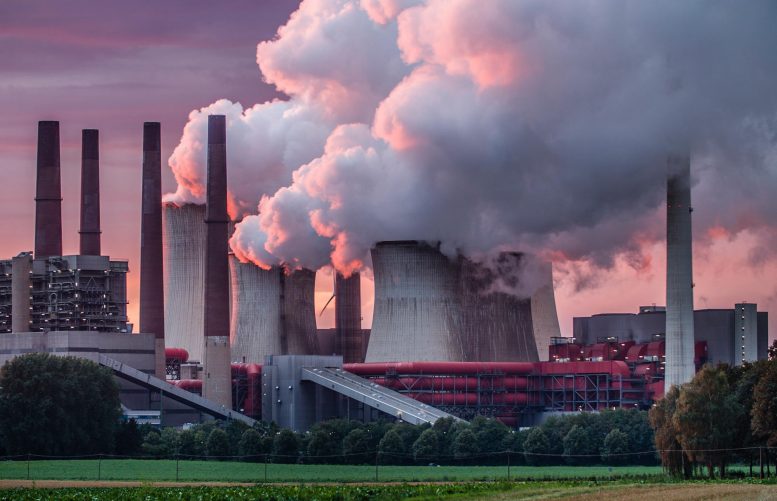
    The amount of carbon dioxide in the atmosphere is only 415 parts per million—but that’s the highest it’s been in at least three million years, according to climate scientists. Photo: Stock Image.

    In July 2015, U.S. Environmental Protection Agency head Gina McCarthy was being grilled by lawmakers over President Obama’s Clean Power Plan requiring states to limit carbon emissions, when she was asked, “What percentage of the atmosphere is CO2?”

    The EPA’s top administrator said she didn’t know. Whether she didn’t know the percentage precisely and didn’t want to generalize or couldn’t even hazard a ballpark guess, the attack was on. 

    Either way, the answer to that question is there is a lot less carbon dioxide in the atmosphere than most people think, and according to University of Alberta climatology researcher Andrew Bush, that’s all the more reason to be wary of even the slightest changes.

    The composition of the atmosphere at present is about 77 percent nitrogen, 21 percent oxygen, and just under one percent argon, with the final one percent accounting for a host of trace gases including water vapor—which forms rain and clouds, nitrous oxide, methane, ozone, and carbon dioxide, Bush said. 

    Carbon dioxide makes up just 0.0415 percent of the atmosphere, or 415 parts per million. That number made headlines in May as concentrations of CO2 within the Earth’s atmosphere have not been above 415 parts per million in upwards of three million years.

    The trace gases that make up that final one percent are all greenhouse gases, with water vapor being the best at absorbing the most radiation, Bush explained.

    “The thing about trace gases is that many of them don’t last long in the atmosphere. Tropospheric ozone, for example, doesn’t last very long because of chemical reactions. And water vapor’s lifespan is a matter of days, maybe weeks.

    “But CO2 can last in the atmosphere for decades, even centuries.”

    And though less than half of one-tenth of a percent would seem insignificant, Bush said from a radiation and energy perspective, it is critical.

    “For instance, ozone makes up just 0.000004 percent of the atmosphere, but without the stratospheric ozone layer absorbing ultraviolet radiation coming in from the sun, there would be no terrestrial life at all on the planet,” he said.

    Because oxygen and nitrogen allow the Earth to radiate thermal energy back into space, Earth’s average temperature would be a frosty -18C without the warming processes generated by greenhouse gases, instead of the current comfortable 15C.

    In fact, greenhouse gases, as Bush explained, can absorb the energy given off by any substance at terrestrial temperatures. 

    “That means even the energy you and I give off, our body heat, is absorbed quite nicely by carbon dioxide, water vapor, and other greenhouse gases, then partially re-radiated back at us.” 

    He added blankets or sweaters are made of material that has the same properties as greenhouse gases—only they’re not gases.

    “Increasing greenhouse gas concentrations in the atmosphere is as if the Earth were putting on a thicker and thicker blanket, and a temperature increase is inevitable,” he said.

    Increasing concentrations of greenhouse gases build off each other, which Bush said leads to climate change.

    “For example, an increase in CO2 causes temperature to warm. Warmer air can hold more water vapor, so evaporation increases and that leads to even more greenhouse gases—a positive feedback,” he explained.

    “Just because it’s a small percentage of the atmosphere, that in no way means it’s unimportant.”

    Never miss a breakthrough: Join the SciTechDaily newsletter.
    Follow us on Google and Google News.

    Carbon Dioxide Climate Climate Change University of Alberta
    Share. Facebook Twitter Pinterest LinkedIn Email Reddit

    Related Articles

    Arctic Permafrost Turning Into a Carbon Source – Holds More Carbon Than Has Ever Been Released by Humans

    Doubt Cast on Carbon Capture by Stanford Study – “It Usually Increases Air Pollution”

    It’s Not Just Smokestacks to Worry About: Mountain Streams Emit a Surprising Amount of CO2

    Key Theory on Earth’s Climate May Be Wrong

    NASA to Launch Spacecraft to Keep Track of Global Carbon Dioxide

    Shedding Light on the Role of Forests in Carbon Sequestration

    Carbon Absorption by Plants Limited by the Abundance of Soil Nutrients

    Record Arctic Snow Melt Might Be Prolonging American Drought

    The First ‘Bottom-Up’ Estimates of China’s CO2 Emissions

    Leave A Reply Cancel Reply

    • Facebook
    • Twitter
    • Pinterest
    • YouTube

    Don't Miss a Discovery

    Subscribe for the Latest in Science & Tech!

    Trending News

    “I Couldn’t Do It Anymore” – Antarctic Guides Quit Their Dream Jobs After Witnessing Tourism’s Damage

    Scientists Say Eating Less Protein May Help You Live Longer

    Scientists Solve a Long-Standing Mystery About Bird and Dinosaur Eggs

    Belly Fat and Low Vitamin D May More Than Double the Risk of Early Death

    Lost in Space: Rare Cosmic Flare Exposes a Wandering Black Hole Far From Its Galaxy’s Center

    Dark Matter May Be Leaving a Signal in Earth’s Atmosphere

    Scientists Discover a 300-Million-Year-Old Geological Time Capsule Inside Fossilized Wood

    Oral Weight Loss Pill Helps Patients Lose up to 12% of Body Weight

    Follow SciTechDaily
    • Facebook
    • Twitter
    • YouTube
    • Pinterest
    • Newsletter
    • RSS
    SciTech News
    • Biology News
    • Chemistry News
    • Earth News
    • Health News
    • Physics News
    • Science News
    • Space News
    • Technology News
    Recent Posts
    • Never-Before-Seen Vortices Are Swirling Across the Sun
    • Something May Be Flowing Beneath Pluto’s Giant Heart-Shaped Glacier
    • Don’t Miss: Europe Is About To Go Dark in a Spectacular Total Solar Eclipse
    • Industrial Chicken Farming Is Supercharging the Spread of a Dangerous Foodborne Bacterium
    • Honeybee Queens May Pass Toxic Chemicals to the Next Generation
    Copyright © 1998 - 2026 SciTechDaily. All Rights Reserved.
    • Science News
    • About
    • Contact
    • Editorial Board
    • Privacy Policy
    • Terms of Use

    Type above and press Enter to search. Press Esc to cancel.