
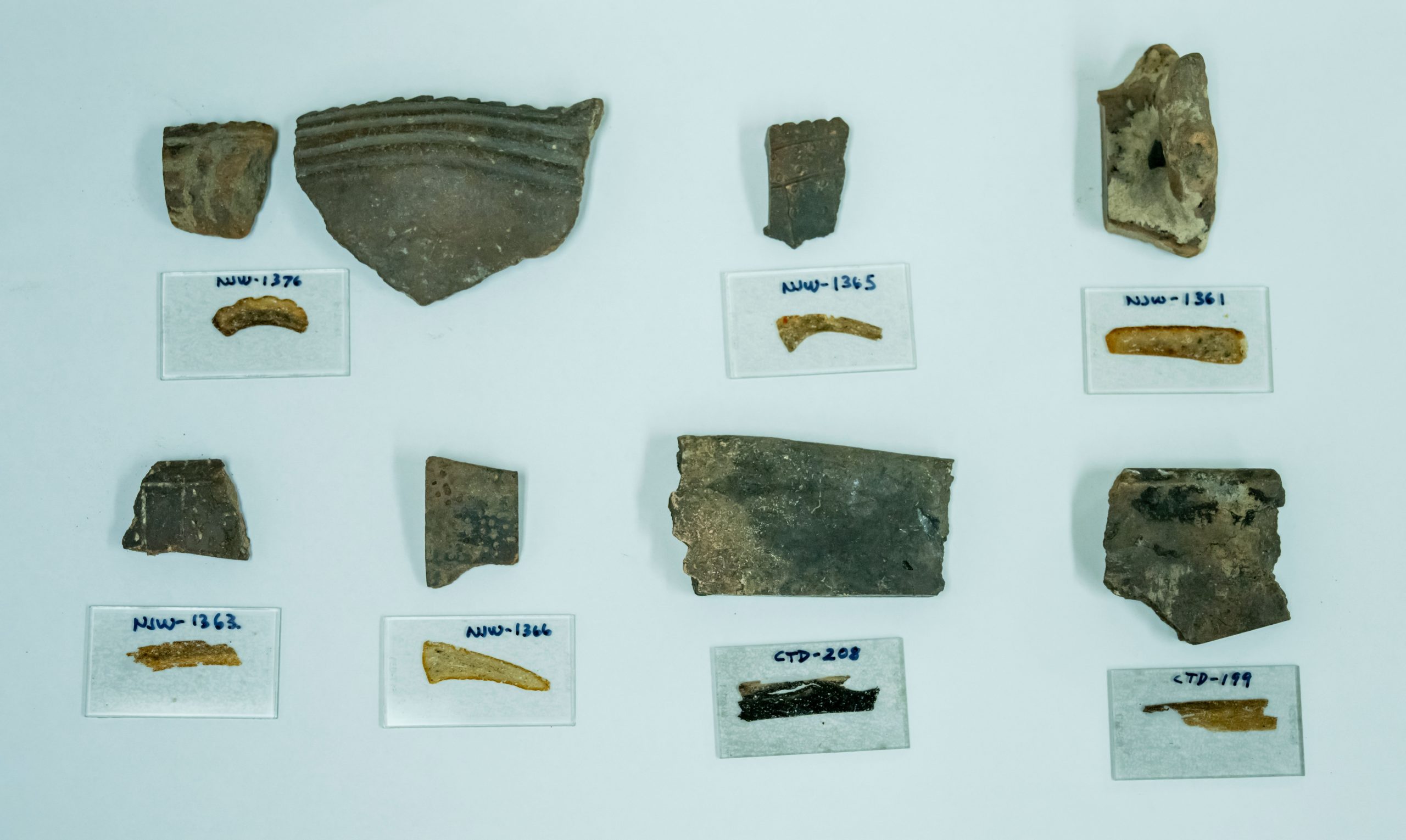
Decorated pots made in Tampa Bay may preserve the skills and broken vessels that migrant artisans brought from their homeland.
A century ago, archaeologists digging around Tampa Bay uncovered pottery fragments bearing designs that seemed out of place. The motifs closely resembled those of Mississippian culture, which emerged around A.D. 1000 in the Mississippi River Valley and spread across much of the Midwest and eastern United States.
Hundreds of miles south of that heartland, Tampa Bay’s coastal communities, known to archaeologists as the Safety Harbor culture, relied on fishing and other marine resources rather than the maize farming characteristic of Mississippian life.
Archaeologists had generally excluded peninsular Florida from maps of Mississippian culture, yet the decorated pottery suggested a connection they could not fully explain. Without the instruments and expertise needed to establish its origins, curators stored the fragments while competing explanations remained unresolved.
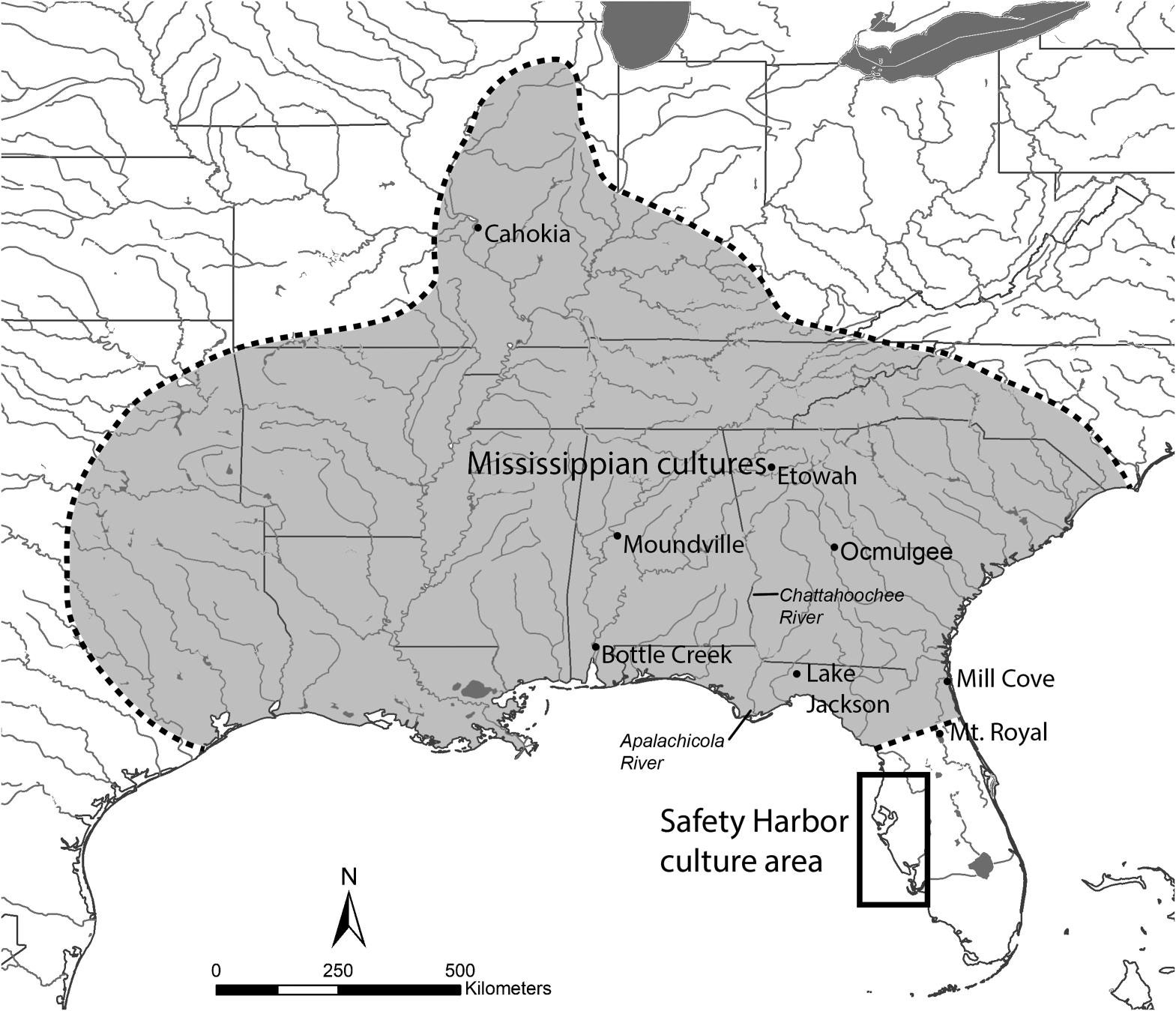
“It’s been this open debate for a century,” said Neill Wallis, curator of Florida archaeology, bioarchaeology, and the Ceramic Technology Laboratory at the Florida Museum of Natural History. “Tampa Bay sites had some Mississippian-like traits such as platform mound-village complexes and iconography, but lacked others, like maize agriculture and shell-tempered pottery. The Mississippian-looking pottery has always begged the question: How did this stuff wind up in Tampa Bay?”
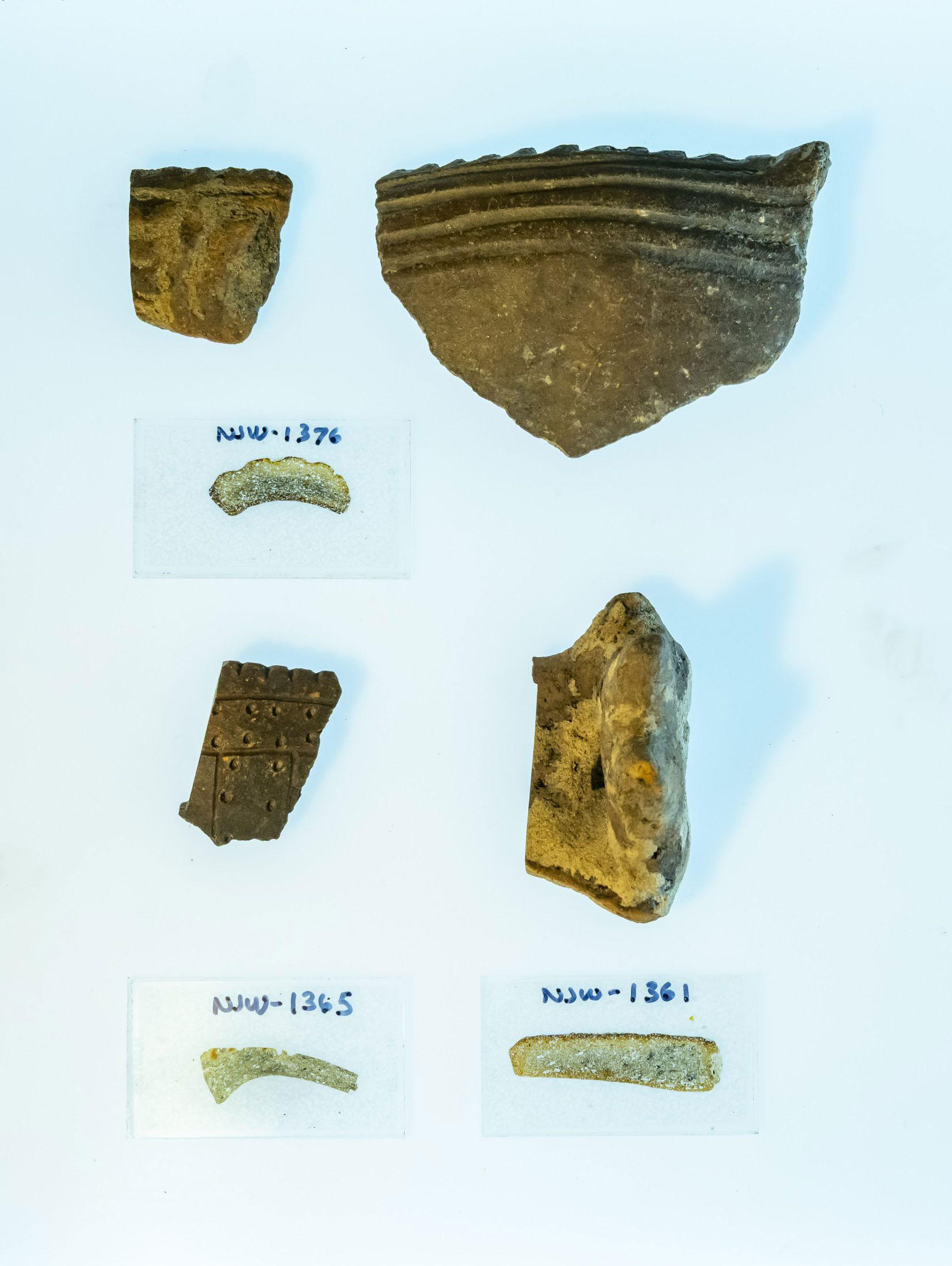
A Florida Museum study of 58 plain and decorated pottery fragments suggests that artisans from northern Florida settled in Tampa Bay and continued practicing a craft learned at home. Their decorated vessels combined local clay with northern production techniques and, in many cases, crushed pottery that appeared to come from their homeland.
Decorated pots reveal a distinct craft
Both kinds of vessels would have been used for cooking and serving, although the decorated pottery was likely reserved for special occasions. Its makers used higher-quality clay and more consistent mixtures of ingredients, suggesting greater expertise in preparing the material. Their access to better clay also indicates that they were granted a limited resource for their craft.
The decorated vessels were built by stacking coils of clay, a method used by Mississippian potters. The plain wares were molded, a technique that people without pottery skills could learn quickly. Molding had become more popular as the region’s population increased.
Mississippian artisans also mixed crushed freshwater shell or pieces of old pottery into their clay, a practice called tempering. The recycled pottery, known as grog, helps vessels withstand the high temperatures of firing and cooking.
Grog appeared in 80% of the decorated samples and none of the plain ones. Most plain vessels instead contained dry clay chunks or sand, materials used in both plain and decorated pottery in Tampa Bay for the previous 3,000 years.
“This grog tempering is not something that we saw previously or in the plain samples in Tampa Bay,” said Trevor Duke, who began the research for his doctoral dissertation at the University of Florida. “But up in the Tallahassee Hills, where the nearest massive Mississippian mound center is located, it’s common in all vessels. It’s the plain-Jane tempering technique there.”
Duke and his colleagues expanded his dissertation research to examine a larger collection of samples. By comparing the plain and decorated pottery, they could investigate whether the northern-looking designs reflected deeper differences in how the vessels were made.
Northern traces inside locally made pots
The clay’s chemistry established that the vessels themselves had not been imported. Using neutron activation analysis, the researchers measured the pottery’s chemical composition and compared it with raw clay sources around Tampa Bay. The matching profiles indicated that all the sampled pottery had been made locally.
Local clay could still have been shaped by potters copying designs they had encountered elsewhere. But imitation alone would not explain why the decorated vessels also differed in their construction, clay preparation, and temper. The ingredients inside them offered another way to investigate their makers’ connections.
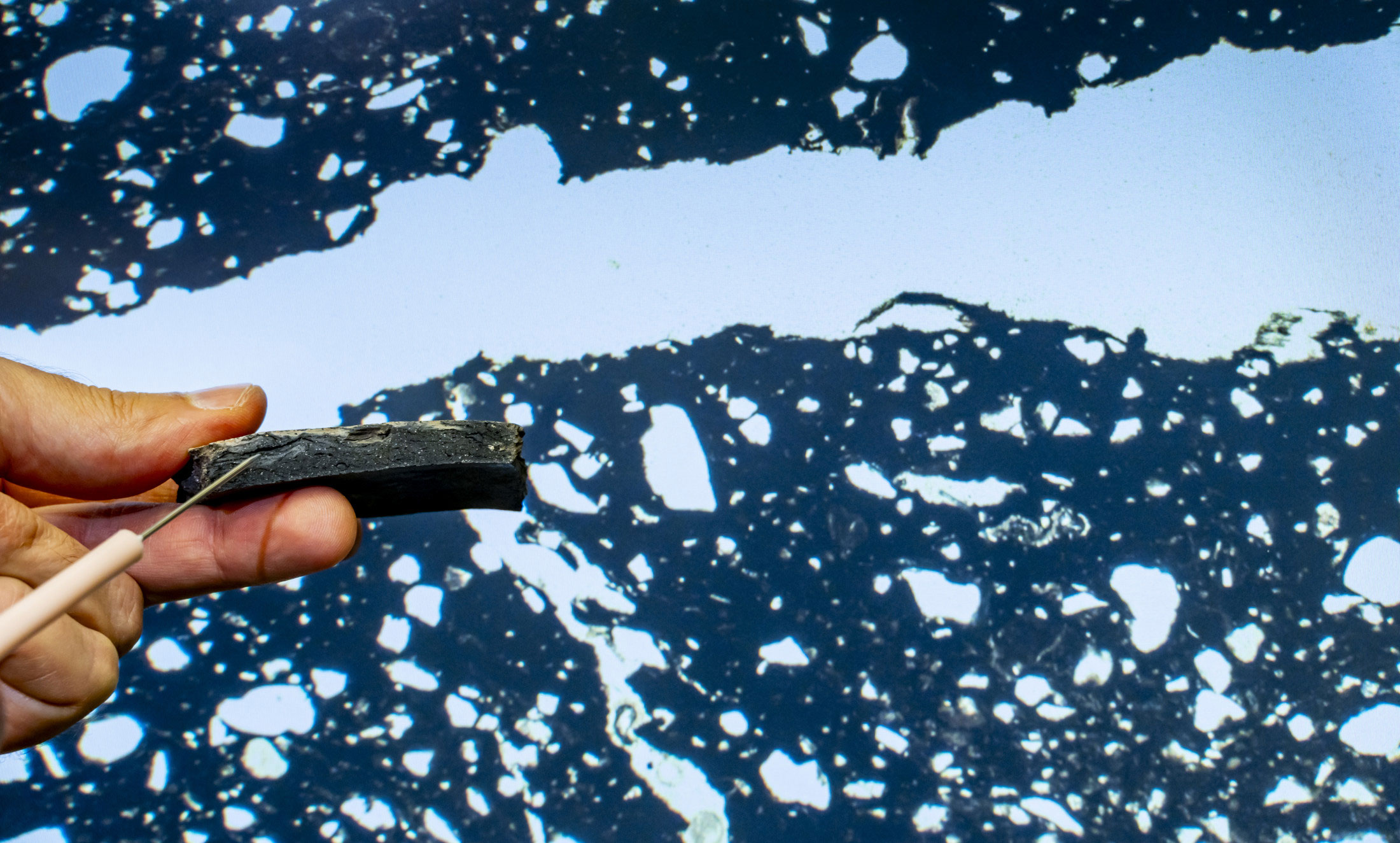
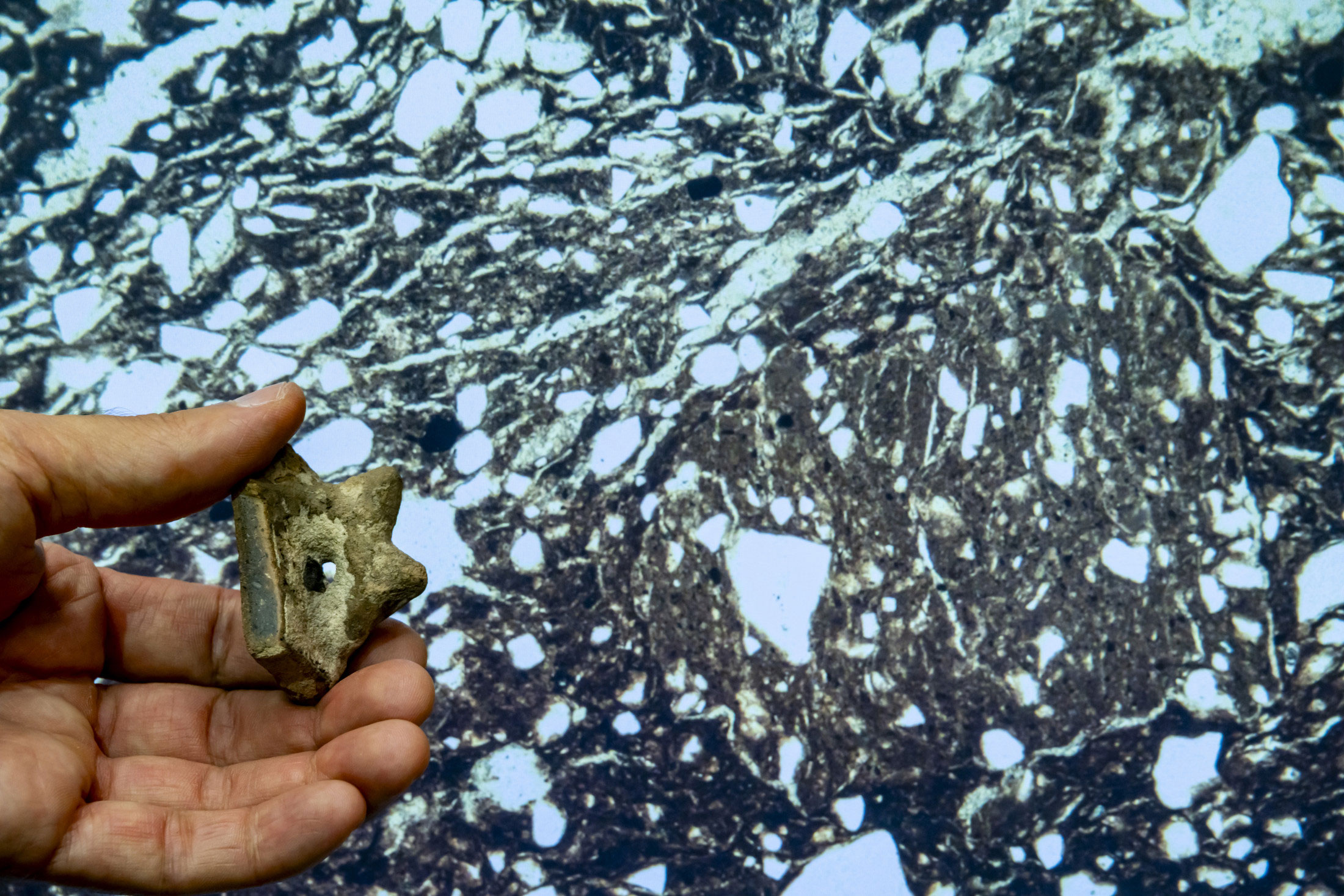
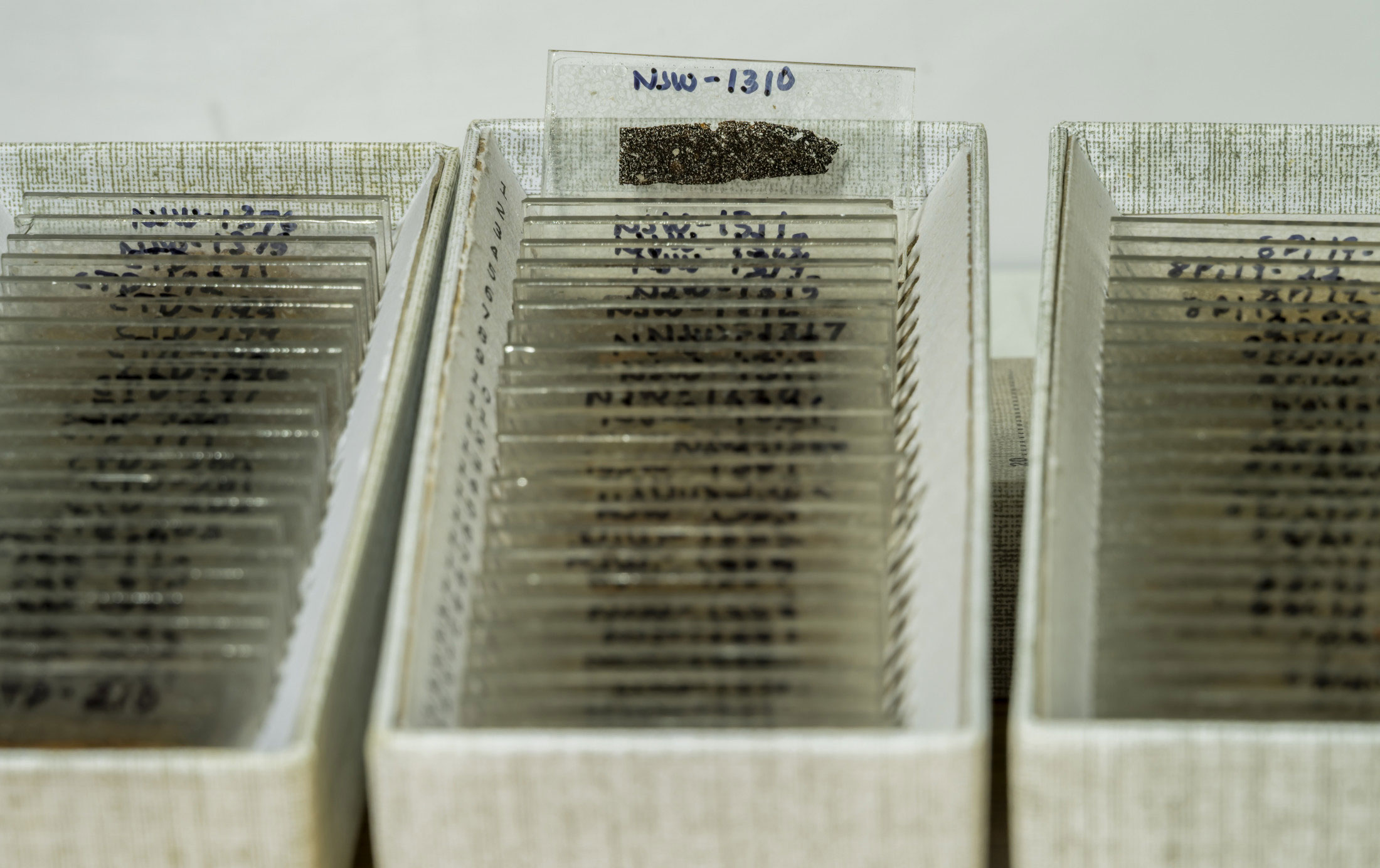
Using a method called petrography, the researchers cut thin sections from the fragments and polished them until they were about half the width of a human hair. Light passing through the sections under a polarizing microscope revealed mineral grains, cracks, and tiny spaces that recorded how the clay had been processed.
“Looking at the section under a microscope, you can identify the minerals in it based on their color and shape. From that, we can figure out what was added to it. It’s a sort of fingerprint of the people who made it,” Wallis said.
Inside the grog, the team identified mica, a shiny mineral common in the Florida Panhandle but not typically found in peninsular Florida. Although the surrounding clay came from Tampa Bay, the crushed pottery mixed into it appeared to come from the Mississippian heartland. Along with the production methods, this material linked the vessels to northern communities such as those in the Tallahassee Hills, about 200 miles away.
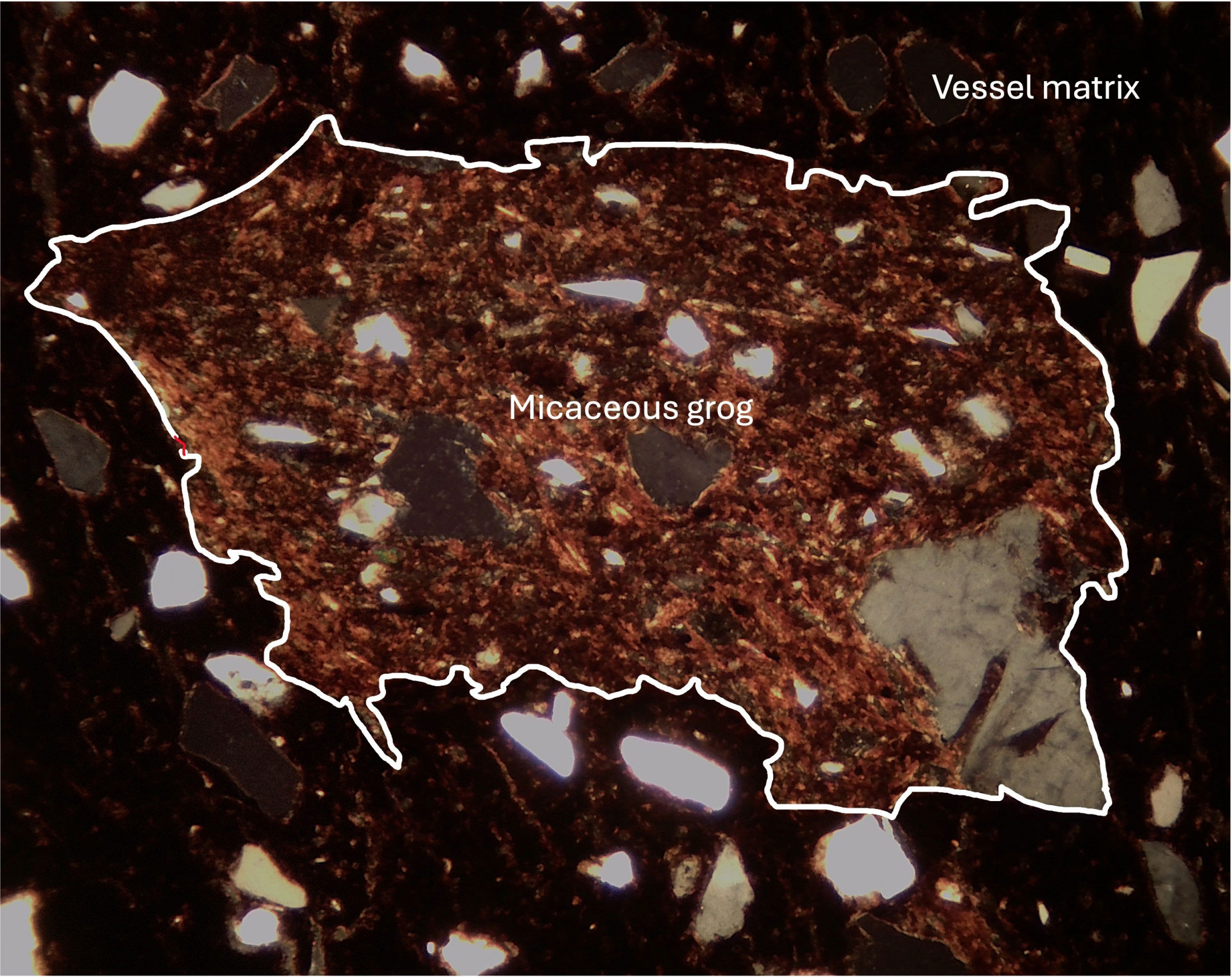
The researchers interpret that combination as evidence that migrating artisans carried old pottery south, then crushed and ground it to mix into clay at their new home. The movement of people could account for both the northern ingredients and the knowledge needed to make the vessels.
“We were curious to find out if these vessels were imported from the heartland by trade, if they were local imitations of Mississippian motifs, or, as we ultimately found, if they were made by migrants who had made their way into communities in Tampa Bay to take up shop and residency there,” Duke said.
Pottery skills could set newcomers apart
Those artisans would have entered a region of relatively small chiefdoms. The largest Safety Harbor village was home to the Tocobaga, with smaller Mocoso, Pohoy, and Uzita chiefdoms occupying the surrounding area. These communities built flat-topped mounds but never concentrated political power on the scale of the major Mississippian centers.
In the northern heartland, large chiefdoms controlled surrounding villages, communities cultivated extensive maize fields, and earthen mounds supported temples and chiefs’ residences. The coastal communities shared some northern traditions while maintaining their own way of life, creating a setting in which familiar skills from elsewhere could acquire a different value.
“Migrant communities often had to figure out their own niche in a new place,” said Andrea Torvinen, collections manager of the Ceramic Technology Lab and Florida Archaeology at the Florida Museum. “What would have made these migrants stand out? How would they have established a role in this new area? Bringing a specialized knowledge of pottery production seems to have been one way they could do so.”
For centuries, the techniques used to make decorated pottery remained distinct from those used for plain, everyday vessels. Even as the decorated pots circulated through the community, their clay recipes, tempering, and coiled construction were not clearly visible in the finished products. Residents could use the vessels without learning how to reproduce them.
The researchers suggest that instruction remained within a small group of artisans working closely together. Access to experienced potters could have limited who learned the craft, whether or not its practitioners deliberately concealed their methods.
“The group of potters making the decorated vessels likely had some kind of special status that they maintained through this secretive practice, even if it wasn’t a secret in the sense that no one knew about it,” Wallis said. “In fact, for secrets like this, you do have to broadcast some of the details so that people know there is a secret.”
“People with specialized skills have direct relationships with the people learning from them. That’s how we see knowledge passed down. When it’s the way your mentor has always done it, that’s how you’re going to do it,” Torvinen said. “And in this case, there could have been a more meaningful reason behind it. By tying the homeland pottery into this enchainment, they’re bringing those pots with them into the next generation.”
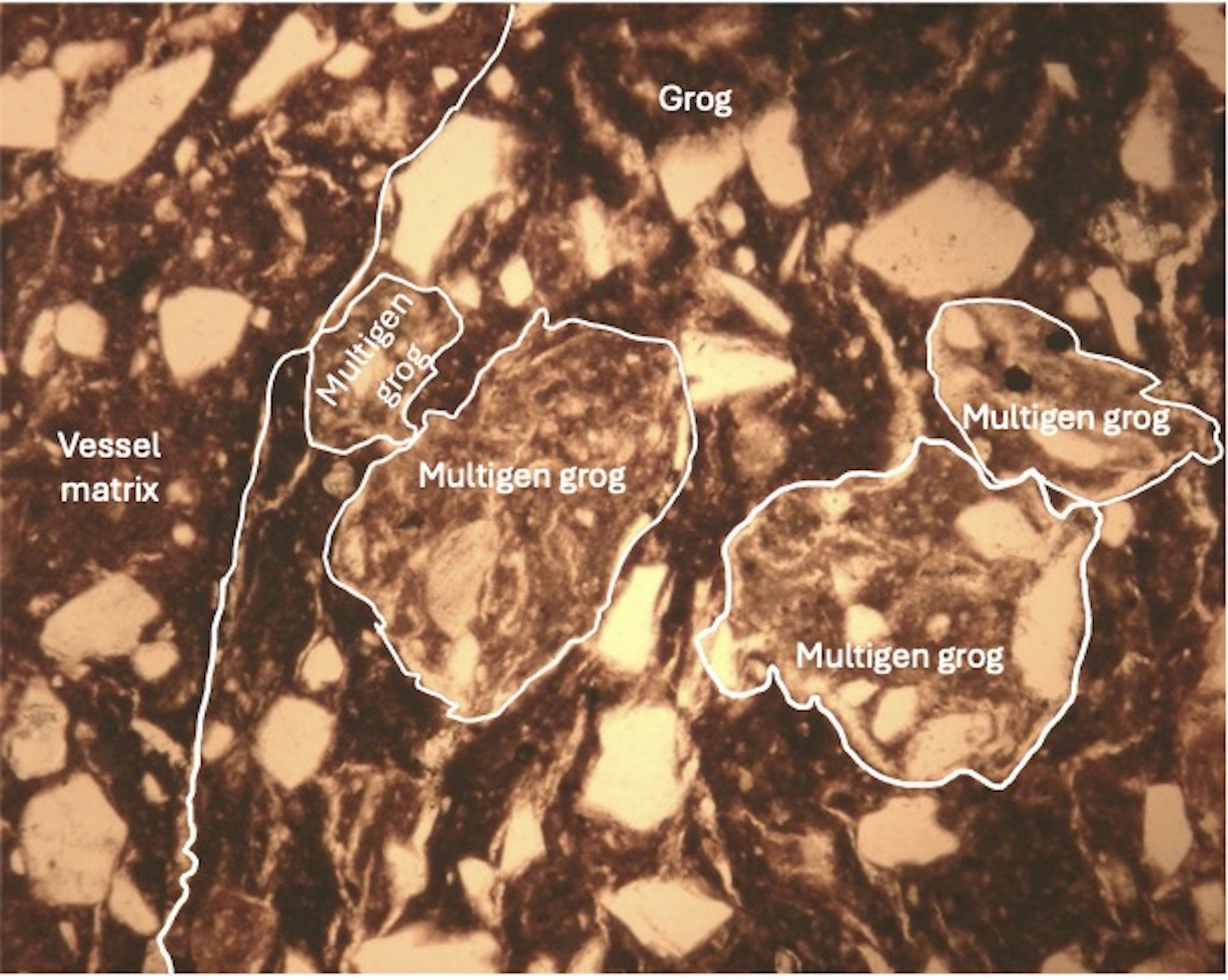
That chain of reuse was preserved inside every grog-tempered vessel examined. Each contained pieces of older pottery with still earlier grog embedded within them. The repeated incorporation of decorated vessels suggests that the material likely held meaning beyond its practical role in helping pottery withstand heat.
“It’s sort of like Russian nesting dolls because you have grog within grog within grog. You can trace this back several generations of pots,” Wallis said. “And they’re not using vessels from just anywhere. They’re crushing up the same decorated vessels that include pieces of decorated pottery from before.”
Reference: “Secret Recipes: Potting Knowledge and Migration in Mississippian (ca. AD 1000–1600) Tampa Bay, Florida, USA” by C. Trevor Duke, Andrea Torvinen and Neill J. Wallis, 18 September 2026, American Antiquity.
DOI: 10.1017/aaq.2026.10227
This research was funded in part by the National Science Foundation (grant no. 2052613), the Wenner-Gren Foundation (grant no. 9440), the Francis and Gertrude Levett Foundation, and the Florida Archaeology Professorship at the Florida Museum of Natural History.
Never miss a breakthrough: Join the SciTechDaily newsletter.
Follow us on Google and Google News.