
Close Menu
    Facebook X (Twitter) Instagram
    SciTechDaily
    • Biology
    • Chemistry
    • Earth
    • Health
    • Physics
    • Science
    • Space
    • Technology
    Facebook X (Twitter) Pinterest YouTube RSS
    SciTechDaily
    Home»Science»Tracing Genomic Secrets of History: Unraveling Ancient Roman Migration in the Balkans
    Science

    Tracing Genomic Secrets of History: Unraveling Ancient Roman Migration in the Balkans

    By Mississippi State UniversityJanuary 3, 2024No Comments4 Mins Read
    Facebook Twitter Pinterest Telegram LinkedIn WhatsApp Email Reddit
    Share
    Facebook Twitter LinkedIn Pinterest Telegram Email Reddit
    Roman History DNA Genetics
    Mississippi State University anthropologist Anna Osterholtz contributed to a study in Cell, providing key data from ancient Roman burial sites. The research, involving a multidisciplinary team, analyzed genomic data from the Balkan region, uncovering significant demographic shifts and the influx of Slavic-speaking populations during the Migration Period.

    A new study reveals major demographic changes in the Balkan region during the first millennium, including the migration of Slavic-speaking populations after the fall of the Roman Empire.

    A Mississippi State University (MSU) anthropologist’s bioarchaeological analysis and bone samples from ancient Roman burial sites were crucial in the development of new research regarding Roman and Balkan migration featured recently in Cell, a prestigious peer-reviewed journal.

    Collaborative Efforts in Archaeological Research

    Anna Osterholtz, an associate professor in the Department of Anthropology and Middle Eastern Cultures, provided her research on the “lived experiences” of the Romans in Croatia. She currently works closely with museum staff at the Town Museum of Trogir and the Institute for Anthropological Research, both in Croatia.
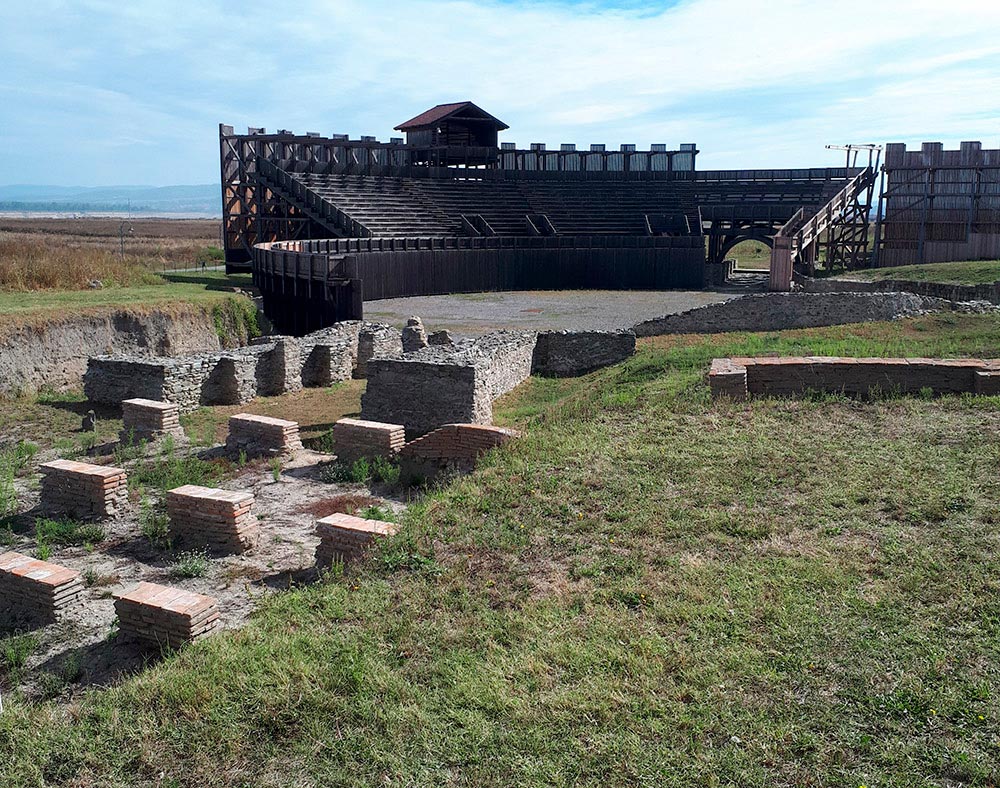
    Archaeological Site Viminacium Amphitheater
    The archaeological site of the Viminacium amphitheater, an ancient Roman necropolis located in present-day Serbia, was used to reconstruct the genomic history of the Balkan during the Roman migration of the first millennium. Credit: Carles Lalueza-Fox

    The multidisciplinary reconstructed the genomic history of the Balkan Peninsula during the first millennium of the common era, a time and place of demographic, cultural, and linguistic change. It was led by the Institute of Evolutionary Biology in Spain, a joint center of the Spanish National Research Council and Pompeu Fabra University, along with research from the University of Belgrade in Serbia, the University of Western Ontario in Canada, Harvard University, and MSU.
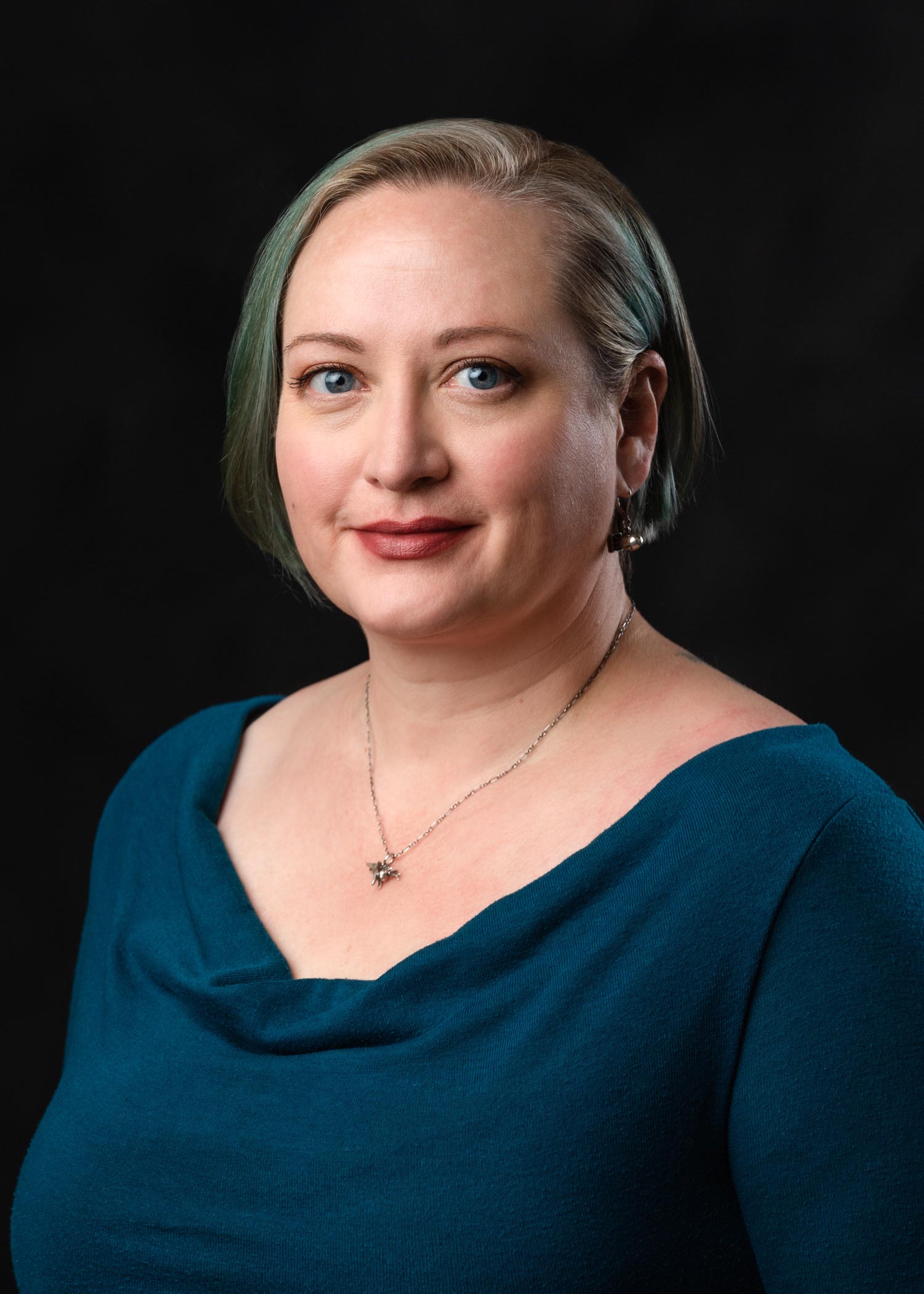
    Anna Osterholtz
    Anna Osterholtz. Credit: MSU

    Insights into Ancient Migration and Cultural Shifts

    The team recovered and analyzed whole genome data from 146 ancient people excavated primarily from Serbia and Croatia—more than a third of which came from the Roman military frontier at the massive archaeological site of Viminacium in Serbia—which they co-analyzed with data from the rest of the Balkans and nearby regions. The study highlights the cosmopolitanism of the Roman frontier and the long-term consequences of migrations that accompanied the breakdown of Roman control, including the arrival of people speaking Slavic languages.

    “Essentially, the study showed that there was an influx of individuals who moved into the Balkan region that are genetically similar to modern Slavic-speaking populations. It represents one of the largest demographic changes in Europe during what is known as the Migration Period. It’s a time frame where local identity was forming in the vacuum created by the dissolution of the Roman empire,” Osterholtz said.

    “This study gives us a clue about how these communities were formed during the Migration Period. My own research examines how this is reflected in funerary practices and in changes in health,” Osterholtz said.

    For more on this research:

    • In the Shadow of Rome: Ancient DNA Analysis Recasts Balkan History

    Reference: “A genetic history of the Balkans from Roman frontier to Slavic migrations” by Iñigo Olalde, Pablo Carrión, Ilija Mikić, Nadin Rohland, Swapan Mallick, Iosif Lazaridis, Matthew Mah, Miomir Korać, Snežana Golubović, Sofija Petković, Nataša Miladinović-Radmilović, Dragana Vulović, Timka Alihodžić, Abigail Ash, Miriam Baeta, Juraj Bartík, Željka Bedić, Maja Bilić, Clive Bonsall, Maja Bunčić, Domagoj Bužanić, Mario Carić, Lea Čataj, Mirna Cvetko, Ivan Drnić, Anita Dugonjić, Ana Đukić, Ksenija Đukić, Zdeněk Farkaš, Pavol Jelínek, Marija Jovanovic, Iva Kaić, Hrvoje Kalafatić, Marijana Krmpotić, Siniša Krznar, Tino Leleković, Marian M. de Pancorbo, Vinka Matijević, Branka Milošević Zakić, Anna J. Osterholtz, Julianne M. Paige, Dinko Tresić Pavičić, Zrinka Premužić, Petra Rajić Šikanjić, Anita Rapan Papeša, Lujana Paraman, Mirjana Sanader, Ivana Radovanović, Mirjana Roksandic, Alena Šefčáková, Sofia Stefanović, Maria Teschler-Nicola, Domagoj Tončinić, Brina Zagorc, Kim Callan, Francesca Candilio, Olivia Cheronet, Daniel Fernandes, Aisling Kearns, Ann Marie Lawson, Kirsten Mandl, Anna Wagner, Fatma Zalzala, Anna Zettl, Željko Tomanović, Dušan Keckarević, Mario Novak, Kyle Harper, Michael McCormick, Ron Pinhasi, Miodrag Grbić, Carles Lalueza-Fox and David Reich, 7 December 2023, Cell.
    DOI: 10.1016/j.cell.2023.10.018

    Never miss a breakthrough: Join the SciTechDaily newsletter.
    Follow us on Google and Google News.

    Anthropology Archaeology Genetics History Migration
    Share. Facebook Twitter Pinterest LinkedIn Email Reddit

    Related Articles

    Tracing the Roman Empire’s Rise and Fall Through Ancient Balkan Genomes

    Unraveling the Roman Empire’s Legacy: Balkan Genomes Illuminate Ancient Migrations

    Harvard’s New Genetics Research on Ancient Britain Contains Insights on Language, Ancestry, Kinship, Milk

    Ancient Genetics Trace the Origin and Decline of the Legendary Scythians

    Indiscriminate Killing Revealed in Genetic Analysis of Ancient Massacre

    Migrations Reconstructed Through Ancient DNA: Each Mediterranean Island Has Its Own Genetic Pattern

    Dead in Unmarked Graves Identified by Combining Genetics With Genealogy

    How Ancient Poop Debunked Myth of Native American Lost Civilization

    Scientists Reveal the Complex Story Behind the Beaker Phenomenon

    Leave A Reply Cancel Reply

    • Facebook
    • Twitter
    • Pinterest
    • YouTube

    Don't Miss a Discovery

    Subscribe for the Latest in Science & Tech!

    Trending News

    Scientists Break 50-Year-Old Bottleneck To Supercharge Cancer Drug Production

    Popular Weight-Loss Drug Wegovy Linked to Sudden Vision Loss

    Extraordinary Fossil Reveals Fatal Duel Between Ocean Titans 80 Million Years Ago

    “Super Bizarre” – Neuroscientists Discover That Adult Brain Is Filled With Millions of “Silent Synapses”

    Simple Brain Training Cuts Dementia Risk Decades Later, Study Finds

    A Simple Injection Could Help the Heart Heal Itself After a Heart Attack

    Scientists Just Discovered a Hidden Freshwater World Beneath the Great Salt Lake

    Why Your Daily Shower Could Be Worsening the Water Crisis

    Follow SciTechDaily
    • Facebook
    • Twitter
    • YouTube
    • Pinterest
    • Newsletter
    • RSS
    SciTech News
    • Biology News
    • Chemistry News
    • Earth News
    • Health News
    • Physics News
    • Science News
    • Space News
    • Technology News
    Recent Posts
    • Scientists Debunk Rattlesnake Myth That Fooled Hikers and Doctors for Decades
    • This Bizarre Insect Turns Pink to Green in Just 11 Days
    • Scientists Discover Plants Can “Count” – and May Be Smarter Than We Thought
    • New Study Challenges the Idea That We Stop Psychologically Growing After 30
    • Primordial Magnetic Fields May Solve One of Cosmology’s Biggest Mysteries
    Copyright © 1998 - 2026 SciTechDaily. All Rights Reserved.
    • Science News
    • About
    • Contact
    • Editorial Board
    • Privacy Policy
    • Terms of Use

    Type above and press Enter to search. Press Esc to cancel.