
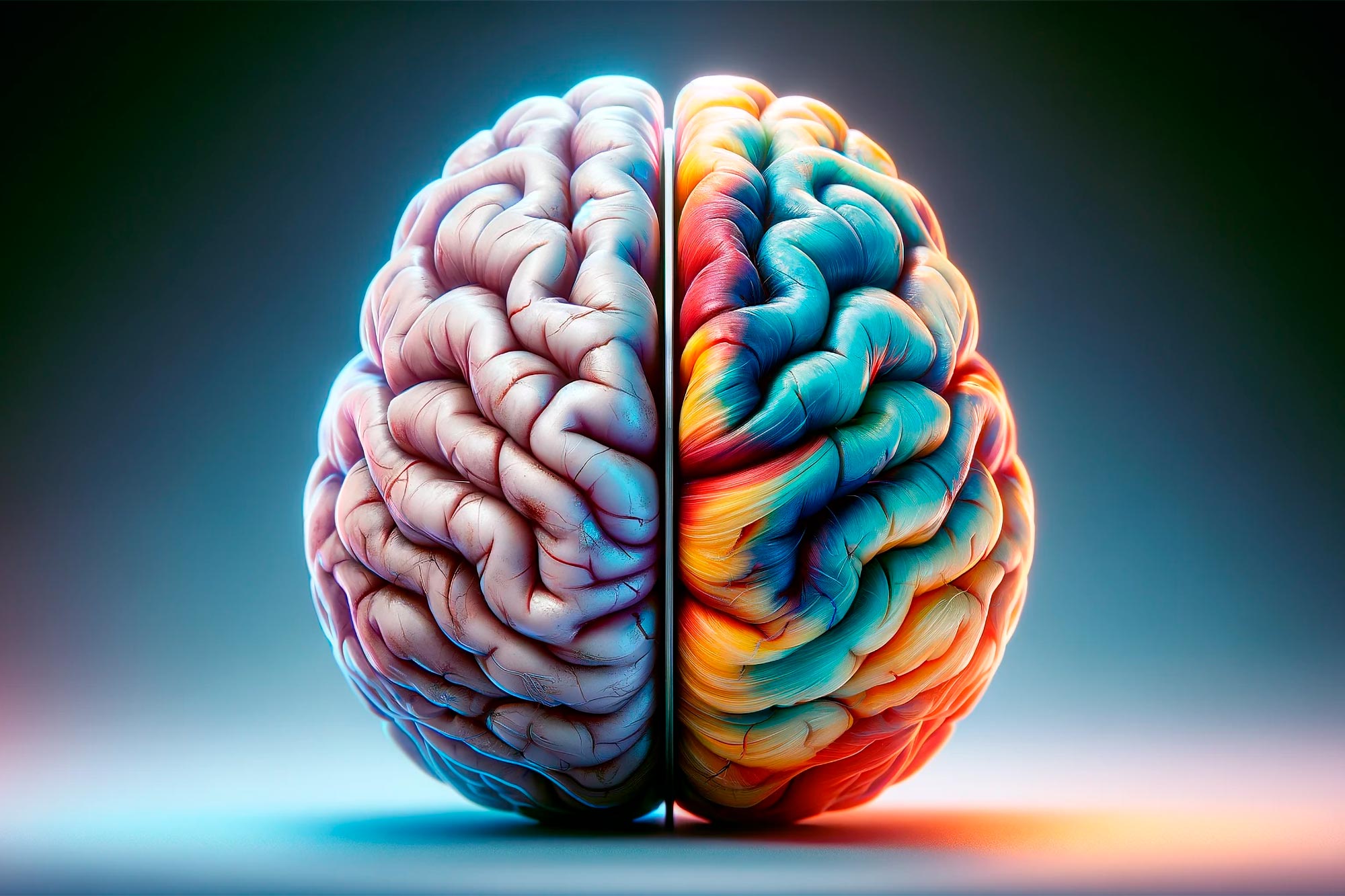
PET scans of people with mild cognitive impairment detected lower levels of serotonin, the brain chemical associated with positive mood, compared to those without it.
Comparing PET scans of more than 90 adults with and without mild cognitive impairment (MCI), Johns Hopkins Medicine researchers say relatively lower levels of the so-called “happiness” chemical, serotonin, in parts of the brain of those with MCI may play a role in memory problems including Alzheimer’s disease.
The findings, recently published in the Journal of Alzheimer’s Disease, lend support to growing evidence that measurable changes in the brain happen in people with mild memory problems long before an Alzheimer’s diagnosis, and may offer novel targets for treatments to slow or stop disease progression.
Evidence of Brain Changes Preceding Alzheimer’s
“The study shows that people with mild cognitive impairment already display loss of the serotonin transporter. This measure that reflects serotonin degeneration is associated with problems with memory, even when we take into account in our statistical model MRI measures of neurodegeneration and PET measures of the amyloid protein that are associated with Alzheimer’s Disease,” says Gwenn Smith, Ph.D., professor of psychiatry and behavioral sciences at the Johns Hopkins University School of Medicine.
Understanding Mild Cognitive Impairment
MCI describes the diagnostic stage between normal brain function in aging and Alzheimer’s Disease (AD). Symptoms of MCI include frequent forgetfulness of recent events, word finding difficulty, and loss of the sense of smell. Those with MCI may stay in this stage indefinitely, or progress to more severe forms of cognitive deficits, giving urgency to the search for predictive markers, and possible early prevention interventions, investigators say.
The investigators cautioned that their study showed a correlation between lower serotonin transporter levels and memory problems in MCI, and was not designed to show causation or the role of serotonin in the progression from MCI to AD. To answer these questions, further research is needed to study over time healthy controls and individuals with MCI to demonstrate the role of serotonin in disease progression.
Study Design and Findings
For the study, the Hopkins scientists recruited 49 volunteers with MCI, and 45 healthy adults ages 55 and older who underwent an MRI to measure changes in brain structure and two positron emission tomography (PET) scans of their brains at Johns Hopkins between 2009 and 2022. The research team used PET scans to look specifically at the serotonin transporter – a neurotransmitter, or brain chemical long associated with positive mood, appetite and sleep – and to look at the amyloid-beta protein (Aβ) distribution in the brain. Aβ is thought to play a central role in the pathology of AD. Studies in mice done at Johns Hopkins have shown that serotonin degeneration occurs before the development of widespread beta-amyloid deposits in the brain. Loss of serotonin is often associated with depression, anxiety, and psychological disorders.
Researchers found that MCI patients had lower levels of the serotonin transporter, and higher levels of Aβ than healthy controls. The MCI patients had up to 25% lower serotonin transporter levels in cortical and limbic regions than healthy controls. In particular, they report, lower serotonin transporter levels were found in cortical, limbic, and subcortical regions of the brains in those with MCI, areas specifically responsible for executive function, emotion, and memory.
“The correlation we observed between lower serotonin transporters and memory problems in MCI is important because we may have identified a brain chemical that we can safely target that may improve cognitive deficits and, potentially, depressive symptoms,” says Smith. “If we can show that serotonin loss over time is directly involved in the transition from MCI to AD, recently developed antidepressant medications may be an effective way to improve memory deficits and depressive symptoms and thus, may be a powerful way forward to slow disease progression.”
Future Research
Researchers say future studies include longitudinal follow-up of individuals with MCI to compare serotonin degeneration to the increase in and Aβ levels, as well as the increase in levels of the Tau protein that is also associated with AD compared to healthy adults. They are also studying multi-modal antidepressant drugs to treat depression and memory deficits in hopes of mitigating and halting symptoms.
Reference: “Serotonin Degeneration and Amyloid-β Deposition in Mild Cognitive Impairment: Relationship to Cognitive Deficits” by Gwenn S Smith, Hiroto Kuwabara, Haijuan Yan, Najlla Nassery, Mark Yoon, Vidya Kamath, Michael Kraut, Neda F Gould, Alena Savonenko, Jennifer M Coughlin, Martin Lodge, Martin G Pomper, Ayon Nandi, Daniel Holt, Robert F Dannals and Jeannie M Leoutsakos, 24 October 2023, Journal of Alzheimer’s Disease.
DOI: 10.3233/jad-230570
Other scientists at the Johns Hopkins University School of Medicine and Johns Hopkins Bloomberg School of Public Health who contributed to this research are Jennifer Coughlin, Robert Dannals, Neda Gould, Daniel Holt, Vidya Kamath, Michael Kraut, Hiroto Kuwabara, Jeannie Leoutsakos, Martin Lodge, Ayon Nandi, Najlla Nassery, Martin Pomper, Alena Savonenko, Haijuan Yan and Mark Yoon.
This research was partly supported by the National Institutes of Health.
Never miss a breakthrough: Join the SciTechDaily newsletter.
Follow us on Google and Google News.