
Close Menu
    Facebook X (Twitter) Instagram
    SciTechDaily
    • Biology
    • Chemistry
    • Earth
    • Health
    • Physics
    • Science
    • Space
    • Technology
    Facebook X (Twitter) Pinterest YouTube RSS
    SciTechDaily
    Home»Biology»These Feline Brothers Are the First Cats Ever Documented With Marfan Syndrome
    Biology

    These Feline Brothers Are the First Cats Ever Documented With Marfan Syndrome

    By Cornell UniversityOctober 1, 2026No Comments3 Mins Read
    Facebook Twitter Pinterest Telegram LinkedIn WhatsApp Email Reddit
    Share
    Facebook Twitter LinkedIn Pinterest Telegram Email Reddit
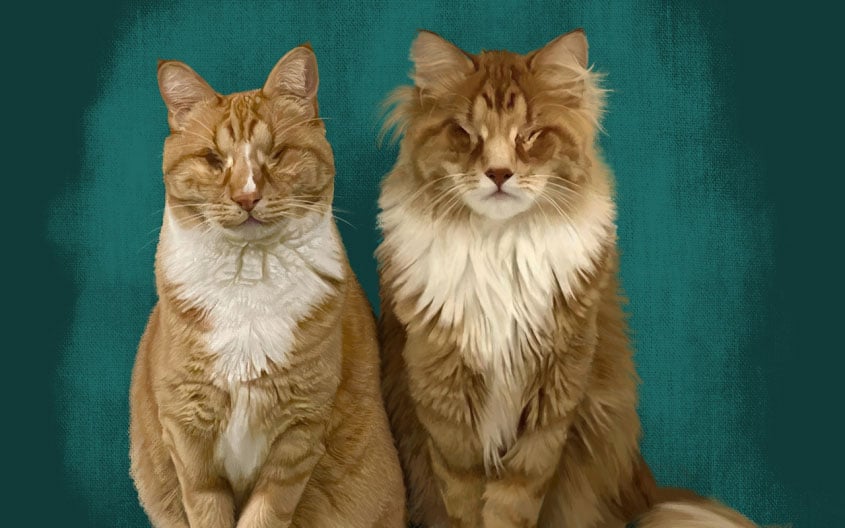
    Digital Artwork of Feline Siblings Gary and Shaggy
    Digital artwork by Gary and Shaggy’s owner, Nicole Desmond. Credit: Nicole Desmond

    The first documented feline cases of Marfan syndrome offer clues to how an altered gene allowed two affected cats to survive into adulthood.

    Gary and Shaggy, two feline brothers, reached adulthood with Marfan syndrome, a rare inherited disorder that weakens the body’s connective tissues. Both cats carried two altered copies of FBN1, a gene involved in building those tissues, even though a single altered copy can cause the condition in humans.

    Researchers at Cornell University found that the cats’ altered gene still allowed some normal function, helping explain their survival. Their study, published in Scientific Reports, provides the first molecular characterization of Marfan syndrome in domestic cats and describes the first known documented feline cases.

    Structural clues point to a rare connective tissue disorder

    Marfan syndrome is recognized mostly in humans, affecting about 1 in 4,000 people. The FBN1 gene supplies instructions for making fibrillin-1, a protein that serves as a building block for connective tissues in blood vessels, bones, ligaments, skin, and eyes. Inheriting two altered copies is extremely rare in people and can interfere with the production of normal fibrillin-1.
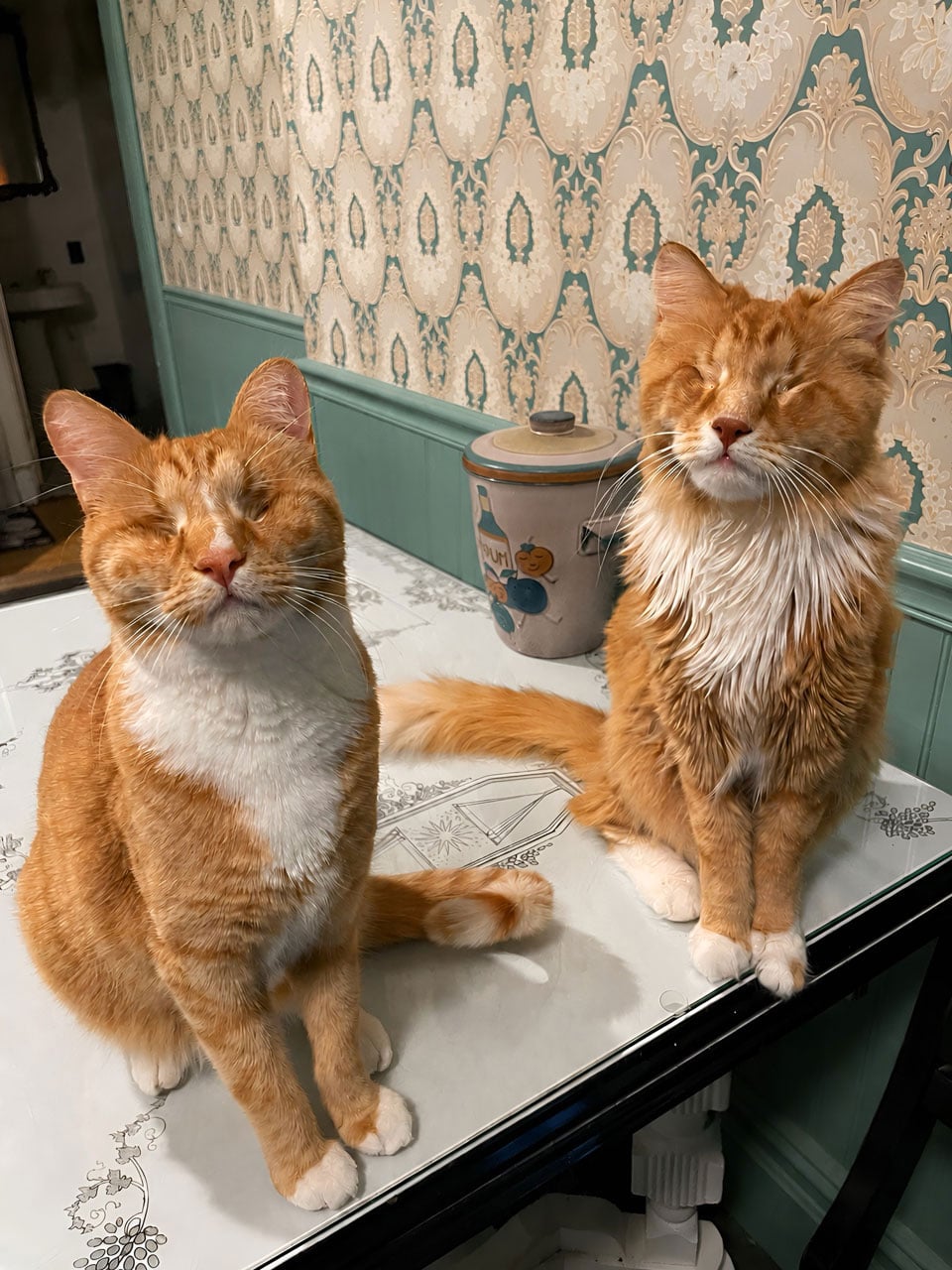
    Feline Siblings Gary and Shaggy
    Feline siblings Gary, left, and Shaggy are the first domestic cats to be documented with molecular characterization of Marfan syndrome. Credit: Nicole Desmond

    For Gary and Shaggy, signs of the disorder appeared in several parts of the body. Their limbs were noticeably long when they were kittens. Later examinations revealed structural problems in their eyes and enlargement of the aorta, the main artery carrying blood from the heart. Together, these findings pointed veterinarians toward Marfan syndrome.

    Partial gene function explains the cats’ survival

    A multidisciplinary team combined detailed clinical evaluations with genetic sequencing, which confirmed that each brother had inherited an altered copy of FBN1 from each parent. Further investigation showed that their particular genetic change disrupted only part of the process by which the gene’s instructions are prepared for use. Rather than shutting the gene down completely, it left some normal function intact. That remaining function helps explain why carrying two altered copies did not cause the more severe disease that might otherwise have occurred.

    “The findings provide a foundation for improved veterinary diagnostics,” said senior author Dr. Jacquelyn Evans, an assistant professor in Cornell’s College of Veterinary Medicine and at the Baker Institute for Animal Health. “It can help veterinarians recognize similar cases in the future and may help develop genetic tests.”

    Reference: “A homozygous hypomorphic FBN1 splice region variant in domestic cats with Marfan syndrome” by Shawna R. Cook, Jessica J. Hayward, Soon Hon Cheong, Linda Impe, Ian R. Porter, Brian Lamendola, Gavin R. Hitchener, Urs Giger, Philip R. Fox, Jacquelyn M. Evans and Bart J. G. Broeckx, 19 September 2026, Scientific Reports.
    DOI: 10.1038/s41598-026-70702-3

    This work was supported in part by The Hartwell Foundation (SRC).

    Never miss a breakthrough: Join the SciTechDaily newsletter.
    Follow us on Google and Google News.

    Cats Cornell University Genetics Mutation Veterinary
    Share. Facebook Twitter Pinterest LinkedIn Email Reddit

    Related Articles

    Cornell Scientists Unravel Mystery Behind DNA Replication

    New 2 Minute Screening Test Could Improve Lives of Cats With Heart Disease

    Have A Fat Cat? Here Is The Diet They Need To Follow To Lose Weight

    Scarecrow Gene May Lead to New Varieties of Staple Crops With Higher Yields

    De Novo Somatic Mutations Likely Cause Hemimegalencephaly

    Mysterious Gene Mutation Provides Window into the Biology of Language Cognition

    The Tomato Genomics Consortium Sequences the Tomato Genome

    Faster and Cheaper Genomics Technique Ready for Takeoff

    Mutations in TTN Gene Cause Idiopathic Dilated Cardiomyopathy (DCM)

    Leave A Reply Cancel Reply

    • Facebook
    • Twitter
    • Pinterest
    • YouTube

    Don't Miss a Discovery

    Subscribe for the Latest in Science & Tech!

    Trending News

    “Crawzilla” – Scientists Just Found North America’s Biggest Known Crayfish

    Scientist Reveals 7 of the Strangest Things Coffee Does to Your Body

    Great News From Enceladus: Saturn’s Icy Moon Just Became Even More Promising for Life

    Scientists Just Built the World’s Most Accurate Clock

    Scientists Find a “Pain Switch” That Could Shut Down Arthritis Pain

    Scientists Reveal What Could Happen if Yellowstone Erupted Now

    Scientists Discover a Molecular “Memory” That Could Make Lost Weight Come Back

    This Strange Planet Is Going Backwards – and Scientists Don’t Know Why

    Follow SciTechDaily
    • Facebook
    • Twitter
    • YouTube
    • Pinterest
    • Newsletter
    • RSS
    SciTech News
    • Biology News
    • Chemistry News
    • Earth News
    • Health News
    • Physics News
    • Science News
    • Space News
    • Technology News
    Recent Posts
    • These Feline Brothers Are the First Cats Ever Documented With Marfan Syndrome
    • Spinosaurus May Have Spent Most of Its Life Underwater, New Study Finds
    • The Secret to Better Magnetic Memory May Be the Light, Not the Material
    • Einstein Probe Discovers a Secret Phase of Neutron Star Collisions
    • Scientists Watch New Particles “Pop Into Existence” on a Quantum Computer
    Copyright © 1998 - 2026 SciTechDaily. All Rights Reserved.
    • Science News
    • About
    • Contact
    • Editorial Board
    • Privacy Policy
    • Terms of Use

    Type above and press Enter to search. Press Esc to cancel.