
Close Menu
    Facebook X (Twitter) Instagram
    SciTechDaily
    • Biology
    • Chemistry
    • Earth
    • Health
    • Physics
    • Science
    • Space
    • Technology
    Facebook X (Twitter) Pinterest YouTube RSS
    SciTechDaily
    Home»Health»Artificial Sweeteners Doing More Harm Than Good – More Likely to Gain Weight
    Health

    Artificial Sweeteners Doing More Harm Than Good – More Likely to Gain Weight

    By University of South AustraliaDecember 17, 20196 Comments2 Mins Read
    Facebook Twitter Pinterest Telegram LinkedIn WhatsApp Email Reddit
    Share
    Facebook Twitter LinkedIn Pinterest Telegram Email Reddit
    Artificial Sweeteners
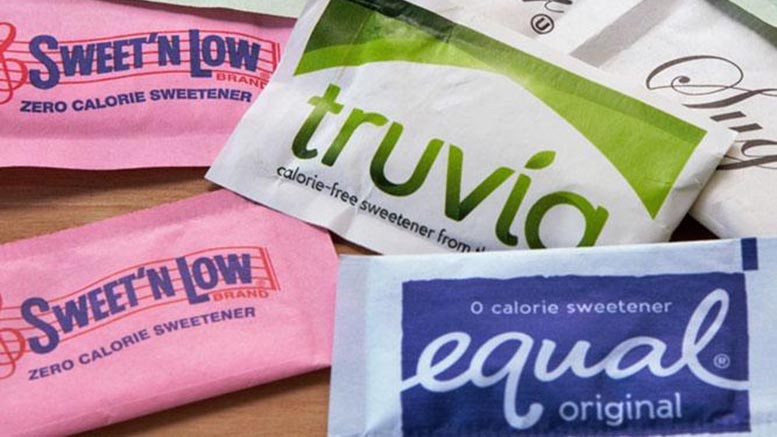
    According to a new research, persons who use low-calorie sweeteners (LCS) are more likely to gain weight, which is the exact reverse of what customers expect.

    A $2.2 billion industry to help people lose weight through artificial sweeteners may be contributing to type 2 diabetes, according to researchers from the University of South Australia.

    A recently published review led by UniSA Professor Peter Clifton reveals that people who use low-calorie sweeteners (LCS) are more likely to gain weight, the exact opposite of what consumers expect.

    “Artificial sweeteners also change the gut bacteria which may lead to weight gain and risk of type 2 diabetes.”

    This is despite controlled clinical trials showing that artificial sweeteners do lead to weight loss.

    There has been a 200 percent increase in LCS usage among children and a 54 percent increase among adults in the past 20 years, Prof Clifton says.

    Low-calorie sweeteners are used in place of sucrose, glucose, and fructose. They have an intensely sweet flavor without the calories, but recent studies have highlighted potential adverse health effects.

    Prof Clifton says a US study of 5158 adults over a seven-year period found that those who consumed large quantities of artificial sweeteners gained more weight than non-users.

    “Consumers of artificial sweeteners do not reduce their overall intake of sugar. They use both sugar and low-calorie sweeteners and may psychologically feel they can indulge in their favorite foods.

    “Artificial sweeteners also change the gut bacteria which may lead to weight gain and risk of type 2 diabetes,” he says.

    Artificially sweetened beverages (ASB) are also linked with increased risks of death and cardiovascular disease, strokes, and dementia among older people, but it is not clear why.

    Prof Clifton cites 13 studies that investigated the effects of ASB intake on the risk of type 2 diabetes, all of which found either no link or a positive one. One study found that substituting ASB for sugar-sweetened beverages or fruit juices was associated with a 5-7 percent lower risk of type 2 diabetes.

    “A better option than low-calorie sweeteners is to stick to a healthy diet, which includes plenty of whole grains, dairy, seafood, legumes, vegetables and fruits and plain water,” Prof Clifton says.

    Reference: “Non-nutritive Sweeteners and Glycaemic Control” by Yoona Kim, Jennifer B. Keogh and Peter M. Clifton, 19 November 2019, Current Atherosclerosis Reports.
    DOI: 10.1007/s11883-019-0814-6

    Never miss a breakthrough: Join the SciTechDaily newsletter.
    Follow us on Google and Google News.

    Diabetes Nutrition Popular University of South Australia Weight Loss
    Share. Facebook Twitter Pinterest LinkedIn Email Reddit

    Related Articles

    Can Potatoes Help With Weight Loss? Scientists Reveal Surprising Benefits

    Natural Compound Found in Olives Found To Reduce Blood Sugar Levels and Promote Weight Loss

    Scientists Reveal Best Dieting Strategy for Losing Weight With Type 2 Diabetes

    The “Cucumber Cure”: A Seafood Solution to Diabetes?

    Believe It or ‘Nut’: Snacking on Almonds Can Help You Lose Weight

    A Potential Cure for Obesity – New Particles Stop the Absorption of Fat and Carbs

    Scientists Discover Why Late-Night Eating Leads to Diabetes and Weight Gain

    6 Scientifically Proven Health Benefits of a Plant-Based Diet

    Yale Researchers Find Keto Diet Can Be Healthful or Harmful, Depending on the Timing

    6 Comments

    1. Scorpio on December 17, 2019 9:11 am

      It clearly say MAY LEAD TO …..

      There is no peroof or scientific statiscal prooven evidence of anything mentioned here!!!

      Reply
    2. Night Raptor on December 17, 2019 10:18 am

      So out of all the different kinds of artificial sweeteners, somehow they all have the same effects? Like most of these, it is likely from surveys and very unscientific.

      Reply
    3. Matt on December 17, 2019 10:32 am

      This is definitely some BS. I need a double blind study and I need to know the confidence interval. Statistics are misleading and can be bent to trick people. This reeks of bullcrap.

      Reply
    4. Gerry W Kavanaugh on December 17, 2019 10:40 am

      As usual, these studies do nothing but confuse the general public. There is absolutely no science involved. No causal facts. Just reporting coincidences.

      I think there should be a strong movement to stop wasting money on these “studies” and focus on science and fact. The information generated is completely useless and means nothing.

      Reply
    5. Sam d on December 18, 2019 6:33 am

      This is not a rct, just a lit review or an epidemiological observation, which is meaningless to draw any conclusion from

      Reply
    6. Cb on December 18, 2019 8:02 am

      I agree, I started chewing tons of gum with sweeteners. I gained 20 lbs in 4 months. Quit gum and am less hungry and losing weight.

      Reply
    Leave A Reply Cancel Reply

    • Facebook
    • Twitter
    • Pinterest
    • YouTube

    Don't Miss a Discovery

    Subscribe for the Latest in Science & Tech!

    Trending News

    JWST Finds a “Star” 100 Billion Times Brighter Than Any Star Should Be

    Scientists Find a Hidden Biological Link Across Different Forms of Autism

    Astronomers Discover a Ghostly River of Stars That Could Reveal Dark Matter

    Why Is Colorectal Cancer Rising in People Under 50? New Clues Point to the Environment

    Quantum Fluctuations Break a Crystal’s Symmetry Rules

    Why Does an Irregular Heartbeat Strike 40 Years Early in Some People?

    Scientists Reveal How ADHD Could Fuel Creative Thinking

    Scientists Find Just 3 Minutes of Sprinting Can Transform Blood Chemistry

    Follow SciTechDaily
    • Facebook
    • Twitter
    • YouTube
    • Pinterest
    • Newsletter
    • RSS
    SciTech News
    • Biology News
    • Chemistry News
    • Earth News
    • Health News
    • Physics News
    • Science News
    • Space News
    • Technology News
    Recent Posts
    • More Screen Time, Better Thinking? An 8-Year Study Finds a Surprising Link
    • A Vast Clean Energy Source May Be Hiding Beneath Australia’s Red Soil
    • Scientists Uncover Signs of an Ancient Climate “Tipping Point”
    • Cleaner Cars May Be Hiding a New Pollution Problem
    • Common Plant Chemical Linked to Widespread Organ Damage in Aquatic Animals
    Copyright © 1998 - 2026 SciTechDaily. All Rights Reserved.
    • Science News
    • About
    • Contact
    • Editorial Board
    • Privacy Policy
    • Terms of Use

    Type above and press Enter to search. Press Esc to cancel.