
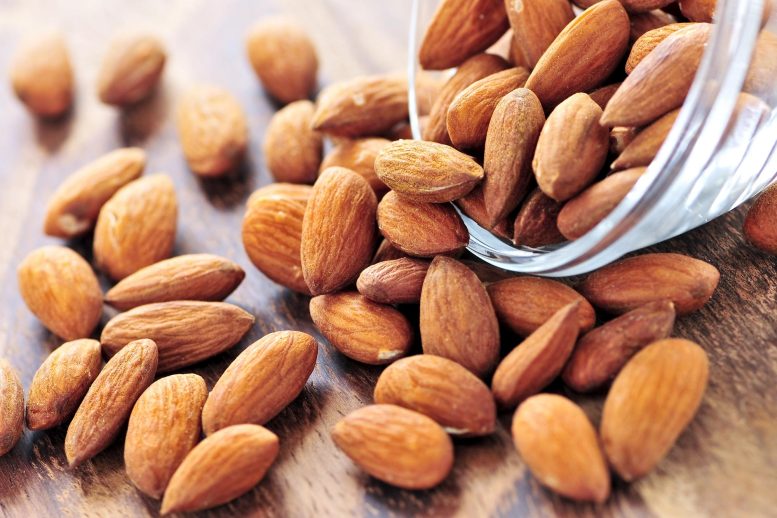
Daily almond snacks can reduce calorie intake, improve appetite-regulating hormones, and support long-term weight management and health.
Weight loss is never an easy nut to crack, but a handful of almonds could keep extra kilos at bay according to new research from the University of South Australia.
Examining how almonds can affect appetite, researchers found that a snack of 30-50 grams (1.0-1.8 ounces) of almonds could help people cut back on the number of calories they consume each day.
The study found that people who consumed almonds – as opposed to an energy-equivalent carbohydrate snack – lowered their energy intake by 300 kilojoules (72 calories) – most of which came from junk food – at the subsequent meal. The research was published in the European Journal of Nutrition.
Hormonal Appetite Regulation
Dr. Sharayah Carter from UniSA’s Alliance for Research in Exercise, Nutrition and Activity (ARENA) says the research provides valuable insights for weight management.
“Rates of overweight and obesity are a major public health concern and modulating appetite through better hormonal response may be key to promoting weight management,” Dr. Carter says.
“Our research examined the hormones that regulate appetite, and how nuts – specifically almonds – might contribute to appetite control.”
“We found that people who ate almonds experienced changes in their appetite-regulating hormones, and that these may have contributed to reduced food intake (by 300kJ).”
In Australia, two in three (12.5 million) adults are overweight or obese. Globally, 1.9 billion adults are overweight with 650 million of these being obese.
Almonds’ Nutritional Impact on Hormones
The study found that people who ate almonds had 47 percent lower C-peptide responses (which can improve insulin sensitivity and reduce the risk of developing diabetes and cardiovascular disease); and higher levels of glucose-dependent insulinotropic polypeptide (18 percent higher), glucagon (39 percent higher), and pancreatic polypeptide responses (44 percent higher). Glucagon sends satiety signals to the brain, while pancreatic polypeptide slows digestion which may reduce food intake, both encouraging weight loss.
“Almonds are high in protein, fiber, and unsaturated fatty acids, which may contribute to their satiating properties and help explain why fewer kilojoules were consumed.”
The findings of this study show that eating almonds produce small changes to people’s energy intake, Dr. Carter says this may have clinical effects in the long term.
“Even small, positive lifestyle changes can have an impact over a longer period. When we’re making small, sustainable changes, we’re more likely to be improving our overall health in the long run,” Dr. Carter says.
“Almonds are a fantastic healthy snack to incorporate into the daily diet. We are now excited to look at how almonds might affect appetite during a weight loss diet and how they might assist with weight management in the long term.”
Reference: “Acute feeding with almonds compared to a carbohydrate-based snack improves appetite-regulating hormones with no effect on self-reported appetite sensations: a randomised controlled trial” by Sharayah Carter, Alison M. Hill, Jonathan D. Buckley, Sze-Yen Tan, Geraint B. Rogers and Alison M. Coates, 28 October 2022, European Journal of Nutrition.
DOI: 10.1007/s00394-022-03027-2
Never miss a breakthrough: Join the SciTechDaily newsletter.
Follow us on Google and Google News.
2 Comments
OMG! Would the Scitechdaily please stop printing this marketing crap? You are insulting the readership.
I’ll bet snacking on kale rather than almonds would cause greater weight loss.