
Close Menu
    Facebook X (Twitter) Instagram
    SciTechDaily
    • Biology
    • Chemistry
    • Earth
    • Health
    • Physics
    • Science
    • Space
    • Technology
    Facebook X (Twitter) Pinterest YouTube RSS
    SciTechDaily
    Home»Space»OwO What’s This? Astronomers Study Galactic Bulge for Clues to Black Hole Mystery
    Space

    OwO What’s This? Astronomers Study Galactic Bulge for Clues to Black Hole Mystery

    By ESA/HubbleMarch 19, 2020No Comments2 Mins Read
    Facebook Twitter Pinterest Telegram LinkedIn WhatsApp Email Reddit
    Share
    Facebook Twitter LinkedIn Pinterest Telegram Email Reddit
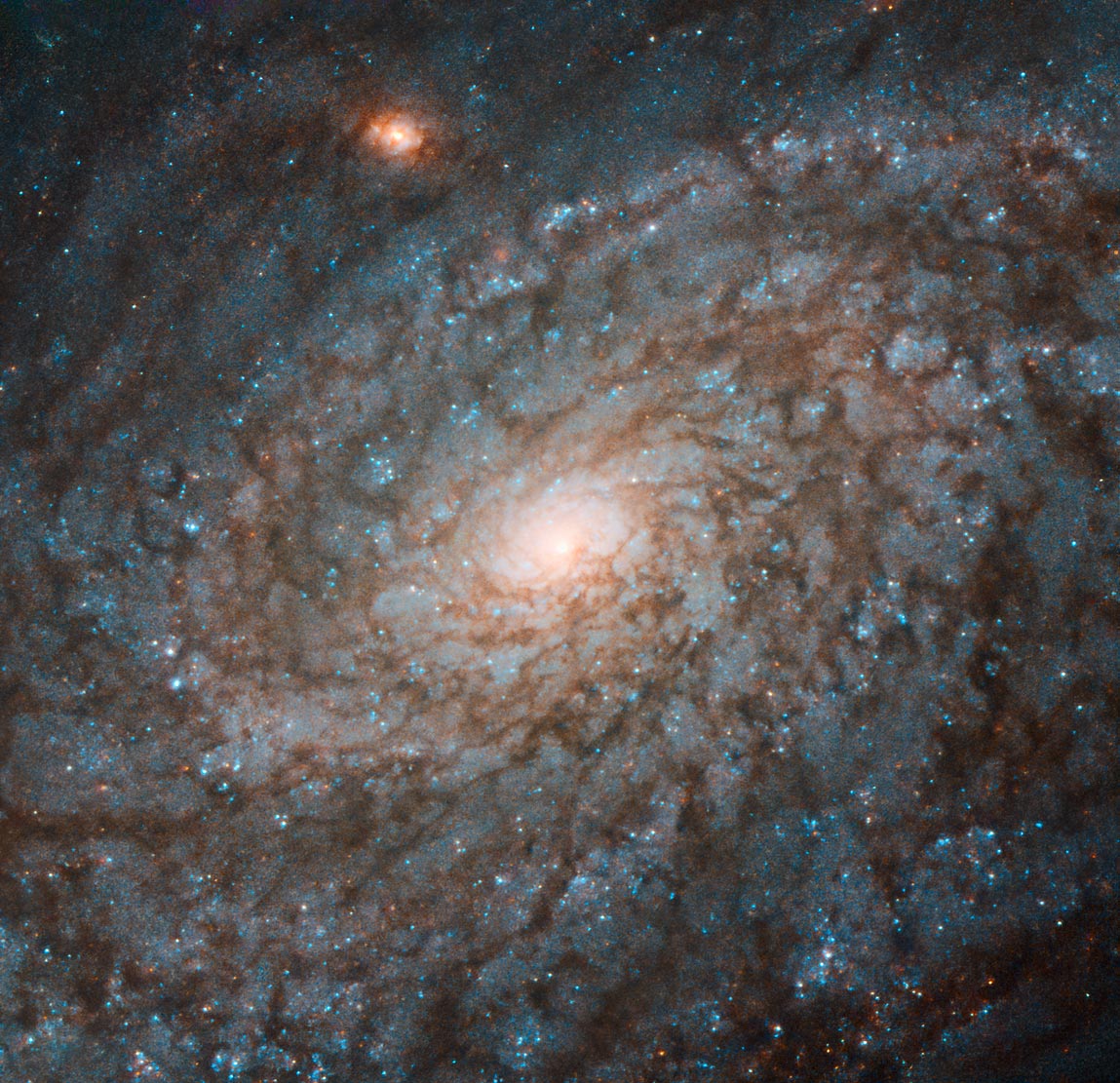
    Cotton Wool Galaxy NGC 4237
    Galaxy NGC 4237, located about 60 million light-years from Earth in the constellation of Coma Berenices (Berenice’s Hair). Credit: ESA/Hubble & NASA, P. Erwin et al.

    This picture taken by the NASA/ESA Hubble Space Telescope, shows the galaxy NGC 4237. Located about 60 million light-years from Earth in the constellation of Coma Berenices (Berenice’s Hair), NGC 4237 is classified as a flocculent spiral galaxy. This means that its spiral arms are not clearly distinguishable from each other, as in grand design spiral galaxies, but are instead patchy and discontinuous. This gives the galaxy a fluffy appearance, somewhat resembling cotton wool.

    Astronomers studying NGC 4237 were actually more interested in its galactic bulge — its bright central region. By learning more about these bulges, we can explore how spiral galaxies have evolved, and study the growth of the supermassive black holes that lurk at the centers of most spirals. There are indications that the mass of the black hole at the center of a galaxy is related to the mass of its bulge.

    However, this connection is still uncertain, and why these two components should be so strongly correlated is still a mystery — one that astronomers hope to solve by studying galaxies in the nearby Universe, such as NGC 4237.
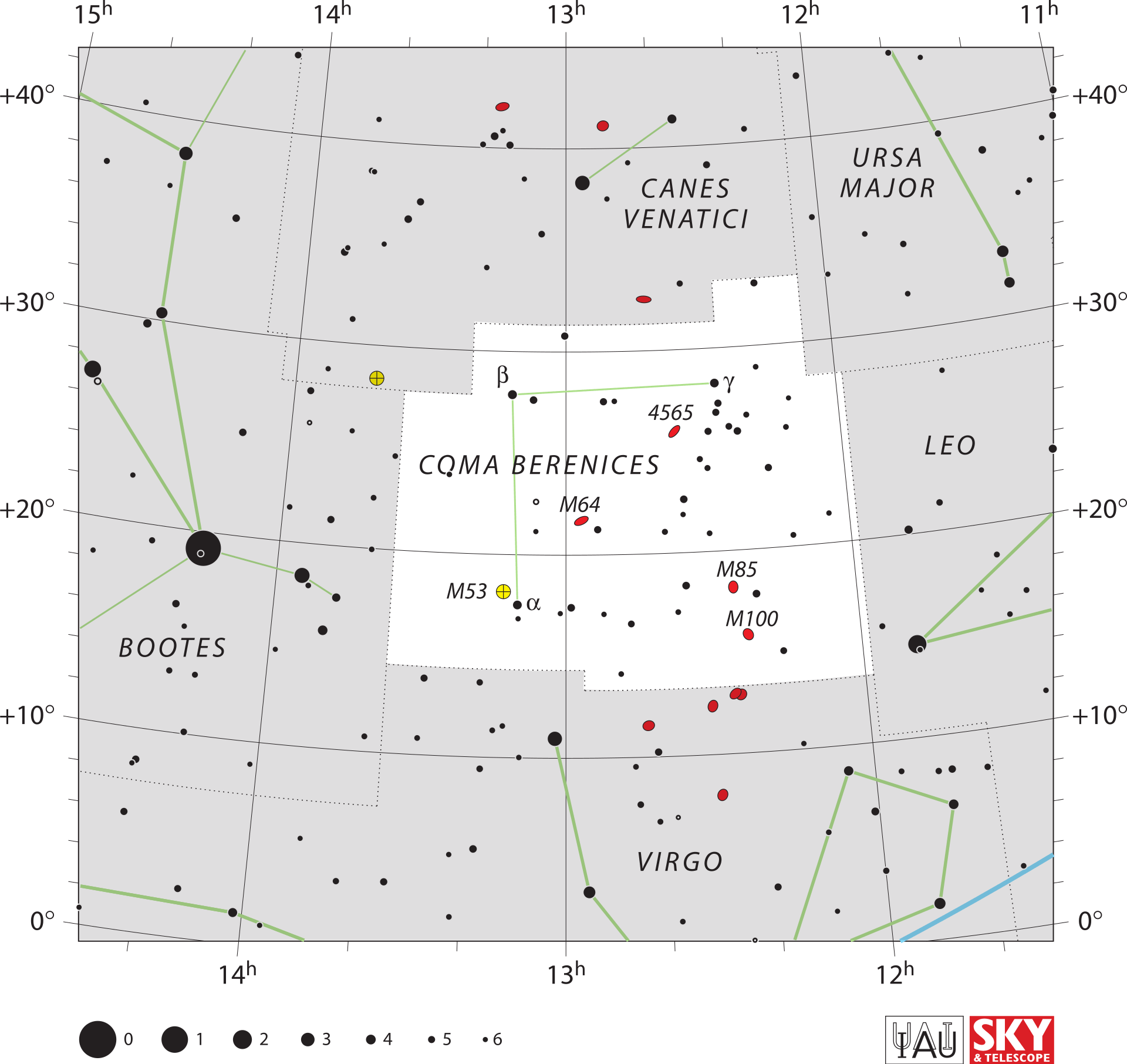
    Coma Berenices Constellation
    IAU Coma Berenices chart. Credit: IAU and Sky & Telescope magazine (Roger Sinnott & Rick Fienberg) CC BY 3.0

    Galactic Bulge: In astronomy, a bulge is a tightly packed group of stars within a larger formation. The term almost exclusively refers to the central group of stars found in most spiral galaxies (see galactic spheroid). Bulges were historically thought to be elliptical galaxies that happened to have a disk of stars around them, but high-resolution images using the Hubble Space Telescope have revealed that many bulges lie at the heart of a spiral galaxy. It is now thought that there are at least two types of bulges: bulges that are like ellipticals and bulges that are like spiral galaxies.

    Never miss a breakthrough: Join the SciTechDaily newsletter.
    Follow us on Google and Google News.

    Astronomy Astrophysics Black Hole European Space Agency Hubble Space Telescope NASA Popular
    Share. Facebook Twitter Pinterest LinkedIn Email Reddit

    Related Articles

    Hubble’s Newest Discovery Isn’t a Star, It’s a Window Into the Dark Universe

    The Big Bang’s Dark Legacy Revealed by Hubble: Unexpected Black Holes

    Star Torn Apart and Devoured by Ravenous Supermassive Black Hole

    Astronomers Build Incredible 3D Visualization of Exploded Star Using NASA’s Great Observatories [Video]

    Mysterious Gigantic Carbon Cocoons Discovered Surrounding Growing Galaxies

    Hubble Reveals That Markarian 231 is Powered by a Double Black Hole

    5,000 Light Year Long Jet of Superheated Gas Ejected From a Supermassive Black Hole

    Hubble and VLA View Elliptical Galaxy Hercules A

    Hubble Views Abell 2261, An Elliptical Galaxy With an Unusually Large Core

    Leave A Reply Cancel Reply

    • Facebook
    • Twitter
    • Pinterest
    • YouTube

    Don't Miss a Discovery

    Subscribe for the Latest in Science & Tech!

    Trending News

    JWST Finds a “Star” 100 Billion Times Brighter Than Any Star Should Be

    Scientists Find a Hidden Biological Link Across Different Forms of Autism

    Astronomers Discover a Ghostly River of Stars That Could Reveal Dark Matter

    Why Is Colorectal Cancer Rising in People Under 50? New Clues Point to the Environment

    Quantum Fluctuations Break a Crystal’s Symmetry Rules

    Why Does an Irregular Heartbeat Strike 40 Years Early in Some People?

    Scientists Reveal How ADHD Could Fuel Creative Thinking

    Scientists Find Just 3 Minutes of Sprinting Can Transform Blood Chemistry

    Follow SciTechDaily
    • Facebook
    • Twitter
    • YouTube
    • Pinterest
    • Newsletter
    • RSS
    SciTech News
    • Biology News
    • Chemistry News
    • Earth News
    • Health News
    • Physics News
    • Science News
    • Space News
    • Technology News
    Recent Posts
    • A Vast Clean Energy Source May Be Hiding Beneath Australia’s Red Soil
    • Scientists Uncover Signs of an Ancient Climate “Tipping Point”
    • Cleaner Cars May Be Hiding a New Pollution Problem
    • Common Plant Chemical Linked to Widespread Organ Damage in Aquatic Animals
    • Scientists Discover a Hidden Baobab Species in Madagascar
    Copyright © 1998 - 2026 SciTechDaily. All Rights Reserved.
    • Science News
    • About
    • Contact
    • Editorial Board
    • Privacy Policy
    • Terms of Use

    Type above and press Enter to search. Press Esc to cancel.