
Close Menu
    Facebook X (Twitter) Instagram
    SciTechDaily
    • Biology
    • Chemistry
    • Earth
    • Health
    • Physics
    • Science
    • Space
    • Technology
    Facebook X (Twitter) Pinterest YouTube RSS
    SciTechDaily
    Home»Biology»Even Among Wild Mammals, Females Live Longer
    Biology

    Even Among Wild Mammals, Females Live Longer

    By CNRSMarch 28, 2020No Comments2 Mins Read
    Facebook Twitter Pinterest Telegram LinkedIn WhatsApp Email Reddit
    Share
    Facebook Twitter LinkedIn Pinterest Telegram Email Reddit
    Elephant Seal
    Female mammals live longer than males on average because they have lower mortality risk at all ages,

    In all human populations, average lifespans are longer for women than for men. Moreover, nine out of ten supercentenarians — that is, people 110 years old and up — are women. But what about for other mammals, in the wild?

    A team led by Jean-François Lemaître, a CNRS researcher at the Biometry and Evolutionary Biology laboratory (CNRS / Claude Bernard Lyon 1 University / VetAgro Sup), compiled demographic data for 134 populations of 101 mammalian species — from bats to lions, orcas to gorillas — making their study the widest reaching and most precise to date. In 60% of the cases, female mammals live longer than males: 18.6% longer on average (versus only 7.8% longer in humans).

    Is this because male mortality rates rise faster with age? Not necessarily, according to Lemaître’s team: for about half of the populations studied, the rise in mortality with age is even more pronounced among female mammals. However, mortality risk is lower among females at all ages.
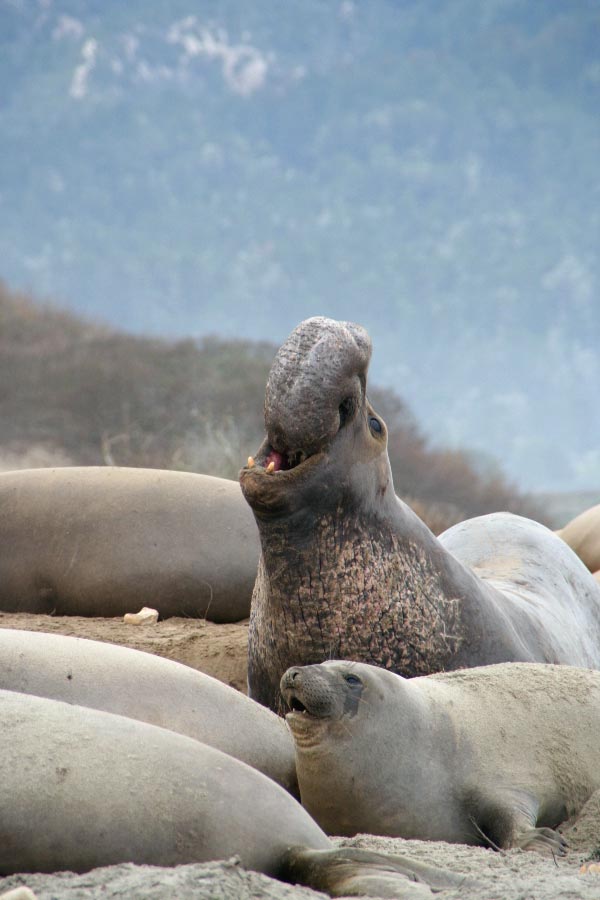
    Elephant Seals
    Northern elephant seals (Mirounga angustirostris) in the Año Nuevo colony (California, USA). Here a male surrounded by his harem is emitting a cry to mark his territory. Elephant seals are one of the species in which females outlive males. Credit: © Isabelle CHARRIER / Neuro-PSI / CNRS Photothèque

    Reference: “Sex differences in adult lifespan and aging rates of mortality across wild mammals” by Jean-François Lemaître, Victor Ronget, Morgane Tidière, Dominique Allainé, Vérane Berger, Aurélie Cohas, Fernando Colchero, Dalia A. Conde, Michael Garratt, András Liker, Gabriel A. B. Marais, Alexander Scheuerlein, Tamás Székely and Jean-Michel Gaillard, 23 March 2020, Proceedings of the National Academy of Sciences.
    DOI: 10.1073/pnas.1911999117

    Never miss a breakthrough: Join the SciTechDaily newsletter.
    Follow us on Google and Google News.

    Aging CNRS Longevity Mammals
    Share. Facebook Twitter Pinterest LinkedIn Email Reddit

    Related Articles

    Researchers Have Discovered a Mutation That Significantly Increases Lifespan

    Secrets of Longevity Revealed: Scientists Find Species That Essentially Do Not Age

    Life-Extending Effects: How Serotonin, Dopamine, and the Smell of Food Affect Aging

    Scientists Discover Small Proteins Regulate the Aging Process

    Research Shows Cell Aging Can Be Slowed by Oxidants

    Accurate Aging of Wild Animals Thanks to Discovery of First Epigenetic Clock for Bats

    Genetic Self-Destruct – Some Worms Programmed to Die Early for Sake of Colony

    Synergistic Cellular Pathways Identified That Extend Lifespan by 500%

    Sirtuin Protein SIRT6 Linked to Longevity in Mammals

    Leave A Reply Cancel Reply

    • Facebook
    • Twitter
    • Pinterest
    • YouTube

    Don't Miss a Discovery

    Subscribe for the Latest in Science & Tech!

    Trending News

    These Toads Are Surviving a Deadly Fungus – Scientists May Finally Know Why

    These Brain Cells May Explain Why We Eventually Have To Sleep

    Tomatoes Contain an Invisible Ingredient With Surprising Effects on Liver Health

    World’s First Heat-Powered Cooling System Turns Waste Heat Into Cold

    Antarctica Gained a Record 695 Billion Tons of Ice in Just Two Years

    Don’t Miss: A Brilliant Venus and Glowing Harvest Moon Light Up the Sky

    New Twist on the Einstein Problem Reveals Unexpected Physics

    JWST Captures Stunning Evidence of How Supermassive Black Holes Feed

    Follow SciTechDaily
    • Facebook
    • Twitter
    • YouTube
    • Pinterest
    • Newsletter
    • RSS
    SciTech News
    • Biology News
    • Chemistry News
    • Earth News
    • Health News
    • Physics News
    • Science News
    • Space News
    • Technology News
    Recent Posts
    • Scientists Discover a Hidden Defect That Could Explain Why IBD Keeps Coming Back
    • Millions Take Blood Pressure Drugs, but Many May Be Missing Their Heart-Protective Benefits
    • Could Alien Life Be Conscious in Ways We Can’t Imagine?
    • Scientists Develop a Fruit Wash That Removes Pesticide Residues and Keeps Produce Fresh Longer
    • Scientists May Have Finally Explained Why Astronauts Get Constipated in Space
    Copyright © 1998 - 2026 SciTechDaily. All Rights Reserved.
    • Science News
    • About
    • Contact
    • Editorial Board
    • Privacy Policy
    • Terms of Use

    Type above and press Enter to search. Press Esc to cancel.