
Close Menu
    Facebook X (Twitter) Instagram
    SciTechDaily
    • Biology
    • Chemistry
    • Earth
    • Health
    • Physics
    • Science
    • Space
    • Technology
    Facebook X (Twitter) Pinterest YouTube RSS
    SciTechDaily
    Home»Biology»Sirtuin Protein SIRT6 Linked to Longevity in Mammals
    Biology

    Sirtuin Protein SIRT6 Linked to Longevity in Mammals

    By SciTechDailyFebruary 27, 2012No Comments2 Mins Read
    Facebook Twitter Pinterest Telegram LinkedIn WhatsApp Email Reddit
    Share
    Facebook Twitter LinkedIn Pinterest Telegram Email Reddit
    lab-mouse
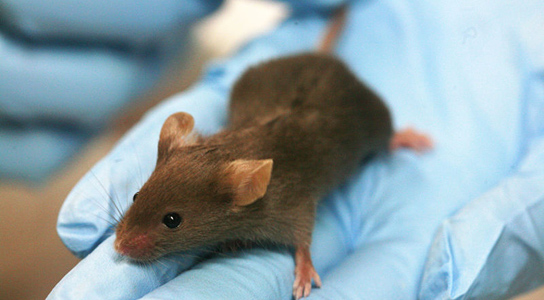
    Higher SIRT6 levels can lengthen lifespan in male mice by up to 15.8%. However, as the mouse strain used in the lab experiments is prone to tumors, the longevity boost might be due to SIRT6’s anti-cancer effects rather than its direct impact on aging.

    A member of the sirtuin family of proteins, SIRT6, has been shown to extend lifespans in mammals. Researchers studying the aging process have long been intrigued by the sirtuin genes and their associated proteins. Recent results published in the journal Nature suggest that the overexpression of this one gene can lengthen lifespan in male mice by up to 15.8%.

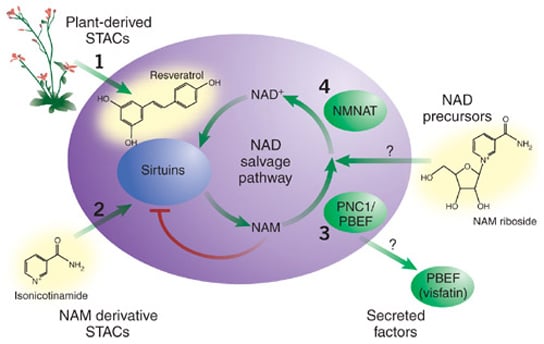
    SIRT1 has been in the spotlight for years, since it was also closely related to the longevity-linked yeast gene. Some researchers speculated that SIRT1 could boost lifespan in mammals, and that it was the target of resveratrol, a compound found in red wine that’s been linked to a variety of health benefits.
    sirtuin-infographic

    Until now, SIRT1 has not affected longevity in mammals, although its expression is associated with a healthier metabolism in mice fed a high-fat diet. Haim Cohen, a molecular biologist at Bar-Ilan University in Ramat-Gan, Israel, studied the SIRT6 gene.

    In 2006, it was reported that mice missing the SIRT6 gene seemed to age more quickly. When mice had higher levels of SIRT6, longevity in females was unaffected, but the median lifespan of male mice rose by 14.5%. The maximum lifespan rose by 15.8%.

    The strain of mice used in the lab experiments are particularly prone to tumors, especially in males. The longer lifespan could be a result of an anti-cancer effect of SIRT6 rather than a direct effect on aging.

    It is not yet known why sirtuin levels affect males and females differently.

    Reference: “Sirtuin protein linked to longevity in mammals” by Heidi Ledford, 22 February 2012, Nature.
    DOI: 10.1038/nature.2012.10074

    Never miss a breakthrough: Join the SciTechDaily newsletter.
    Follow us on Google and Google News.

    Longevity Mammals Molecular Biology Protein Resveratrol SIRT1
    Share. Facebook Twitter Pinterest LinkedIn Email Reddit

    Related Articles

    New Analysis of Longevity Protein Yields Important Therapeutic Insights

    Yale Researchers Create a 21st Amino Acid

    New Analysis on Iceman Ötzi Opens Up New Research Possibilities for Mummies

    A Closer Look at the Antifreeze Protein That Allows Siberian Beetles to Survive

    Enzyme’s Essential Role in Long-Term Memory Refuted

    SSRL Validates Anti-Flu Protein Design

    “Arsenic-Life” Bacterium Prefers Phosphate Over Arsenate

    New Design Makes Previously Inaccessible Proteins Vulnerable to Drugs

    Resveratrol Interacts With SIRT1 Gene for Health Benefits

    Leave A Reply Cancel Reply

    • Facebook
    • Twitter
    • Pinterest
    • YouTube

    Don't Miss a Discovery

    Subscribe for the Latest in Science & Tech!

    Trending News

    Scientists Uncover Potential Brain Risks of Popular Fish Oil Supplements

    Scientists Discover a Surprising Way To Make Bread Healthier and More Nutritious

    After 60 Years, Scientists Uncover Unexpected Brain Effects of Popular Diabetes Drug Metformin

    New Research Uncovers Hidden Side Effects of Popular Weight-Loss Drugs

    Scientists Rethink Extreme Warming After Surprising Ocean Discovery

    Landmark Study Links Never Marrying to Significantly Higher Cancer Risk

    Researchers Discover Unknown Beetle Species Just Steps From Their Lab

    Largest-Ever Study Finds Medicinal Cannabis Ineffective for Anxiety, Depression, PTSD

    Follow SciTechDaily
    • Facebook
    • Twitter
    • YouTube
    • Pinterest
    • Newsletter
    • RSS
    SciTech News
    • Biology News
    • Chemistry News
    • Earth News
    • Health News
    • Physics News
    • Science News
    • Space News
    • Technology News
    Recent Posts
    • Students Build Dark Matter Detector and Set New Experimental Limits
    • Scientists Discover Caffeine Can Repair Key Memory Circuits After Sleep Loss
    • Strange 65-Foot Dinosaur Discovered in Argentina
    • Researchers Uncover Source of Strange Deformation in Earth’s Largest Continental Rift
    • Scientists Solve Mystery of Where the Colorado River Vanished Millions of Years Ago
    Copyright © 1998 - 2026 SciTechDaily. All Rights Reserved.
    • Science News
    • About
    • Contact
    • Editorial Board
    • Privacy Policy
    • Terms of Use

    Type above and press Enter to search. Press Esc to cancel.