
Close Menu
    Facebook X (Twitter) Instagram
    SciTechDaily
    • Biology
    • Chemistry
    • Earth
    • Health
    • Physics
    • Science
    • Space
    • Technology
    Facebook X (Twitter) Pinterest YouTube RSS
    SciTechDaily
    Home»Biology»How Long to Play Dead in Order to Stay Alive? The Answer Is “Highly Strategic”
    Biology

    How Long to Play Dead in Order to Stay Alive? The Answer Is “Highly Strategic”

    By University of BristolJuly 8, 20201 Comment2 Mins Read
    Facebook Twitter Pinterest Telegram LinkedIn WhatsApp Email Reddit
    Share
    Facebook Twitter LinkedIn Pinterest Telegram Email Reddit
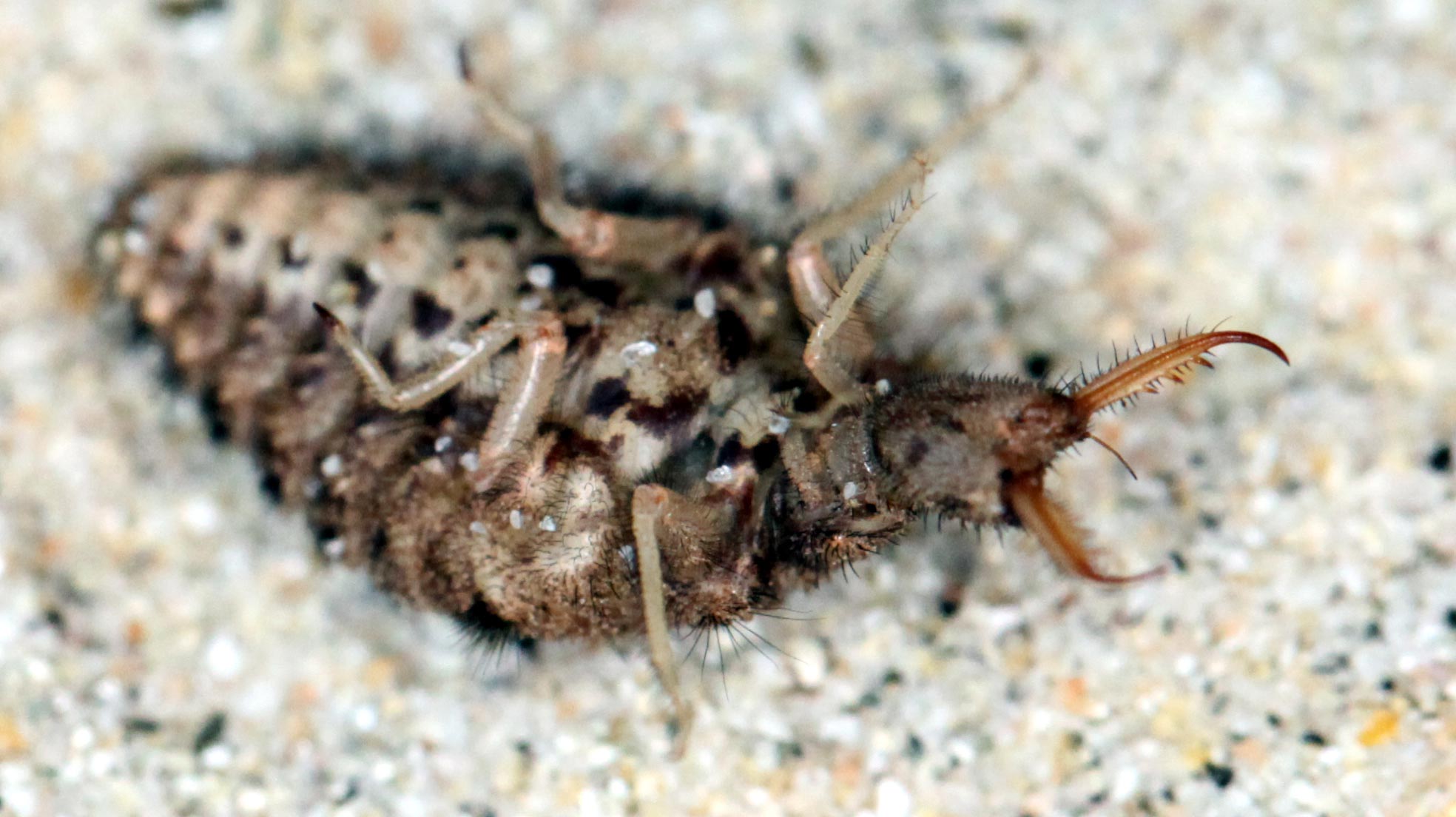
    Belly-Up Antlion Larva
    A belly-up antlion larva remaining motionless for an unpredictable period testing to destruction the patience of potential predators. Credit: Professor Nigel R. Franks, University of Bristol

    Many animals remain motionless or play dead after being attacked by a predator in the hope that it will give up and move onto some other unfortunate prey.

    A team of scientists from the University of Bristol has been studying this phenomenon in antlions considered to be one of the fiercest predators in the insect kingdom.

    Their findings, which appear today in the journal Proceedings of the Royal Society B, suggest that studying the duration of such immobility may provide a new understanding of predator-prey relationships.

    Professor Nigel Franks, from the School of Biological Sciences, led the research. He said: “Lots of animals play dead in extreme danger. Examples include possums, certain birds, and woodlice.

    “Even humans may play dead in extremis. However, to the best of our knowledge, no one before us has asked the question how long should a potential victim ‘play possum’?”

    The Bristol team discovered that playing dead in antlion larvae is highly strategic – remaining motionless for completely unpredictable periods. Hence, a predator cannot predict how long its potential prey will remain inactive.

    Professor Franks added: “This is a strategy that should test to destruction the patience of a potential predator and has probably saved countless antlions from their fate.

    “Our work shows a new way forward for studies of predator evasion: namely, the importance of quantitative and analytical approaches focusing on how behavioral acts can be strategically timed.”

    Reference: “Post-contact immobility and half-lives that save lives” by Ana B. Sendova-Franks, Alan Worley and Nigel R. Franks, 8 July 2020, Proceedings of the Royal Society B.
    DOI: 10.1098/rspb.2020.0881

    Never miss a breakthrough: Join the SciTechDaily newsletter.
    Follow us on Google and Google News.

    Entomology University of Bristol
    Share. Facebook Twitter Pinterest LinkedIn Email Reddit

    Related Articles

    Animals Fake Death for Long Periods of Time to Escape Predators

    Tropical Paper Wasps Babysit for Neighboring Nests

    Common Pesticides Stop Bees and Flies From Getting a Good Night’s Sleep and Disrupts Their Memories

    Crickets Eavesdrop on Bat Echolocation Calls and Drop From the Sky to Evade Capture

    Deaf Moths Evolved Noise-Cancelling Scales to Evade Prey – More Efficient Than Current Sound Engineering Technology

    European Cave Spiders Produce Extremely Stretchable Silk

    Researchers Recreate the Song of 165 Million Year Old Katydid

    Fungus Transforms North American Red Turpentine Beetle into Tree Killer in Asia

    Adanson’s Jumping Spiders Hunt Using Unusual Depth Perception

    1 Comment

    1. ziane.ziane on July 8, 2020 10:33 pm

      Thanks for such a beautiful post,

      Reply
    Leave A Reply Cancel Reply

    • Facebook
    • Twitter
    • Pinterest
    • YouTube

    Don't Miss a Discovery

    Subscribe for the Latest in Science & Tech!

    Trending News

    These Toads Are Surviving a Deadly Fungus – Scientists May Finally Know Why

    These Brain Cells May Explain Why We Eventually Have To Sleep

    Tomatoes Contain an Invisible Ingredient With Surprising Effects on Liver Health

    World’s First Heat-Powered Cooling System Turns Waste Heat Into Cold

    Antarctica Gained a Record 695 Billion Tons of Ice in Just Two Years

    Don’t Miss: A Brilliant Venus and Glowing Harvest Moon Light Up the Sky

    New Twist on the Einstein Problem Reveals Unexpected Physics

    JWST Captures Stunning Evidence of How Supermassive Black Holes Feed

    Follow SciTechDaily
    • Facebook
    • Twitter
    • YouTube
    • Pinterest
    • Newsletter
    • RSS
    SciTech News
    • Biology News
    • Chemistry News
    • Earth News
    • Health News
    • Physics News
    • Science News
    • Space News
    • Technology News
    Recent Posts
    • Cardiac Breakthrough Could Offer Lifesaving Treatment to More Patients
    • Scientists Uncover New Clues Behind the “Suicide Headache” Mystery
    • Depression in Later Life May Be an Early Warning Sign of Alzheimer’s
    • Physicists Find Useful Energy Hiding in Quantum “Waste Heat”
    • Largest-Ever Physics Survey Raises New Doubts About Our Model of the Universe
    Copyright © 1998 - 2026 SciTechDaily. All Rights Reserved.
    • Science News
    • About
    • Contact
    • Editorial Board
    • Privacy Policy
    • Terms of Use

    Type above and press Enter to search. Press Esc to cancel.