
Close Menu
    Facebook X (Twitter) Instagram
    SciTechDaily
    • Biology
    • Chemistry
    • Earth
    • Health
    • Physics
    • Science
    • Space
    • Technology
    Facebook X (Twitter) Pinterest YouTube RSS
    SciTechDaily
    Home»Biology»Your Eyes Can Reveal if You’ve Suffered a Traumatic Experience in the Past
    Biology

    Your Eyes Can Reveal if You’ve Suffered a Traumatic Experience in the Past

    By Swansea UniversityJuly 27, 2020No Comments3 Mins Read
    Facebook Twitter Pinterest Telegram LinkedIn WhatsApp Email Reddit
    Share
    Facebook Twitter LinkedIn Pinterest Telegram Email Reddit
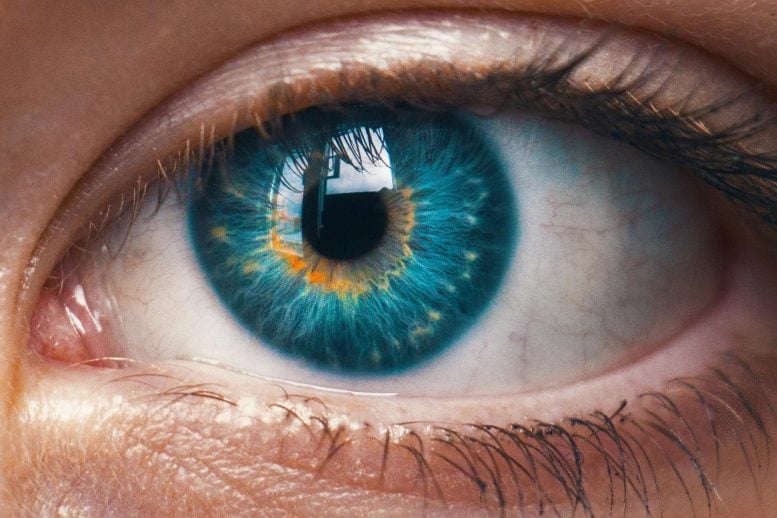
    Eye Pupil Macro
    New research indicates that a person’s pupils can serve as an indicator of past traumatic experiences.

    Study shows how traumatic experiences can leave their mark on a person’s eyes.

    New research by Welsh academics shows that a patient’s pupils can reveal if they have suffered a traumatic experience in the past.

    Post-traumatic stress disorder can occur when a person has experienced a traumatic event such as a car crash, combat stress, or abuse. They can be left with a greater sensitivity, or hyperarousal, to everyday events and an inability to switch off and relax.

    The research, led by Dr. Aimee McKinnon at Cardiff University and published in the journal Biological Psychology, looked for traces of these traumatic events in the eyes of patients who were suffering from PTSD by measuring the pupil of the eye while participants were shown threatening images such as vicious animals or weapons, as well as other images that showed neutral events, or even pleasant images.

    The response of people with PTSD was different to other people, including people who had been traumatized but did not have PTSD.

    At first, the pupil failed to show the normal sharp constriction that is caused by changes in light level — but then their pupils grew even larger to the emotional stimuli than for the other participants.

    Another unexpected result was that pupils of the patients with PTSD not only showed an exaggerated response to threatening stimuli, but also to stimuli that depicted “positive” images, such as exciting sports scenes.

    Swansea University’s Professor Nicola Gray, who co-authored the paper along with Professor Robert Snowden of Cardiff University, believes this is an important finding.

    She said: “This shows that the hyper-response of the pupil is in response to any arousing stimulus, and not just threatening ones. This may allow us to use these positive pictures in therapy, rather than relying upon negative images, that can be quite upsetting to the patient, and therefore make therapy more acceptable and bearable. This idea now needs testing empirically before it is put into clinical practice.”

    Dr. McKinnon, who is now at Oxford University, added: “These findings allow us to understand that people with PTSD are automatically primed for threat and fear responses in any uncertain emotional context, and to consider what a burden this must be to them in everyday life.

    “It also suggests that it is important for us to recognize that, in therapy, it is not just the fear-based stimuli that need deliberately re-appraising.

    “If someone with PTSD is faced with any high level of emotional stimulation, even if this is a positive emotion, it can immediately trigger the threat system. Clinicians need to understand this impact of positive stimuli in order to support their service users overcome the significant challenges they face.”

    Reference: “Enhanced emotional response to both negative and positive images in post-traumatic stress disorder: Evidence from pupillometry” by Aimee I. Mckinnon, Nicola S. Gray and Robert J. Snowden, 18 June 2020, Biological Psychology.
    DOI: 10.1016/j.biopsycho.2020.107922

    Never miss a breakthrough: Join the SciTechDaily newsletter.
    Follow us on Google and Google News.

    Behavioral Science Eyes Injury Popular Psychology PTSD Stress Swansea University
    Share. Facebook Twitter Pinterest LinkedIn Email Reddit

    Related Articles

    No, Stress Isn’t Always Bad. Here’s How To Harness It To Enhance Performance

    Science Shows Attractiveness Pays Off at Work – But There’s a Trick To Level the Playing Field

    Research Reveals a Quarter of Adults Don’t Want Children – And They’re Still Happy

    A Simple Trick Can Help Couples Weather COVID-19 Pandemic-Related Stress

    People More Afraid of Catching COVID-19 Are More Judgmental

    Narcissism Linked to Aggression – Study Found Relationship “Across the Board” All Over the World

    The Mystery of Playing With Fear: Psychology Researchers Investigate Haunted Houses

    Sexting Isn’t Just About Sex – Surprising New Research Shows 3 Main Motivations

    Controversial Psychiatry Change Could See Bereavement as a Disease

    Leave A Reply Cancel Reply

    • Facebook
    • Twitter
    • Pinterest
    • YouTube

    Don't Miss a Discovery

    Subscribe for the Latest in Science & Tech!

    Trending News

    Scientists Recreate a Nuclear Fireball and Uncover Fallout’s Hidden Chemistry

    These Tiny Gut Particles Could Be Accelerating Aging Throughout the Body

    Doctors Changed One Thing and Weight Gain Stopped

    Magnetic Fields May Solve a Longstanding Binary Star Mystery

    The Probiotic Breakthrough for Natural Anxiety Relief and Better Mental Health

    Animal vs. Plant Protein: Scientists Found a Surprising Nutritional Difference

    According to Scientists, This Simple Dietary Change Is Linked to Lower Depression Scores

    Researchers Discover a Hidden Vitamin D Problem That Persists Year-Round

    Follow SciTechDaily
    • Facebook
    • Twitter
    • YouTube
    • Pinterest
    • Newsletter
    • RSS
    SciTech News
    • Biology News
    • Chemistry News
    • Earth News
    • Health News
    • Physics News
    • Science News
    • Space News
    • Technology News
    Recent Posts
    • Scientists Tracked 4,500 Animals During COVID – What They Discovered Was Surprising
    • Hidden Phase of Matter Finally Captured After Decades of Predictions
    • The Strange “Spacetime Crystal” That Can Suddenly Turn Into a Black Hole
    • A Hidden Gut Signal May Be Driving Sleep Apnea’s Deadly Heart Risks
    • This AI-Designed “Universal Vaccine” Could Stop Future Pandemics Before They Start
    Copyright © 1998 - 2026 SciTechDaily. All Rights Reserved.
    • Science News
    • About
    • Contact
    • Editorial Board
    • Privacy Policy
    • Terms of Use

    Type above and press Enter to search. Press Esc to cancel.