
Close Menu
    Facebook X (Twitter) Instagram
    SciTechDaily
    • Biology
    • Chemistry
    • Earth
    • Health
    • Physics
    • Science
    • Space
    • Technology
    Facebook X (Twitter) Pinterest YouTube RSS
    SciTechDaily
    Home»Chemistry»Scientist Warn: Toxic Chromium Could Form in Drinking Water Pipes
    Chemistry

    Scientist Warn: Toxic Chromium Could Form in Drinking Water Pipes

    By American Chemical SocietyOctober 3, 20204 Comments3 Mins Read
    Facebook Twitter Pinterest Telegram LinkedIn WhatsApp Email Reddit
    Share
    Facebook Twitter LinkedIn Pinterest Telegram Email Reddit
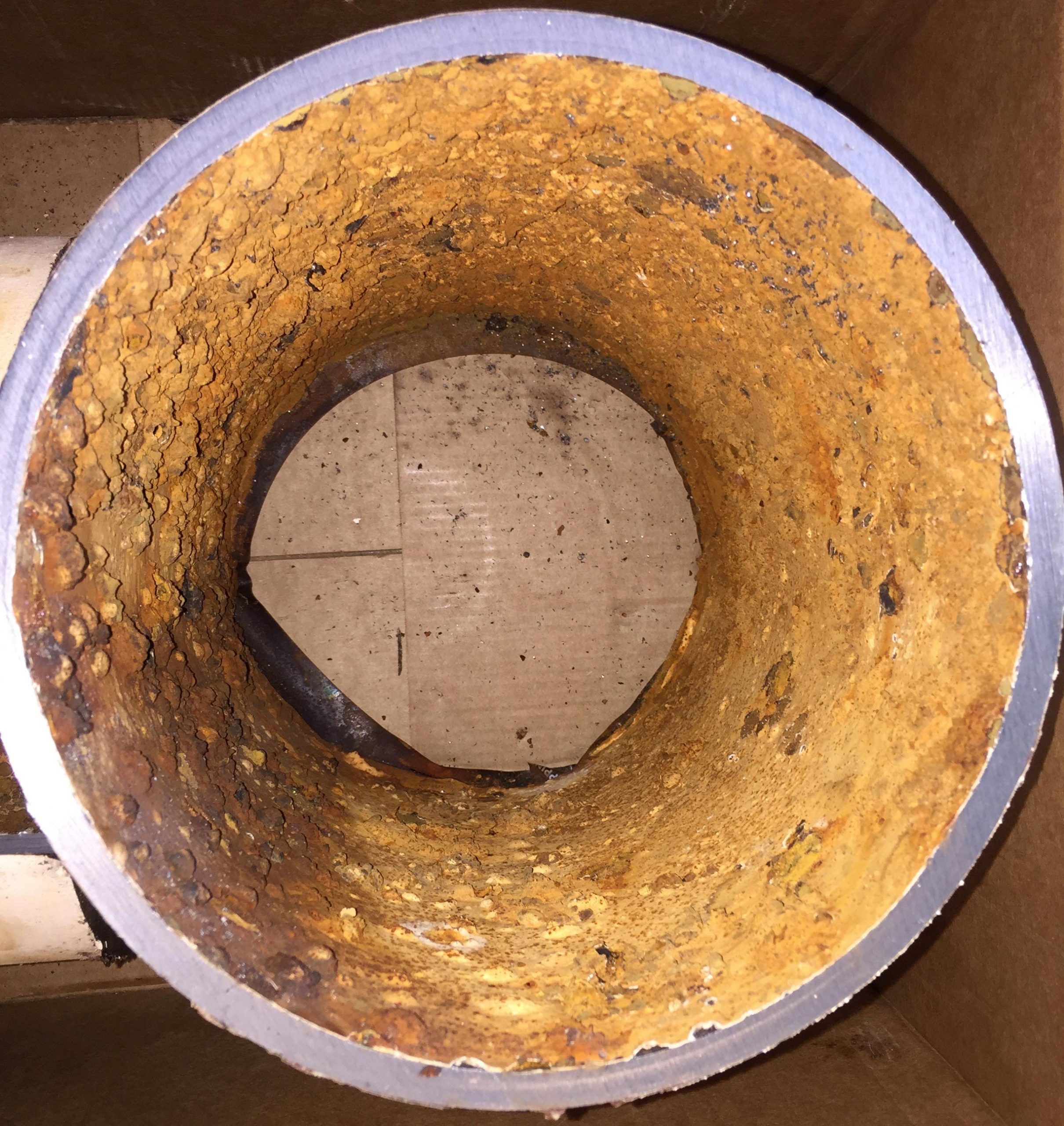
    Scale Inside Cast Iron Alloy Pipe
    Scale on the inside of cast iron alloy pipes can react with residual disinfectant in the water to release Cr(VI). Credit: Adapted from Environmental Science & Technology 2020, DOI: 10.1021/acs.est.0c03922

    The water crisis in Flint, Michigan, brought much-needed attention to the problem of potentially toxic metals being released from drinking water distribution pipes when water chemistry changes. Now, researchers reporting in ACS’ Environmental Science & Technology have investigated how hexavalent chromium, known as Cr(VI), can form in drinking water when corroded cast iron pipes interact with residual disinfectant. Their findings could suggest new strategies to control Cr(VI) formation in the water supply.

    The metal chromium, known as Cr(0), is found in cast iron alloy, which is the most widely used plumbing material in water distribution systems. As pipes corrode, a buildup of deposits, known as scale, forms on the pipes’ inner walls. Trace chemicals in water can react with scale, forming new compounds that could be released into the water. Some of these compounds contain Cr(VI), which, at high doses, can cause lung cancer, liver damage, reproductive issues, and developmental problems.

    In 2014, California set a drinking water standard of 10 μg/L Cr(VI), but the guideline was later withdrawn because no economically feasible treatment to remove Cr(VI) from tap water existed. Haizhou Liu and colleagues wanted to find out how exactly Cr(VI) makes its way into drinking water, which might reveal new ways to prevent its formation.

    The researchers collected two sections of cast iron pipe from two drinking water distribution systems in the U.S.: one from a system using groundwater with naturally high Cr(VI) levels (11-24 μg/L), and the other from a system using surface water with undetectable Cr(VI). The team scraped off scale from the pipes and analyzed its composition. The levels of total Cr were about 18 times higher in the first pipe than in the second. In both pipes, chromium existed in two oxidation states, Cr(0) and Cr(III).

    When the researchers added a chlorine- or bromine-containing disinfectant to the scale, it quickly reacted with Cr(0), rather than Cr(III) as previously suspected, to form Cr(VI). To help mitigate Cr(VI) levels, adding less-reactive disinfectants to treat drinking water could be explored, and cast iron pipes with chromium alloy should be used with caution, the researchers say.

    Reference: “Hexavalent Chromium Release in Drinking Water Distribution Systems: New Insights into Zerovalent Chromium in Iron Corrosion Scales” by Cheng Tan, Sumant Avasarala and Haizhou Liu, 30 September 2020, Environmental Science & Technology.
    DOI: 10.1021/acs.est.0c03922

    The authors acknowledge funding from the National Science Foundation.

    Never miss a breakthrough: Join the SciTechDaily newsletter.
    Follow us on Google and Google News.

    American Chemical Society Popular Public Health Toxicology Water
    Share. Facebook Twitter Pinterest LinkedIn Email Reddit

    Related Articles

    New Research Exposes Shocking Health Risks of Chemicals Found in Popular Everyday Products

    Are Plastic Water Bottles Safe? New Study Sparks Concern Over VOCs

    Want Fewer Microplastics in Your Tap Water? Try This Simple Tip

    Double-Duty: New Catalyst Generates Hydrogen Fuel While Cleaning Up Wastewater

    Swimming Pools Contain Dangerous Chlorine Disinfection Byproducts – Here’s How to Make Them Safer

    Disinfected by the Sun: New Cotton Face Mask Kills Up to 99.9999% of Bacteria and Viruses in Daylight

    You’re Using Disinfectants Wrong. Here’s How to Destroy 99.9% of Viruses/Coronaviruses and Bacteria [Video]

    Does Soap Actually ‘Kill’ the Coronavirus? Here’s the Chemistry [Video]

    Researchers Unearth a ‘Ticking Time Bomb’ – Synthetic Chemicals in Soils

    4 Comments

    1. Bill Simpson on October 3, 2020 12:53 pm

      Don’t you wish this was the most threatening thing you had to worry about?

      Reply
    2. :( on October 4, 2020 9:08 am

      Just imagine what they don’t report…

      Reply
    3. stephen schaffer on October 4, 2020 9:13 am

      “In 2014, California set a drinking water standard of 10 μg/L Cr(VI), but the guideline was later withdrawn because no economically feasible treatment to remove Cr(VI) from tap water existed.”
      Fascinating! There’s a deadly problem but it will cost “too much” to remedy. An example of outstanding intellectual ability to obfuscate. But, not smart public health for the unfortunate community.
      Yikes!

      Reply
    4. kamir bouchareb st on March 7, 2025 2:58 pm

      what is this

      Reply
    Leave A Reply Cancel Reply

    • Facebook
    • Twitter
    • Pinterest
    • YouTube

    Don't Miss a Discovery

    Subscribe for the Latest in Science & Tech!

    Trending News

    The Universe Is Expanding Too Fast and Scientists Can’t Explain Why

    “Like Liquid Metal”: Scientists Create Strange Shape-Shifting Material

    Early Warning Signals of Esophageal Cancer May Be Hiding in Plain Sight

    Common Blood Pressure Drug Shows Surprising Power Against Deadly Antibiotic-Resistant Superbug

    Scientists Uncover Dangerous Connection Between Serotonin and Heart Valve Disease

    Scientists Discover a “Protector” Protein That Could Help Reverse Hair Loss

    Bone-Strengthening Discovery Could Reverse Osteoporosis

    Scientists Uncover Hidden Trigger Behind Stem Cell Aging

    Follow SciTechDaily
    • Facebook
    • Twitter
    • YouTube
    • Pinterest
    • Newsletter
    • RSS
    SciTech News
    • Biology News
    • Chemistry News
    • Earth News
    • Health News
    • Physics News
    • Science News
    • Space News
    • Technology News
    Recent Posts
    • The Simple Habit That Could Help Prevent Cancer
    • Forgotten Medicinal Plant Shows Promise in Fighting Dangerous Superbugs
    • Millions Take These IBS Drugs, But a New Study Finds Serious Risks
    • 5 Common Myths About Learning a New Language, Debunked
    • The Neanderthal “Love Story” Isn’t What It Seems
    Copyright © 1998 - 2026 SciTechDaily. All Rights Reserved.
    • Science News
    • About
    • Contact
    • Editorial Board
    • Privacy Policy
    • Terms of Use

    Type above and press Enter to search. Press Esc to cancel.