
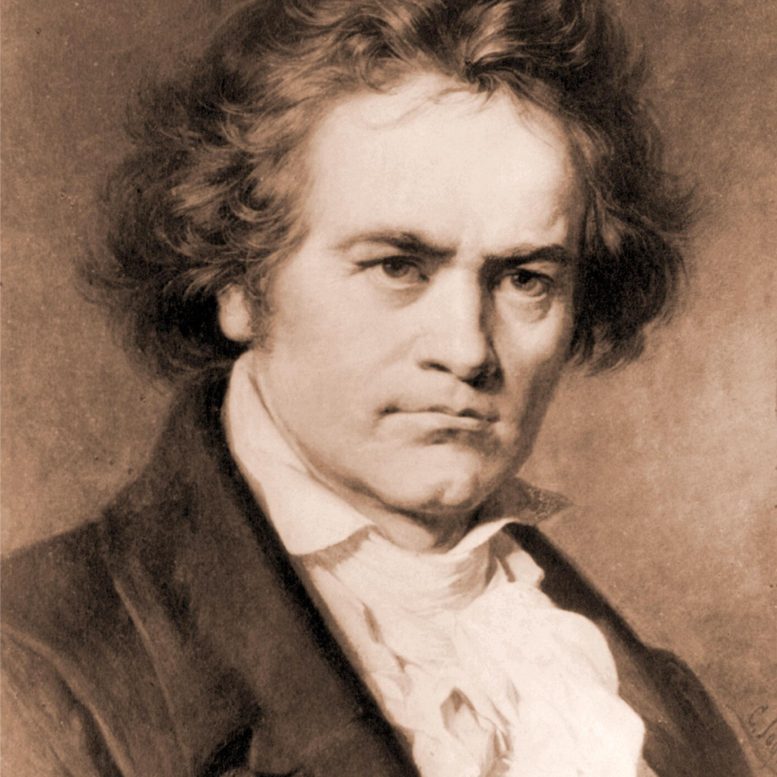
Beethoven’s DNA analysis revealed liver disease and hepatitis B factors but no cause for his deafness. A surprising extrapair paternity event was uncovered in his paternal lineage.
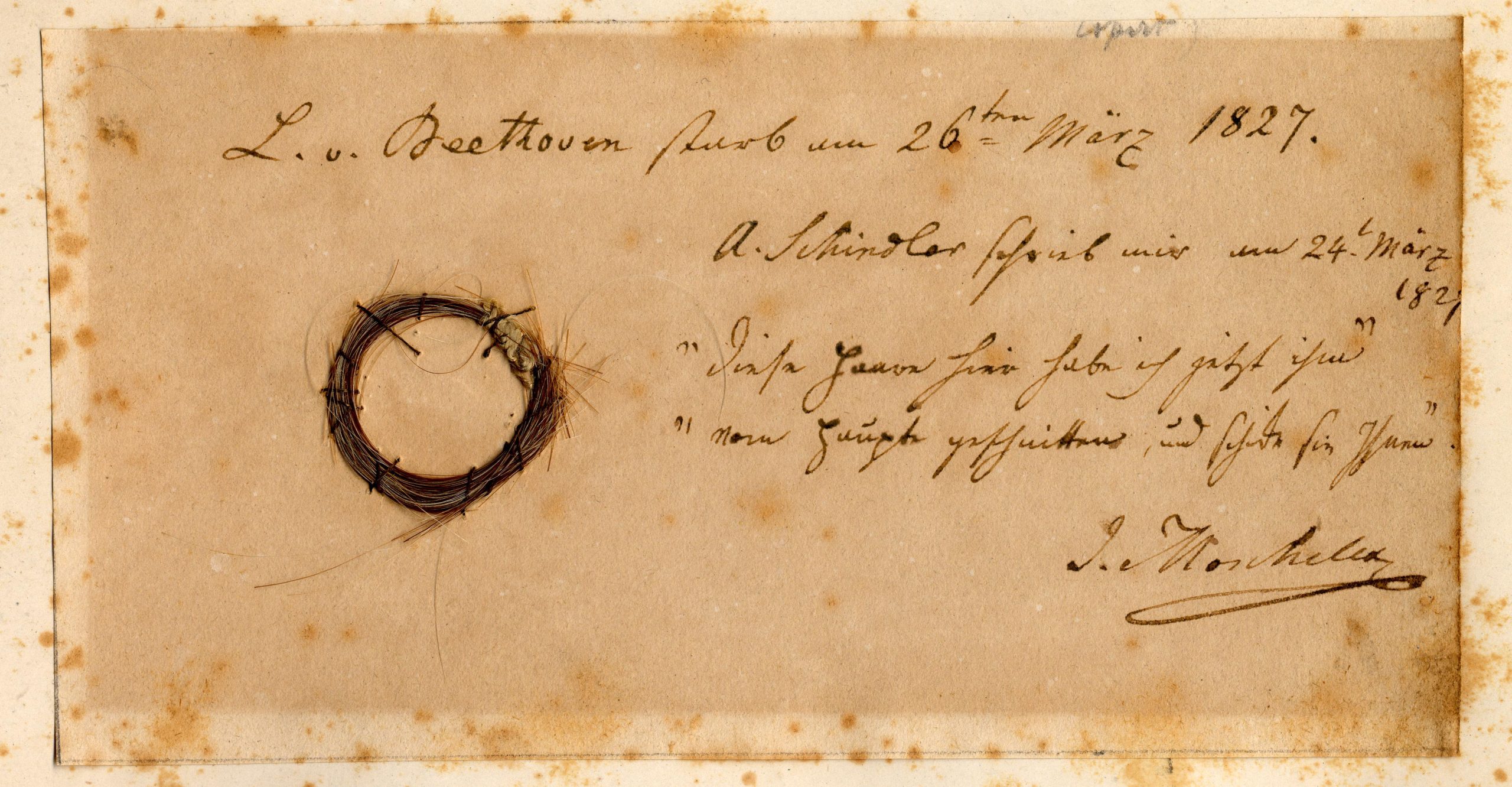
In 1802, Ludwig van Beethoven asked his brothers to request that his doctor, J.A. Schmidt, describe his malady—his progressive hearing loss—to the world upon his death so that “as far as possible at least the world will be reconciled to me after my death.” Now, more than two centuries later, a team of researchers reporting in the journal Current Biology on March 22 has partially fulfilled his wish by analyzing DNA they lifted and pieced together from locks of his hair.
“Our primary goal was to shed light on Beethoven’s health problems, which famously include progressive hearing loss, beginning in his mid- to late-20s and eventually leading to him being functionally deaf by 1818,” said Johannes Krause from the Max Planck Institute for Evolutionary Anthropology in Leipzig, Germany.
“We were unable to find a definitive cause for Beethoven’s deafness or gastrointestinal problems,” Krause says. “However, we did discover a number of significant genetic risk factors for liver disease. We also found evidence of an infection with the hepatitis B virus in at latest the months before the composer’s final illness. Those likely contributed to his death.”
An Unexpected Discovery: Extrapair Paternity
As commonly happens when people analyze DNA, the researchers uncovered another surprise. Beethoven’s Y chromosome doesn’t match that of any of five modern-day relatives carrying the same last name and sharing, on the basis of genealogical records, a common ancestor with Beethoven’s paternal line. The finding points to an extramarital “event” somewhere over the generations on Beethoven’s father’s side.
“This finding suggests an extrapair paternity event in his paternal line between the conception of Hendrik van Beethoven in Kampenhout, Belgium in c.1572 and the conception of Ludwig van Beethoven seven generations later in 1770, in Bonn, Germany,” says Tristan Begg, now at the University of Cambridge, U.K.
The idea for the work was conceived by Begg and study co-author William Meredith almost a decade ago. They were motivated by Beethoven’s request for postmortem studies to describe his illness and make it public. In the new study, the team, also including Toomas Kivisild of Katholieke Universiteit Leuven in Belgium, relied on recent improvements in ancient DNA analysis; these improvements have enabled whole-genome sequencing from small quantities of historical hair.
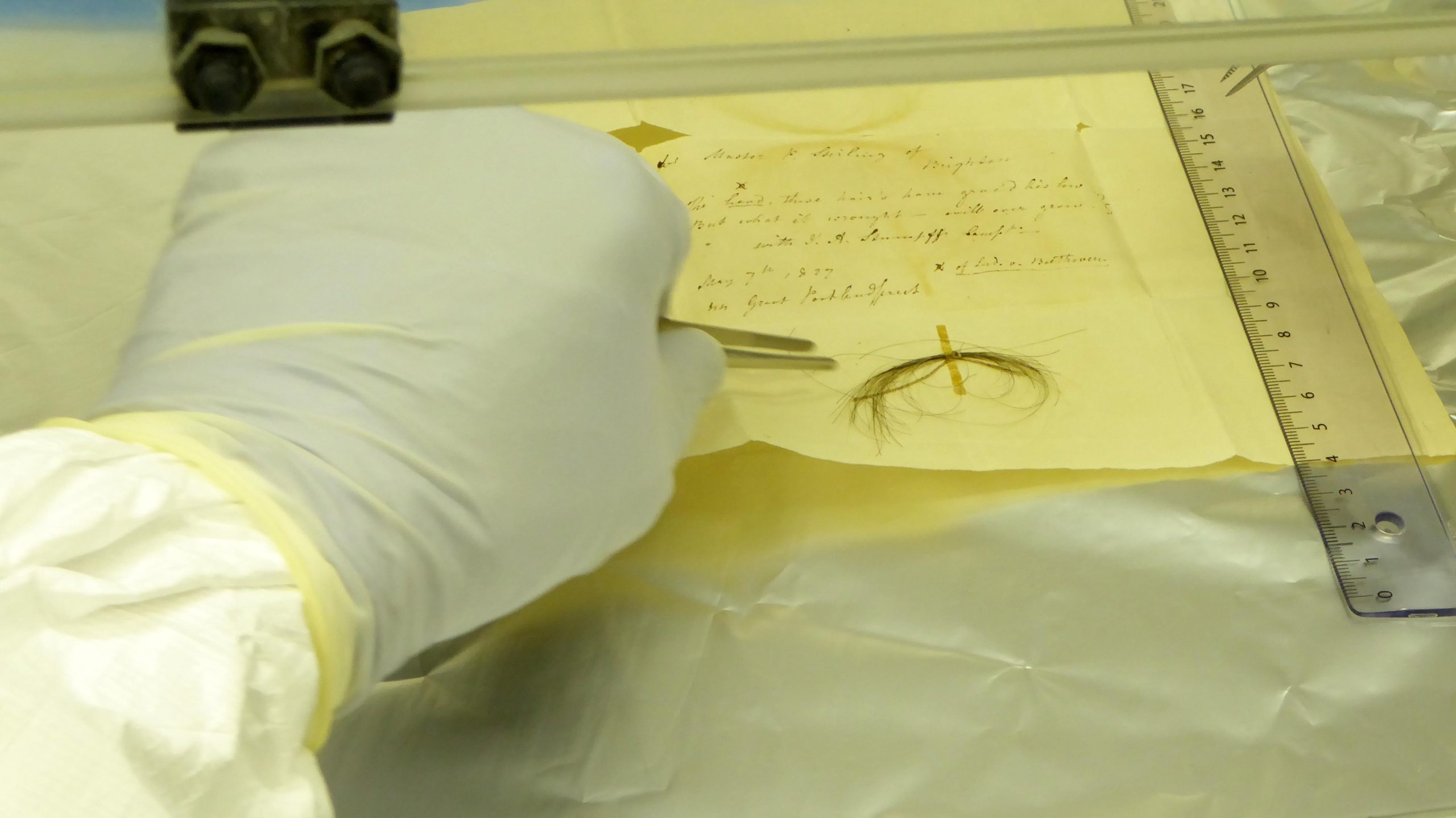
First, they analyzed independently sourced locks of hair attributed to Beethoven, only five of which they confirmed came from the same European male. They deemed these five to be “almost certainly authentic” and used them to sequence Beethoven’s genome to 24-fold genomic coverage.
Reevaluating Past Theories About Beethoven’s Health
Medical biographers had earlier suggested that Beethoven had many substantially heritable health conditions. But the researchers in this study couldn’t find in his genome an explanation for Beethoven’s hearing disorder or gastrointestinal problems. They did find that he was genetically predisposed to liver disease.
Further study of other DNA in his samples suggested that he also had a hepatitis B infection at least during the months leading up to his death. “Together with the genetic predisposition and his broadly accepted alcohol consumption, these present plausible explanations for Beethoven’s severe liver disease, which culminated in his death,” they write.
The researchers note that previous analyses suggesting that Beethoven had lead poisoning turned out to have been based on a sample that wasn’t Beethoven’s at all; instead, it came from a female. Future studies testing for lead, opiates, and mercury must be based on authenticated samples, they say.
The DNA extracted from Beethoven’s hair is genetically most similar to that of people living in present-day North Rhine-Westphalia, consistent with Beethoven’s known German ancestry, Begg says. Future studies of Beethoven’s samples collected over time might help to clarify when he got infected with hepatitis B. Meanwhile, more studies of his close relatives might help to clarify his biological relationship to modern decedents of the Beethoven family.
Reference: “Genomic analyses of hair from Ludwig van Beethoven” by Tristan James Alexander Begg, Axel Schmidt, Arthur Kocher, Maarten H.D. Larmuseau, Göran Runfeldt, Paul Andrew Maier, John D. Wilson, Rodrigo Barquera, Carlo Maj, András Szolek, Michael Sager, Stephen Clayton, Alexander Peltzer, Ruoyun Hui, Julia Ronge, Ella Reiter, Cäcilia Freund, Marta Burri, Franziska Aron, Anthi Tiliakou, Joanna Osborn, Doron M. Behar, Malte Boecker, Guido Brandt, Isabelle Cleynen, Christian Strassburg, Kay Prüfer, Denise Kühnert, William Rhea Meredith, Markus M. Nöthen, Robert David Attenborough, Toomas Kivisild and Johannes Krause, 22 March 2023, Current Biology.
DOI: 10.1016/j.cub.2023.02.041
This work was supported by the American Beethoven Society and the Hugh Stuart Center Charitable Trust.
Never miss a breakthrough: Join the SciTechDaily newsletter.
Follow us on Google and Google News.