
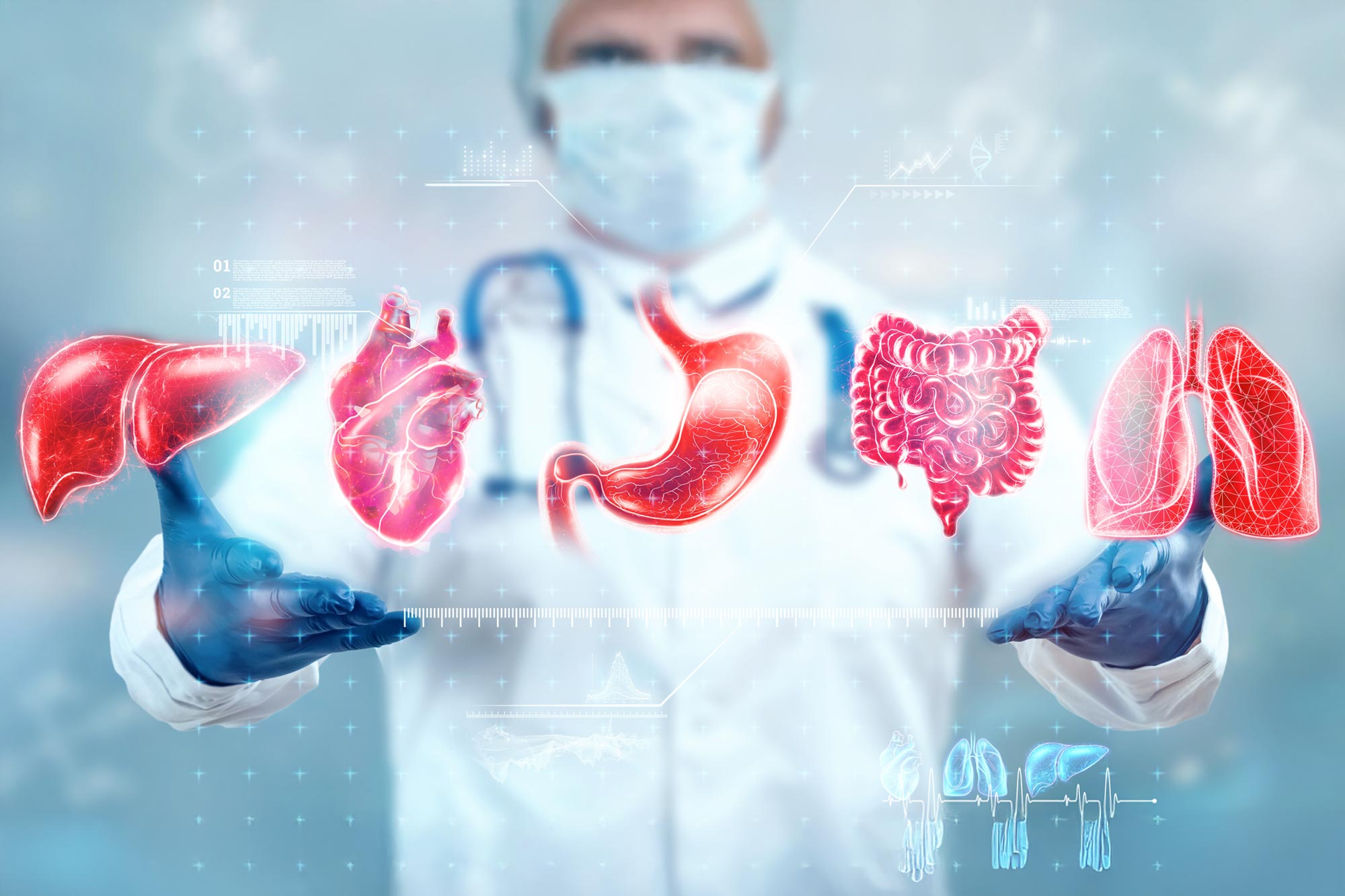
Scientists have developed a blood test that estimates the biological age of individual organs, offering a new way to gauge future disease risk.
Your body is not aging as a single unit. While your driver’s license may say you’re 50, your brain could resemble that of someone much older, while your heart or kidneys remain comparatively young.
Scientists are increasingly finding that each organ follows its own biological clock, and those hidden differences may determine not only which diseases you develop but also how long you live.
A new Stanford Medicine study found that a blood test can estimate the biological age of 11 major organs and organ systems. The researchers showed that unusually “old” organs were linked to a higher risk of developing diseases years later, with brain age emerging as one of the strongest predictors of both Alzheimer’s disease and overall mortality.
“We’ve developed a blood-based indicator of the age of your organs,” said Tony Wyss-Coray, PhD, professor of neurology and neurological sciences and director of the Knight Initiative for Brain Resilience at the Wu Tsai Neurosciences Institute. “With this indicator, we can assess the age of an organ today and predict the odds of your getting a disease associated with that organ 10 years later.”
The method can also identify people with a higher chance of dying from conditions tied to one or more of the 11 organ systems examined in the study: brain, muscle, heart, lung, arteries, liver, kidneys, pancreas, immune system, intestine and fat.
One organ’s biological age appears to matter especially strongly for lifespan. Wyss-Coray said the brain plays a central role in how long someone is likely to live.
“The brain is the gatekeeper of longevity,” he said. “If you’ve got an old brain, you have an increased likelihood of mortality. If you’ve got a young brain, you’re probably going to live longer.”
Wyss-Coray, the D. H. Chen Professor II, is the senior author of the study, published in Nature Medicine. Hamilton Oh, PhD, a former graduate student in Wyss-Coray’s group, is the lead author.

Eleven organ systems, 3,000 proteins, 45,000 people
The study analyzed 44,498 randomly chosen UK Biobank participants between ages 40 and 70. UK Biobank is a long-running health research project that has gathered repeated blood samples and updated medical records from about 600,000 people over multiple years. Participants in this study were followed for as long as 17 years to track changes in their health.
Wyss-Coray’s group used an advanced commercial lab technology to measure nearly 3,000 proteins in each person’s blood. About 15% of those proteins could be traced to a single organ, while many others were linked to more than one organ source.
The researchers entered the blood protein measurements into a computer model. The model calculated typical levels of organ-specific proteins for people at each age, then compared each participant’s protein pattern with the average for people of the same age.
From those comparisons, the team created an algorithm that estimated a biological age for each of the 11 organs or organ systems. The algorithm also measured how far each organ’s protein pattern in a given person differed from the age-adjusted average. These protein patterns acted as indicators of each organ’s relative biological condition. When an organ’s score differed from the average by more than 1.5 standard deviations, it was placed in the “extremely aged” or “extremely youthful” category.
About one-third of participants had at least one organ that differed from the average by 1.5 standard deviations or more. The investigators classified those organs as “extremely aged” or “extremely youthful.” One quarter of participants had more than one organ in one of those extreme categories.
For the brain, an “extremely aged” score meant falling within the 6% to 7% of participants whose brain protein signatures were at one end of the biological age distribution. “Extremely youthful” brains were in the 6% to 7% at the opposite end.
Health outcomes foretold
The algorithm was also able to predict future health risks by linking an organ’s current biological age to later disease. Wyss-Coray and his colleagues examined whether extremely aged organs were associated with any of 15 disorders, including Alzheimer’s disease, Parkinson’s disease, chronic liver disease, chronic kidney disease, Type 2 diabetes, two heart conditions, two lung diseases, rheumatoid arthritis, osteoarthritis, and others.
Several disease risks were influenced by the biological age of multiple organs. Still, the clearest links appeared when an organ was biologically old, and the later disease involved that same organ. An extremely aged heart was tied to higher risk of atrial fibrillation or heart failure. Biologically older lungs were linked to greater risk of chronic obstructive pulmonary disease (COPD). An older brain was linked to higher risk of Alzheimer’s disease.
The connection between an extremely aged brain and later Alzheimer’s disease was especially strong. People with biologically old brains had 3.1 times the Alzheimer’s risk of people whose brains were aging normally. An extremely youthful brain was strongly protective, with only about one-fourth the Alzheimer’s risk seen in people with normally aged brains.
Put another way, a person with a biologically old brain was about 12 times more likely to receive a new Alzheimer’s diagnosis over the next decade or so than someone the same age with a biologically young brain.
Wyss-Coray also said brain age was the strongest single predictor of overall mortality. Participants with extremely aged brains had a 182% higher risk of dying over about 15 years. Those with extremely youthful brains had a 40% lower risk of dying over the same period.
Predicting the disease, then preventing it
“This approach could lead to human experiments testing new longevity interventions for their effects on the biological ages of individual organs in individual people,” Wyss-Coray said.
For example, medical researchers may be able to use extreme brain age as an early warning sign for Alzheimer’s disease risk. That could allow intervention before clear symptoms appear, when there may still be time to slow or stop the disease process, Wyss-Coray said.
Clinical trials that carefully track lifestyle, diet, and prescribed or supplemental substances, while also measuring organ age, could help reveal how those factors affect the aging of different organs. Wyss-Coray added that the same approach could also test whether already approved drugs can restore a more youthful organ profile before someone develops a disease linked to that organ’s advanced biological age.
“This is, ideally, the future of medicine,” he said. “Today, you go to the doctor because something aches, and they take a look to see what’s broken. We’re trying to shift from sick care to health care and intervene before people get organ-specific disease.”
In a study published June 15, 2026, also in Nature Medicine, Wyss-Coray and his colleagues extended the work further. They showed that biological age can be measured not only in organs, but also in individual cell types within those organs.
That newer study revealed unexpected biological links and possible improvements in diagnosis. For example, it found evidence that people with two copies of the APOE4 genotype in their genomes (who are at extremely high risk for Alzheimer’s disease) tend to have biologically older astrocytes, which are important support cells in the brain. But among people with two APOE4 copies whose astrocytes appear more youthful, the heightened risk is effectively neutralized.
The same study also produced a surprising finding about immune cells. People with two APOE4 copies in their genomes (and, consequently, a generally more aged astrocyte profile) tended to have youthful macrophages, which are immune cells that help fight pathogens and repair damaged tissue.
For amyotrophic lateral sclerosis, the study found that the condition occurred 12.7 times more often in people with an aged skeletal muscle cell profile than in people whose muscle cells were classified as youthful. That difference could be detected more than three years before a diagnosis based on symptoms. If confirmed in future research, the finding could help support a much earlier diagnostic test for ALS.
For now, the analytical tool is available only for research. Wyss-Coray plans to commercialize it. He is a cofounder and scientific officer of Teal Omics and Vero Bioscience, two companies that have licensed related Stanford technology through Stanford University’s Office of Technology Licensing. The companies are working toward commercial uses that include screens for new drug targets and a consumer product.
Wyss-Coray said the test could become available in the next two to three years. “The cost will come down as we focus on fewer key organs, such as the brain, heart, and immune system, to get more resolution and stronger links to specific diseases.”
References:
“Plasma proteomic signatures of cellular aging predict human disease” by Daisy Yi Ding, Veronica Augustina Bot, Kenneth L. Chen, James W. Groves, Róbert Pálovics, Daisuke Masuda, Amelia Farinas, Hamilton Se-Hwee Oh, Viktoria Wagner, Nannan Lu, The Global Neurodegeneration Proteomics Consortium (GNPC), Carlos Cruchaga, Alina Isakova, Jonathan M. Schott and Tony Wyss-Coray, 15 June 2026, Nature Medicine.
DOI: 10.1038/s41591-026-04446-y
“Plasma proteomics links brain and immune system aging with healthspan and longevity” by Hamilton Se-Hwee Oh, Yann Le Guen, Nimrod Rappoport, Deniz Yagmur Urey, Amelia Farinas, Jarod Rutledge, Divya Channappa, Anthony D. Wagner, Elizabeth Mormino, Anne Brunet, Michael D. Greicius and Tony Wyss-Coray, 9 July 2025, Nature Medicine.
DOI: 10.1038/s41591-025-03798-1
The study was funded by the National Institutes of Health (grants P50AG047366 and P30AG066515), the Milky Way Foundation, the Knight Initiative for Brain Resilience and the Stanford Alzheimer’s Disease Research Center.
Never miss a breakthrough: Join the SciTechDaily newsletter.
Follow us on Google and Google News.
1 Comment
How can I become part of the testing ? I’m already experiencing some short- term memory loss episodes, and would like to take part in this earlier detection, possible prevention research.tell me what criteria I need to meet to be a candidate; thank you.