
Close Menu
    Facebook X (Twitter) Instagram
    SciTechDaily
    • Biology
    • Chemistry
    • Earth
    • Health
    • Physics
    • Science
    • Space
    • Technology
    Facebook X (Twitter) Pinterest YouTube RSS
    SciTechDaily
    Home»Technology»A Simple Brain Scan May Help Restore Movement After Paralysis
    Technology

    A Simple Brain Scan May Help Restore Movement After Paralysis

    By American Institute of PhysicsJanuary 20, 2026No Comments4 Mins Read
    Facebook Twitter Pinterest Telegram LinkedIn WhatsApp Email Reddit
    Share
    Facebook Twitter LinkedIn Pinterest Telegram Email Reddit
    Woman EEG Brain Scan Test
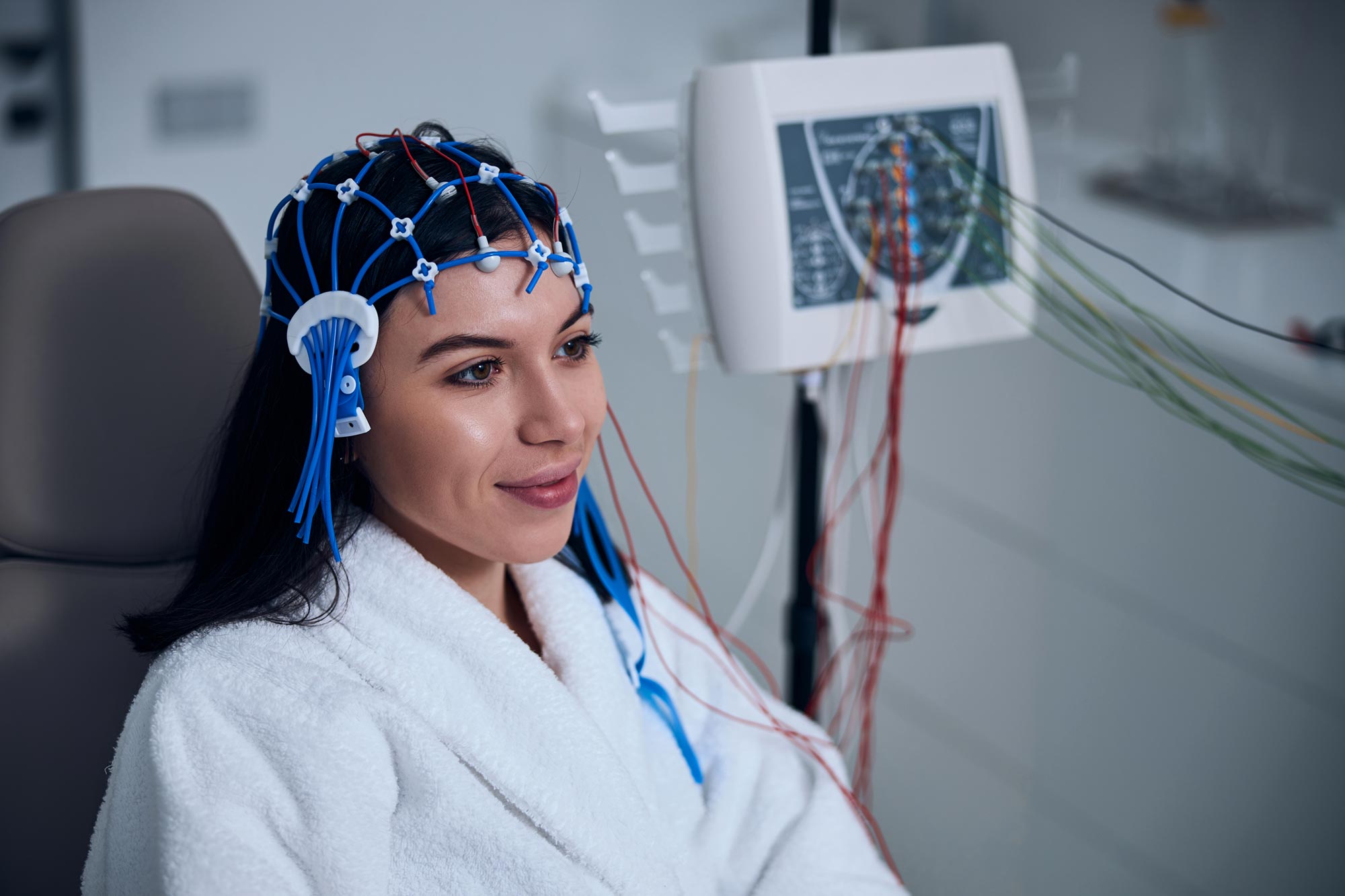
    Researchers are testing whether simple EEG headsets can read the brain’s “move” signals and send them past spinal cord injuries to restore movement. The technology isn’t perfect yet, but it may offer a safer, noninvasive path toward walking again. Credit: Shutterstock

    A brain cap and smart algorithms may one day help paralyzed patients turn thought into movement—no surgery required.

    People with spinal cord injuries often experience partial or complete loss of movement in their arms or legs. In many cases, the nerves in the limbs themselves still function, and the brain continues to produce normal signals. The problem is the injury to the spinal cord, which blocks communication between the brain and the rest of the body.

    Researchers are now exploring ways to reconnect those signals without repairing the spinal cord itself.

    Using Brain Scans to Capture Movement Intent

    In a study published today (January 20) in APL Bioengineering by AIP Publishing, scientists from universities in Italy and Switzerland examined whether electroencephalography (EEG) could help link brain activity to limb movement. Their work focused on testing whether this noninvasive technology could read the brain’s movement signals and make them useful again.

    When someone attempts to move a paralyzed limb, their brain still produces the same electrical patterns associated with that action. If these signals can be detected and interpreted, they could be sent to a spinal cord stimulator, which may then activate the nerves responsible for movement in that limb.
    EEG Monitoring Device Brain Signals Spinal Cord Stimulator
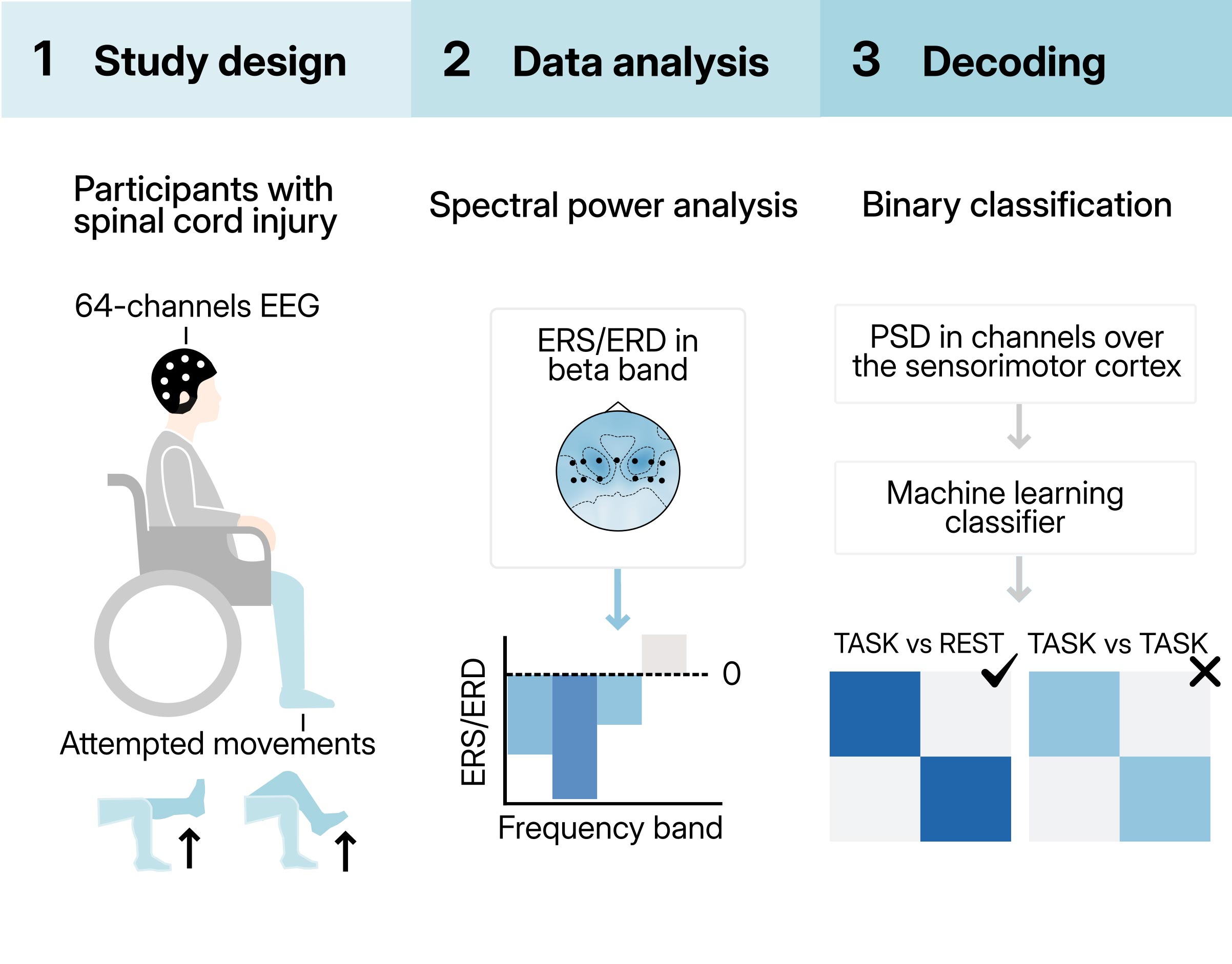
    Scientists in Italy and Switzerland are exploring a new way to help people with spinal cord injuries move again—without brain surgery. Their idea is to use EEG headsets, which read brain activity from the scalp, to capture the signals the brain still sends when someone tries to move a paralyzed limb. Credit: Toni et al.

    Why Avoid Brain Implants

    Much of the earlier research in this field has relied on surgically implanted electrodes to read movement-related signals directly from the brain. Although those systems have shown promise, the researchers wanted to see if EEG could offer a safer alternative.

    EEG systems are worn as caps fitted with multiple electrodes that record brain activity from the scalp. While they may appear complex or intimidating, the researchers argue that they are far less risky than implanting hardware into the brain or spinal cord.

    “It can cause infections; it’s another surgical procedure,” said author Laura Toni. “We were wondering whether that could be avoided.”
    Noninvasive Brain Scanning Could Send Signals to Paralyzed Limbs
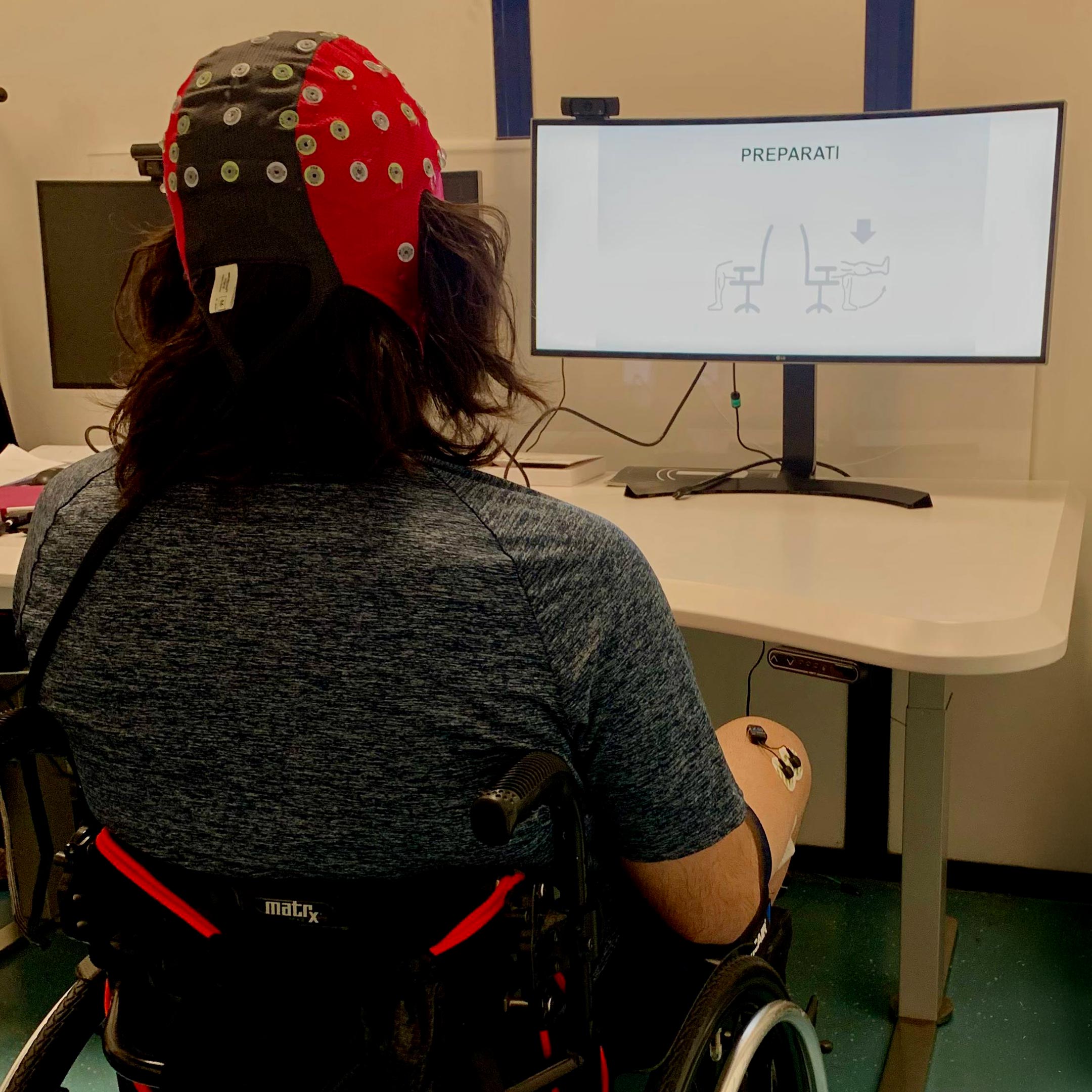
    Signals from an EEG monitoring device could be used to send brain signals to a spinal cord stimulator, helping paralyzed patients control their limbs more effectively. Credit: Laura Toni

    Limits of EEG Technology

    Reading movement signals through EEG presents significant technical challenges. Because the electrodes sit on the surface of the head, they have difficulty detecting activity that originates deeper inside the brain. This limitation affects some movements more than others.

    Signals related to arm and hand motion are easier to detect because they originate closer to the outer regions of the brain. Movements involving the legs and feet are harder to decode because those signals come from areas located deeper and closer to the center.

    “The brain controls lower limb movements mainly in the central area, while upper limb movements are more on the outside,” said Toni. “It’s easier to have a spatial mapping of what you’re trying to decode compared to the lower limbs.”

    Machine Learning Helps Decode Brain Signals

    To make sense of the limited EEG data, the researchers used a machine learning algorithm designed to analyze small and complex datasets. During testing, patients wore EEG caps while attempting simple movements. The team recorded the brain activity produced during these efforts and trained the algorithm to sort and classify the signals.

    The system was able to reliably tell when a person was trying to move versus when they were not. However, it struggled to distinguish between different types of movement attempts.

    What Comes Next

    The researchers believe their approach can be improved with further development. Future work will focus on refining the algorithm so it can identify specific actions such as standing, walking, or climbing. They also hope to explore how these decoded signals could be used to activate implanted stimulators in patients undergoing recovery.

    If successful, this method could move noninvasive brain scanning closer to helping people with spinal cord injuries regain meaningful movement.

    Reference: “Decoding lower-limb movement attempts from electro-encephalographic signals in spinal cord injury patients” by Laura Toni, Valeria De Seta, Luigi Albano, Daniele Emedoli, Aiden Xu, Vincent Mendez, Filippo Agnesi, Sandro Iannaccone, Pietro Mortini, Silvestro Micera and Simone Romeni, 20 January 2026, APL Bioengineering.
    DOI: 10.1063/5.0297307

    Never miss a breakthrough: Join the SciTechDaily newsletter.
    Follow us on Google and Google News.

    American Institute of Physics Biomedical Engineering Biotechnology Neuroscience Physiology
    Share. Facebook Twitter Pinterest LinkedIn Email Reddit

    Related Articles

    Scientists Warn of “Bleak Cyborg Future” From Brain-Computer Interfaces

    Sonothermogenetics Can Control Behavior by Stimulating a Specific Target Deep in the Brain

    Advanced Computer Model Enables Improvements to “Bionic Eye” Technology

    Blind Spots Uncovered at the Intersection of AI and Neuroscience – Dozens of Scientific Papers Debunked

    Fresh 3D-Printing Platform: Advanced Tissue Fabrication Paves Way for Bioprinting Tissues and Organs

    Transforming Nanofiber Membranes Into Complex 3D Shapes for Biomedical Applications

    MIT Develops Soft, Flexible Neural Implants That Can Be 3D Printed on Demand

    Bionic Tactile Enhancement – Highly Sensitive Sensors Inspired by Spiders Improve Sense of Touch

    New Technique Enlarges Tissue Samples, Making Them Easier to Image

    Leave A Reply Cancel Reply

    • Facebook
    • Twitter
    • Pinterest
    • YouTube

    Don't Miss a Discovery

    Subscribe for the Latest in Science & Tech!

    Trending News

    Scientists Discover 132-Million-Year-Old Dinosaur Tracks on South Africa’s Coast

    Scientists Uncover the Secret Ingredient Behind the Spark That May Have Started Life on Earth

    Physicists Observe Matter in Two Places at Once in Mind-Bending Quantum Experiment

    Stanford Scientists Discover Hidden Brain Circuit That Fuels Chronic Pain

    New Study Reveals Why Ozempic Works Better for Some People Than Others

    Climate Change Is Altering a Key Greenhouse Gas in a Way Scientists Didn’t Expect

    New Study Suggests Gravitational Waves May Have Created Dark Matter

    Scientists Discover Why the Brain Gets Stuck in Schizophrenia

    Follow SciTechDaily
    • Facebook
    • Twitter
    • YouTube
    • Pinterest
    • Newsletter
    • RSS
    SciTech News
    • Biology News
    • Chemistry News
    • Earth News
    • Health News
    • Physics News
    • Science News
    • Space News
    • Technology News
    Recent Posts
    • 320 Light-Years Away, a Planet Confirms a Fundamental Cosmic Assumption
    • Astronomers Solve Decades-Long Mystery About Saturn’s Spin – “Something Strange Was Happening”
    • Scientists Uncover Strange New State of Matter Inside Uranus and Neptune
    • The Crown Jewel of Dentistry? Breakthrough Tech Could Transform Tooth Repair
    • The Surprising Non-Medical Factor That Determines Cancer Survival
    Copyright © 1998 - 2026 SciTechDaily. All Rights Reserved.
    • Science News
    • About
    • Contact
    • Editorial Board
    • Privacy Policy
    • Terms of Use

    Type above and press Enter to search. Press Esc to cancel.