
Close Menu
    Facebook X (Twitter) Instagram
    SciTechDaily
    • Biology
    • Chemistry
    • Earth
    • Health
    • Physics
    • Science
    • Space
    • Technology
    Facebook X (Twitter) Pinterest YouTube RSS
    SciTechDaily
    Home»Space»Advanced Analysis of Apollo Moon Rock Sample Illuminates Lunar Evolution
    Space

    Advanced Analysis of Apollo Moon Rock Sample Illuminates Lunar Evolution

    By University of Hawaii at ManoaFebruary 9, 2022No Comments3 Mins Read
    Facebook Twitter Pinterest Telegram LinkedIn WhatsApp Email Reddit
    Share
    Facebook Twitter LinkedIn Pinterest Telegram Email Reddit
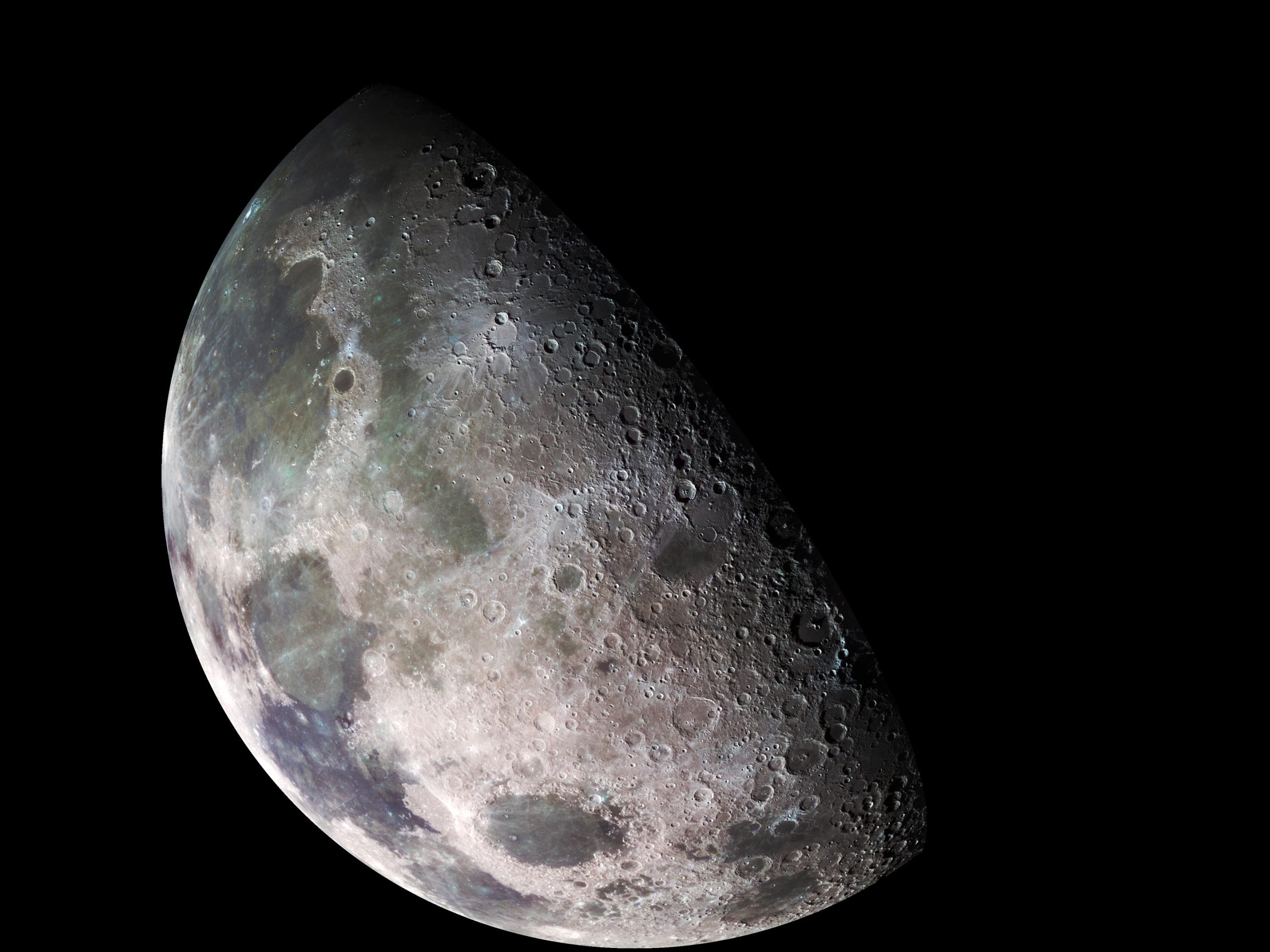
    Galileo North Polar Moon Mosaic
    The Moon. Credit: NASA/JPL/USGS

    New analysis of Apollo 17 Moon rock reveals rapid lunar cooling, challenging previous theories. The findings suggest a re-evaluation of lunar formation processes and demonstrate the value of modern analysis techniques.

    Sophisticated analysis of a rock sample taken from the Moon during the Apollo 17 mission nearly 50 years ago revealed new information about the complex cooling and evolutionary history of the Moon. The findings, from University of Hawaiʻi at Mānoa researchers, were published in Nature Communications.

    Apollo 17 astronauts collected the rock sample troctolite 76535 from the Moon’s surface in 1972, and it remains one of the most scientifically valuable samples of the Moon due to its pristine nature. Further, the rock type is widespread on the Moon and likely contains important clues to understanding lunar formation.
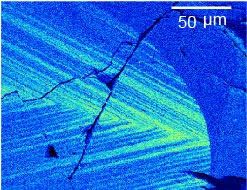
    X-Ray Intensity Map Showing Phosphorus in Olivine
    Phosphorus X-ray intensity map of olivine—displaying both sharp phosphorus heterogeneities, and a truncation, suggesting a dissolution event. Credit: Nelson et al., 2021

    Advanced Imaging, High-Performance Computing

    William Nelson, lead author of the study and Earth sciences graduate student in the UH Mānoa School of Ocean and Earth Science and Technology (SOEST), and co-authors used a specialized electron microprobe to perform high-resolution analysis of troctolite 76535.

    “Previous reports suggest the minerals in the Apollo 17 sample were chemically homogeneous,” said Nelson. “Surprisingly, we found chemical variations within crystals of olivine and plagioclase. The pattern of these chemical variations allows us to constrain the earliest, high-temperature cooling histories of these minerals using numerical models of chemical diffusion.”

    SOEST researchers used the UH high-performance computing cluster Mana, to consider the effects of a variety of computer-simulated cooling paths—well over 5 million chemical diffusion models.

    Reshaping Understanding of Moon Formation

    “The simulations revealed that these heterogeneities could only survive a relatively short period of time at high temperatures,” said Nelson.
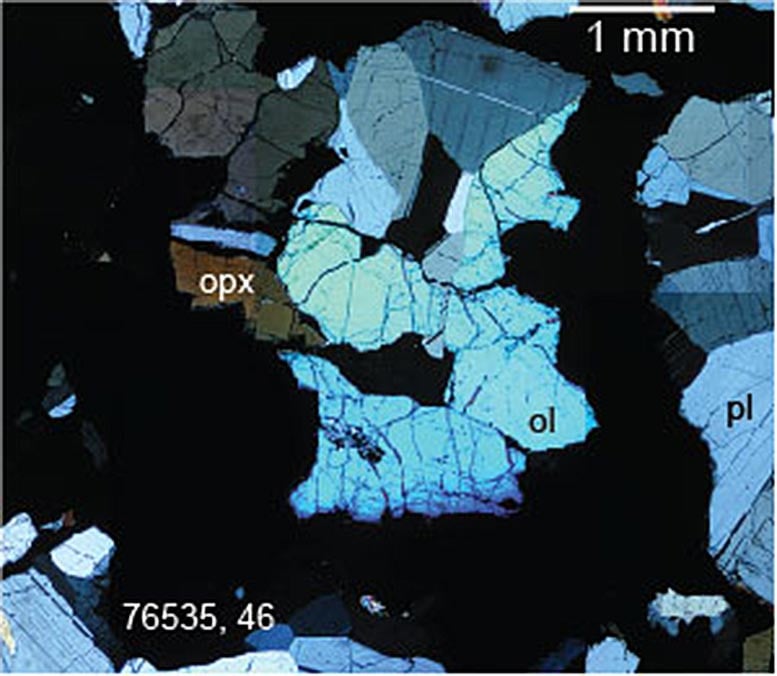
    Lunar Sample Under Polarized Light Microcope
    Image of slide 46 of 76535 taken with a polarized light microscope. Credit: Nelson et al., 2021

    The diffusion patterns preserved in the mineral grains and observed with the microprobe were consistent with a rapid cooling history of no more than 20 million years at high temperatures. The finding challenges previous estimates of a 100-million-year cooling duration and supports initial rapid cooling of magmas within the lunar crust.

    “This is changing our outlook on how an important suite of lunar rocks formed,” said Nelson.

    To reconcile high-temperature cooling rates with the generally accepted view of the way in which these rocks formed, the research team proposed that perhaps this rock type is formed by a process called reactive infiltration wherein a melt interacts with rock—changing its chemical and physical makeup.

    The study also demonstrates the value of re-examining previously analyzed samples using modern techniques and how quickly new data can reshape our understanding of planetary evolution.

    To better understand the observed chemical heterogeneity, the research team is currently investigating how quickly phosphorus can diffuse in olivine crystals. Additionally, they are searching for similar heterogeneities in other Apollo samples.

    Reference: “Chemical heterogeneities reveal early rapid cooling of Apollo Troctolite 76535” by William S. Nelson, Julia E. Hammer, Thomas Shea, Eric Hellebrand and G. Jeffrey Taylor, 14 December 2021, Nature Communications.
    DOI: 10.1038/s41467-021-26841-4

    Never miss a breakthrough: Join the SciTechDaily newsletter.
    Follow us on Google and Google News.

    Astronomy Geophysics Moon University of Hawaii at Manoa
    Share. Facebook Twitter Pinterest LinkedIn Email Reddit

    Related Articles

    Confusing Scientists for Decades: Lunar Rocks Reveal Surprising Truth About the Moon’s Magnetic Field

    Scientists Map the Mineralogy of the Moon’s South Pole-Aitken Basin

    Small Asteroids Completely Shattered the Moon’s Upper Crust

    Lunar Reconnaissance Orbiter Finds Evidence of “Recent” Lunar Volcanism

    Solar Energetic Particles May Have Significantly Altered the Properties of Lunar Soil

    NASA Scientists Measure the Deformation of the Moon

    Lunar Rock Samples Reveal Evidence of a Huge Meteorite Strike

    Researchers Explain Metamorphosis of Moon’s Water Ice

    NASA’s GRAIL Mission Returns Video From Far Side of the Moon

    Leave A Reply Cancel Reply

    • Facebook
    • Twitter
    • Pinterest
    • YouTube

    Don't Miss a Discovery

    Subscribe for the Latest in Science & Tech!

    Trending News

    Scientists Discover Stem Cells That Could Regrow Teeth and Bone

    Early Cannabis Use May Stall Key Brain Skills in Teens

    Popular Vitamin D Supplement Has “Previously Unknown” Negative Effect, Study Finds

    Study Reveals Malaria’s Hidden Role in Human Evolution

    The Hidden Risk of Taking Breaks From Weight-Loss Drugs Like Ozempic

    Scientists Warn That This Common Pet Fish Can Wreck Entire Ecosystems

    Scientists Make Breakthrough in Turning Plastic Trash Into Clean Fuel Using Sunlight

    This Popular Supplement May Interfere With Cancer Treatment, Scientists Warn

    Follow SciTechDaily
    • Facebook
    • Twitter
    • YouTube
    • Pinterest
    • Newsletter
    • RSS
    SciTech News
    • Biology News
    • Chemistry News
    • Earth News
    • Health News
    • Physics News
    • Science News
    • Space News
    • Technology News
    Recent Posts
    • Beyond Inflammation: Scientists Uncover New Cause of Persistent Rheumatoid Arthritis
    • Cancer-Like Mutations Found in the Brain May Be Driving Alzheimer’s Disease
    • A Simple Molecule Could Unlock Safer, Easier Weight Loss
    • Stretching Diamonds Unlocks Powerful New Quantum Sensing Abilities
    • This Robot Could Explore Mars 3x Faster Than Today’s Rovers
    Copyright © 1998 - 2026 SciTechDaily. All Rights Reserved.
    • Science News
    • About
    • Contact
    • Editorial Board
    • Privacy Policy
    • Terms of Use

    Type above and press Enter to search. Press Esc to cancel.