
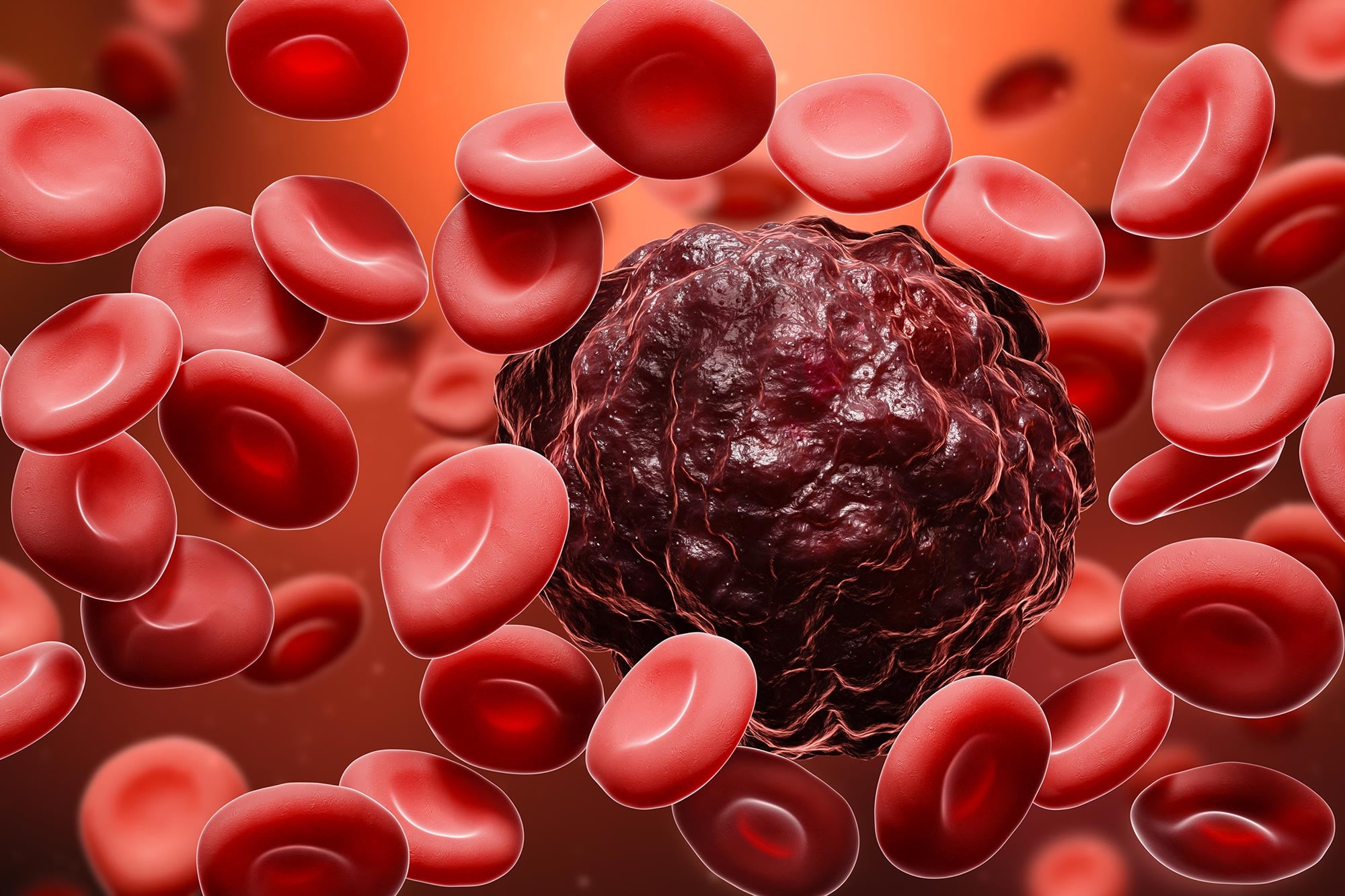
A new AI system called CytoDiffusion could reshape how blood disorders such as leukemia are detected by analyzing blood cell morphology with remarkable sensitivity and awareness of its own uncertainty.
An AI system capable of examining the shape and structure of blood cells with higher accuracy and consistency than human specialists may significantly reshape how conditions such as leukemia are diagnosed.
The tool, known as CytoDiffusion, is built on generative AI, the same category of technology used in image creators like DALL-E. It is designed to study the appearance of blood cells in detail.
Many current AI models focus mainly on pattern recognition, but the team of researchers from the University of Cambridge, University College London, and Queen Mary University of London demonstrated that CytoDiffusion can recognize a broad range of normal blood cell variations and detect rare or unusual cells that may signal disease. Their findings appear in the journal Nature Machine Intelligence.
The Challenge of Manual Blood Cell Analysis
Identifying small variations in the size, shape, and overall look of blood cells is essential for diagnosing many blood disorders. However, developing the expertise required for this work takes extensive training, and even highly experienced clinicians can disagree when evaluating difficult samples.
“We’ve all got many different types of blood cells that have different properties and different roles within our body,” said Simon Deltadahl from Cambridge’s Department of Applied Mathematics and Theoretical Physics, the study’s first author. “White blood cells specialize in fighting infection, for example. But knowing what an unusual or diseased blood cell looks like under a microscope is an important part of diagnosing many diseases.”
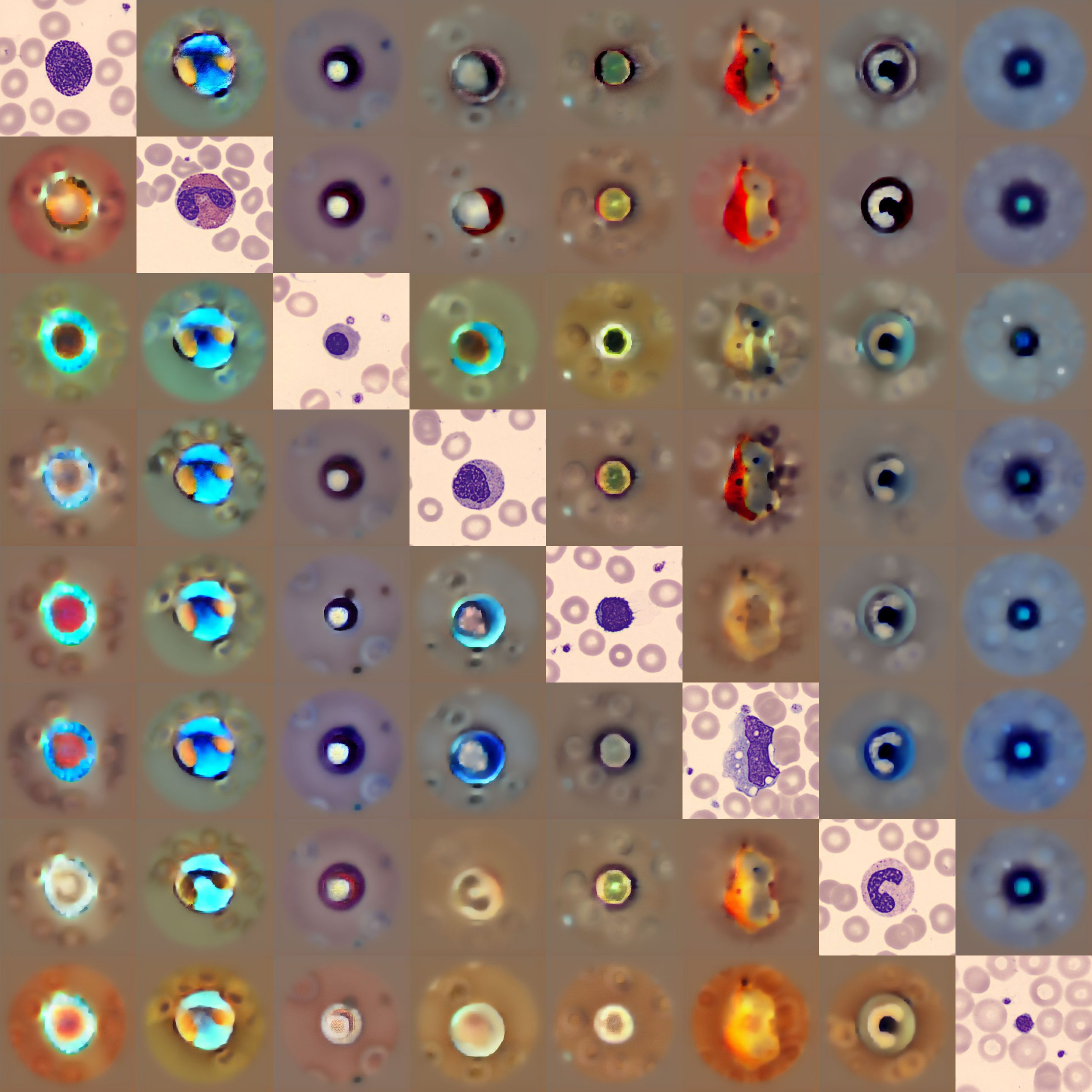
However, a typical blood ‘smear’ contains thousands of cells – far more than any human could analyze. “Humans can’t look at all the cells in a smear – it’s just not possible,” said Deltadahl. “Our model can automate that process, triage the routine cases, and highlight anything unusual for human review.”
“The clinical challenge I faced as a junior hematology doctor was that after a day of work, I would face a lot of blood films to analyze,” said co-senior author Dr Suthesh Sivapalaratnam from Queen Mary University of London. “As I was analyzing them in the late hours, I became convinced AI would do a better job than me.”
Training CytoDiffusion
To develop CytoDiffusion, the researchers trained the system on over half a million images of blood smears collected at Addenbrooke’s Hospital in Cambridge. The dataset – the largest of its kind – included both common blood cell types and rarer examples, as well as elements that can confuse automated systems.
By modelling the full distribution of cell appearances rather than just learning to separate categories, the AI became more robust to differences between hospitals, microscopes, and staining methods, and better able to recognize rare or abnormal cells.
In tests, CytoDiffusion could detect abnormal cells linked to leukemia with far greater sensitivity than existing systems. It also matched or surpassed current state-of-the-art models, even when given far fewer training examples, and quantified its own uncertainty.
“When we tested its accuracy, the system was slightly better than humans,” said Deltadahl. “But where it really stood out was in knowing when it was uncertain. Our model would never say it was certain and then be wrong, but that is something that humans sometimes do.”
“We evaluated our method against many of the challenges seen in real-world AI, such as never-before-seen images, images captured by different machines, and the degree of uncertainty in the labels,” said co-senior author Professor Michael Roberts, also from Cambridge’s Department of Applied Mathematics and Theoretical Physics. “This framework gives a multi-faceted view of model performance which we believe will be beneficial to researchers.”
Synthetic Image Generation
The team also showed that CytoDiffusion could generate synthetic blood cell images indistinguishable from real ones. In a ‘Turing test’ with ten experienced hematologists, the human experts were no better than chance at telling real from AI-generated images.
“That really surprised me,” said Deltadahl. “These are people who stare at blood cells all day, and even they couldn’t tell.”
As part of the project, the researchers are releasing what they say is the world’s largest publicly available dataset of peripheral blood smear images: more than half a million in total.
“By making this resource open, we hope to empower researchers worldwide to build and test new AI models, democratize access to high-quality medical data, and ultimately contribute to better patient care,” said Deltadahl.
Not a Replacement, but a Partner
While the results are promising, the researchers say that CytoDiffusion is not a replacement for trained clinicians. Instead, it is designed to support them by rapidly flagging abnormal cases for review and handling more routine ones automatically.
“The true value of healthcare AI lies not in approximating human expertise at lower cost, but in enabling greater diagnostic, prognostic, and prescriptive power than either experts or simple statistical models can achieve,” said co-senior author Professor Parashkev Nachev from UCL. “Our work suggests that generative AI will be central to this mission, transforming not only the fidelity of clinical support systems but their insight into the limits of their own knowledge. This ‘metacognitive’ awareness – knowing what one does not know – is critical to clinical decision-making, and here we show machines may be better at it than we are.”
The researchers say further work is needed to make the system faster and to test it across diverse patient populations to ensure fairness and accuracy.
Reference: “Deep generative classification of blood cell morphology” by Simon Deltadahl, Julian Gilbey, Christine Van Laer, Nancy Boeckx, Mathie P. G. Leers, Tanya Freeman, Laura Aiken, Timothy Farren, Matthew Smith, Mohamad Zeina, Stephen MacDonald, Daniel Gleghorn, BloodCounts! consortium, James HF Rudd, Concetta Piazzese, Joseph Taylor, Nicholas Gleadall, Carola-Bibiane Schönlieb, Suthesh Sivapalaratnam, Michael Roberts and Parashkev Nachev, 19 November 2025, Nature Machine Intelligence.
DOI: 10.1038/s42256-025-01122-7
The research was supported in part by the Trinity Challenge, Wellcome, the British Heart Foundation, Cambridge University Hospitals NHS Trust, Barts Health NHS Trust, the NIHR Cambridge Biomedical Research Centre, NIHR UCLH Biomedical Research Centre, and NHS Blood and Transplant. The research was conducted by the Imaging working group within the BloodCounts! consortium, which aims to use AI to improve blood diagnostics globally. Simon Deltadahl is a Member of Lucy Cavendish College, Cambridge.
Never miss a breakthrough: Join the SciTechDaily newsletter.
Follow us on Google and Google News.